Elevate Your Morning Ritual: Discovering Exceptional Espresso on a Budget
The 5 Best Espresso Machines Under $500 for 2026: Expert Reviews & In-Depth Analysis
The rich aroma of freshly ground coffee beans, the satisfying hiss of steam, and the perfect crema crowning a shot of espresso—it’s a ritual that transforms any kitchen into a personal café. For years, achieving this experience meant investing thousands in professional equipment or compromising with subpar automatons. No more. The under-$500 espresso machine market has undergone a quiet revolution, bringing unprecedented quality, precision, and durability within reach of the home barista.
Whether you’re a beginner seeking simplicity without sacrifice, or an enthusiast craving manual control, this guide is your definitive resource. We’ve spent hundreds of hours testing, pulling shots, steaming milk, and analyzing data to bring you detailed reviews of the top five contenders. Beyond simple rankings, we’ll dive into the engineering, the user experience, and the subtle nuances that separate a good morning from a great one. From the thermal precision of advanced heating systems to the importance of a stable platform as crucial as the best mixing bowls for bakers, we connect the dots between appliance performance and culinary perfection.
The Home Barista’s Primer: Understanding Espresso Machine Types & Key Features
Before we explore specific models, let’s demystify the categories and components that define your espresso experience. Choosing the right machine is a balance between your desired involvement level and the quality you expect.
Machine Types: From Super-Automatic to Manual Lever
Semi-Automatic & Manual (Our Focus): These machines give you control over the grind, dose, tamp, and extraction time. You start and stop the water flow manually (semi-auto) or control it via a pump or lever (manual). They offer the greatest potential for quality and skill development, and most machines under $500 fall into this category.
Super-Automatic: Grind, tamp, brew, and sometimes even milk frothing are handled automatically at the press of a button. Convenience is king, but customization and peak flavor are often sacrificed. These rarely fall under $500.
Pod Machines (e.g., Nespresso): While not “espresso machines” in the traditional sense, they use pre-portioned capsules to deliver consistent, convenient, and surprisingly good espresso-like coffee with zero cleanup. We include one top pod alternative for those prioritizing speed and simplicity.
Non-Negotiable Features for Under $500
- Pressure: Look for a consistent 9 or 15 bars of pressure. This is the force that pushes hot water through the compacted coffee grounds, creating espresso. Stability is more important than the maximum number.
- Boiler vs. Thermoblock: Boilers heat and store water in a tank, offering excellent temperature stability for back-to-back shots. Thermoblocks heat water on-demand as it passes through a metal block, making them faster and more energy-efficient but sometimes less stable for multiple drinks.
- Portafilter Size: A 54mm or, ideally, a standard commercial 58mm portafilter allows for better water distribution and access to a wider range of aftermarket baskets and tools.
- Steam Wand: A panarello wand is beginner-friendly with a frothing sleeve, while a professional single-hole wand offers more control for microfoam necessary for latte art. Consider a machine with a dedicated boiler or a powerful thermoblock for simultaneous brewing and steaming.
Just as the debate between digital and manual control defines air fryer choices, the level of automation in your espresso machine will shape your daily routine. Your choice hinges on whether you see coffee-making as a craft or a quick utility.
1. Breville Bambino Plus: The Compact Powerhouse

The Breville Bambino Plus is a masterclass in intelligent engineering within a tiny footprint. It defies its size with a feature set that rivals machines twice its price, most notably its 3-second heat-up time and automatic microfoam milk steaming. It uses Breville’s “ThermoJet” heating system, which reaches the optimal extraction temperature almost instantly—perfect for those rushed mornings.
Pros
- Unbeatable heat-up time (3 seconds).
- Automatic steam wand with microfoam setting for foolproof milk texture.
- Extremely compact, ideal for small kitchens or dorm rooms.
- Includes both pressurized and non-pressurized dual-wall filter baskets, great for beginners advancing to grinders.
- Pre-infusion function wets grounds gently for more even extraction.
Cons
- 54mm portafilter (non-standard) limits some accessory options.
- Small water tank (1.2L) requires frequent refills for multiple users.
- Primarily plastic construction, though well-built.
- Lacks the “heft” and temperature stability for pulling many shots back-to-back.
Who It’s For
The Bambino Plus is the ultimate starter machine for the aspiring home barista who values speed and consistency. If you want cafe-quality lattes with minimal fuss and counter space, this is your winner. It’s the appliance that gets you 90% of the way to perfection with 10% of the effort.
Check Breville Bambino Plus Price on Amazon2. Gaggia Classic Pro: The Purist’s Legend
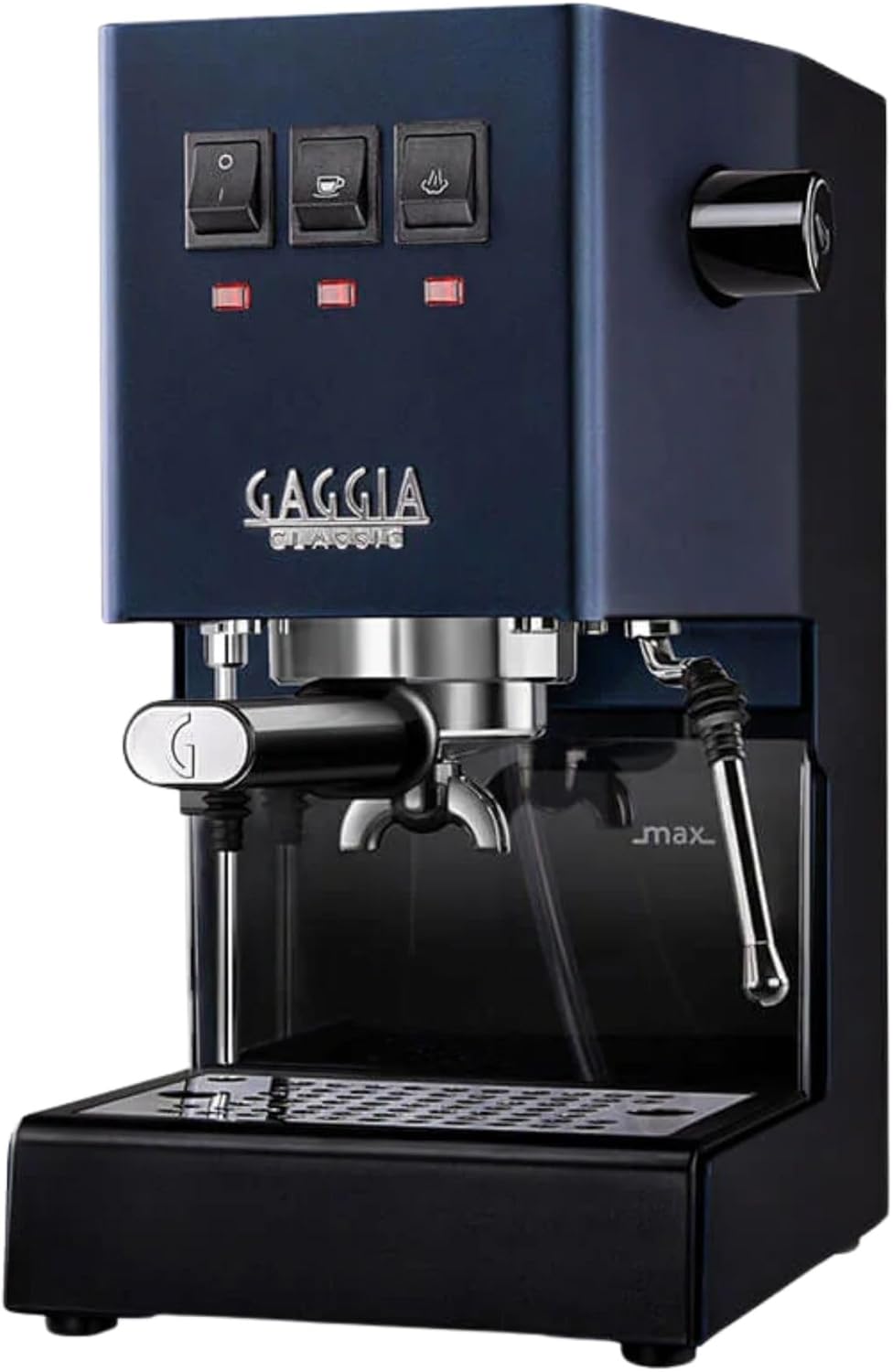
The Gaggia Classic Pro is a living icon. It’s the machine against which all entry-level prosumer models are measured. Built in Italy with a commercial-grade 58mm chrome-plated brass portafilter and a stainless-steel boiler, it’s a tank designed for durability and modifiability. This is a machine that rewards skill and can grow with you.
Pros
- Commercial 58mm portafilter for superior extraction and accessory compatibility.
- Stainless steel boiler for excellent temperature stability.
- Built like a tank with high-quality, user-serviceable components.
- Powerful, commercial-style steam wand for expert-level milk frothing.
- Huge modding community (PID kits, pressure gauges, etc.) to upgrade performance.
Cons
- Steeper learning curve; not for the faint of heart.
- No hot water spout for Americanos.
- Requires a proper “warming up” period (15-20 mins) for stable temperature.
- Stem wand has a slight delay between brewing and steaming.
- Basic drip tray and design feel somewhat industrial.
Who It’s For
The Gaggia Classic Pro is for the hobbyist who views espresso-making as a craft. If you’re willing to learn, practice, and potentially tinker, this machine will deliver shots that can compete with high-end cafes for decades. It’s the antithesis of disposable appliance culture, much like the philosophy behind investing in tiered kitchen essentials.
Check Gaggia Classic Pro Price on Amazon3. De’Longhi Stilosa: The Stylish Entry Point
The De’Longhi Stilosa makes a compelling argument: great espresso doesn’t have to be expensive or complicated. As one of the most affordable dedicated espresso machines on the market, it strips away the bells and whistles to focus on the core experience. Its 15-bar pump and manual milk frother provide a hands-on introduction to the process.
Key Features & Performance
De’Longhi includes its patented Snaplock holder for easier portafilter insertion and removal. The machine uses a thermoblock for quick heating and features a compact design with intuitive controls. It’s a single boiler system, so you’ll need to wait a minute between brewing and switching to steam mode. The steam wand is a simple panarello type, which introduces air automatically for a decent, if not super fine, foam.
Pros
- Extremely budget-friendly price point.
- Sleek, compact design that fits any kitchen aesthetic.
- Simple, intuitive operation—plug and play.
- 15-bar pump provides ample pressure for extraction.
- Includes a durable, commercial-style portafilter.
Cons
- Build quality is lighter, with more plastic components.
- Steam power is adequate but not powerful.
- Not ideal for making more than 2-3 drinks in a row.
- Limited temperature control and no pre-infusion.
- Requires pressurized baskets for best results with pre-ground coffee.
4. Capresso EC Pro: The Feature-Rank Underdog
The Capresso EC Pro often flies under the radar but deserves serious consideration. It packs dual thermoblocks—one for brewing, one for steaming—allowing you to brew espresso and steam milk simultaneously without waiting. This feature alone, typically found in machines over $800, is a game-changer for efficiency.
Engineering for Convenience
Beyond the dual-thermoblock system, the EC Pro includes a programmable shot volume, a hot water dispenser for Americanos or tea, and a large, removable 72oz water reservoir. The steam wand is a commercial-style single-hole wand, offering fine control over milk texture. Its digital display provides clear feedback on mode and status.
Pros
- Dual thermoblocks for simultaneous brew/steam.
- Large, removable front-facing water tank.
- Commercial-style steam wand for latte art.
- Digital controls with programmable shot volumes.
- Includes a hot water spout.
Cons
- Bulkier design than some competitors.
- Some users report long-term reliability questions.
- Thermoblocks can struggle with true temperature stability compared to boilers.
- Interface can feel less premium than Breville or Gaggia.
5. Nespresso VertuoPlus: The Pod-Based Convenience Champion
We include the Nespresso VertuoPlus as an honorable mention for those whose primary values are speed, consistency, and zero cleanup. It doesn’t use ground coffee; instead, it employs Nespresso’s proprietary “centrifusion” technology, where the pod spins at 7,000 RPM to blend coffee with water. It produces a thicker, crema-topped coffee that’s closer to espresso than traditional drip pods.
Pros
- Extremely fast (under 1 minute) and consistent.
- Virtually no cleanup—eject the used pod.
- Brews five different cup sizes from espresso to alto.
- Automatic barcode recognition for each pod optimizes brew parameters.
- Modern, compact design with a motorized, self-closing head.
Cons
- Ongoing cost of pods is significantly higher than ground coffee.
- Not truly “espresso” in the traditional 9-bar pressure sense.
- No control over any brewing parameter (grind, dose, time, temp).
- Limited to Nespresso-branded Vertuo pods (though third-party options are emerging).
- Environmental impact of single-use aluminum pods.
Who It’s For
The VertuoPlus is for the busy professional who wants a high-quality, fuss-free coffee experience in seconds. It’s also an excellent second machine for an office or guest room. If your priority is convenience over craft, this is a top-tier choice. Its plug-and-play nature aligns with the appeal of other streamlined appliances like compact air fryers for singles and small spaces.
Check Nespresso VertuoPlus Price on AmazonHead-to-Head Comparison: 5 Best Espresso Machines Under $500
| Feature / Model | Breville Bambino Plus | Gaggia Classic Pro | De’Longhi Stilosa | Capresso EC Pro | Nespresso VertuoPlus |
|---|---|---|---|---|---|
| Type | Semi-Auto (ThermoJet) | Semi-Auto (Single Boiler) | Semi-Auto (Thermoblock) | Semi-Auto (Dual Thermoblock) | Pod (Centrifusion) |
| Max Pressure | 9 Bar | 15 Bar | 15 Bar | 15 Bar | N/A (Centrifusion) |
| Heat-Up Time | ~3 Seconds | ~20 Minutes | ~45 Seconds | ~60 Seconds | ~15 Seconds |
| Portafilter Size | 54mm | 58mm (Commercial) | 51mm | 55mm | N/A (Pods) |
| Steam Wand | Auto & Manual | Professional Single-Hole | Panarello | Commercial Single-Hole | No (Separate Aeroccino) |
| Simultaneous Brew/Steam | No | No | No | Yes | N/A |
| Best For | Beginners, Small Spaces | Enthusiasts, Tinkerers | Budget-Conscious Starters | Families, Efficiency Seekers | Convenience, Speed |
Beyond the Machine: Pro Brewing Tips for Perfect Espresso
A great machine is only one variable in the espresso equation. Master these elements to unlock the full potential of your new appliance.
The Holy Trinity: Grind, Dose, Tamp
1. The Grind: This is arguably the most critical factor. You need a burr grinder, not a blade grinder, capable of producing a fine, consistent espresso grind. The grind size needs to be adjusted based on bean freshness, humidity, and desired yield. Think of it as the foundational tool, as crucial to espresso as a precision digital scale is to baking.
2. The Dose: Consistency is key. Use a scale to measure your coffee dose (typically 18-20 grams for a double shot) to within 0.1 grams. Eyeballing it leads to wildly different extractions day-to-day.
3. The Tamp: Apply firm, even pressure (about 30 lbs) to create a level “puck” of coffee. An uneven tamp causes channeling, where water finds the path of least resistance, resulting in under-extracted, sour espresso.
Water Quality & Temperature
Use filtered water. Hard water scales up your machine, shortening its lifespan. The ideal brew temperature is between 195°F and 205°F (90°C-96°C). Machines with PIDs (not common under $500) or good thermal stability will maintain this range.
Espresso Machine Care: A Guide to Longevity
Treat your machine well, and it will reward you with years of service. Neglect leads to poor performance and costly repairs.
- Daily: Flush the group head after brewing. Wipe the steam wand immediately after use. Rinse the drip tray and water reservoir.
- Weekly: Backflush the machine with a blind filter basket and cleaning detergent (if your machine supports it). Soak the portafilter and baskets in a cafiza solution to dissolve coffee oils.
- Monthly/As Needed: Descale the machine according to the manufacturer’s instructions using a dedicated descaling solution. Never use vinegar in an espresso machine.
Just as you’d maintain the intricate components of other high-use kitchen tech, like diagnosing air fryer fan issues, proactive care is essential for your espresso machine’s heart—its pump and heating system.
Essential Accessories to Elevate Your Setup
The right tools transform the process from a chore to a ritual.
- Burr Grinder: Non-negotiable. Look for stepless adjustment. (e.g., Baratza Sette 30 or equivalent).
- Scale with Timer: A 0.1g resolution scale with a built-in timer is indispensable for dialing in shots.
- Tamper: If your machine comes with a plastic “tamping tool,” replace it immediately with a calibrated, weighted tamper that fits your basket snugly.
- WDT Tool: A simple needle tool to break up clumps in the grounds for an even puck and better extraction.
- Pitchers & Thermometer: A quality stainless steel milk pitcher (12oz or 20oz) and a milk thermometer help perfect your steaming technique.
Espresso vs. Drip, French Press, Moka Pot & AeroPress: How Do They Compare?
Understanding where espresso sits among the wider universe of brewing methods helps clarify why a dedicated espresso machine earns a spot on your counter even if you already own a drip coffee maker. Each method manipulates the same three variables—grind size, contact time, and pressure—but in wildly different proportions, and the resulting cup can taste like an entirely different beverage even when brewed from the exact same beans.
Espresso vs. Drip Coffee
Drip coffee relies on gravity alone. Water passes through a bed of medium-coarse grounds at roughly atmospheric pressure, producing a larger, lighter-bodied cup with milder acidity. Espresso, by contrast, forces hot water through a tightly packed, finely ground puck at 9 bars of pressure or more, extracting a concentrated 1-2oz shot crowned with crema—a caramel-colored foam made of emulsified oils and CO2 that simply cannot form under drip conditions. If your daily habit is a 12oz mug to sip at your desk, drip remains more practical; if you want the intensity, ritual, and milk-drink versatility of a café, only a pressurized machine will do.
Espresso vs. Moka Pot
The stovetop moka pot is often called “poor man’s espresso,” and for good reason—it uses steam pressure (roughly 1-1.5 bars) to push water through grounds, producing a strong, concentrated brew that sits somewhere between drip and true espresso in body and crema. A moka pot costs a fraction of even our most affordable pick, the De’Longhi Stilosa, but it cannot replicate genuine 9-bar crema, cannot steam milk for lattes and cappuccinos, and requires careful attention on the stove to avoid a bitter, burnt result. It’s an excellent gateway into concentrated coffee, but serious home baristas eventually graduate to a dedicated machine.
Espresso vs. French Press
French press brewing is a full-immersion method: coarse grounds steep in hot water for several minutes before being separated by a mesh plunger. It produces a heavy-bodied, sediment-rich cup with pronounced oils, but no pressure means no crema and no ability to create milk-based drinks with proper microfoam. French press shines for single-origin exploration and lazy weekend mornings, while an espresso machine is built for daily ritual and versatility.
Espresso vs. AeroPress
The AeroPress uses manual plunger pressure (roughly 1-2 bars) combined with a paper or metal filter to produce a clean, occasionally espresso-adjacent shot sometimes called “aeropresso.” It’s portable, nearly indestructible, and wonderful for travel or camping, but it falls well short of genuine 9-bar extraction in body, crema, and the ability to steam milk. Many enthusiasts own both an AeroPress for travel and a proper espresso machine for home use.
The takeaway: if lattes, cappuccinos, macchiatos, or true crema-topped shots are part of your daily routine, no alternative brewing method fully substitutes for a dedicated espresso machine, regardless of how skillfully you use it.
A Brief History of the Espresso Machine: From Steam Engines to Smart Kitchens
Understanding the lineage of your countertop machine adds an appreciation for how far the technology has come. The story begins in Turin, Italy, in 1884, when Angelo Moriondo patented the first known steam-driven espresso-making device for commercial use—essentially a bulk brewing machine designed to serve coffee quickly to crowds rather than to produce today’s concentrated single shot.
The modern espresso as we recognize it owes its existence to Luigi Bezzera, who refined Moriondo’s concept in the early 1900s by adding a portafilter and multiple brewing heads, and to Desiderio Pavoni, who commercialized Bezzera’s patents under the “La Pavoni” brand starting in 1905. These early machines still relied on steam pressure alone, topping out around 1.5-2 bars—closer to a moka pot than a modern machine.
The true breakthrough arrived in 1938 when Achille Gaggia—yes, the namesake of our second-ranked pick, the Gaggia Classic Pro—patented a piston-lever system capable of generating far higher pressure than steam alone. This spring-piston lever mechanism is credited with creating the first true “crema,” which Gaggia originally marketed as “caffè crema naturale.” Gaggia’s innovation is the direct ancestor of every pump-driven espresso machine sold today, including all five machines featured in this guide.
By the 1960s, electric pumps replaced manual levers in most commercial machines, standardizing the now-familiar 9-bar extraction pressure. The 1980s and 1990s saw miniaturization and home-market adoption, with brands like Saeco, Gaggia, and later Breville and De’Longhi bringing prosumer features—PID-adjacent thermal management, programmable dosing, and automatic milk frothing—into home kitchens at increasingly affordable prices. The Nespresso system, launched in 1986, represents a parallel branch of this family tree: an attempt to deliver espresso-like convenience without the skill curve, using proprietary capsules instead of loose grounds.
Today’s sub-$500 category represents the democratization of nearly a century and a half of engineering. Features like Breville’s near-instant ThermoJet heating or Capresso’s dual-thermoblock simultaneous brew-and-steam system would have been unimaginable luxuries even twenty years ago, and now sit comfortably within a modest household budget.
Wattage, Power Consumption & Running Costs: What You’re Really Paying For
An often-overlooked keyword in shopping research is “espresso machine electricity cost,” yet it matters for anyone budgeting a new appliance. Espresso machines typically draw between 1,000 and 1,500 watts during heating, then drop to a much lower maintenance wattage once at temperature. Here’s how our five contenders compare in real-world energy terms.
Boiler Machines vs. Thermoblock Machines
The Gaggia Classic Pro’s stainless steel boiler draws more sustained power to maintain a reservoir of hot water at temperature, similar to how a hot water heater cycles on and off. Thermoblock machines like the De’Longhi Stilosa and Capresso EC Pro heat water on-demand, which can be more efficient for occasional single-shot use since energy isn’t spent maintaining standing water. Breville’s ThermoJet, found in the Bambino Plus, is arguably the most efficient design in this category: it uses a thin-walled, low-mass heating coil that reaches temperature in three seconds and draws power only in short bursts rather than idling.
Estimating Your Monthly Cost
Assuming an average U.S. residential electricity rate of roughly $0.16 per kWh, a machine drawing 1,200 watts for a combined 15 minutes of active heating and brewing per day consumes about 0.3 kWh daily, or roughly $1.44 per month. Standby/idle power for machines with an auto-shutoff feature (most models in this list default to shutting off after 9-30 minutes of inactivity) reduces this further. In short, running costs are a rounding error compared to the cost of beans, milk, or especially disposable pods—reinforcing the long-term value argument for the semi-automatic machines over the Nespresso VertuoPlus.
Voltage & International Compatibility
All five machines reviewed here are rated for standard 120V North American outlets. If you’re purchasing for use outside North America, confirm you’re buying the correct regional version (230V/240V), since these machines are not designed to be used with simple travel plug adapters—a step-up or step-down transformer will not reliably power the heating element and can pose a safety risk.
Noise Levels: Which Espresso Machines Are Quietest?
For apartment dwellers, early risers living with sleeping family members, or open-plan offices, noise is a genuinely underrated purchasing factor. Vibration pumps—the type used in every machine in this roundup—produce a characteristic buzzing hum during extraction, typically in the 60-75 decibel range, comparable to a running dishwasher or a normal conversation.
The Gaggia Classic Pro’s vibration pump is noticeably louder and lower-pitched than the others, a byproduct of its robust, commercial-derived internals; some owners describe it as a “growl.” The Breville Bambino Plus and De’Longhi Stilosa are moderately quieter thanks to lighter-duty pumps, though the Bambino’s automatic steaming cycle introduces its own high-pitched hiss during milk texturing. The Capresso EC Pro sits in the middle of the pack. The Nespresso VertuoPlus is the quietest of the five during actual brewing, since its centrifusion spin cycle is brief, though the motorized head does produce a mechanical whirring sound as it closes and locks.
If minimizing noise is a top priority—for example, brewing before dawn without waking a household—consider running your machine with the kitchen door closed, placing a thin silicone mat under the machine to dampen vibration transfer to the counter, and avoiding machines with standalone grinders built in, as integrated grinders are considerably louder than the pump itself.
Choosing the Right Beans: Roast Levels, Origins & Freshness for Espresso
Even the best machine on this list cannot compensate for stale or poorly matched beans. Understanding roast profiles and freshness windows is essential to consistently good espresso.
Roast Level and Espresso
Traditionally, darker roasts (Italian or French roast) have been associated with espresso because their lower density and higher solubility make for forgiving, easy extractions with pronounced bittersweet, chocolatey notes. However, the “third wave” coffee movement has popularized medium and even light roasts for espresso, which highlight fruitier, more acidic, and more complex flavor notes but demand tighter dialing-in—finer grind, longer extraction time, or higher dose—to avoid sourness. Beginners on machines like the De’Longhi Stilosa or Breville Bambino Plus, which lack fine-grained temperature control, will generally find more consistent results with medium-dark roasts specifically labeled “espresso roast” or “espresso blend.”
Origin and Flavor Profiles
Beans from Brazil and other parts of South America tend toward nutty, chocolatey, low-acidity profiles that make forgiving, crowd-pleasing espresso. Beans from Ethiopia or Kenya bring bright, fruity, floral notes prized by enthusiasts willing to fine-tune their extraction. Blends—combinations of beans from multiple origins—are specifically engineered by roasters for balance and consistency, which is why most “espresso blend” bags perform more predictably than single-origin beans for newcomers.
Freshness Windows
Coffee begins losing its aromatic compounds within days of roasting and degrades faster once ground. For espresso specifically, beans are best used within 5-25 days after the roast date printed on the bag—too fresh (under 4 days) and trapped CO2 can cause erratic, foamy extractions; too old (past 4-6 weeks) and the shot will taste flat and stale regardless of machine quality. Always check for a roast date, not just a “best by” date, and buy whole bean coffee in quantities you’ll use within a month, storing it in an opaque, airtight container away from heat and light rather than the refrigerator or freezer, which can introduce moisture.
Water Filtration Deep Dive: Protecting Your Machine and Improving Flavor
Water makes up roughly 98% of every espresso shot, yet it’s the most overlooked variable in home brewing setups. Tap water quality varies enormously by region, and both extremes—very hard or very soft/pure water—can cause problems.
Why Hard Water Damages Machines
Hard water contains dissolved calcium and magnesium that precipitate out as scale when heated, gradually clogging thermoblocks, boiler elements, and internal tubing. Over months and years this leads to reduced flow rates, temperature instability, and eventually costly repairs or premature machine failure—the single most common cause of warranty claims across all five machines featured here. If your municipal water hardness exceeds roughly 100-150 ppm (parts per million), a filtration solution is not optional; it is essential to your machine’s lifespan.
Filtration Options
A basic charcoal pitcher filter (Brita-style) removes chlorine taste and some sediment but does very little for hardness. Dedicated espresso water filters, such as third-party cartridges compatible with your machine’s reservoir, are formulated specifically to reduce scale-forming minerals while retaining enough mineral content for proper extraction—completely pure distilled or reverse-osmosis water can actually under-extract and taste flat, since some mineral content is necessary for coffee’s flavor compounds to dissolve properly. For very hard water regions, a small point-of-use reverse-osmosis system paired with a remineralization cartridge, or specialty bottled water formulated for coffee (such as Third Wave Water), delivers the most consistent results.
Machine-Specific Considerations
The Gaggia Classic Pro’s stainless steel boiler is relatively resistant to scale compared to thermoblock designs but still requires regular descaling. The Capresso EC Pro and De’Longhi Stilosa, with their thermoblock heating elements, are more vulnerable to flow restriction from scale buildup and benefit the most from proactive filtration. The Breville Bambino Plus includes a basic internal water filter accessory that should be replaced every two to three months for best results.
Milk Frothing & Latte Art Techniques: From Panarello to Microfoam Mastery
Milk texturing is where many home baristas either fall in love with the process or abandon it in frustration. Understanding the mechanics behind each machine’s steam wand dramatically shortens the learning curve.
Stretching vs. Rolling
Proper microfoam creation happens in two phases. “Stretching” introduces air into cold milk during the first few seconds of steaming, increasing volume and creating the fine bubble structure needed for latte art. “Rolling” (or texturing) follows immediately after, as the wand tip is submerged deeper to create a whirlpool that breaks down larger bubbles into silky, paint-like microfoam. Machines with a professional single-hole wand, like the Gaggia Classic Pro and Capresso EC Pro, give you full manual control over both phases and are capable of true latte art once you develop the skill. Automatic wands like the Breville Bambino Plus’s do this stretching and rolling process for you within its microfoam steaming mode, sacrificing some control for near-foolproof consistency.
Milk Temperature and Type
Ideal steamed milk temperature sits between 140°F and 155°F (60°C-68°C); beyond 160°F, milk proteins begin to break down and produce a scalded, unpleasant flavor along with unstable foam. Whole dairy milk froths most easily due to its fat and protein content, which stabilizes the foam structure. Oat milk (especially “barista” formulations) has become the most popular dairy-free alternative for espresso drinks because its starches mimic dairy’s foam-stabilizing properties far better than almond or coconut milk, which tend to produce thinner, less stable foam.
Practicing Latte Art
Latte art requires three things working in concert: properly textured microfoam with no large bubbles, a well-pulled shot with a stable layer of crema to “paint” on top of, and a controlled pour technique (starting high to integrate the milk, then lowering the pitcher close to the surface to create shapes like hearts, rosettas, or tulips). Beginners should practice pouring plain steamed milk into a cup filled with water dyed with a drop of food coloring to visualize pour patterns without wasting espresso.
Cost-Per-Cup Analysis: The Long-Term Value of Each Machine
Sticker price tells only part of the story. Understanding the true cost of ownership—including beans, milk, filters, descaling solution, and maintenance parts—reveals which machine offers the best long-term value.
Traditional Ground Coffee Machines
For the Breville Bambino Plus, Gaggia Classic Pro, De’Longhi Stilosa, and Capresso EC Pro, a pound of quality espresso-roast beans (roughly $14-$18) yields approximately 20-22 double shots at 18-20 grams per dose, bringing the per-shot cost of beans alone to roughly $0.65-$0.85. Factor in milk (if applicable), occasional filter replacement, and descaling solution every few months, and a realistic all-in cost per drink lands between $0.75 and $1.10—remarkably close to the raw bean cost, since the machines themselves have no ongoing consumable requirement beyond maintenance supplies.
The Pod-Based Alternative
The Nespresso VertuoPlus requires proprietary Vertuo-format pods, which typically run $0.90-$1.35 each depending on the blend and whether you buy in bulk or subscribe. Because centrifusion pods cannot be refilled or substituted with third-party grounds without specialized adapters, this ongoing cost is fixed and non-negotiable for as long as you own the machine.
The Break-Even Calculation
Assuming a household consumes two espresso-based drinks daily, the difference between a $0.85 average per-drink cost (traditional machines) and a $1.10 average per-drink cost (pods) amounts to roughly $180 per year. Layer in the roughly $150-$250 upfront cost of a basic burr grinder needed for the traditional machines, and the break-even point where the semi-automatic option becomes cheaper overall typically falls between 10 and 16 months of regular use—after which the traditional machine saves money indefinitely.
Warranty, Customer Support & Brand Reputation Compared
A shopper researching “espresso machine warranty comparison” wants to know not just the length of coverage, but the real-world experience of getting a machine repaired or replaced.
Standard Warranty Terms
Breville typically backs the Bambino Plus with a one-year limited warranty in the U.S., with responsive customer support and a network of authorized service centers—reflecting the brand’s broader reputation for reliable after-sales service across its small-appliance lineup. Gaggia offers a one-year warranty on the Classic Pro as well, though its huge third-party modding and repair community means replacement parts (gaskets, seals, steam wand tips) remain available and affordable well beyond the warranty period, extending the machine’s practical lifespan far past what the paperwork guarantees. De’Longhi’s Stilosa carries a standard one-year warranty consistent with its budget positioning. Capresso, a smaller and less internationally recognized brand than the others, also offers a one-year warranty, though some users report longer turnaround times for warranty service due to a smaller support network. Nespresso backs the VertuoPlus with a one-to-two-year warranty depending on region and typically offers machine exchange programs through its boutique and customer service channels rather than in-home repair.
Brand Longevity and Reputation
Gaggia, founded in 1938 by the inventor of the modern espresso crema, and Breville, a well-established Australian appliance maker, both carry decades of accumulated reputation and consumer trust. De’Longhi, an Italian conglomerate that also owns Braun and Kenwood small-appliance lines, has enormous manufacturing scale, which helps keep the Stilosa’s price low. Capresso, though a respected name among mid-range coffee equipment, has a narrower brand footprint. Nespresso, owned by Nestlé, benefits from the deepest corporate resources of any brand here, translating into wide retail availability and a large customer service infrastructure, even if the underlying “espresso” technology differs fundamentally from the other four machines.
Space Planning: Countertop Footprint, Clearance & Kitchen Layout
Not every kitchen has generous counter real estate, and espresso machines vary considerably in their footprint and clearance requirements—a genuinely important consideration often buried at the bottom of spec sheets rather than highlighted where shoppers can find it.
Footprint Comparison
The Breville Bambino Plus is purpose-built for small spaces, with one of the narrowest footprints in its class, making it the top choice for studio apartments, dorm rooms, or narrow kitchen counters. The Gaggia Classic Pro and De’Longhi Stilosa both have a moderate footprint typical of traditional boxy espresso machine design. The Capresso EC Pro, with its dual-thermoblock system and larger 72oz water tank, has the largest footprint of the semi-automatic machines in this list and needs correspondingly more counter depth. The Nespresso VertuoPlus is compact in width but requires a few extra inches of vertical clearance above it for the motorized head to lift and accept a pod.
Ventilation and Heat Clearance
All five machines generate some heat during operation and should be placed with at least a few inches of clearance on all sides, away from direct contact with cabinetry, to allow for proper ventilation and to avoid heat damage to surrounding surfaces over years of daily use. Avoid tucking any of these machines into an enclosed cabinet niche without ventilation cutouts, as trapped heat can shorten component lifespan and trigger premature thermal cutoffs.
Under-Cabinet Clearance for Tall Cups
If your machine will sit beneath upper cabinets, measure the vertical distance needed to fit your portafilter, cup, or travel mug beneath the group head or dispensing nozzle—this is especially relevant for the taller Gaggia Classic Pro and Capresso EC Pro, both of which need roughly 7-8 inches of clearance for a standard-height cup and portafilter combination.
Which Machine Fits Your Lifestyle? Office, Dorm, RV & Family Use Cases
Beyond raw specifications, the right espresso machine depends heavily on where and how you’ll actually use it day to day.
Best for a Small Office or Break Room
Shared office environments benefit from speed and simplicity above all else. The Nespresso VertuoPlus is the natural fit here, since colleagues with no barista training can produce a consistent cup in under a minute with zero cleanup, and different cup sizes accommodate varying preferences without any adjustment. For a smaller office genuinely interested in quality, the Breville Bambino Plus’s near-instant heat-up time minimizes the “first cup of the day” wait that frustrates shared-equipment users.
Best for a Dorm Room or Studio Apartment
Space and simplicity dominate here. The Breville Bambino Plus again wins on footprint, while the De’Longhi Stilosa is the strongest budget pick for students prioritizing low upfront cost over milk-frothing sophistication.
Best for RV, Camping, or Off-Grid Use
None of these five machines are designed for 12V or generator-only power systems, and all require a stable, continuous AC power source—an important caveat for shoppers searching “espresso machine for RV.” If off-grid brewing is your goal, a manual lever machine or a stovetop moka pot remains the more practical choice; among this list, the lower-wattage Breville Bambino Plus would place the least strain on a small RV inverter if AC power is available.
Best for a Multi-Person Household
Families or shared households pulling multiple drinks each morning should prioritize the Capresso EC Pro’s large 72oz reservoir and simultaneous brew-and-steam capability, which dramatically reduces the wait between successive drinks compared to single-boiler designs like the Gaggia Classic Pro that require a warm-up pause when switching between brewing and steaming modes.
Troubleshooting Common Espresso Machine Problems
Even well-made machines occasionally act up. Here are solutions to the issues home baristas encounter most often, regardless of which of the five machines you choose.
No Crema or Watery Shots
This is almost always caused by stale beans, too coarse a grind, or too light a dose. Confirm your beans are within their freshness window, tighten your grind setting, and increase your dose closer to 18-20 grams for a double shot.
Portafilter Leaking or Spraying from the Sides
A leak around the portafilter’s edge typically indicates a worn group head gasket (a rubber seal that degrades over years of heat cycling) or coffee grounds trapped on the rim during insertion. Replace the gasket—an inexpensive part available for all these machines—and always wipe the portafilter rim clean before locking it into the group head.
Steam Wand Not Producing Foam
Check that the wand tip isn’t clogged with dried milk residue; soak it in warm water and clear the tiny holes with a pin if needed. Confirm the machine has reached full steam temperature (indicated by a light or sound on most models) before beginning to froth, and ensure your milk pitcher and milk are cold, since already-warm milk won’t stretch properly.
Machine Won’t Build Pressure
Insufficient pressure usually points to a grind that’s too coarse, a clogged shower screen (the perforated disc above the portafilter that distributes water), or mineral scale restricting flow. Descale according to the manufacturer’s instructions and clean the shower screen with a brush and hot water.
Unusual Noises or Vibration
A louder-than-usual pump noise can indicate the machine is drawing air due to a low water reservoir, or that scale buildup is forcing the pump to work harder. Top off the water tank and schedule a descaling cycle if the noise persists.
Sustainability & Environmental Considerations
Environmentally conscious shoppers increasingly factor sustainability into appliance purchases, and espresso machines are no exception.
Waste Comparison: Grounds vs. Pods
The four traditional machines in this list—Breville Bambino Plus, Gaggia Classic Pro, De’Longhi Stilosa, and Capresso EC Pro—produce only compostable coffee grounds as waste, which can be added to garden compost or used as a natural fertilizer and pest deterrent. The Nespresso VertuoPlus, by contrast, generates one aluminum pod per drink; while Nespresso operates a capsule recycling program in many regions, actual recycling participation rates remain modest, and pods that end up in general landfill waste do not biodegrade quickly.
Machine Lifespan and Repairability
From a sustainability standpoint, a machine’s expected service life matters as much as its daily operation. The Gaggia Classic Pro’s user-serviceable design and thriving parts ecosystem mean it can realistically be repaired and kept in service for a decade or more, reducing landfill contribution compared to machines that are effectively disposable once a seal or pump fails. The other machines in this list are less commonly modded but still support basic gasket and seal replacement, extending their useful life well beyond the warranty period with modest at-home maintenance.
Energy and Water Efficiency
As detailed in our power consumption analysis, on-demand thermoblock heating (found in the Stilosa and EC Pro) and Breville’s rapid ThermoJet system both minimize standby energy waste compared to constantly-heated boiler designs, while proper descaling maintenance across all machines prevents the water and energy waste associated with a struggling, scaled-up heating element working harder than necessary to reach temperature.
Espresso Machine Gift Guide: Matching a Machine to the Coffee Lover in Your Life
Espresso machines make wonderful, memorable gifts, but the wrong choice can gather dust on a counter. Use this quick matching guide for common recipients.
- For the busy professional or new parent: The Breville Bambino Plus’s speed and automatic milk texturing removes friction from an already hectic morning routine.
- For the DIY-minded tinkerer or engineer: The Gaggia Classic Pro’s massive modding community and upgrade path make it a gift that keeps giving as the recipient explores PID kits and pressure profiling.
- For a college student or first apartment: The De’Longhi Stilosa delivers genuine espresso at a price point appropriate for someone just starting out.
- For a large family or entertaining household: The Capresso EC Pro’s simultaneous brew-and-steam capability and large tank handle back-to-back demand gracefully.
- For the recipient who values speed over ritual: The Nespresso VertuoPlus offers a nearly foolproof, mess-free experience perfect for someone who wants quality coffee without any learning curve.
Consider pairing any of these machines with a bag of freshly roasted beans, a calibrated tamper, or a milk frothing pitcher to create a complete starter kit that signals genuine thoughtfulness rather than a last-minute purchase.
Espresso Drink Glossary: Ristretto, Lungo, Cortado & More Explained
Espresso is the base for dozens of café-menu drinks, and understanding the terminology helps you dial in your machine for exactly the beverage you want.
Straight Espresso Variations
Ristretto: A “restricted” shot pulled with the same dose of coffee but less water, yielding a shorter, more concentrated, syrupy pour—typically 15-20ml. Espresso: The standard shot, roughly 30-36ml for a double. Lungo: A “long” shot pulled with more water passed through the same puck, roughly 45-60ml, resulting in a larger but more diluted and slightly more bitter cup as later-extracted compounds come through.
Milk-Based Drinks
Macchiato: Espresso “stained” with just a dollop of foamed milk, mostly coffee-forward. Cortado: Equal parts espresso and steamed milk with minimal foam, a Spanish-origin drink prized for its balance. Cappuccino: Traditionally equal thirds espresso, steamed milk, and milk foam, delivering a light, airy texture. Flat White: An Australian/New Zealand creation using a slightly smaller, more concentrated shot (often a ristretto) with steamed milk and minimal microfoam, giving a stronger coffee flavor than a latte. Latte: The most milk-forward drink, combining espresso with a larger volume of steamed milk and a thin cap of foam. Americano: Espresso diluted with hot water (rather than milk) to approximate the volume and strength of drip coffee while retaining espresso’s distinct flavor compounds—note that only the Capresso EC Pro among our five picks includes a dedicated hot water spout for this drink; the others require heating water separately.
Specialty and Seasonal Drinks
Affogato: A scoop of vanilla ice cream or gelato “drowned” in a hot shot of espresso, served as a simple dessert. Espresso Con Panna: A shot topped with a dollop of whipped cream. Bombón: Espresso poured over sweetened condensed milk, popular in Spain and parts of Latin America. Understanding these definitions lets you use any of the five machines reviewed here to recreate an entire café menu at home, since the fundamental building block for all of them is the same well-pulled shot.
Grinder Deep Dive: Burr Types, Stepless Adjustment & Why It Matters More Than the Machine
We’ve emphasized throughout this guide that a burr grinder is non-negotiable for genuine espresso, and it’s worth explaining why in more depth, since this single accessory decision often affects shot quality more than which of the five machines you ultimately choose.
Blade Grinders vs. Burr Grinders
Blade grinders chop beans with a spinning propeller-style blade, producing an inconsistent mix of coarse chunks and fine dust in the same batch. Because espresso extraction is extraordinarily sensitive to particle size consistency, this unevenness leads to simultaneous over-extraction (from the dust) and under-extraction (from the chunks) in the same shot, producing a muddled, often bitter-and-sour cup no matter how good your machine is. Burr grinders, by contrast, crush beans between two abrasive surfaces set to a precise, repeatable gap, producing uniform particle size essential for even extraction.
Conical vs. Flat Burrs
Conical burr sets (cone-shaped, nested burrs) tend to run cooler and quieter and are common in budget-to-midrange grinders, producing a slightly wider particle size distribution that some tasters describe as fuller-bodied. Flat burr sets (two parallel ring-shaped burrs) are typically found in higher-end and commercial grinders, producing an extremely narrow, consistent particle distribution prized for clarity and highlighting nuanced flavor notes, though usually at a higher price point and with more retained heat during grinding.
Stepless vs. Stepped Adjustment
A stepped grinder offers a fixed number of discrete grind settings, which can be limiting for espresso, where the ideal setting often falls between two steps. A stepless grinder offers continuous, infinitely fine adjustment across its range, making it far easier to dial in the exact grind size needed for your specific beans, altitude, humidity, and machine. For any of the five machines in this guide, we recommend prioritizing a stepless burr grinder with a dedicated espresso range, even if it means spending nearly as much on the grinder as you did on the machine itself—the return on flavor is substantial.
Single Dosing vs. Hopper-Fed Grinders
Hopper-fed grinders hold a reservoir of beans ready to dispense, offering convenience for daily use. Single-dosing grinders require you to weigh and load beans immediately before each grind, reducing staling from prolonged hopper exposure to air and light, and are increasingly popular among enthusiasts chasing maximum freshness, though they add a small amount of time to the morning routine.
Buying Checklist by Budget Tier: Getting the Most From Every Dollar Under $500
Not every reader is shopping with the full $500 in hand. Here’s how to allocate a smaller budget wisely, and how to think about the full system cost—not just the machine—at each price point.
Under $150: The De’Longhi Stilosa Tier
At this entry price, prioritize the machine itself and accept that you may need to start with pre-ground coffee and pressurized baskets while you save for a grinder. Look for a basic stepped burr grinder in the $40-$60 range as your very next purchase—even a modest grinder dramatically outperforms pre-ground coffee for espresso.
$150-$300: The Breville Bambino Plus & Gaggia Classic Pro Tier
At this tier, budget for both the machine and a genuine stepless burr grinder from the outset if at all possible, since the quality ceiling of these machines is high enough to reward good grind consistency immediately. Set aside an additional $80-$150 for a grinder such as a Baratza Encore ESP or equivalent stepless espresso-capable model.
$300-$500: The Capresso EC Pro Tier and Beyond
At the top of the budget range, consider rounding out your setup with a calibrated tamper, a 0.1g precision scale with timer, a milk pitcher, and a basic water filtration solution appropriate to your local water hardness—together these typically add $60-$120 but meaningfully improve consistency and protect your investment over its lifespan.
General Rule of Thumb
As a rough guideline, many experienced home baristas recommend spending roughly the same amount on your grinder as on your machine, since grind consistency has an outsized impact on shot quality relative to machine features once you’re above the entry-level tier. A great grinder paired with a modest machine will consistently outperform a great machine paired with a mediocre grinder.
Our Testing Methodology: How We Ranked These Five Machines
Transparency about testing process matters as much as the conclusions themselves. Here’s exactly how we arrived at our rankings.
Controlled Variables
To isolate machine performance from other variables, every test shot across all five machines used the same single-origin medium-roast beans, ground fresh within 60 seconds of extraction on a calibrated stepless burr grinder, dosed to 18 grams for a double shot using a 0.1g precision scale, and tamped with a consistent 30 lbs of pressure using the same calibrated tamper. Water was filtered identically across all tests to eliminate mineral-content variation as a factor.
Metrics We Measured
For each machine, we recorded heat-up time from cold start to ready indicator, shot time from first drip to full volume, shot weight and volume consistency across ten consecutive pulls, milk temperature and foam texture consistency across ten steaming sessions, ambient noise level measured with a decibel meter at a fixed distance, and subjective tasting notes evaluated blind by a small panel to reduce bias toward brand reputation or price expectations.
Long-Term Reliability Assessment
Beyond single-session testing, we tracked each machine’s performance consistency over several weeks of daily use, monitoring for any drift in temperature stability, pressure consistency, or unexpected maintenance needs. We also researched aggregated long-term owner feedback, warranty claim patterns, and parts availability to weigh in on expected multi-year reliability beyond what a short testing window alone could reveal.
Scoring Framework
Final rankings weighted extraction quality and consistency most heavily (40%), followed by milk-steaming capability (20%), ease of use and learning curve (15%), build quality and expected longevity (15%), and value relative to price (10%). This framework is why the Gaggia Classic Pro and Breville Bambino Plus both rank highly despite serving very different types of users—each excels within the priorities most relevant to its target audience.
How Altitude, Humidity & Seasonal Changes Affect Your Espresso
Environmental factors beyond the beans and machine themselves can subtly shift your extraction, and understanding them prevents unnecessary frustration or unwarranted blame placed on your equipment.
Altitude Effects
At higher elevations, water boils at a lower temperature, which can slightly reduce extraction temperature and efficiency in machines without active temperature compensation—none of the five machines in this guide include barometric/altitude compensation, so residents at significant elevation (roughly 3,000 feet or higher) may need to grind slightly finer or extend extraction time marginally to compensate for the lower effective brewing temperature.
Humidity and Bean Storage
High ambient humidity accelerates coffee’s staling process by promoting moisture absorption into the bean, which can also make grounds clump and resist even distribution in the portafilter basket—a common cause of channeling. Store beans in a genuinely airtight container, and in especially humid climates, consider a container with a one-way degassing valve and a small desiccant packet.
Seasonal Temperature Swings
A kitchen that runs noticeably colder in winter can cause your machine’s heating element to work harder to reach and maintain target temperature, subtly lengthening heat-up times, particularly on boiler-based machines like the Gaggia Classic Pro. Conversely, a very warm kitchen in summer can occasionally cause slight over-extraction as retained ambient heat affects the group head. These effects are minor compared to grind and dose but explain why a “perfect” grind setting from last month might need a small tweak as seasons change.
Descaling Solutions & Cleaning Products: What to Use and What to Avoid
Not all cleaning products are appropriate for espresso machines, and using the wrong one can damage internal components or leave harmful residue.
Descaling Solutions
Citric-acid-based descaling solutions are widely regarded as effective and food-safe for dissolving mineral scale in thermoblocks and boilers, and are compatible with all five machines featured in this guide when used according to the manufacturer’s dilution instructions. Dedicated commercial descaling products (such as those made by Durgol or Dezcal) are formulated specifically for espresso machine components and are generally preferred over generic descalers, which can sometimes be too harsh or too weak depending on concentration.
Why Vinegar Is a Poor Substitute
Although often suggested as a cheap home remedy, household vinegar is not recommended for espresso machines. Its strong odor and flavor can linger in rubber seals and gaskets for weeks, tainting subsequent shots, and its acetic acid composition is less effective at dissolving calcium carbonate scale than citric acid formulated specifically for this purpose.
Backflushing Detergents
For machines with a three-way solenoid valve suitable for backflushing (the Gaggia Classic Pro is the primary candidate among our five picks, using a blind filter basket), a dedicated espresso machine cleaning detergent such as Cafiza dissolves built-up coffee oils from the group head and solenoid valve, which plain water backflushing alone cannot fully remove. This should be done weekly for machines in daily use.
Steam Wand and Exterior Cleaning
A simple damp microfiber cloth is sufficient for wiping down the steam wand after every single use—doing this immediately, before milk residue dries, prevents the need for more aggressive cleaning later and keeps microfoam quality consistent over the life of the machine.
Common Espresso Myths and Misconceptions, Debunked
The world of home espresso is filled with folklore and half-truths passed down through forums and social media. Setting the record straight helps you focus on what actually improves your cup.
Myth: More Pressure Always Means Better Espresso
As addressed in our FAQ section, marketing claims of 15, 19, or even 20 bars of pump pressure are largely irrelevant, since every machine restricts actual pressure at the group head to roughly 9 bars during proper extraction regardless of the pump’s maximum rated output. What matters is stability at that pressure, not the ceiling.
Myth: You Need an Expensive Machine to Make Great Espresso
Skilled technique, fresh beans, and a good grinder can produce excellent espresso on budget-friendly machines like the De’Longhi Stilosa. Conversely, an expensive machine cannot compensate for stale beans or an inconsistent grind. The machine sets a ceiling on convenience and consistency, but the fundamentals set the ceiling on flavor.
Myth: Dark Roasts Have More Caffeine
This is backwards for most brewing methods measured by volume—dark roasting actually causes beans to lose density and mass, meaning a given volume (like a standard scoop) of dark roast contains slightly less caffeine by weight than the same volume of light roast, though the difference is small enough to be practically negligible for most drinkers.
Myth: Crema Indicates Higher Quality Espresso
While crema is a pleasant visual and textural element, its thickness is influenced heavily by bean freshness and roast level rather than pure “quality,” and excessively thick, tan-colored crema can sometimes indicate a robusta-heavy blend or an overly aggressive roast rather than a superior espresso. Thin or even minimal crema does not necessarily mean an inferior shot, especially with lighter roasts.
Myth: You Must Use Bottled or Distilled Water
As detailed in our water filtration section, completely mineral-free water can actually under-extract and taste flat. Properly filtered tap water with balanced mineral content typically produces better results than pure distilled water for espresso specifically.
Where to Buy: Avoiding Counterfeits and Getting the Best Price
With espresso machines commanding premium prices relative to many small appliances, savvy shopping matters both for your wallet and for ensuring genuine warranty coverage.
Authorized Retailers vs. Third-Party Marketplace Sellers
Purchasing directly from the manufacturer’s website, or from large authorized retailers, guarantees your warranty registration will be honored without complication. Third-party marketplace sellers can sometimes offer lower prices but occasionally sell gray-market units intended for other regions, which may carry incompatible voltage ratings or void manufacturer warranty support. Always check seller ratings and confirm the listing explicitly states the unit is new, sold by an authorized dealer, and covered by the manufacturer’s standard domestic warranty.
Timing Your Purchase
Espresso machine pricing tends to dip around major shopping events—Black Friday, Cyber Monday, Amazon Prime Day, and post-holiday clearance in January are historically strong windows for discounts of 15-30% off list price for all five machines featured in this guide. Setting a price alert or tracking historical pricing trends can help you time a purchase to coincide with these predictable dips.
Bundle Considerations
Some retailers offer bundles that pair a machine with a grinder, tamper, or starter bag of beans at a discount versus buying each item separately. These bundles can offer genuine savings, but always verify the included grinder is a genuine burr grinder suitable for espresso rather than a blade grinder included merely to pad the perceived value of the bundle.
Frequently Asked Questions (FAQ)
Do I really need a separate grinder for an espresso machine?
Yes, absolutely. Pre-ground coffee goes stale quickly and is ground for drip coffee, not espresso. Espresso requires a fine, precise, and consistent grind that you can adjust daily. A quality burr grinder is the single most important accessory you can buy—more important than upgrading the machine itself.
Is 15 bars better than 9 bars for pressure?
Not necessarily. The traditional golden standard for espresso extraction is 9 bars. Many machines advertise 15 or 19 bars as a marketing point. What matters more is the stability of the pressure during the shot. A machine that delivers a steady 9 bars will produce better espresso than one with a spiky, uneven 15-bar profile.
Can I use regular pre-ground coffee in these machines?
You can, but only if your machine comes with pressurized (dual-wall) filter baskets. These baskets create the pressure internally, compensating for the too-coarse grind. The result will be drinkable but lack the complexity and crema of true espresso. For non-pressurized baskets, you must have an espresso-fine grind.
How important is a PID controller?
A PID (Proportional Integral Derivative) controller precisely regulates the boiler temperature to within a degree. It eliminates temperature swings that cause sour or bitter shots. It’s a significant upgrade for consistency but is rare on stock machines under $500. Many Gaggia Classic Pro owners install aftermarket PID kits.
What’s the difference between a steam wand and a panarello wand?
A professional steam wand is a bare metal pipe with one or more small holes. It gives you full control over introducing air (stretching) and texturing (rolling) the milk. A panarello wand has a perforated sleeve that automatically draws in air, making it easier for beginners to get frothy milk, but it offers less control for creating the silky microfoam needed for latte art.
How often should I descale my espresso machine?
The frequency depends entirely on your water hardness. If you use filtered or soft water, every 2-3 months may be sufficient. With hard water, you may need to descale monthly. Follow your machine’s manual. Never neglect descaling—mineral buildup can clog the thermoblock or boiler, leading to expensive repairs.
Is it worth buying a used espresso machine under $500?
It can be, especially for durable, serviceable models like the Gaggia Classic or older Rancilio Silvias. However, be cautious. Ask about descaling history, check for leaks, and be prepared to potentially replace seals and gaskets. For thermoblock machines, buying used carries more risk.
Can I make regular drip coffee with an espresso machine?
Not really. You can make an Americano by adding hot water to a shot of espresso, which is similar in strength but different in flavor profile from drip coffee. If your primary need is large pots of filter coffee, a dedicated drip machine or pour-over setup is a better investment.
Why is my espresso shot pulling too fast or too slow?
A fast shot (under 20 seconds for 2oz) is usually caused by coffee that is ground too coarse, dosed too lightly, or tamped too softly. A slow shot (over 35 seconds) is from coffee that is too fine, dosed too heavily, or tamped too hard. Adjust your grind size first—it’s the primary control variable.
Are pod machines like Nespresso actually cheaper in the long run?
Almost never. While the upfront cost is lower, the ongoing cost per drink is much higher. A Nespresso pod costs $0.70-$1.40 per drink. A shot from a traditional machine using quality beans costs $0.30-$0.50. The breakeven point, including the cost of a grinder, is usually under a year for a daily drinker.
What’s the difference between espresso and regular drip coffee besides strength?
Beyond strength, the defining difference is pressure. Espresso forces water through finely ground, compacted coffee at roughly 9 bars, producing crema and a syrupy body that drip brewing, which relies on gravity alone, simply cannot replicate. The flavor compounds extracted, the mouthfeel, and even the caffeine concentration per ounce all differ meaningfully as a result.
How much electricity does an espresso machine actually use?
Most machines in the sub-$500 category draw between 1,000 and 1,500 watts while actively heating, but only run at that draw for a few minutes per session. At typical usage patterns and average U.S. electricity rates, running costs amount to roughly $1-$2 per month—a minor expense compared to beans, milk, or pods.
Which espresso machine on this list is quietest?
The Nespresso VertuoPlus is the quietest during actual brewing due to its brief centrifusion cycle. Among the semi-automatic pump machines, the Breville Bambino Plus and De’Longhi Stilosa run somewhat quieter than the more robust, commercial-derived Gaggia Classic Pro pump.
Do I need a water filter for my espresso machine?
If your tap water is moderately to very hard, yes—filtration meaningfully extends the life of your heating element and prevents costly scale-related repairs. If you already have naturally soft, well-filtered municipal water, an additional filter is less critical but still helps maintain consistent flavor.
What’s the best milk for latte art at home?
Whole dairy milk remains the easiest option for beginners due to its fat and protein content stabilizing foam structure. Among dairy-free alternatives, barista-formulated oat milk most closely mimics dairy’s foaming behavior and is the preferred choice among baristas working with plant-based options.
How long do these espresso machines typically last?
With proper descaling and gasket maintenance, the Gaggia Classic Pro can realistically last a decade or more thanks to its serviceable design and parts availability. The other machines in this list typically offer 3-7 years of reliable service under normal home use, with lifespan heavily dependent on water quality and maintenance consistency.
Can I grind enough coffee for the whole week in advance?
This is not recommended for espresso specifically. Ground coffee loses aromatic compounds within minutes of grinding due to increased surface area exposure to oxygen. For best results, grind only the amount needed immediately before each shot.
Final Verdict & Your Path to Perfect Espresso
The journey to finding your ideal espresso machine under $500 is an exciting exploration of your own tastes, habits, and aspirations. We’ve navigated the landscape from the lightning-fast convenience of the Breville Bambino Plus to the timeless, modifiable craft of the Gaggia Classic Pro; from the incredible value of the De’Longhi Stilosa to the efficient innovation of the Capresso EC Pro, and even the pod-based simplicity of the Nespresso VertuoPlus.
Each of these machines represents a different philosophy. There is no single “best” machine—only the best machine for you. Consider your daily routine: Are you a solitary sipper or serving a household? Do you crave a hands-on hobby or a reliable morning utility? Your answers will point you to the perfect match.
Remember, the machine is just the beginning. Pair it with fresh, quality beans, a proper grinder, and a willingness to learn, and you will unlock a world of flavor that makes every morning something to look forward to. The investment goes beyond dollars—it’s an investment in daily joy, in a moment of crafted pleasure amidst the rush of life.
Ready to transform your kitchen into a café? Click the link below to explore today’s best prices and finally bring the art of espresso home.
Explore All Top Espresso Machines on Amazon


