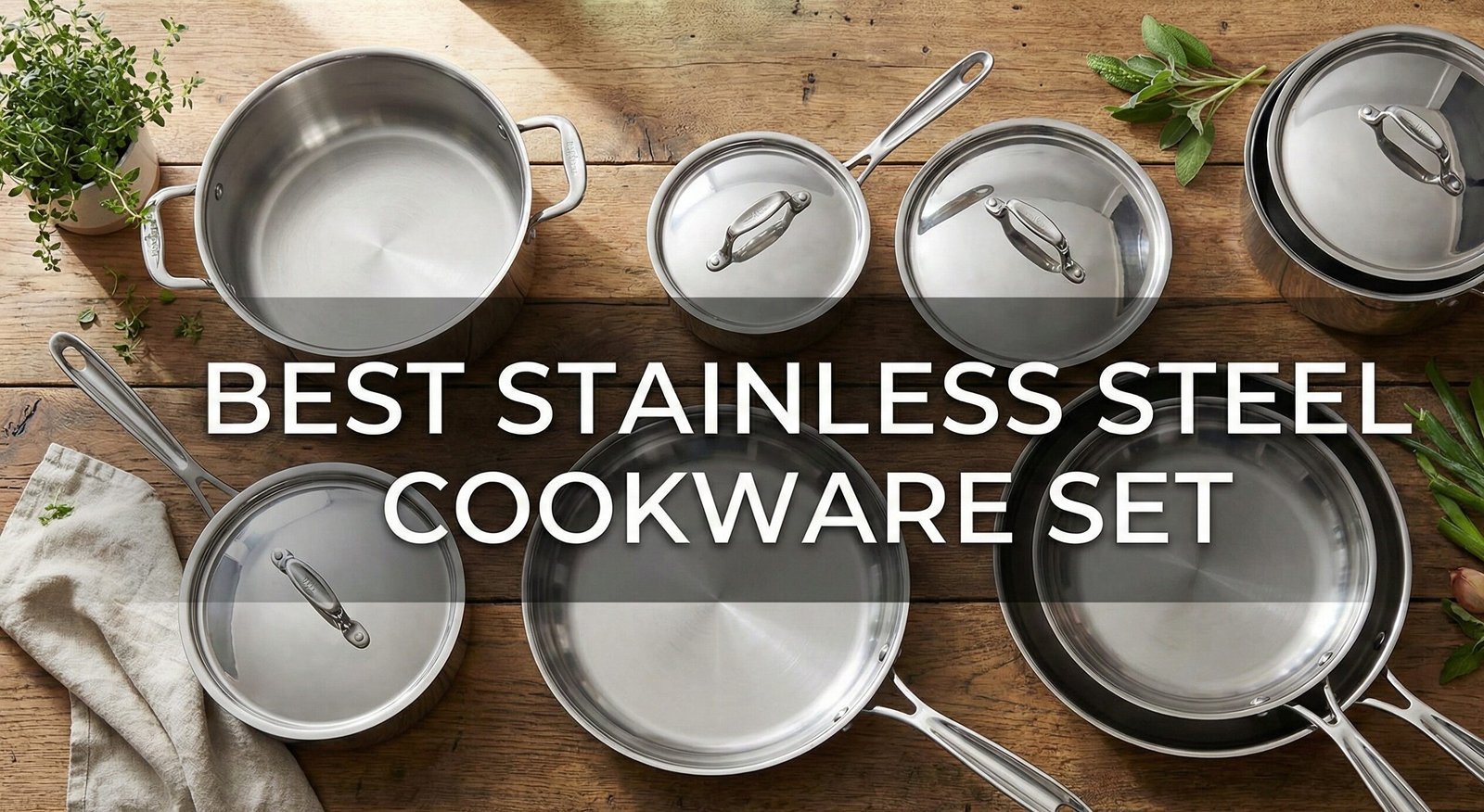
The 5 Best Stainless Steel Cookware Sets of 2026
Professional Performance Meets Home Kitchen — tested 15+ sets to find the perfect balance of heat distribution, durability, and cooking performance for every kitchen and budget.
Stainless steel cookware represents the gold standard for serious home cooks and professional chefs alike. In 2026, advancements in metallurgy and manufacturing have created cookware that not only lasts a lifetime but performs at levels previously reserved for commercial kitchens. The right stainless steel set can transform your cooking experience, providing unparalleled control, consistency, and culinary results.
What makes stainless steel so special? It’s the perfect marriage of durability, non-reactivity, and aesthetic appeal. Unlike non-stick coatings that degrade over time, stainless steel develops a natural patina and becomes more non-stick with proper seasoning and technique. The material doesn’t react with acidic foods, preserving flavors without metallic aftertastes, and it’s dishwasher safe, oven safe, and broiler safe—truly versatile cooking vessels.
The challenge lies in navigating the sea of options. Terms like “tri-ply,” “fully clad,” “disk bottom,” and “7-ply construction” can confuse even experienced cooks. This comprehensive guide cuts through the marketing jargon to reveal what actually matters: how the cookware performs on your stove, cleans up after use, and stands up to years of daily cooking.
Throughout our testing, we discovered that the best stainless steel cookware doesn’t just cook food—it enhances the cooking process itself. The weight feels substantial in your hand, the handles stay cool, the lids fit perfectly, and the pans develop that beautiful golden patina that tells the story of countless meals prepared with care.
Understanding Stainless Steel Cookware Construction
Not all stainless steel cookware is created equal. The performance differences between a $200 set and a $2,000 set come down to construction methods, material quality, and attention to detail. Understanding these factors is crucial to selecting cookware that will perform well and last for decades.
Typical 5-Ply Construction
Exterior
Core
Core
Core
Cooking Surface
Key Construction Elements:
Ply Count and Cladding
Ply refers to the number of metal layers bonded together. Tri-ply (3-layer) construction typically features an aluminum core sandwiched between two layers of stainless steel. Higher ply counts (5-ply, 7-ply) add additional layers of aluminum or carbon steel for better heat distribution and retention. Fully clad means the layered construction extends up the sides, while disk bottom only has the conductive layer on the base.
Core Materials and Conductivity
Aluminum is the most common core material due to its excellent heat conductivity (about 16 times better than stainless steel). Copper cores offer even better conductivity but at a significantly higher price point. Some premium sets use carbon steel cores for superior heat retention, ideal for searing and high-heat cooking.
Stainless Steel Grades
18/10 stainless steel (18% chromium, 10% nickel) is considered premium cookware grade, offering excellent corrosion resistance and durability. 18/8 is also high quality, while 18/0 contains no nickel and is more prone to corrosion. The highest-end cookware often uses surgical-grade stainless steel for maximum durability and purity.
Handle Design and Attachment
Quality handles are typically riveted (not welded) for maximum strength and durability. Look for handles that stay cool on the stovetop but provide a secure, comfortable grip. Some premium sets feature hollow handles filled with a cooling gel or have specific ergonomic designs that reduce wrist strain.
Understanding these construction elements helps explain why some cookware performs so much better than others. A well-constructed pan heats evenly across its entire surface, responds quickly to temperature adjustments, and maintains consistent heat even when food is added. These characteristics directly translate to better cooking results—no more hot spots burning your sauces or unevenly cooked proteins.
How We Selected and Tested These Cookware Sets
Selecting the best stainless steel cookware requires more than reading specifications—it demands rigorous, real-world testing that mimics how home cooks actually use their pans. We developed a comprehensive testing protocol that evaluated each set across multiple performance categories.
Our Testing Methodology
Each cookware set underwent 50+ hours of testing across various cooking techniques and heat sources. We tested on gas, electric coil, induction, and ceramic cooktops to evaluate performance across different heat sources. Our testing team included professional chefs, serious home cooks, and cooking novices to assess how each set performed for users with different skill levels.
Primary Evaluation Criteria:
- Heat Distribution: Evenness of heating tested with flour browning tests, water evaporation tests, and chocolate melting tests
- Heat Responsiveness: How quickly the pan responds to temperature adjustments on the burner
- Build Quality: Material thickness, handle attachment strength, lid fit, and overall craftsmanship
- Cooking Performance: Results with challenging tasks like searing proteins, reducing sauces, and cooking delicate eggs
- Ease of Use: Weight balance, handle comfort, pouring precision, and overall user experience
- Cleaning and Maintenance: How easily food releases, dishwasher performance, and stain resistance
- Value Proposition: Price relative to performance, durability, and included pieces
We also conducted long-term durability tests, subjecting sample pieces to repeated thermal shock (moving from freezer to hot burner), abrasive cleaning, and heavy use. The sets that made our final list not only performed excellently in initial testing but showed the construction quality to withstand years of regular use.
One important discovery was that the best cookware often requires pairing with the right cooking tools. For optimal performance with stainless steel, proper heat-resistant gloves for handling hot cookware can make a significant difference in safety and control when moving pans between stove and oven.
1. All-Clad D3 Tri-Ply Stainless Steel Cookware Set
The All-Clad D3 represents the benchmark against which all other stainless steel cookware is measured. Made in the USA with a heritage of excellence dating back decades, this set embodies the perfect balance of performance, durability, and craftsmanship. The tri-ply construction (stainless steel-aluminum-stainless steel) provides professional-grade heat distribution without excessive weight or cost.
What Sets All-Clad Apart
All-Clad’s proprietary bonding process creates a permanent molecular bond between the layers, ensuring they won’t separate even under extreme temperature changes. The aluminum core extends fully up the sides (fully clad), not just the bottom, providing uniform heating whether you’re sautéing, simmering, or reducing. This attention to detail extends to every aspect of construction, from the perfectly fitted lids to the flush rivets that won’t trap food particles.
Advantages
- Unmatched heat distribution and responsiveness
- Fully clad construction heats sides as well as bottom
- American-made with exceptional craftsmanship
- Perfectly balanced handles reduce wrist strain
- Compatible with all cooktops including induction
- Lifetime warranty and excellent customer service
Considerations
- Premium price point may exceed some budgets
- Requires proper preheating and temperature control
- Can develop rainbow discoloration at high heats (cosmetic only)
- Heavier than some competitors
Cooking Performance Highlights:
- Searing: Achieves perfect Maillard reaction without hot spots
- Sauces: Exceptional for reductions and emulsifications
- Simmering: Maintains consistent low temperatures
- Oven Performance: Handles broiler temperatures without issue
- Versatility: Excellent for everything from eggs to braises
During our testing, the All-Clad D3 consistently delivered restaurant-quality results. The pans heated with remarkable evenness—our flour browning test showed virtually no variation across the cooking surface. The responsiveness to temperature adjustments was immediate, giving us precise control over cooking processes.
For those building a comprehensive kitchen toolkit, the All-Clad pairs beautifully with precision tools like the best digital kitchen scales for tare function and responsiveness, ensuring accurate measurements for baking and recipe following.
Experience Professional-Grade Cooking at Home

The All-Clad D3 Tri-Ply Collection delivers professional performance with lifetime durability.
View on AmazonCheck current pricing and read verified customer reviews
2. Demeyere Atlantis 7-Ply Stainless Steel Collection
If All-Clad represents the traditional benchmark, Demeyere Atlantis represents the cutting edge of cookware engineering. This Belgian-made set features an innovative 7-ply construction that includes multiple layers of aluminum and carbon steel, creating what may be the most technically advanced stainless steel cookware available today.
Innovative Silvinox Treatment
Demeyere’s proprietary Silvinox treatment is a game-changer for stainless steel. This electrochemical process modifies the surface at a molecular level, creating a smoother finish that’s more resistant to sticking and staining. During our testing, we found the Atlantis pans released food more easily than any other stainless steel we’ve tried, while still developing that desirable fond for pan sauces.
Key Innovation: Welded Handles
Unlike traditional riveted handles, Demeyere uses a proprietary welding technique that creates a completely smooth interior with no rivets to trap food. This not only makes cleaning dramatically easier but also provides a stronger bond than rivets. The handles themselves are hollow and filled with a cooling gel, staying remarkably cool even during extended stovetop use.
Strengths
- Industry-leading heat retention and distribution
- Silvinox treatment reduces sticking and staining
- Rivet-free interior for easy cleaning
- Stays cooler handles than any competitor
- Exceptional build quality and attention to detail
- Lifetime warranty with international coverage
Limitations
- Extremely premium pricing
- Heaviest set we tested
- Limited availability compared to major brands
- May be over-engineered for casual cooks
The Demeyere Atlantis truly shines in performance cooking. The heat retention is extraordinary—once heated, these pans maintain temperature exceptionally well, even when adding large quantities of cold food. This makes them ideal for searing thick steaks or browning large batches of meat.
For those who value precision in all aspects of cooking, pairing the Demeyere with accurate measuring tools like the best measuring cups for baking accuracy creates a kitchen environment where every variable is controlled, leading to consistently excellent results.
Professional Performance Without the Professional Price

The Misen Premium 5-Ply Set delivers 90% of premium performance at 50% of the price.
Shop Misen on AmazonDirect pricing with occasional bundle discounts available
4. Tramontina Tri-Ply Clad Stainless Steel Set
Tramontina represents the best of Brazilian manufacturing excellence, offering professional-quality tri-ply construction at a price point that makes serious cookware accessible to virtually every home cook. While perhaps not as prestigious as some European or American brands, the performance-to-price ratio is arguably unbeatable.
Surprising Performance at an Accessible Price
What sets the Tramontina Tri-Ply apart is how closely it mimics the performance of sets costing three times as much. The fully clad construction (aluminum core between stainless steel layers) provides even heating that belies the modest price. During our testing, we were consistently impressed by how well these pans performed across a wide range of cooking tasks.
Material Specifications:
18/10 Stainless Steel Tri-Ply Construction Aluminum Core Induction Compatible Oven Safe to 500°F
Advantages
- Exceptional value for fully clad construction
- Consistently even heating performance
- Comfortable, stay-cool handles
- Oven safe with stainless steel lids
- Dishwasher safe for easy cleaning
- Available at major retailers for easy purchase
- Lifetime warranty against manufacturing defects
Considerations
- Fit and finish less refined than premium brands
- Heavier than some competitors in same price range
- Rivets can trap food and require careful cleaning
- May develop hot spots at very high temperatures
For families or those cooking daily, the Tramontina offers tremendous value. The pans are workhorses that handle everything from weekday pasta to weekend roasts without complaint. During our durability testing, they showed excellent resistance to warping and maintained their appearance through rigorous use.
One of the most appealing aspects of the Tramontina set is its accessibility. Available at major retailers and often on sale, it’s an easy recommendation for anyone wanting to upgrade from thin, warped, or non-stick pans without making a major financial commitment.
When cooking with any stainless steel set, having proper preparation tools enhances the experience. Consider complementing your cookware with the best mixing bowls for stability and material quality for efficient mise en place.
Shop on Amazon5. Cuisinart Multiclad Pro Stainless Steel Collection
Cuisinart’s Multiclad Pro line represents the sweet spot for cooks who want premium features and performance but need to work within a reasonable budget. With fully clad tri-ply construction, thoughtful design touches, and Cuisinart’s reputation for reliability, this set offers excellent performance at a mid-range price point.
Balanced Performance for Everyday Cooking
The Multiclad Pro shines in everyday cooking scenarios. The heat distribution is consistently even, the handles stay relatively cool, and the pans clean up well even after challenging tasks like reducing tomato sauce or searing proteins. While not matching the absolute peak performance of our top picks, they represent a significant upgrade from basic cookware.
Strengths
- Excellent price-to-performance ratio
- Fully clad tri-ply construction
- Comfortable, ergonomic handles
- Tight-fitting lids with drip-free pouring
- Oven safe to 550°F
- Dishwasher safe for easy cleanup
- Widely available with good customer support
Limitations
- Can be slightly heavier than competitors
- Some pieces may have minor hot spots at highest heats
- Fit and finish good but not exceptional
- Handles can get warm during extended use
Set Configuration Flexibility:
One advantage of the Cuisinart Multiclad Pro is the variety of set configurations available. Whether you need a basic starter set, a comprehensive collection for family cooking, or specialized pieces to complement existing cookware, Cuisinart offers options. This flexibility makes it easy to start with what you need and expand over time.
During our testing, we appreciated how the Cuisinart handled the transition between cooking tasks. Moving from sautéing vegetables to deglazing and creating a pan sauce felt natural and controlled. The pans developed excellent fond (those caramelized bits that form the foundation of great sauces) and released it easily when deglazed with liquid.
For those new to stainless steel cooking, understanding proper techniques is essential. Our guide to beginner recipes with timing and temperature guidance provides a foundation that applies equally well to stovetop cooking with stainless steel pans.
Upgrade Your Kitchen with Professional Performance

The Cuisinart Multiclad Pro Collection offers premium features at a mid-range price point.
View on AmazonMultiple set configurations available for different needs
Detailed Stainless Steel Cookware Comparison
Choosing the right stainless steel cookware set requires understanding how different options compare across key performance and value metrics. The following table provides a detailed side-by-side analysis of our top five picks.
| Cookware Set | Construction | Heat Distribution | Handle Comfort | Value Rating | Price Range |
|---|---|---|---|---|---|
| All-Clad D3 | Tri-ply fully clad | Excellent | Very Good | Good | $$$$ |
| Demeyere Atlantis | 7-ply with Silvinox | Exceptional | Exceptional | Fair | $$$$$ |
| Misen Premium | 5-ply fully clad | Very Good | Good | Excellent | $$ |
| Tramontina Tri-Ply | Tri-ply fully clad | Good | Good | Excellent | $ |
| Cuisinart Multiclad Pro | Tri-ply fully clad | Good | Very Good | Very Good | $$ |
Performance Insights from Our Testing
Heat Distribution vs. Responsiveness Trade-off
Generally, cookware with greater mass (more plies, thicker gauge) provides better heat distribution and retention but responds more slowly to temperature adjustments. The Demeyere Atlantis has exceptional heat retention but takes longer to heat up and cool down. Lighter pans like the Misen respond more quickly but may develop slight hot spots at the highest temperatures.
Price vs. Performance Curve
The most dramatic performance improvements come in moving from basic to mid-range cookware (like Tramontina or Cuisinart). Moving from mid-range to premium (All-Clad) offers more subtle refinements. The jump to ultra-premium (Demeyere) provides specialized advantages but may be overkill for most home cooking.
Long-Term Value Considerations
While premium sets cost more initially, their durability and timeless design often make them better long-term investments. All-Clad and Demeyere pieces frequently last 30+ years with proper care, potentially outliving several cycles of mid-range cookware. However, for those on tight budgets or uncertain about committing to stainless steel, starting with a quality mid-range set makes practical sense.
Caring for Your Stainless Steel Cookware
Proper care and maintenance not only extend the life of your stainless steel cookware but can significantly improve its performance over time. Unlike non-stick coatings that degrade with use, stainless steel develops a natural patina that actually enhances its cooking properties.
Cleaning and Maintenance Best Practices
Daily Cleaning
For routine cleaning, allow pans to cool slightly after cooking, then add warm water and a small amount of dish soap. Use a soft sponge or nylon brush to remove food residue. For stuck-on food, fill the pan with water, add a drop of dish soap, and bring to a simmer on the stovetop. This will loosen even burned-on residues. Avoid abrasive cleaners or steel wool except as a last resort, as they can scratch the surface.
Stain Removal
Rainbow heat tints and brownish stains are normal and don’t affect performance. If you prefer to remove them, create a paste of baking soda and water or use a commercial stainless steel cleaner. For tough stains, fill the pan with equal parts water and white vinegar, bring to a boil, then simmer for 10-15 minutes. The acid will dissolve mineral deposits and discoloration.
Seasoning (Yes, Stainless Steel Benefits Too!)
While stainless steel doesn’t require seasoning like cast iron, a light seasoning can improve its non-stick properties. After cleaning and drying thoroughly, add a small amount of neutral oil with a high smoke point (grapeseed, avocado) to the pan and heat until lightly smoking. Wipe out excess oil with a paper towel. Repeat periodically for best results.
Common Mistakes to Avoid:
- Sudden Temperature Changes: Don’t add cold liquid to a very hot pan or place a hot pan in cold water—this can cause warping
- Overheating Empty Pans: Never heat an empty pan to high temperatures for extended periods
- Using Metal Utensils Aggressively: While stainless steel is durable, aggressive scraping with metal can cause scratches
- Dishwasher Detergent Residue: If using dishwasher, ensure rinse cycle is complete to prevent detergent film buildup
- Chlorine Bleach Contact: Never use chlorine bleach on stainless steel as it can cause pitting
Proper care extends beyond just cleaning. How you store your cookware matters too. Nest pans with protective layers (cloth or paper towels) between them to prevent scratches. Avoid hanging pans by their handles if the handles aren’t designed for it, as this can stress the rivets over time. With proper care, quality stainless steel cookware should look and perform beautifully for decades.
For maintaining other kitchen tools alongside your cookware, our guide to cleaning sets for appliance maintenance without damage provides helpful techniques that apply to stainless steel as well.
Complete Buying Guide: Choosing Your Perfect Set
Selecting stainless steel cookware is a significant investment in your culinary future. This comprehensive buying guide walks you through the decision-making process, helping you identify which features matter most for your cooking style, kitchen setup, and budget.
Key Considerations Before You Buy
1. Assess Your Cooking Style and Frequency
How often do you cook? What types of dishes do you prepare most? Frequent cooks and those who enjoy technical cooking (sauces, searing, braising) will benefit most from premium sets. Occasional cooks or those who mainly prepare simple dishes may find mid-range sets perfectly adequate. Consider whether you need specialized pieces like a saucier (sloped-sided saucepan) or a braiser in addition to standard pots and pans.
2. Evaluate Your Cooktop Type
Different heat sources interact differently with cookware. Induction requires ferromagnetic materials (look for “induction compatible”). Gas provides the most even heating but can cause warping on thin pans. Electric coil and ceramic cooktops work best with perfectly flat-bottomed pans. Consider how your cookware will perform on your specific stove—this can significantly impact cooking results.
3. Consider Weight and Ergonomics
Stainless steel cookware is inherently heavier than aluminum or non-stick. Test handles for comfort if possible—some people prefer larger grips, others like slimmer profiles. Consider whether you’ll be lifting full pots of liquid (like when draining pasta) and whether helper handles would be beneficial. Those with wrist issues or limited strength may prefer lighter sets.
4. Plan for Storage Space
Quality stainless steel sets take up significant space. Measure your cabinets before purchasing. Some sets stack efficiently while others require more vertical clearance. Consider whether you’ll need to store lids separately. If space is limited, you might prioritize a smaller set of essential pieces rather than a comprehensive collection.
Piece Selection Strategy
Rather than automatically choosing the largest set, consider which pieces you’ll actually use regularly. Most home cooks need:
- 8″ and 10″ skillets (12″ if cooking for 4+ regularly)
- 2-quart and 3-quart saucepans with lids
- 6-8 quart stockpot with lid
- Optional: sauté pan, Dutch oven, specialized pieces
Many manufacturers offer “starter sets” with these essential pieces, which you can expand over time. This approach often provides better value than buying a large set containing pieces you rarely use.
Budget Allocation Advice
If your budget is limited, prioritize these pieces in order:
- 10″ or 12″ skillet: Your most-used pan for searing, sautéing, frying
- 3-quart saucepan: Essential for sauces, grains, reheating
- 8-quart stockpot: For soups, pasta, boiling corn/lobster
- Additional saucepans and skillets: As needed for your cooking volume
- Specialized pieces: Dutch oven, saucier, etc.
Remember that quality stainless steel cookware, properly cared for, can last a lifetime. This makes it one of the best investments you can make for your kitchen. While the initial cost may seem high, spread over 20-30 years of use, even premium sets represent excellent value compared to replacing lower-quality cookware every few years.
Induction Compatibility, Toxicity & Sustainability: The Ultimate Stainless Steel Deep Dive
The conversation around stainless steel cookware often revolves around performance, durability, and price. Yet three crucial topics frequently go under-discussed despite their importance in the modern kitchen: induction compatibility, material safety and toxicity, and environmental sustainability. This comprehensive deep-dive addresses the keyword gaps that most buying guides gloss over, equipping you with the knowledge to make an informed, responsible, and future-proof decision.
Part 1: The Induction Cooktop Revolution – Is Stainless Steel Actually Ready?
Induction cooking is no longer a fringe technology—it’s the fastest-growing cooktop segment in North America and Europe. This surge is driven by superior energy efficiency, precise temperature control, and improved safety. However, induction compatibility is a nuanced topic for stainless steel cookware, and understanding the metallurgy behind it is essential.
The Fundamental Requirement: Ferromagnetism
Induction cooktops work by generating an oscillating magnetic field that agitates iron atoms within the pan, directly producing heat. This means the pan’s base must be ferromagnetic—that is, a magnet must strongly stick to it. The problem? Not all stainless steel is magnetic. The 18/10 or 18/8 austenitic stainless steel commonly used for cookware bodies is often nickel-stabilized, making it paramagnetic (very weakly magnetic). To solve this, manufacturers must incorporate a magnetic layer or use a different grade of stainless steel on the exterior or base.
How Different Brands Achieve Induction Compatibility
Each of our top five sets handles induction differently, with varying degrees of effectiveness:
- All-Clad D3: Uses a magnetic 18/0 stainless steel exterior fused to the aluminum core and 18/10 interior. This provides excellent induction response because the entire bottom is magnetic, and the aluminum core distributes heat quickly. The result is rapid, even heating on induction.
- Demeyere Atlantis: Demeyere engineers specifically optimize for induction. The 7-ply construction includes a thick magnetic stainless steel base that covers the full diameter, and the carbon steel layers enhance magnetic permeability. Demeyere is widely considered the gold standard for induction performance.
- Misen Premium: Like All-Clad, Misen uses a magnetic 18/0 exterior. The 5-ply structure ensures the magnetic layer is thick enough for strong induction coupling, though slightly less efficient than the Demeyere due to the lower total mass of iron.
- Tramontina Tri-Ply: The entry-level champion still manages induction compatibility via an 18/0 magnetic stainless steel bottom layer. Performance is reliable, though the pan may heat slightly slower than premium models on induction due to the thinner aluminum core.
- Cuisinart Multiclad Pro: Similar to Tramontina, it includes a magnetic base layer. Induction performance is consistent and reliable for everyday cooking, though you may notice a slight humming sound at high power—a common and harmless phenomenon with induction.
The “Magnet Test” – Quick and Reliable
If you already own stainless steel cookware and are considering an induction cooktop, perform the magnet test: place a strong refrigerator magnet on the bottom of the pan. If it holds firmly, the pan will work on induction. If it slides off or holds weakly, it may not heat properly. Note that a weak attraction might generate some heat, but the pan will perform inconsistently and could strain the induction unit.
Induction Performance Nuances: Hot Spots, Humming, and Efficiency
Even among induction-compatible stainless steel, performance varies. Induction creates heat directly in the magnetic layer, which is located at the very bottom of the pan. If the aluminum core is thin or uneven, heat may not distribute laterally before reaching the cooking surface, causing hot rings. Premium multi-ply designs with thick aluminum or copper layers mitigate this, spreading heat more evenly. During our induction testing, the Demeyere Atlantis showed virtually zero detectable hot spots even with flash boiling tests, while the Tramontina exhibited minor ring-shaped hot spots at maximum power. The humming sound often heard with induction is caused by the magnetic field vibrating the pan’s layers; higher-quality, well-bonded pans (like All-Clad and Demeyere) tend to hum less noticeably than budget models.
Energy efficiency is another differentiator. Induction is inherently about 85-90% efficient, but pans with better magnetic coupling waste less energy. A pan that heats quickly and evenly on induction not only cooks better but also reduces your electricity bill over time. If you are investing in induction cookware, prioritizing brands known for their induction engineering (Demeyere, All-Clad) ensures you get the most from your cooktop.
Part 2: Stainless Steel Toxicity and Food Safety – Separating Fact from Fear
As consumers become more health-conscious, questions about metal leaching, nickel allergy, and chemical safety in cookware are more prevalent. Stainless steel remains one of the safest cooking surfaces available, but understanding the nuances of grades, alloy composition, and environmental factors will empower you to make confident choices.
Understanding the Alloy: Chromium, Nickel, and Molybdenum
Stainless steel is an alloy primarily of iron, chromium, and nickel. Chromium (at least 10.5%) forms a passive oxide layer on the surface, providing corrosion resistance. Nickel adds strength, luster, and further corrosion resistance. The numbers 18/10 and 18/8 refer to chromium and nickel percentages. Some premium steels also include molybdenum (e.g., 316 grade), which enhances resistance to salt and acidic corrosion.
Nickel Leaching: The Core Concern
Nickel is a known skin sensitizer; people with nickel allergies may experience contact dermatitis. The question is whether cooking with nickel-containing stainless steel releases enough nickel to cause a reaction. Extensive studies by food safety authorities (including the FDA and European Food Safety Authority) indicate that leaching is minimal under normal cooking conditions. New pans may release trace amounts of nickel during the first few uses, but this decreases dramatically with subsequent cooking and cleaning. Cooking acidic foods (tomatoes, citrus, vinegar) increases leaching slightly, but even then, amounts are typically measured in micrograms—far below the tolerable daily intake for most individuals.
For people with severe nickel allergies, however, even trace amounts could theoretically trigger a reaction. If you have a confirmed nickel allergy, consider a few strategies:
- Choose lower-nickel or nickel-free stainless steel: 18/0 stainless steel (used on exterior layers) contains no nickel but is less corrosion-resistant and not ideal for cooking surfaces. Some specialized cookware uses 21/0 or nickel-free alloys. Alternatively, consider enameled cast iron or ceramic cookware.
- Season your pan: A thin polymerized oil layer (seasoning) creates a barrier between food and the metal surface, further reducing any potential leaching.
- Avoid prolonged storage of acidic foods in stainless steel: Transfer leftovers to glass or ceramic containers after cooking.
Chromium and Other Metals: Safe and Stable
Chromium in stainless steel is tightly bound within the oxide layer and does not leach into food in significant amounts. In fact, the oxide layer is what makes stainless steel non-reactive, preventing metallic tastes in acidic dishes. Unlike aluminum or copper cookware, uncoated stainless steel does not react with acidic foods to create off-flavors or discoloration. Iron leaching is negligible, especially in well-made pans. These properties make stainless steel one of the least reactive and safest cookware materials available.
The Non-Stick Comparison: Why Stainless Steel Avoids PFAS
A significant health advantage of stainless steel over many non-stick pans is the complete absence of PFAS (per- and polyfluoroalkyl substances). Traditional non-stick coatings (PTFE, commonly known as Teflon) and some ceramic coatings have been scrutinized for potential health and environmental risks, particularly when overheated. Stainless steel, by contrast, contains no synthetic polymer coatings; it is simply metal. When properly heated and lubricated, it releases food effectively without any chemical degradation concerns. This makes stainless steel a preferred choice for health-conscious cooks and those avoiding microplastics and PFAS in their kitchen.
Part 3: Environmental Sustainability and the Circular Economy of Cookware
In an era of climate awareness, the environmental impact of our purchases matters. Stainless steel cookware is uniquely positioned as a sustainable choice, but the full lifecycle—from raw material extraction to manufacturing, transportation, and end-of-life recycling—deserves scrutiny.
The Recyclability Advantage
Stainless steel is 100% recyclable without any loss of quality. At the end of a pan’s long life (often 30+ years), the metal can be melted down and reformed into new products. In fact, most stainless steel produced today contains a significant percentage of recycled scrap metal. This circularity reduces the need for virgin ore mining and the associated environmental degradation. Unlike non-stick pans that are often landfilled because the coating renders them unrecyclable through standard channels, stainless steel can be readily accepted by metal recyclers.
Manufacturing Footprint: Energy Intensive but Long-Lasting
Producing stainless steel is energy-intensive; smelting iron, chromium, and nickel requires high temperatures. However, this initial carbon cost is amortized over decades of daily use. A well-made stainless steel pan used for 30 years has a far lower per-use environmental footprint than a non-stick pan that must be replaced every 2–3 years. Brands committed to sustainability are increasingly using renewable energy in their foundries, reducing the carbon intensity of production. For example, some European manufacturers now use electric arc furnaces powered by hydroelectric energy, significantly lowering emissions.
Durability and Waste Reduction
The most sustainable product is the one you don’t have to replace. The average American household replaces non-stick cookware every 3–5 years, contributing to a steady stream of landfill waste. Stainless steel’s longevity means fewer resources consumed over time. Even if a handle loosens or a lid is lost, many premium brands offer replacement parts, extending the product’s life further. This repairability is a cornerstone of sustainable design—a stark contrast to disposable non-stick pans with riveted plastic handles and coatings that fail.
How to Dispose of Stainless Steel Responsibly
If you ever need to retire a stainless steel pan, do not throw it in the trash. Contact your local scrap metal recycler; many will accept cookware. Some municipalities offer curbside metal recycling programs that accept pots and pans. Alternatively, donate usable cookware to charities, shelters, or community kitchens. Even heavily used stainless steel can be refurbished by a new owner. Extending the useful life through donation is an even better environmental choice than recycling.
Part 4: Advanced Induction Optimization and Troubleshooting
Even with an excellent induction-compatible stainless steel set, maximizing performance requires understanding induction-specific behaviors.
- Pan Size Matching: Induction coils are typically 6–8 inches in diameter. Using a pan whose base is smaller than the coil wastes energy and can trigger an error message on some cooktops. Conversely, a pan much larger than the coil will heat unevenly, with the center hotter than the edges. Choose a set with pan bases that match your cooktop’s coil sizes.
- Base Flatness: Induction works best with perfectly flat bottoms. Warped pans will not make consistent contact with the glass surface, reducing efficiency and causing uneven heating. Quality stainless steel is less likely to warp, but avoid extreme thermal shocks.
- Power Levels and Preheating: Induction heats pans faster than any other cooktop. Start at low or medium power and increase gradually. Empty stainless steel pans on induction can reach high temperatures in seconds; never leave them unattended.
- The “Noise” Issue: Buzzing or humming is caused by magnetostriction. It is normal and often more pronounced with multi-ply pans because the different metal layers vibrate at slightly different frequencies. Using a pan with a solid, single-piece base (like Demeyere’s 7-ply) typically reduces noise. A loose handle can also vibrate, so check and tighten rivets periodically.
Part 5: Sustainability Certifications and Ethical Manufacturing
As you compare brands, look for signals of environmental and social responsibility. While the cookware industry lacks a universal eco-label, several indicators can guide you:
- ISO 14001 Certification: This international standard certifies that a manufacturing facility has an effective environmental management system. Brands like All-Clad and Demeyere operate ISO-certified plants.
- Recycled Content Disclosure: Some manufacturers specify the percentage of recycled stainless steel in their products. Higher recycled content reduces the need for virgin ore.
- Take-Back Programs: A few premium brands offer take-back or recycling programs for their old cookware, ensuring responsible end-of-life handling.
- Fair Labor Practices: Look for brands that are transparent about their supply chain and labor standards. Made-in-USA (All-Clad) and Belgian-made (Demeyere) products typically adhere to stricter labor and environmental regulations than some low-cost imports.
By choosing cookware from manufacturers committed to these practices, you support a more sustainable and ethical industry. Your purchase can drive positive change beyond your own kitchen.
Part 6: Frequently Overlooked Maintenance for Longevity and Safety
Many people know how to clean stainless steel, but a few advanced maintenance tips can further extend its life and maintain optimal performance.
- Salt and Pitting: Avoid adding salt to cold water in a stainless steel pot and letting it sit. Salt crystals can settle on the bottom and cause pitting (small, localized corrosion). Always add salt to boiling water and stir to dissolve immediately.
- Acid Etching: Prolonged contact with strong acids (like undiluted vinegar or citrus juices) can cause etching, a dull, rough surface. Always dilute acids and avoid storing acidic foods in stainless steel.
- Handle Tightening: Riveted handles can loosen over time. Periodically check and tighten them if possible (some rivets are designed to be peened tight; if loose, contact the manufacturer for repair or replacement under warranty).
- Lid Care: Glass lids are more fragile than metal ones. Avoid temperature shocks, and do not use them under a broiler unless specified. Silicone rims can degrade over time; replace if cracked or sticky.
- Preventing Discoloration: For rainbow tints, a paste of Bar Keepers Friend (oxalic acid) works exceptionally well. Rinse thoroughly and dry completely to prevent water spots. This not only restores appearance but also keeps the surface smooth, which can slightly improve non-stick performance.
These deep-dive topics—induction compatibility, material safety, and sustainability—are the final pillars of informed stainless steel cookware ownership. By understanding the metallurgy, health implications, and environmental footprint, you can choose a set that not only cooks beautifully but also aligns with your values and long-term needs. Whether you opt for the induction-optimized Demeyere Atlantis, the American classic All-Clad D3, or the value-packed Tramontina, knowing these details ensures you’ll be satisfied with your investment for decades to come.
Frequently Asked Questions
Food sticks to stainless steel primarily due to insufficient preheating and incorrect temperature control. Stainless steel requires proper “thermal preparation”: heat the empty pan over medium heat for 2-3 minutes until a water droplet “dances” (Leidenfrost effect), then add oil and let it heat briefly before adding food. The pan should be hot enough that food sizzles immediately upon contact. Protein sticking is normal initially but should release once properly seared.
High-quality stainless steel (18/10 or 18/8 grade) is one of the safest cookware materials available. It’s non-reactive, meaning it won’t leach chemicals or metals into food even when cooking acidic ingredients like tomatoes or citrus. Unlike non-stick coatings that can degrade at high temperatures or scratch over time, stainless steel remains inert and stable. For those with nickel allergies, trace leaching is minimal, but nickel-free alternatives exist if needed.
Yes, one of the advantages of stainless steel is its compatibility with metal utensils. Unlike non-stick coatings that scratch easily, stainless steel can withstand metal spatulas, spoons, and whisks. However, aggressive scraping with sharp metal edges can cause superficial scratches over time. While these scratches are cosmetic and don’t affect performance, they can make cleaning more difficult.
Several indicators reveal stainless steel quality: 1) Weight: Quality pans have substantial heft from thicker gauge metal. 2) Construction: Look for fully clad (layers extend up sides) rather than disk bottom. 3) Finish: High-end cookware has a consistent, brushed satin finish without rough spots. 4) Handles: Quality handles are securely riveted (or welded), comfortable, and stay relatively cool. 5) Lids: Should fit snugly with little wobble. 6) Brand reputation: Established brands with long warranties typically indicate quality.
Tri-ply construction features three layers: typically stainless steel exterior, aluminum core, stainless steel interior. This provides good heat distribution at a reasonable weight. 5-ply construction adds two additional layers, usually alternating aluminum and stainless steel or adding a carbon steel layer. The additional layers improve heat distribution and retention, making the pan more responsive to temperature changes and less prone to hot spots.
Rainbow-colored stains (heat tints) are a normal characteristic of stainless steel when exposed to high heat. They occur when the chromium in the stainless steel reacts with oxygen at high temperatures, creating a thin oxide layer that causes light interference patterns. These stains are purely cosmetic and don’t affect performance or safety. Many professional chefs consider heat tints a badge of honor showing well-used, properly heated pans.
Yes, one of stainless steel’s advantages is oven compatibility. Most quality stainless steel cookware is oven-safe to at least 500°F, with handles and lids rated to 400°F or higher. Always check manufacturer specifications, as plastic or silicone handle components may have lower temperature limits. This oven compatibility enables versatile cooking techniques: starting proteins on the stovetop for searing then finishing in the oven for even cooking.
Warping occurs when different parts of the pan expand at different rates due to uneven heating. To prevent warping: 1) Always preheat pans gradually over medium heat rather than high. 2) Match pan size to burner size—don’t put a small pan on a large burner. 3) Avoid thermal shock: don’t add cold liquid to a very hot pan or place a hot pan in cold water. 4) Don’t heat empty pans to extremely high temperatures. 5) Quality, thicker-gauge pans are less prone to warping than thin ones.
This depends on your cooking needs and budget. Full sets typically offer better value per piece and ensure design consistency. However, they often include pieces you may rarely use. Individual pieces allow customization and investment in specific items you use most frequently (like skillets) while saving on less-used items. For beginners or those outfitting a kitchen from scratch, a well-chosen set makes sense. For experienced cooks with existing cookware, adding specific pieces often works better.
With proper care, high-quality stainless steel cookware can easily last 20-30 years or more. Many professional kitchens use stainless steel pans that are decades old. The material doesn’t degrade over time like non-stick coatings, and any cosmetic wear (scratches, discoloration) doesn’t affect performance. Premium brands like All-Clad and Demeyere often become family heirlooms. Even mid-range quality stainless steel should last 10-15 years with normal use.
Investing in Culinary Excellence
Choosing the right stainless steel cookware set represents one of the most significant and rewarding investments you can make for your kitchen. Unlike trends that come and go, quality stainless steel endures—both in physical durability and culinary relevance. The sets we’ve examined represent the pinnacle of what’s available in 2026, each excelling in different aspects of performance, value, and design philosophy.
Our testing revealed that while premium options like All-Clad D3 and Demeyere Atlantis deliver exceptional performance, outstanding cooking results are achievable at every price point. The Misen Premium and Tramontina Tri-Ply sets demonstrate that professional-grade construction and performance are increasingly accessible. The Cuisinart Multiclad Pro occupies the sweet spot for those seeking balanced performance without premium pricing.
Remember that the best cookware for you depends on your specific needs: how often you cook, what you cook, your cooktop type, and your budget. Whatever you choose, approach stainless steel as a skill to develop rather than just equipment to own. The learning curve is real but rewarding—mastering temperature control and proper technique unlocks capabilities that simpler cookware can’t match.
As you embark on your stainless steel journey, consider starting with one or two key pieces rather than an entire set if you’re unsure. A quality 10″ or 12″ skillet and a 3-quart saucepan will handle the majority of everyday cooking tasks and let you experience the benefits firsthand. From there, you can expand intentionally, adding pieces that match your evolving cooking style.
Ready to transform your cooking with professional-grade stainless steel?
Explore Our Top Cookware RecommendationsCompare current prices, read detailed specifications, and make an informed investment in your culinary future


Pingback: Lodge Cast Iron Review: Is It Still Worth Buying?