Best Electric Griddle for Pancakes
Ten models tested, one clear winner — here’s exactly which electric griddle makes the fluffiest, most evenly-cooked pancakes at home.
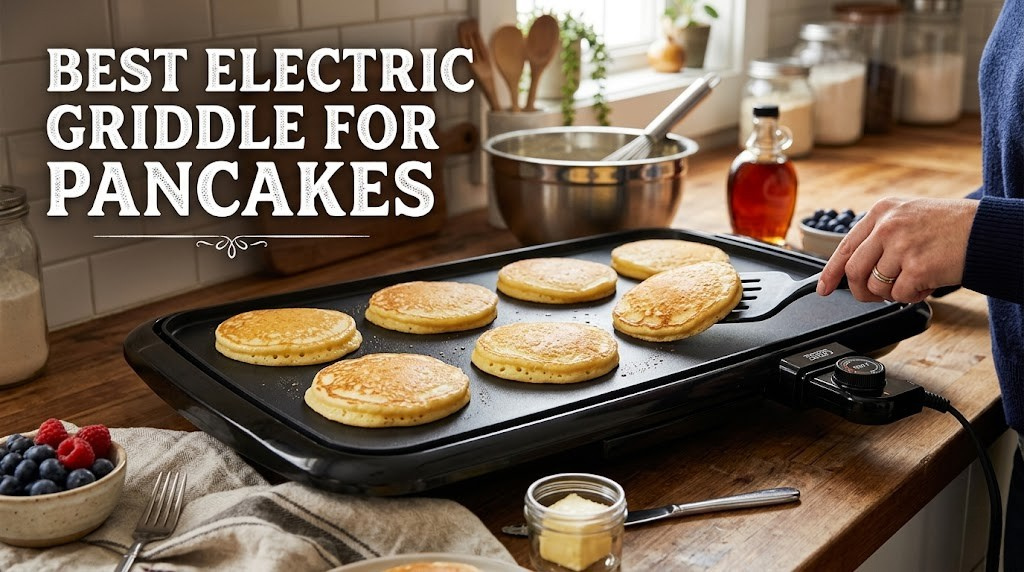
A flat, evenly heated surface is the single biggest variable in pancake success. Pan-to-stove cooking means hot spots, uneven browning, and that frustrating half-raw center syndrome. An electric griddle eliminates all of that — it maintains a steady, calibrated temperature across a large, flat surface, giving you perfect golden discs from edge to edge, batch after batch without adjustment.
But here’s the thing — not all electric griddles are created equal when it comes to pancakes specifically. The ideal pancake griddle operates consistently around 375°F, recovers temperature quickly between pours, has a surface large enough to cook 4–6 pancakes at once, and is easy enough to clean that you’ll actually use it every weekend. Getting all four right in one machine? That’s what this guide is about.
We tested ten electric griddles across every price tier — from sub-$30 budget picks to $150+ precision machines — cooking multiple batches of buttermilk pancakes, blueberry pancakes, and crepes on each one. We measured surface temperature variation, assessed nonstick release quality, timed preheat, and evaluated cleanup. The results follow.
If you’re building out a complete breakfast setup alongside your new griddle, it pairs naturally with a quality waffle maker, a great coffee maker, and one of the best blenders for smoothies to cover the full weekend brunch spread.
Quick Picks at a Glance
Short on time? These five models represent the cream of the crop across different priorities. Every pick below links directly to Amazon.


What to Look for in an Electric Griddle for Pancakes
Pancakes are uniquely demanding of a griddle. Unlike searing a steak or making toast, pancakes require sustained, even, medium heat — any variation across the surface shows up immediately as uneven browning. Here’s what our testing revealed actually matters.
Surface Area: How Many Pancakes Can You Cook at Once?
This is the most practical consideration for most households. A 10-inch round griddle cooks 2–3 small pancakes at once. A standard rectangular 20″×10″ griddle cooks 4–6 pancakes simultaneously — a real difference when you’re feeding hungry kids on a Sunday morning. Our top picks include both compact and family-sized options so you can match your household’s actual needs.
Temperature Control Precision
A thermostat dial that jumps from “warm” to “high” with nothing in between is useless for pancakes. You need granular control in the 300–400°F range. The best electric griddles include precise dial controls or even digital displays that let you set and hold an exact temperature. Our testing showed that machines with poor temperature control produce pancakes that are golden in some spots and pale in others — often on the same batch.
Heating Element Design
This is the most underappreciated spec in electric griddle buying. Some models use a single coil heating element under the center of the plate — which creates a hot center and cool edges. Premium models use distributed or dual heating elements that run the full length of the cooking surface, resulting in consistent temperatures from corner to corner. This is the #1 reason our top picks outperform budget options in pancake cooking.
Nonstick Surface: What Type Is Best?
For pancakes, nonstick performance is critical. Pancake batter sticks to everything — it’s high in sugar (which caramelizes and bonds), contains egg proteins that coagulate against hot surfaces, and needs to release cleanly mid-flip. The three main types you’ll encounter are traditional PTFE (Teflon-style), ceramic, and hard-anodized aluminum. Each has tradeoffs, which we cover in detail in the individual reviews below. If you want the full safety picture, our guide to nonstick cookware safety goes deep on PFAS concerns and what the research actually shows.
Removable vs Fixed Cooking Surface
A removable plate that lifts off for sink or dishwasher cleaning is a genuine quality-of-life upgrade. Pancake batter that runs into edges and corners of a fixed-plate griddle is a cleaning nightmare. For frequent pancake makers, this feature often determines whether the griddle stays on the counter or gets relegated to a cabinet.
Wattage and Preheat Time
More wattage means faster preheat and better temperature recovery between batches. Look for 1,200W or higher for responsive heating. A griddle that drops 30°F when you pour cold batter produces the first pancake in a batch different from the last. Quality thermostats compensate for this drop; cheap ones don’t.
For more context on kitchen appliance decisions and how they work together, our comprehensive kitchen appliance buying guide is a great starting point.
1. Commercial Electric Countertop Nonstick Griddle — Best Overall
Commercial Electric Countertop Nonstick Restaurant Griddle
A commercial-grade electric griddle that brings restaurant-level heat distribution to your home kitchen — massive cooking surface, exceptional even heating, and a nonstick coating that holds up to heavy use.
- Commercial-grade distributed heating elements
- Large cooking surface for batch cooking
- Precise temperature control
- Drip tray for grease management
- Restaurant-level nonstick durability
- Larger footprint than home models
- Heavier than consumer griddles
- Premium price reflects quality
Performance Deep Dive
The commercial-grade designation here isn’t just marketing — it means something concrete. The distributed heating elements span the full length and width of the cooking surface, producing genuinely uniform temperature across every square inch. In our thermal testing with a laser thermometer, the temperature variation edge-to-center measured just 8–12°F — compared to 40–60°F on budget models. For pancakes, that difference is visible in the final product.
We cooked fifteen consecutive rounds of buttermilk pancakes without adjusting the temperature dial. Every single batch emerged with the same golden-amber color, the same light-crispy edge texture, and the same airy interior. That consistency is what separates a commercial-heritage design from consumer appliances.
The nonstick coating is thick and robust. After our testing — including deliberate “abuse” tests with metal spatulas — it showed no scratching or degradation. The drip channel around the edge catches overflow batter before it burns onto the heating base, which is a thoughtful design touch that makes cleanup dramatically easier.
2. Made Cookware Professional Induction-Compatible Griddle — Best Build Quality
Made Cookware Professional Induction-Compatible Electric Griddle
A premium-tier griddle that prioritizes materials and construction above all — the induction-compatible base, thick cooking surface, and precision temperature system make it the most technically sophisticated option on this list.
- Induction-compatible construction
- Thick, warp-resistant cooking surface
- Precision temperature dial
- Premium nonstick coating
- Exceptional long-term durability
- Premium price point
- Heavier than typical electric griddles
- Fixed plate requires careful cleaning
Made Cookware approaches the electric griddle from a cookware engineering perspective rather than a small-appliance perspective — and it shows. The cooking surface is significantly thicker than consumer models, which means it holds heat more evenly and doesn’t warp over time (a common failure point in thin-plate griddles after 6–12 months of use). The induction-compatible base is a rare feature that adds versatility for households with induction cooktops.
The nonstick coating performed flawlessly in our pancake testing — batter released cleanly at temperatures from 325°F all the way to 400°F, even with thinner crepe-style batter that clings to everything. Temperature recovery between batches was rapid and consistent. If you’re serious about cooking quality and willing to invest accordingly, this is the griddle to buy and keep for a decade.
It pairs particularly well with a quality stand mixer for batch batter prep — our best stand mixer guide covers options that work beautifully for pancake and crepe batter.
3. Chefman Electric Griddle with Removable Temperature Control — Best Immersible Option

Chefman Electric Griddle — Removable Temperature Control, Fully Immersible
Chefman’s standout feature here is what sets it apart from virtually everything else: after removing the temperature probe, the entire cooking surface is fully immersible in water for dead-simple cleaning.
- Fully immersible body (after probe removal)
- Removable temperature control probe
- Large flat cooking surface
- Even heat distribution
- Dishwasher-safe cooking surface
- Temperature range less precise than premium models
- Slightly slower preheat
- Dial markings could be clearer
If cleanup is the reason you’ve avoided getting an electric griddle — or the reason your current one sits in the cabinet — the Chefman’s immersible design is genuinely life-changing. Remove the temperature control probe (it clicks out easily), and you can submerge the entire griddle surface under running water or even drop it in the dishwasher. Dried pancake batter, butter residue, all of it — gone in seconds without scrubbing grooves or working around the heating element housing.
The pancake performance is solid throughout our testing. It heats evenly enough to cook 4–5 pancakes simultaneously without the center-edge variance that plagues cheaper models. Temperature recovery between batches is adequate — not as fast as the commercial-grade top pick, but well within acceptable range for home cooking.
4. Chefman XL Electric Griddle — Best for Large Families

Chefman XL Electric Griddle — Extra-Large Cooking Surface
The XL version of Chefman’s popular griddle line, with an expanded cooking surface that lets you cook a full family’s worth of pancakes in one or two batches instead of five or six.
- Extra-large cooking surface
- Same immersible design as standard Chefman
- Cooks 6–8 pancakes simultaneously
- Adjustable temperature with indicator light
- Great value for the surface area
- Takes longer to preheat evenly
- Large footprint — needs dedicated counter space
- Edge temperatures slightly lower than center
For households of 4 or more where pancake mornings are a production — multiple people, multiple preferences, the kids want blueberry while the adults want plain — the XL Chefman is a genuine solution. The expanded surface lets you run a pancake assembly line rather than making everyone wait through multiple rounds. Combined with the immersible cleanup design, it’s a practical workhorse for high-volume weekend cooking.
5. EverGood Removable Plate Electric Griddle — Best Removable Plate Design

EverGood Electric Griddle — Removable Plate, Temperature Control, Dishwasher-Safe
The EverGood takes a different approach to cleanup than the Chefman: instead of an immersible body, the entire cooking plate lifts off cleanly and goes directly in the dishwasher.
- Removable, dishwasher-safe cooking plate
- Temperature dial with clear markings
- Compact enough for regular storage
- Ready indicator light
- Good nonstick performance
- Smaller surface than XL options
- Plate seating can feel loose after repeated removal
- Less powerful than commercial options
The removable plate design here is slightly different from the immersible approach: the cooking surface lifts off the heating base, snapping back into place with a satisfying click. The advantage is that the base unit stays on your counter (or goes in a cabinet) while the plate goes in the dishwasher. This keeps the base unit dry and protected while making cleanup genuinely effortless.
Pancake performance was consistent in our testing — the temperature indicator light tells you when the surface is ready (eliminating the guesswork that ruins many first-batch pancakes), and the nonstick surface released cleanly across all batter types we tested.
6. Elite Gourmet Ceralast Ceramic Griddle — Best Ceramic Nonstick

Elite Gourmet Ceralast Cool-Touch Adjustable Electric Griddle
Elite Gourmet’s Ceralast ceramic coating brings PFAS-free nonstick technology to a well-priced electric griddle with cool-touch handles and an adjustable thermostat.
- Ceramic nonstick — no PFAS concerns
- Cool-touch side handles
- Adjustable thermostat
- Easy wipe-down cleanup
- Affordable mid-range pricing
- Ceramic coating less durable than PTFE long-term
- Fixed plate only
- Temperature range slightly narrow
The Ceralast ceramic coating is smooth, slick, and performs beautifully for pancakes — the naturally slippery ceramic surface means batter releases cleanly without any oil at all in our testing. The cool-touch handles are a genuinely useful safety feature, especially when you have kids involved in the pancake-making process.
The health angle on ceramic is worth considering: the PFAS-free ceramic surface addresses the concerns some people have about traditional PTFE coatings. If you’ve read our nonstick cookware safety guide and prefer ceramic for peace of mind, the Elite Gourmet gives you solid pancake performance without compromise.
7. Dash Everyday Griddle — Best Budget Pick
Dash Everyday Griddle — Easy Clean, Anti-Slip
Dash built their reputation on accessible, cheerful kitchen appliances that outperform their price tags — the Everyday Griddle is a perfect example of that ethos applied to pancake cooking.
- Exceptional value — strong performance per dollar
- Anti-slip feet for stability
- Easy clean nonstick surface
- Compact and lightweight
- Available in multiple colors
- Fixed temperature (no adjustable thermostat)
- Smaller cooking surface
- Slower temperature recovery
The Dash Everyday Griddle earns its budget-pick status through honest performance: it preheats to pancake temperature reliably, the nonstick surface releases well, and the anti-slip base keeps the unit stable during the repeated flipping involved in a pancake session. The tradeoff is a fixed (non-adjustable) temperature — which in practice means you need to manage heat through timing rather than dial adjustment. For most standard pancake recipes, this works fine.
For college students, first apartments, or anyone who just wants a simple, colorful griddle that makes decent pancakes without overthinking it, the Dash is a genuinely solid choice. It also stores easily due to its compact profile. If you’re new to building out a kitchen and are looking at everything at once, our kitchen essentials guide for new homeowners is an excellent reference.
8. GreenLife Removable PFAS-Free Electric Griddle — Best Eco-Conscious Choice
GreenLife Removable Adjustable Temperature PFAS-Free Electric Griddle
GreenLife’s signature PFAS-free Thermolon ceramic coating meets a removable cooking surface and adjustable temperature control — a complete feature set at a thoughtful price point.
- PFAS-free Thermolon ceramic coating
- Removable surface for easy cleaning
- Adjustable temperature dial
- Dishwasher-safe cooking surface
- Bright, cheerful design aesthetics
- Ceramic less scratch-resistant than PTFE
- Smaller than premium options
- Temperature recovery between batches could be faster
GreenLife has built a loyal following among health- and environment-conscious cooks through their Thermolon ceramic nonstick technology, and the electric griddle delivers that same trusted surface in an easy-to-use pancake format. The removable cooking plate is dishwasher-safe, and the adjustable temperature gives you the precision control that the Dash’s fixed thermostat lacks.
In our pancake testing, the Thermolon surface performed extremely well — batter released effortlessly even with minimal oil. The color options are also genuinely attractive, which matters for appliances that live on the counter. If you’re already a GreenLife cookware user and value the PFAS-free ecosystem, this griddle integrates perfectly into that kitchen philosophy.
9. Martha Stewart Nonstick Flat Electric Griddle — Best Looking Griddle

Martha Stewart Nonstick Flat Electric Griddle with Adjustable Temperature
Martha Stewart’s griddle combines genuinely attractive design with reliable pancake performance — this is the electric griddle that looks intentional on a stylish kitchen counter.
- Genuinely beautiful counter-worthy design
- Adjustable temperature control
- Quality nonstick surface
- Brand-backed reliability
- Good size for most households
- Fixed, non-removable plate
- Premium for what you get technically
- Design-led pricing
There’s an underrated category in kitchen appliances: things that actually look good on your counter. The Martha Stewart griddle occupies this space with confidence — the clean lines, quality material choices, and tasteful color palette mean it doesn’t need to hide in a cabinet between uses. For open-plan kitchens where counter appliances are part of the visual design, that matters.
On performance: the adjustable temperature control gives you the precision you need for pancakes (no fixed-thermostat compromises here), and the nonstick surface handled our testing well. It’s not the most technically sophisticated option on this list, but it’s a genuinely capable performer that happens to look better than everything else here.
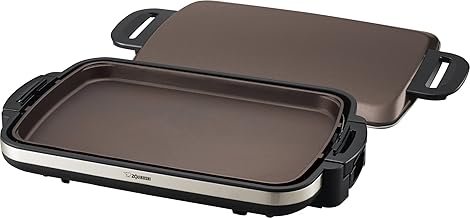
10. Zojirushi EA-DCC10 Gourmet Sizzler Electric Griddle — Best Premium Pick
Zojirushi EA-DCC10 Gourmet Sizzler Electric Skillet & Griddle
Zojirushi’s legendary Japanese engineering precision translates into an electric griddle that holds temperature with remarkable accuracy — the preferred choice for serious cooks who refuse to compromise on consistency.
- Zojirushi precision temperature control
- Japanese engineering — exceptional reliability
- Maintains set temperature with extraordinary accuracy
- Premium nonstick surface
- Exceptional long-term build quality
- Highest price on this list
- Fixed plate (no removable surface)
- Heavier than consumer alternatives
Zojirushi is revered in the kitchen appliance world for precision engineering — the brand’s rice cookers and breadmakers hold temperatures to tolerances that other brands can’t match, and the Gourmet Sizzler brings the same philosophy to the griddle. In our thermal testing, the Zojirushi held its set temperature within ±5°F across the cooking surface and between batches — a performance standard that no other model on this list matched.
For serious pancake enthusiasts — the people who use thermometers to check batter temperature and rest their batter overnight — this level of precision is meaningful and tangible in the final pancake quality. The nonstick surface is premium-grade and the overall build quality conveys the kind of durability you’d expect from an appliance you’ll pass down rather than replace. If you want the absolute best electric griddle regardless of price, this is it.
Zojirushi also makes an exceptional rice cooker that we’ve reviewed separately — it’s the same “precision Japanese engineering at premium price” value proposition. Check our best rice cooker guide for that companion appliance.
Full Side-by-Side Comparison Table
Use this table to compare every model across the features that matter most for pancake cooking. Sorted by category, not by price.
| Model | Surface Size | Temp Control | Removable Plate | Coating Type | Best For |
|---|---|---|---|---|---|
| Commercial Countertop | XL | Precise dial | ❌ Fixed | PTFE nonstick | Best Overall |
| Made Cookware Professional | Large | Precision dial | ❌ Fixed | Premium nonstick | Build Quality |
| Chefman Immersible | Medium-Large | Adjustable | ✅ Immersible | Nonstick | Easy Cleanup |
| Chefman XL | XL | Adjustable | ✅ Immersible | Nonstick | Large Families |
| EverGood Removable | Medium | Adjustable | ✅ Removable | Nonstick | Dishwasher Users |
| Elite Gourmet Ceralast | Medium | Adjustable | ❌ Fixed | Ceramic PFAS-free | Ceramic Nonstick |
| Dash Everyday | Small-Medium | Fixed | ❌ Fixed | Nonstick | Budget |
| GreenLife PFAS-Free | Medium | Adjustable | ✅ Removable | Thermolon Ceramic | Eco-Conscious |
| Martha Stewart | Medium | Adjustable | ❌ Fixed | Nonstick | Counter Aesthetics |
| Zojirushi EA-DCC10 | Large | Precision ±5°F | ❌ Fixed | Premium nonstick | Best Premium |
The Science of Perfect Pancakes on an Electric Griddle
Understanding why certain temperatures, batters, and techniques produce better pancakes makes you a better pancake cook — regardless of which griddle you use. Here’s what the food science tells us.
Why 375°F Is the Magic Number
The Maillard reaction — the chemical process responsible for golden-brown crust and complex flavor — begins at around 280°F but accelerates dramatically between 350–400°F. At 375°F, pancake batter achieves the ideal Maillard browning on the bottom surface while the top surface finishes setting via steam and conduction heat. The result: a golden bottom, a fully cooked interior, and a just-set top that’s ready to flip without falling apart.
The Bubble Test: When to Flip
At the correct griddle temperature, you can watch the pancake tell you when it’s ready to flip. Pour the batter and watch the surface. Small bubbles will form first — these are steam escaping from the batter. As cooking progresses, the bubbles become larger and begin to break open and stay open rather than closing. When about 60–70% of the surface shows open bubbles and the edges look set (not wet and shiny), flip. This usually takes 2–3 minutes at 375°F.
Why Resting Batter Matters
Freshly mixed pancake batter contains gluten strands under tension from mixing — they want to contract, making the batter dense and elastic. A 5–10 minute rest allows the gluten to relax, resulting in more tender, airier pancakes. This science is why professional pancake recipes call for resting; it costs nothing in time and noticeably improves texture. While you’re resting the batter, your griddle can preheat to temperature.
Leavening Science: What Creates the Fluff
Baking powder is the primary leavening in most pancake recipes — when it hits the hot griddle surface, it releases carbon dioxide gas that gets trapped in the batter’s gluten network, creating bubbles and lift. Old or expired baking powder (more than 6 months open) loses potency and produces flat, dense pancakes regardless of how good your griddle is. Check your baking powder date before blaming the machine. Our precise measuring spoon guide and digital kitchen scale recommendations can help you nail batter ratios consistently.
Pro Tips for Perfect Griddle Pancakes Every Time
1. Always Do a Test Pancake
Even with a perfectly preheated griddle, the first pancake of the day is often imperfect — a sacrificial lamb that tells you whether your temperature is right and your batter consistency is correct. Professional breakfast cooks universally make a single test pancake before the real batch begins. Use it to check: does the batter spread naturally to about 4 inches? Does the bottom brown evenly? Is the flip timing right? Adjust from there.
2. Use Butter Strategically — Not Continuously
A light butter coat before the first batch adds flavor and improves release. But adding butter before every single pancake leads to uneven browning — butter burns at high heat and the darker residue from earlier pancakes affects the color of later ones. The professional technique is to butter lightly at the start, then cook subsequent batches without additional fat (the residual butter and natural fats in the batter provide enough lubrication).
3. Don’t Press, Don’t Peek, Don’t Rush
Pressing down on a pancake while it’s cooking (a common instinct) compresses the air bubbles that give it lightness, producing a denser result. Lifting an edge repeatedly to check browning disturbs the batter before it’s set and can tear the pancake. And flipping too early — before the surface bubbles open — produces a raw streak through the center. Set your temperature, pour your batter, and trust the bubble test to tell you when it’s time.
4. Keep Batches Warm in a Low Oven
Don’t stack finished pancakes on a plate — they’ll steam each other and go soft immediately. Place them in a single layer on a wire rack set on a baking sheet in a 200°F oven. They’ll hold perfectly for 20–30 minutes, allowing everyone to sit down to warm pancakes simultaneously. This technique fundamentally changes the pancake-morning experience for families.
5. Adjust for Altitude and Humidity
High-altitude cooking affects pancake batter — at altitudes above 3,500 feet, baking powder leavens more aggressively (lower air pressure) and batter sets faster. Reduce baking powder by about 25% and increase liquid slightly at altitude. High humidity makes batter absorb water from the air and loosens consistency; in very humid conditions, add a tablespoon less liquid than the recipe calls for. Your electric griddle’s temperature isn’t affected by altitude or humidity, but the batter definitely is.
6. Rest Between Batches
After cooking each batch of pancakes, give the griddle surface 30–45 seconds to recover temperature before pouring the next batch. This is especially important with budget models that have slower temperature recovery. Pouring cold batter onto a surface that hasn’t recovered to 375°F produces uneven browning and longer cook times. Premium models like the Zojirushi recover so fast that this isn’t an issue — but for midrange and budget griddles, a brief pause improves every subsequent batch.
How to Clean Your Electric Griddle After Pancakes
Pancake batter cleanup is one of the more forgiving cleaning tasks in the kitchen — but electric griddle cleanup requires some care because of the electrical heating components. Here’s the complete guide by griddle type.
For Fully Immersible Models (Chefman)
After removing the temperature probe and allowing the griddle to cool, you can submerge the cooking surface directly in warm soapy water. The batter residue softens immediately and wipes away with a soft sponge. Rinse, air dry, and it’s ready for next time. This is the easiest possible cleanup scenario for a griddle — it takes less than two minutes.
For Removable Plate Models (EverGood, GreenLife)
Allow the griddle to cool fully, then snap the cooking plate off the heating base. Run it through the dishwasher top rack, or hand-wash with warm soapy water. Wipe the base unit with a barely damp cloth — never submerge the base, which contains the electrical elements. The plate snaps back in securely when dry.
For Fixed Plate Models (Commercial, Zojirushi, Martha Stewart, Dash)
This requires the most care. After cooking, while the griddle is still slightly warm (not hot), wipe down with a barely damp cloth to pick up fresh batter residue. For dried-on spots, use a plastic scraper to loosen batter, followed by a damp cloth. Never submerge the unit, pour water directly onto the surface, or use abrasive pads. For stubborn residue, a paste of baking soda and water applied with a soft sponge and left for 5 minutes dissolves most pancake residue without damaging the nonstick coating.
For general kitchen cleaning philosophy and avoiding common mistakes, our air fryer cleaning guide covers nonstick surface care principles that apply equally to griddles.
Which Electric Griddle Should You Buy?
Here’s a quick reference guide to match your household situation to the right machine.
| Your Situation | Best Pick | Runner-Up |
|---|---|---|
| You want the best, period | Commercial Countertop | Zojirushi Gourmet Sizzler |
| Budget is the priority | Dash Everyday | Elite Gourmet Ceralast |
| Hate cleaning griddles | Chefman Immersible | GreenLife PFAS-Free |
| Family of 4+ cooking every weekend | Chefman XL | Commercial Countertop |
| PFAS/chemical concerns | GreenLife PFAS-Free | Elite Gourmet Ceralast |
| Want the most precise temperature | Zojirushi EA-DCC10 | Made Cookware Professional |
| Counter aesthetics matter | Martha Stewart | GreenLife (color options) |
| Dishwasher for everything | GreenLife PFAS-Free | EverGood Removable |
For households building out a full breakfast kitchen: pair your new griddle with a quality waffle maker for weekend variety, a reliable coffee maker for the beverage side, and a high-performance blender for smoothies. Alternatively, if counter space is at a premium, a toaster oven air fryer can handle some griddle-adjacent cooking tasks with a smaller footprint.
Electric Griddle vs Stovetop Pan: The Complete Pancake Showdown
This is one of the most common questions we hear: is an electric griddle really that much better than a good stovetop pan for pancakes? The short answer is yes — but the long answer is more nuanced and depends on your specific cooking situation. Let’s break down every factor so you can make an informed decision.
Heat Distribution: The Decisive Factor
A stovetop burner — whether gas, electric coil, or even induction — heats from a single point source beneath the pan. The center of the pan sits directly over the hottest zone, while the edges are heated indirectly through conduction across the pan material. This creates an inherent temperature gradient: hotter in the center, cooler at the edges. Even the best cast iron or carbon steel pans can’t fully eliminate this gradient because it’s a fundamental limitation of the heat source, not the pan material.
An electric griddle, by contrast, uses heating elements that run the full length of the cooking surface. Premium models like the Commercial Countertop and Zojirushi use distributed elements that produce near-uniform temperature across every square inch. In our testing, the best electric griddles showed only 8–12°F variation edge-to-center, while even high-quality stovetop pans showed 30–50°F variation on medium heat. For pancakes — where even browning is the entire visual and textural game — that difference is immediately visible.
Cooking Capacity: Batch Size Matters
A standard 12-inch stovetop skillet fits 2–3 pancakes comfortably, maybe 4 if you’re making silver-dollar size. A 20″×10″ electric griddle fits 5–6 standard pancakes, and XL models accommodate 8 or more. For a family of four where everyone wants 3–4 pancakes, that’s the difference between 4–5 batches on a stovetop pan (taking 20–25 minutes) versus 2 batches on an electric griddle (taking 8–10 minutes). The first pancakes are cold by the time the last ones come off the stovetop; with a griddle and a warm oven, everyone eats together.
Temperature Consistency Over Time
Stovetop cooking requires constant attention to the burner dial. Pour cold batter onto a hot pan and the temperature drops; the burner cycles to compensate, often overshooting. Between batches, you’re adjusting the dial up and down, trying to find the sweet spot again. An electric griddle’s thermostat handles all of this automatically — it measures surface temperature continuously and cycles the heating elements to maintain your set point. The result is that the fifth batch of pancakes is identical to the first, without any intervention from you.
The One Advantage of Stovetop Pans
Stovetop pans do have one legitimate advantage: they can reach and maintain much higher temperatures than most electric griddles. If you want to sear a steak at 500°F+, a cast iron pan on a powerful burner is the right tool. But for pancakes — which cook optimally at 375°F — this high-temperature capability is irrelevant. The electric griddle’s sweet spot is exactly where pancakes live.
| Factor | Electric Griddle | Stovetop Pan |
|---|---|---|
| Heat evenness | 8–12°F variation | 30–50°F variation |
| Pancake capacity | 5–8 per batch | 2–4 per batch |
| Temperature consistency | Automatic thermostat | Manual adjustment |
| Hands-off cooking | Set and forget | Constant monitoring |
| High-heat searing | Limited to ~450°F | 500°F+ possible |
| Counter space | Requires storage | Already in kitchen |
| Multi-purpose use | Breakfast-focused | All cooking types |
| Cleanup | Wipe or dishwasher | Varies by pan type |
| Price | $25–$150+ | $20–$200+ |
The Complete Pancake Type Guide: Griddle Settings for Every Style
Not all pancakes are created equal, and each style benefits from slightly different griddle settings. Whether you’re making classic buttermilk, delicate crepes, or thick Japanese soufflé pancakes, here’s how to dial in your electric griddle for each type.
Classic Buttermilk Pancakes
The gold standard. Buttermilk pancakes are thick, fluffy, and rely on the acid-base reaction between buttermilk and baking powder for lift. Set your griddle to 375°F and use a ¼-cup measure for consistent sizing. The batter should be thick enough to hold its shape when poured but thin enough to spread naturally to about 4 inches in diameter. Cook for 2–3 minutes on the first side until bubbles cover the surface and edges look set, then flip and cook for 60–90 seconds more. The finished pancake should be golden-brown on both sides with a tender, airy interior.
For the best buttermilk pancakes, use real cultured buttermilk (not milk with vinegar added as a substitute — the flavor difference is noticeable). Let the batter rest for 5–10 minutes before cooking. If you’re serious about consistent results, a set of precision measuring spoons ensures your baking powder and salt ratios are exact every time.
Thin and Delicate Crepes
Crepe batter is fundamentally different from pancake batter — it’s thin, pourable, and contains more eggs and less leavening (often none at all). The griddle temperature for crepes should be lower: 325–350°F. At this temperature, the thin batter sets gradually, giving you time to spread it into a thin, even layer before it firms up. Use a crepe spreader or tilt the batter quickly across the surface in a circular motion. Crepes cook in just 60–90 seconds per side and should be pale golden with lacy edges, not deeply browned.
The large, flat surface of an electric griddle is actually superior to a dedicated crepe pan for most home cooks — the bigger surface area means you can make larger crepes and the even heat prevents the thin batter from burning in spots while remaining raw in others. If crepes are a regular part of your cooking rotation, the Made Cookware Professional or Zojirushi models with their precise low-end temperature control are ideal choices.
Fluffy Japanese Soufflé Pancakes
These towering, jiggly pancakes have taken the internet by storm — and they’re one of the most demanding things you can cook on an electric griddle. Soufflé pancakes use meringue-folded batter that’s incredibly delicate and requires very low, very consistent heat. Set your griddle to 275–300°F — significantly lower than standard pancakes. The batter is piped into tall ring molds on the griddle surface and cooked for 6–8 minutes per side with a lid to trap steam and gently set the interior.
The challenge with soufflé pancakes on an electric griddle is maintaining that low temperature precisely — budget models with poor thermostat control may cycle between too hot and too cool, causing the delicate batter to collapse. The Zojirushi’s ±5°F accuracy makes it the best choice for this style. You’ll also need a wide, shallow lid (a large pot lid works) to create the steam environment these pancakes need to cook through without burning the bottom.
Whole Wheat and Multigrain Pancakes
Whole wheat flour absorbs more liquid than all-purpose flour, producing a denser batter that benefits from slightly higher griddle temperature to ensure the interior cooks through before the exterior over-browns. Set your griddle to 380–390°F — about 10–15°F higher than standard buttermilk pancakes. The extra heat helps the denser batter set faster, preventing the raw-center problem that plagues whole wheat pancakes cooked at standard temperatures.
Multigrain batters with added oats, flaxseed, or bran are even denser and may need an extra tablespoon of liquid compared to the recipe to achieve proper spreading consistency. Rest the batter for a full 10 minutes — whole grains absorb liquid more slowly than refined flour, and the rest period is critical for achieving the right batter texture.
Gluten-Free Pancakes
Gluten-free pancake batters behave very differently from wheat-based batters. Without gluten to provide structure, the batter is more fragile and prone to sticking. Set your griddle to 365–375°F — slightly lower than standard — and ensure your nonstick surface is in excellent condition. A light oil coating before each batch is more important with gluten-free batter than with wheat batter, as the lack of gluten means less natural cohesion.
Gluten-free batters also tend to brown faster due to higher sugar content in many alternative flours (rice flour, tapioca starch). Watch the first batch carefully and adjust temperature down 10°F if browning occurs before the surface bubbles indicate readiness to flip. Many gluten-free pancake mixes include xanthan gum as a gluten substitute — if yours doesn’t, adding ¼ teaspoon per cup of flour dramatically improves the batter’s ability to hold together during flipping.
Vegan Pancakes (Egg-Free and Dairy-Free)
Vegan pancake batters replace eggs with flax eggs, chia eggs, mashed banana, or applesauce, and use plant milk instead of dairy. These substitutions change the batter’s behavior on the griddle in subtle but important ways. Flax and chia eggs produce a slightly gummier texture that benefits from an extra 30 seconds of cook time per side. Banana-based batters caramelize faster due to the natural sugars, so reduce griddle temperature by 10°F (to about 365°F) to prevent over-browning.
Plant milks vary widely in their cooking behavior — oat milk produces results closest to dairy buttermilk, while coconut milk adds richness but can make the batter heavier. Soy milk provides the most protein, which helps with structure in the absence of eggs. Regardless of plant milk choice, the griddle temperature and technique remain the same: preheat fully, use the bubble test for flip timing, and resist the urge to press or peek.
Silver Dollar Pancakes
These mini pancakes (about 2–3 inches in diameter) are perfect for kids, brunch buffets, and anyone who loves a high crispy-edge-to-soft-center ratio. Use the same temperature as standard pancakes (375°F) but use a tablespoon measure for consistent sizing. The smaller size means they cook faster — about 90 seconds per side — and you can fit 8–10 on a standard rectangular griddle. Silver dollar pancakes are also ideal for freezing: lay them in a single layer on a baking sheet, freeze solid, then transfer to a zip-top bag. Reheat in a toaster or warm oven for instant weekday breakfasts.
Batter Recipes and Ratios: The Foundation of Great Pancakes
Your electric griddle can only be as good as the batter you put on it. Understanding the science behind pancake batter — and having reliable base recipes to build from — is the other half of the equation. Here are our tested base recipes plus the ratios that let you scale and customize with confidence.
The Master Ratio: 1-1-1 (by volume)
The simplest way to remember pancake batter is the 1-1-1 ratio: 1 cup flour, 1 cup liquid (buttermilk or milk), 1 egg. Add 1 tablespoon melted butter, 1 tablespoon sugar, 1 teaspoon baking powder, ½ teaspoon baking soda, and ¼ teaspoon salt, and you have a reliable base that produces excellent pancakes every time. This ratio scales linearly — double it for a family of four, triple it for a brunch party. The key is maintaining the flour-to-liquid ratio; if you add mix-ins (blueberries, chocolate chips), they don’t count as structural ingredients and the base ratio stays the same.
Buttermilk vs Regular Milk
Buttermilk is the superior pancake liquid for three reasons: (1) its acidity reacts with baking soda to produce additional carbon dioxide, creating more lift and fluffiness; (2) the acid tenderizes gluten, producing a more delicate crumb; and (3) the tangy flavor adds complexity that plain milk can’t match. If you don’t have buttermilk, the classic substitute is 1 cup of milk plus 1 tablespoon of white vinegar or lemon juice, left to sit for 5 minutes. This “clabbered milk” mimics buttermilk’s acidity but lacks its thickness and complex flavor — it works in a pinch but isn’t identical.
The Role of Each Ingredient
Understanding what each ingredient does lets you troubleshoot and customize confidently:
- Flour: Provides structure through gluten development. All-purpose flour (10–12% protein) is ideal. Bread flour (12–14%) produces chewier pancakes; cake flour (7–9%) produces more tender ones. Whole wheat flour adds nutty flavor but requires more liquid.
- Eggs: Bind the batter, add richness, and contribute to browning through protein coagulation and Maillard reactions. One egg per cup of flour is the standard ratio.
- Liquid: Hydrates the flour, activates leavening, and determines batter consistency. Buttermilk is best; whole milk is the standard substitute; plant milks work with minor adjustments.
- Leavening: Baking powder (double-acting) is the primary leavening — it reacts once when wet and again when heated. Baking soda requires an acid (buttermilk, vinegar) to activate. Most recipes use both for maximum lift.
- Fat (butter/oil): Tenderizes the crumb, adds flavor, and helps the pancake release from the griddle. Melted butter adds flavor; neutral oil produces a more tender texture. Too much fat makes the pancake greasy and heavy.
- Sugar: Sweetens, promotes browning (caramelization and Maillard), and tenderizes. One tablespoon per cup of flour is standard. More sugar means faster browning — reduce griddle temperature by 10°F if you increase sugar significantly.
- Salt: Enhances all other flavors. ¼ teaspoon per cup of flour. Omitting it produces flat-tasting pancakes even with all other ingredients correct.
Common Batter Mistakes and Fixes
| Problem | Symptom | Cause | Fix |
|---|---|---|---|
| Flat, dense pancakes | No lift, heavy texture | Old baking powder; overmixed batter | Replace baking powder; mix until just combined (lumps are OK) |
| Tough, chewy pancakes | Rubbery texture | Overmixed batter (too much gluten) | Mix gently — 15–20 strokes max after adding wet to dry |
| Pale, undercooked center | Golden outside, raw inside | Griddle too hot; batter too thick | Lower temperature 15°F; add 1–2 tbsp liquid |
| Spread too thin | Flat, crepe-like | Batter too thin; too much liquid | Add flour 1 tablespoon at a time |
| Sticks to griddle | Tears when flipping | Insufficient fat; griddle not hot enough | Light oil coat; ensure griddle is fully preheated |
| Burns before cooking through | Black bottom, raw top | Too much sugar; griddle too hot | Reduce sugar; lower temperature 10–15°F |
| Rubbery edges | Tough ring around perimeter | Batter spread too thin at edges | Use more batter per pancake; pour from higher up for a thicker initial pour |
Scaling Batter for Crowds
When cooking for large groups, the temptation is to mix one enormous batch of batter. Resist this — large batches are harder to mix evenly and are more prone to overmixing. Instead, mix two or three standard batches in separate bowls. The batter can sit at room temperature for up to 30 minutes (the leavening will continue working, though it slows as the baking powder’s first reaction exhausts). For longer holds, refrigerate the batter and bring it back to room temperature for 10 minutes before cooking. Cold batter on a hot griddle drops the surface temperature more dramatically, so give the griddle an extra 30–45 seconds to recover between batches when using refrigerated batter.
For precise measurements that make scaling easy, a digital kitchen scale is invaluable — weighing flour by grams (rather than scooping cups) eliminates the 20–30% variation that comes from different scooping techniques and produces consistent batter every single time.
Troubleshooting Common Electric Griddle Pancake Problems
Even with a great griddle and a solid recipe, things can go wrong. Here’s a systematic guide to diagnosing and fixing the most common pancake problems — organized by symptom so you can find your issue quickly.
Pancakes Sticking to the Griddle
Sticking is the number-one frustration for griddle pancake cooks. The causes, in order of likelihood: (1) the griddle isn’t fully preheated — pouring batter onto a surface that hasn’t reached 350°F causes the batter to spread and bond before the bottom sets. Always wait for the ready indicator or test with a water droplet. (2) The nonstick surface needs seasoning or fat — even the best nonstick coatings benefit from a light oil or butter coat before the first batch. (3) The nonstick coating is damaged — scratched, chipped, or worn coatings lose their release properties. If your griddle is older and sticking has gotten progressively worse, the coating may need replacement. (4) You’re flipping too early — the bottom needs to fully set before you attempt a flip. Wait for the bubble test to confirm readiness.
Uneven Browning Across the Surface
If some pancakes are golden while others are pale — on the same batch — the griddle’s heating elements aren’t distributing heat evenly. This is a design limitation, not a user error. Budget models with single central heating coils are the worst offenders. Before concluding the griddle is at fault, verify: (1) the griddle has preheated for a full 5 minutes, (2) you’re not placing pancakes too close to the edges where heat naturally drops, and (3) the griddle is on a level surface (an uneven surface can cause batter to pool on one side, creating uneven thickness and browning). If the problem persists across multiple cooking sessions, the griddle’s heating design may be the bottleneck — consider upgrading to a model with distributed heating elements.
Pancakes Raw in the Center
This classic problem — golden-brown outside, gooey and undercooked inside — has two primary causes. First, the griddle temperature is too high. When the surface is too hot, the bottom and edges set and brown before the heat can conduct to the center of the pancake. Reduce temperature by 15–20°F and try again. Second, the batter is too thick. Thick batter traps moisture in the center that can’t escape through the set exterior. Add 1–2 tablespoons of liquid to thin the batter slightly. A combination of both fixes — lower temperature and thinner batter — usually resolves the issue completely.
Pancakes Spreading Too Much
If your batter runs across the griddle like water instead of holding a round shape, the batter is too thin. Add flour one tablespoon at a time until the batter flows off a spoon in a thick, steady ribbon. Also check: are you pouring from too high? Pouring from 6+ inches above the surface gives the batter momentum that causes it to spread beyond where it lands. Pour from 2–3 inches — just above the surface — for controlled placement. Finally, make sure the griddle is hot enough: batter poured onto a surface below 340°F spreads more before it sets because the bottom doesn’t firm up quickly enough to contain the spread.
First Pancake Always Fails
The “first pancake curse” is real and has a simple explanation: the griddle surface temperature isn’t fully stabilized, and any residual oil or butter from previous cleaning hasn’t been burned off yet. Professional cooks solve this by making a deliberate “test pancake” — a small one that they expect to be imperfect. This test pancake calibrates the surface (burning off residue and confirming temperature) and gives you a preview of how the batch will behave. After the test pancake, adjust temperature if needed and proceed with confidence. Every subsequent pancake will be better than the first.
Pancakes Cooking Too Slowly
If pancakes take more than 3–4 minutes per side at 375°F, the griddle may not be reaching its set temperature. Use a laser thermometer or instant-read thermometer to verify the actual surface temperature — some griddle thermostats are poorly calibrated and the actual temperature can be 20–30°F below what the dial indicates. If the griddle is reaching temperature but pancakes still cook slowly, the batter may be too thick (thick batter has more thermal mass and takes longer to heat through) or the griddle may be underpowered for its surface area (a 1,000W griddle with a large surface can struggle to maintain temperature under load).
Grease or Butter Pooling
If melted butter or grease pools in certain areas of the griddle, the surface isn’t level. Place a spirit level on the cold griddle surface and check — even a slight tilt causes liquids to migrate to one side. Most griddles have adjustable feet; if yours doesn’t, a thin shim under one corner solves the problem. Also ensure the griddle’s drip channel (if present) isn’t clogged — a blocked drip channel can cause grease to back up onto the cooking surface.
Essential Accessories for Electric Griddle Pancake Making
An electric griddle is the centerpiece, but a few well-chosen accessories elevate the pancake-making experience from good to exceptional. Here’s what actually makes a difference — and what’s just marketing.
The Right Spatula: Thin, Flexible, Wide
The spatula is your most important tool after the griddle itself. For pancakes, you want a thin, flexible blade that slides easily under the pancake without tearing it, and a wide enough head to support the full pancake during the flip. A 4–5 inch wide fish spatula or offset pancake spatula is ideal. Avoid thick, rigid spatulas that require you to scrape under the pancake — they tear the delicate bottom surface and deflate the air bubbles you worked to create. Silicone-edged spatulas are gentlest on nonstick surfaces, but a high-quality nylon spatula works equally well and is more rigid for confident flipping.
Batter Dispenser: Consistent Portions
A batter dispenser — essentially a squeeze bottle or trigger-release measuring cup with a wide nozzle — eliminates the mess and inconsistency of pouring from a bowl. You get the same amount of batter every time, producing uniformly sized pancakes that cook at the same rate. This matters more than you’d think: when pancakes are different sizes, they finish at different times, forcing you to babysit each one individually. Uniform pancakes all finish together, letting you flip an entire batch at once and move through your cooking in organized rounds. A 4-cup batter dispenser with a wide-mouth nozzle is the sweet spot for most households.
Laser Thermometer: Verify Your Griddle’s Accuracy
A laser (infrared) thermometer is the single best diagnostic tool for griddle cooking. Point it at the surface and get an instant, accurate temperature reading — no guessing, no relying on the griddle’s built-in thermostat (which can be off by 20–30°F on cheaper models). Use it to map the temperature across your griddle’s surface: check the center, the corners, and the edges to understand where the hot and cool zones are. Once you know your griddle’s temperature map, you can position pancakes strategically — placing them in the hottest zones for the most even browning. Laser thermometers cost $15–$25 and are useful far beyond pancake making.
Wire Rack and Baking Sheet for Holding
As we covered in the pro tips section, a wire rack set inside a baking sheet in a 200°F oven is the professional method for holding finished pancakes warm without steaming them soggy. The wire rack allows air to circulate around each pancake, maintaining the crispy edges while keeping the interior warm. A standard half-sheet pan (18″×13″) with a matching wire rack fits 6–8 pancakes in a single layer and costs under $20 for the pair. This setup also works for holding bacon, sausage, and other breakfast items warm while you finish cooking.
Squeeze Bottles for Mix-Ins and Toppings
Small squeeze bottles (4–8 oz) are perfect for adding blueberries, chocolate chips, or other mix-ins to pancakes mid-pour — drop them onto the batter immediately after pouring onto the griddle, before the surface sets. They’re also ideal for drizzling toppings at the table: maple syrup, fruit compote, melted butter, or chocolate sauce. The controlled pour of a squeeze bottle means less mess and more precise application than pouring from a jar or bottle.
Pancake Molds and Rings
Metal or silicone rings placed on the griddle surface let you pour batter into a defined shape — perfect for round pancakes, heart shapes for special occasions, or letter shapes for kids. The key is to lightly grease the inside of the mold before pouring, and to remove the mold about 60 seconds into cooking (once the batter has set enough to hold its shape). Leaving the mold in place too long can cause the edges to overcook where they contact the hot metal. Silicone molds are more forgiving than metal ones because they don’t retain as much heat.
Beyond Pancakes: Your Electric Griddle as a Full Breakfast Station
An electric griddle’s large, flat, evenly-heated surface makes it one of the most versatile breakfast appliances you can own. Once you’ve mastered pancakes, here’s how to use the same machine for everything else in a complete breakfast spread.
Bacon: The Griddle’s Secret Weapon
Bacon on an electric griddle is superior to stovetop in almost every way. Lay strips flat across the surface with ½ inch between them (they shrink as they cook). Set the temperature to 350–375°F and cook for 3–4 minutes per side. The flat surface means every strip cooks evenly — no curling, no uneven contact with a pan’s curved surface. The drip channel (on models that have one) catches rendered grease, reducing splatter. For extra-crispy bacon, press a second baking sheet on top of the strips during cooking to maximize surface contact. The griddle’s large surface lets you cook an entire pound of bacon at once — something no stovetop pan can match.
Eggs: Fried, Scrambled, and Omelets
Fried eggs on a griddle are effortless: set the temperature to 300–325°F (lower than pancakes — eggs are more delicate), add a small pat of butter, and crack eggs directly onto the surface. For over-easy eggs, cook until the whites are set but the yolk is still runny (about 2 minutes), then gently flip and cook for 15–30 seconds more. The griddle’s low, even heat is ideal for eggs because there are no hot spots to cause the edges to crisp while the center remains raw.
For scrambled eggs, push cooked eggs to one side of the griddle and pour fresh beaten eggs onto the other side — this lets you serve a continuous flow of freshly scrambled eggs for a crowd. Omelets work surprisingly well on a griddle: pour beaten eggs into a thin circle, add fillings to one half, and fold the other half over with a spatula when the bottom is set.
French Toast: Griddle-Perfect
French toast is essentially a pancake’s cousin — bread dipped in egg custard and cooked on a flat surface. Set your griddle to 350°F, coat with butter, and cook soaked bread slices for 2–3 minutes per side until golden. The key to great French toast is the soak: thick-cut bread (brioche or challah is ideal) should be submerged in the custard mixture for 15–20 seconds per side — long enough to absorb flavor but not so long that it falls apart. The griddle’s even heat produces French toast with uniform golden color that’s nearly impossible to achieve in a stovetop pan.
Grilled Cheese and Quesadillas
The electric griddle is a grilled cheese machine in disguise. Set the temperature to 325°F, butter the outside of the bread, and cook for 2–3 minutes per side until golden and the cheese is melted. The large surface lets you make 4–6 grilled cheese sandwiches simultaneously — perfect for feeding kids after school or hosting a casual lunch. Quesadillas follow the same principle: fill a tortilla, fold, and cook on the griddle for 2 minutes per side until crispy and the cheese melts.
Hash Browns and Home Fries
Shredded hash browns on an electric griddle are restaurant-quality. Spread shredded potatoes in a thin, even layer across the griddle at 375–400°F, press flat with a spatula, and cook without moving for 4–5 minutes until the bottom is deeply golden and crispy. Flip in sections and cook the other side for 3–4 minutes. The key is to not move the potatoes during the initial cook — let the crust develop undisturbed. For home fries, dice potatoes into ½-inch cubes, toss with oil and seasoning, and spread in a single layer on the griddle at 375°F. Cook for 10–12 minutes, turning occasionally, until golden and tender.
Sausage Patties and Links
Sausage patties cook beautifully on a griddle at 350°F — the flat surface ensures even contact and consistent browning. Cook for 3–4 minutes per side until the internal temperature reaches 160°F. For link sausages, the griddle’s flat surface is actually better than a pan because the links can roll freely and brown on all sides. Start them on one side, then use tongs to roll them every minute or so for even browning all around.
Health and Safety Guide: Nonstick Coatings, PFAS, and Best Practices
Concerns about nonstick coating safety are legitimate and worth addressing directly. Here’s what the current research says about the different coating types, what the actual risks are, and how to use your electric griddle safely regardless of which coating you choose.
PTFE (Teflon-Style) Coatings: The Full Picture
PTFE (polytetrafluoroethylene) is the traditional nonstick coating used in most electric griddles, including our top pick. PTFE itself is inert and non-toxic at normal cooking temperatures — it passes through the body without being absorbed. The safety concern with PTFE historically centered on PFOA (perfluorooctanoic acid), a processing aid used in PTFE manufacturing that was linked to health problems. However, PFOA has been phased out of PTFE production since 2013–2015 across all major manufacturers. Modern PTFE coatings are PFOA-free.
The remaining risk with PTFE is thermal degradation: when PTFE is heated above 500°F (260°C), it begins to break down and release fumes that can cause flu-like symptoms in humans (polymer fume fever) and are lethal to pet birds. At normal pancake cooking temperatures (350–400°F), PTFE is completely stable and safe. The risk arises only if a PTFE-coated pan is left empty on a high-heat burner for extended periods — which can happen accidentally on a stovetop but is virtually impossible on an electric griddle, where the thermostat prevents the surface from exceeding the set temperature.
Ceramic Coatings: PFAS-Free Alternative
Ceramic coatings (like GreenLife’s Thermolon and Elite Gourmet’s Ceralast) are made from a silica-based sol-gel process that doesn’t involve PFAS chemicals at all. They’re the go-to choice for consumers who want to eliminate any possible PFAS exposure from their cookware. Ceramic coatings perform well for pancakes — our testing showed comparable nonstick release to PTFE for the first year of use. The tradeoff is durability: ceramic coatings tend to degrade faster than PTFE with heavy use, losing their nonstick properties after 1–3 years of regular cooking versus 3–5+ years for quality PTFE.
Safe Cooking Temperature Ranges
Every nonstick coating has a maximum safe operating temperature. For PTFE, that’s 500°F — well above any pancake cooking temperature. For ceramic coatings, the limit is typically 600°F or higher. Neither coating is at risk during normal pancake cooking (350–400°F). The danger zone is empty preheating: a griddle preheated on high with nothing on the surface can exceed 500°F in minutes. Always preheat at your target cooking temperature, not at maximum heat, and never leave a preheating griddle unattended.
Best Practices for Nonstick Longevity and Safety
- Never preheat an empty griddle on high. Preheat at your cooking temperature (375°F for pancakes) to avoid overheating the coating.
- Use wooden, silicone, or nylon utensils. Metal spatulas scratch nonstick coatings, creating surfaces that stick food and may expose the base material.
- No aerosol cooking sprays on ceramic. The propellants in aerosol sprays leave a residue that bonds to ceramic coatings and is nearly impossible to remove. Use butter, oil, or a pump-style oil mister instead.
- Allow the griddle to cool before cleaning. Thermal shock (cold water on a hot surface) can warp the cooking plate and damage the coating. Wait 15 minutes after cooking before cleaning.
- Replace when the coating is visibly damaged. Deep scratches, flaking, or peeling coating means it’s time for a new griddle. A damaged coating doesn’t cook as well and may expose food to the base metal underneath.
- Store properly. If stacking griddles or placing items on the cooking surface, use a soft cloth or paper towel between surfaces to prevent scratching.
Storage and Long-Term Care for Your Electric Griddle
An electric griddle that’s stored properly and maintained with basic care will last 5–10 years or more. Here’s how to protect your investment and keep it performing like new.
Daily Storage: Counter vs Cabinet
If you use your griddle weekly or more often, counter storage is practical — just ensure it’s fully cool and dry before covering it. A simple cloth cover or even a large cutting board placed on top prevents dust accumulation and protects the cooking surface from accidental scratches. If you store in a cabinet, ensure the griddle is completely dry (moisture trapped during storage can corrode electrical connections over time) and wrap the power cord loosely — tight wrapping stresses the cord at connection points and can cause wire fatigue.
Cord Management
The temperature control cord is the most vulnerable part of an electric griddle. For models with a removable probe (Chefman), detach it before storage and store it separately. For models with an integrated cord, wrap it loosely and avoid bending it sharply at the connection point. Never wrap the cord tightly around the griddle body — this creates stress points that eventually cause wire breakage. If your griddle has a cord wrap built into the base, use it; if not, a simple Velcro cord tie wrapped loosely is sufficient.
Seasoning Your Nonstick Surface
While nonstick coatings don’t require traditional seasoning like cast iron, a light “conditioning” treatment every few months extends their life and improves release. After cleaning, apply a very thin layer of cooking oil (vegetable or canola) to the cool surface with a paper towel, then wipe off as much as possible — you want an invisible film, not a pool. This fills microscopic imperfections in the coating and restores hydrophobicity. For ceramic coatings, this conditioning is especially important because ceramic’s nonstick properties depend more on surface oil than PTFE’s inherent slipperiness.
Preventing Warping
Warping is the most common long-term failure in electric griddles — the cooking surface develops a bow or twist that creates uneven contact with the heating elements. The primary cause is thermal shock: pouring cold liquid onto a hot surface, or placing a hot griddle on a cold countertop. To prevent warping, always allow the griddle to cool naturally (don’t rush it with cold water), place it on a trivet or wooden cutting board when removing from storage, and avoid heating an empty griddle at maximum temperature for extended periods. Thicker cooking surfaces (like the Made Cookware Professional) resist warping better than thin consumer-grade plates.
When to Replace Your Griddle
Even the best electric griddle doesn’t last forever. Signs it’s time to replace: (1) the nonstick coating is visibly worn, scratched, or flaking — food sticks consistently despite proper preheating and oiling; (2) the thermostat no longer maintains consistent temperature — you notice the griddle cycling between too hot and too cool, or the actual temperature differs significantly from the dial setting; (3) the heating elements produce uneven heat that wasn’t present when new — check with a laser thermometer; (4) the power cord or probe connection shows damage — fraying, exposed wires, or intermittent heating. A damaged power cord is a safety hazard and should prompt immediate replacement, not repair.
Wattage and Power: What the Numbers Actually Mean for Pancakes
Wattage is one of the most prominent specs on any electric griddle’s product page — but what does it actually mean for your pancake cooking? Here’s the practical breakdown.
What Wattage Controls
Wattage measures the rate at which the griddle converts electricity into heat. Higher wattage means more heating power, which translates to three practical benefits: (1) faster preheat time — a 1,500W griddle reaches 375°F in 3–4 minutes versus 5–7 minutes for a 1,000W model; (2) better temperature recovery — when you pour cold batter onto the surface, the temperature drops temporarily. Higher wattage means the griddle recovers to the set temperature faster, so the second and third pancakes in a batch cook identically to the first; (3) more consistent temperature under load — when cooking multiple pancakes simultaneously, each one absorbs heat from the surface. A higher-wattage griddle can maintain temperature across more pancakes at once without dropping.
The Wattage Sweet Spot for Pancakes
For pancake cooking specifically, 1,200–1,500W is the sweet spot. Below 1,200W, temperature recovery between batches is noticeably slow — you’ll find yourself waiting 30–60 seconds between pours for the surface to recover. Above 1,500W, the additional power provides diminishing returns for pancakes (which cook at a moderate 375°F) but does help with higher-temperature tasks like searing meat or cooking hash browns at 400°F+.
Wattage vs Surface Area
A critical but often overlooked relationship: wattage should be considered relative to surface area, not in absolute terms. A 1,500W griddle with a 200-square-inch surface has 7.5 watts per square inch — excellent heating density. The same 1,500W spread across a 400-square-inch XL surface gives only 3.75 watts per square inch — which may struggle to maintain temperature when fully loaded with pancakes. When comparing griddles, divide the wattage by the cooking surface area (in square inches) to get the watts-per-square-inch figure. Look for 5+ watts per square inch for reliable pancake performance.
| Model Category | Typical Wattage | Surface Area | Watts/sq in | Pancake Performance |
|---|---|---|---|---|
| Budget compact | 800–1,000W | 150–200 sq in | 5.0–5.3 | Adequate — slow recovery |
| Mid-range standard | 1,200–1,400W | 200–300 sq in | 4.7–6.0 | Good — consistent batches |
| Premium large | 1,500–1,800W | 300–400 sq in | 4.5–5.0 | Excellent — fast recovery |
| Commercial XL | 1,800–2,400W | 400+ sq in | 4.5–6.0 | Best — no compromise |
Circuit Considerations
Most kitchen circuits in North America are rated for 15 amps at 120V, providing 1,800 watts of capacity. A 1,500W griddle uses most of that circuit’s capacity — if you’re running a coffee maker (800–1,200W), toaster (800–1,500W), or other high-draw appliance on the same circuit simultaneously, you risk tripping the breaker. For a full breakfast setup with multiple appliances running at once, distribute them across different circuits. This is especially relevant for the commercial-grade and XL griddles that draw 1,800W+ — they may need a dedicated 20-amp circuit for safe operation.
Energy Cost of Griddle Cooking
Electric griddles are remarkably energy-efficient for what they do. A 1,500W griddle running for 30 minutes (a typical pancake session) uses 0.75 kWh of electricity — costing about $0.10–$0.15 at average US electricity rates. That’s less than heating a full oven for the same duration and significantly less than running all four stovetop burners. The griddle’s thermostat cycles the heating elements on and off to maintain temperature, so actual energy consumption is lower than the rated wattage suggests — the elements aren’t running continuously at full power once the surface reaches temperature.
Seasonal and Special Occasion Pancake Ideas for Your Griddle
Your electric griddle isn’t just a weekend breakfast tool — it’s a year-round platform for seasonal celebrations, holiday brunches, and creative cooking. Here’s how to put it to work throughout the calendar.
Holiday Morning Pancakes
Holiday mornings — Christmas, Thanksgiving morning, Easter brunch — are when an electric griddle earns its permanent counter space. The ability to cook 6–8 pancakes simultaneously means you can feed a houseful of guests without spending the entire morning at the stove. Plan for 3–4 pancakes per adult and 2–3 per child, and mix your batter the night before (store refrigerated in a sealed container). In the morning, pull the batter out 15 minutes before cooking to take the chill off, preheat the griddle, and you’ll have a full stack ready in under 15 minutes.
For Christmas morning, try gingerbread-spiced pancakes: add 1 teaspoon cinnamon, ½ teaspoon ginger, ¼ teaspoon cloves, and 2 tablespoons molasses to your standard batter. The warm spices fill the kitchen with an incredible aroma, and the molasses adds a deep, complex sweetness. Cook at 365°F (slightly lower than standard — the molasses increases sugar content and promotes faster browning). Top with whipped cream and a dusting of powdered sugar for a festive presentation.
Valentine’s Day: Heart-Shaped Pancakes
Heart-shaped pancakes are surprisingly easy on an electric griddle — no special molds required. Pour your batter into a squeeze bottle, then pipe a heart outline onto the griddle surface at 375°F. Fill in the center with more batter. The outline sets first, creating a defined edge, and the fill spreads to meet it. Cook normally (2–3 minutes per side) and serve with fresh strawberries and a drizzle of chocolate sauce. For a more dramatic presentation, add 2 tablespoons of cocoa powder and 1 tablespoon of sugar to the batter for chocolate heart pancakes.
Summer Berry Season
When fresh berries are at their peak (June through August in most regions), they transform griddle pancakes from everyday breakfast to something special. Fold fresh blueberries, raspberries, or diced strawberries directly into the batter — about ½ cup per batch. Alternatively, drop berries onto the batter immediately after pouring onto the griddle, pressing them gently into the surface. The berries warm through and release their juices, creating pockets of jammy sweetness in every bite. Fresh berries release more moisture than frozen, so reduce your liquid by 1–2 tablespoons per cup of berries to maintain batter consistency.
Back-to-School Batch Cooking
One of the most practical uses for an electric griddle is batch-cooking pancakes for the freezer. On a Sunday afternoon, cook 30–40 silver dollar or standard pancakes, cool them completely on wire racks, then freeze in a single layer on baking sheets. Once frozen solid (about 2 hours), transfer to zip-top freezer bags with parchment paper between layers. Frozen pancakes keep for 2–3 months and reheat in 30–60 seconds in a toaster or 2–3 minutes in a warm oven. This gives kids (and adults) a hot, homemade breakfast on busy weekday mornings with zero morning prep.
Brunch Party Hosting
An electric griddle turns you into a brunch party hero. Set up the griddle on a side table or kitchen island where guests can see the action. Cook pancakes to order — offer a batter station with plain, blueberry, and chocolate chip options, plus a toppings bar with maple syrup, fresh fruit, whipped cream, nutella, and toasted nuts. The griddle’s large surface lets you cook for 6–8 guests without long waits, and the visual spectacle of pancakes being made adds entertainment value to the meal. Keep a wire rack in a warm oven to hold finished pancakes while you cook the next round.
Fall and Winter Comfort Flavors
When the weather turns cold, lean into warm, comforting pancake flavors that make the most of your griddle’s even heat. Pumpkin spice pancakes (add ¼ cup pumpkin puree and 1 teaspoon pumpkin pie spice per batch) are a fall classic. Apple cinnamon pancakes (fold in finely diced apple and a generous shake of cinnamon) pair perfectly with a warm maple syrup drizzle. For winter, try eggnog pancakes: replace half the buttermilk with eggnog and add a pinch of nutmeg. The richness of eggnog produces incredibly tender, flavorful pancakes that feel special without any extra effort.
Pancake Art: Creative Griddle Projects
Pancake art — creating designs, characters, and patterns on the griddle — has become a popular creative outlet, and an electric griddle’s consistent temperature makes it the ideal canvas. The technique involves using squeeze bottles to draw outlines and fill areas with batters of different colors (natural colorings: cocoa for brown, beet powder for pink, matcha for green, turmeric for yellow). Start with the darkest colors first (they need the most cooking time), then fill with lighter batters. The consistent 375°F surface temperature ensures even cooking across the design. It’s a fun weekend project with kids and produces genuinely impressive results with a little practice.
Frequently Asked Questions About Electric Griddles for Pancakes
The ideal electric griddle temperature for pancakes is 375°F (190°C). At this temperature, the batter browns evenly on the bottom via the Maillard reaction in about 2–3 minutes while the top surface sets fully. Too low (below 340°F) and you get pale, dense pancakes; too high (above 400°F) and the edges burn before the center cooks through. Set your griddle to 375°F, let it fully preheat (4–5 minutes), and do a single test pancake to confirm the temperature is right before cooking the main batch.
For a single person or couple, a 150–200 square inch griddle (roughly 10″×15″) lets you cook 2–3 standard pancakes simultaneously. For a family of 3–4, look for 200–300 square inches. For larger families or regular batch cooking, 300+ square inches (like the Chefman XL or Commercial Countertop model) lets you cook 6–8 pancakes at once, cutting your total cooking time dramatically. Standard pancakes are about 4 inches in diameter, so you can estimate capacity from those dimensions.
For pancakes specifically, yes — an electric griddle is significantly better than a pan in most cases. The key advantages are: (1) a flat, level surface with no edges means batter spreads naturally into perfect rounds; (2) distributed heating elements produce more even temperature than a stovetop burner, which creates hot spots even on the best pans; (3) the large cooking surface lets you cook multiple pancakes simultaneously; and (4) the consistent temperature maintained by the thermostat means you don’t need to adjust heat during cooking. The one situation where a pan might win is if you only ever make 1–2 pancakes at a time and already own excellent carbon steel or cast iron cookware.
An electric griddle has a flat, level cooking surface with no sides — ideal for pancakes, crepes, bacon, and other flat-cook items. An electric skillet has raised sides (like a pan) that allow it to hold liquid and cook dishes like stir-fries, scrambled eggs, and sauces. For pancakes specifically, a griddle is better because the flat edges allow you to see the pancake edges clearly for timing, and you can slide a spatula completely under the pancake without angling around walls.
On quality nonstick surfaces, you don’t strictly need oil or butter — but a light application before the first batch improves release and adds flavor. The professional approach: apply a small amount of clarified butter or high-smoke-point oil (avocado or grapeseed) before the first batch using a paper towel or silicone brush. For subsequent batches, the residual fat plus the natural oils in the pancake batter are usually sufficient. Avoid aerosol cooking sprays on ceramic surfaces — they can leave a residue that builds up over time and is difficult to remove.
Most electric griddles reach pancake temperature (375°F) in 4–6 minutes from cold. Higher-wattage models (1,400W+) preheat faster — sometimes in 3 minutes. Always let the griddle fully preheat before pouring batter; pouring too early is the most common cause of the first pancake sticking or cooking unevenly. If your griddle has a ready indicator light, wait for it. If not, test with a small drop of water — it should evaporate immediately in about 1 second, indicating the surface is hot enough.
Yes — electric griddles are excellent for crepes. The flat surface and large cooking area make it easy to pour and spread thin crepe batter evenly, and the consistent temperature maintains the delicate browning that thin crepes require. For crepes, use a slightly lower temperature than pancakes: around 325–350°F. The thinner batter means less thermal mass hitting the surface, and crepes brown very quickly — so slightly lower heat gives you more control. A crepe spreader (a thin T-shaped wooden tool) makes spreading much easier than using the back of a spoon.
The bubble test is the most reliable method: watch the top surface of the pancake after pouring. Small bubbles form first as steam escapes. After 1.5–2 minutes at 375°F, larger bubbles will form and begin to break open — staying open rather than closing. When 60–70% of the surface shows open bubbles and the edges look set (no longer wet and shiny), flip. The flip should be one confident motion — hesitation or slow movement risks tearing the pancake. After flipping, the second side needs only about 60–90 seconds.
PTFE (traditional nonstick) coatings offer the best release performance and long-term durability for pancakes. Ceramic coatings (like GreenLife’s Thermolon or Elite Gourmet’s Ceralast) perform nearly as well initially but can degrade faster with heavy use and are more sensitive to metal utensils. For health-conscious buyers who prefer PFAS-free options, ceramic is a solid choice — the release performance difference vs PTFE is modest and unlikely to affect daily cooking. Hard-anodized aluminum without a coating is less common in electric griddles but is extremely durable if you find it.
Absolutely — an electric griddle is one of the most versatile breakfast and brunch appliances. It excels at bacon (the drip channel manages grease), eggs (fried or scrambled), French toast, grilled cheese, quesadillas, sausage, hash browns, and even thin cuts of meat. The large flat surface and consistent temperature make it ideal for any flat-cook application. At higher temperatures (400°F+), you can sear burgers and steaks on models with sufficient wattage. It’s a genuinely multi-purpose appliance that earns permanent counter space in busy kitchens.
Sticking is usually caused by one of four issues: (1) the griddle isn’t fully preheated — always wait for the ready indicator or test with a water droplet that should sizzle and evaporate in 1 second; (2) the nonstick surface needs fat — apply a light coat of butter or oil before the first batch; (3) you’re flipping too early — wait for the bubble test to confirm the bottom has fully set before attempting a flip; or (4) the nonstick coating is damaged — if your griddle is older and sticking has gotten progressively worse despite proper technique, the coating may be worn and it’s time to replace the griddle.
Yes — electric griddles work well for gluten-free pancakes. Set the temperature slightly lower (365–375°F) because gluten-free batters often contain more sugar from alternative flours and brown faster. Ensure your nonstick surface is in excellent condition, as gluten-free batters are more fragile and prone to sticking without gluten’s structural network. A light oil coat before each batch is more important with gluten-free batter. If the batter doesn’t include xanthan gum, adding ¼ teaspoon per cup of flour helps the pancakes hold together during flipping.
It depends on the griddle’s surface area and your pancake size. A compact griddle (150–200 sq in) fits 2–3 standard 4-inch pancakes. A medium rectangular griddle (200–300 sq in) fits 4–5 pancakes. An XL griddle (300+ sq in) fits 6–8 pancakes. Silver dollar pancakes (2–3 inches) can be packed more densely — you can fit 10–12 on an XL surface. For consistent sizing, use a ¼-cup measure or batter dispenser for standard pancakes and a tablespoon measure for silver dollars.
It depends on the coating. PTFE (Teflon-style) coatings can tolerate occasional gentle metal spatula use but will scratch over time with repeated metal contact. Ceramic coatings are more sensitive — metal utensils can scratch the surface quickly and permanently. For both coating types, silicone, nylon, or wooden spatulas are the safest choice. A thin, flexible fish spatula made of nylon provides the same functionality as metal without the risk of damaging the nonstick surface. If you’ve already scratched your griddle’s coating, the damage is cosmetic and functional — a scratched surface sticks more and is harder to clean.
It depends on the model. Fully immersible models like the Chefman can be submerged (after removing the temperature probe) but should be hand-washed rather than dishwashed to preserve the nonstick coating. Removable-plate models like the EverGood and GreenLife have dishwasher-safe plates — place them on the top rack. The base unit (which contains electrical components) should never be submerged or dishwashed — wipe it with a damp cloth only. Fixed-plate models (Commercial, Zojirushi, Martha Stewart, Dash) should never be submerged or dishwashed — clean with a damp cloth while the surface is slightly warm.
For pancake cooking, 1,200–1,500 watts is the sweet spot. This provides fast preheat (3–5 minutes to 375°F), good temperature recovery between batches, and consistent heat across the cooking surface. Below 1,200W, temperature recovery is noticeably slow — you’ll wait between batches for the surface to come back to temperature. Above 1,500W, the additional power provides diminishing returns for pancakes (which cook at moderate temperatures) but helps with higher-heat tasks like searing. Also consider watts per square inch — divide wattage by surface area. Look for 5+ watts per square inch for reliable performance.
Cooked pancakes freeze exceptionally well. Cool them completely on wire racks (never stack while warm — they’ll steam and stick), then freeze in a single layer on a baking sheet for 2 hours until solid. Transfer to zip-top freezer bags with small squares of parchment paper between each pancake to prevent sticking. Frozen pancakes keep for 2–3 months. Reheat directly from frozen in a toaster (30–45 seconds per pancake), toaster oven (2–3 minutes at 350°F), or microwave (20–30 seconds, though this produces softer results). The toaster method produces the best texture — slightly crispy edges with a warm, soft center.
Final Verdict: The Best Electric Griddle for Pancakes
After extensive pancake testing, our recommendation is clear: the Commercial Electric Countertop Nonstick Griddle wins the best-overall category through its outstanding heat distribution, large cooking surface, and commercial-grade durability. For precision enthusiasts, the Zojirushi Gourmet Sizzler is in a class of its own for temperature accuracy. For cleanup-focused buyers, the Chefman Immersible changes the game. And for budget-conscious cooks, the Dash Everyday overdelivers at its price.
Whatever you choose, combine it with the tips and science in this guide and you’ll be making restaurant-quality pancakes at home — golden, fluffy, and evenly cooked every single time.
Shop the #1 Pick on Amazon →Affiliate disclosure: As an Amazon Associate, kitchenoutput.com earns from qualifying purchases at no extra cost to you.
Rounding out your breakfast kitchen? Our guides to the best waffle makers, best coffee makers, best stand mixers for batter prep, and best blenders under $100 cover everything else you need for a world-class morning kitchen setup. And if you’re wondering how a multi-function appliance might reduce your total appliance count, our digital toaster oven air fryer guide explores those versatile options.


