- Introduction
- How Pressure Cookers Work
- The Presto Legacy
- Top Picks at a Glance
- Review: 23-Quart Canner
- Presto vs Other Brands
- Review: 6-Quart Cooker
- Best Recipes for Your Presto
- Buyer’s Guide
- Canning for Beginners
- Maintenance & Care
- Troubleshooting Guide
- Altitude Adjustments
- Electric vs Stovetop
- Common Mistakes
- Energy Efficiency
- FAQ
- Final Verdict
The Ultimate Presto Pressure Cooker Review: Canning Champion or Kitchen Dud?
Affiliate Disclosure: This post contains affiliate links. If you buy something through these links, we may earn a small commission at no extra cost to you. We only recommend products we’ve personally tested and believe in. Thanks for your support!
Remember the hiss of grandma’s pressure cooker on the stove? For many of us, it’s a sound of nostalgia, a promise of a tender pot roast or perfectly preserved summer peaches. In the world of stovetop pressure cookers, one name has echoed through American kitchens for generations: Presto. But do these classic, no-frills workhorses still hold up in an era of smart ovens and the best digital air fryers?
We’re diving deep to answer that question. I’ve spent weeks testing, canning, and cooking up a storm—similar to how we approach a Power XL air fryer review—to see if Presto’s reputation for durability, safety, and performance is still deserved. This isn’t just a spec sheet comparison; this is a hands-on, real-world review to help you decide if a Presto pressure cooker is the right tool for your modern kitchen.
Whether you’re a seasoned home canner looking to upgrade your equipment, a busy parent trying to get dinner on the table faster, or a curious beginner wondering what all the pressure cooking fuss is about, this comprehensive guide has you covered. We’ll explore the science behind pressure cooking, compare Presto to its biggest rivals, share our favorite recipes, and walk you through everything from basic maintenance to advanced canning techniques. By the end, you’ll know exactly which Presto model belongs in your kitchen—and how to get the most out of it.
How Pressure Cookers Work: The Science Behind the Magic
Before we dive into specific models and reviews, it’s worth understanding what makes a pressure cooker such a powerful kitchen tool. The science is surprisingly simple, yet the results are extraordinary. Understanding the原理 behind pressure cooking will help you use your Presto more effectively, troubleshoot issues when they arise, and appreciate why certain recipes turn out so remarkably well.
The Basic Principle: Trapped Steam
At its core, a pressure cooker is a sealed pot with a locking lid. When you heat liquid inside the sealed vessel, it produces steam. Because that steam cannot escape, pressure builds inside the cooker. This increase in pressure raises the boiling point of water from the standard 212 degrees Fahrenheit (100 degrees Celsius) at sea level to approximately 250 degrees Fahrenheit (121 degrees Celsius) at 15 PSI (pounds per square inch) of pressure.
That extra 38 degrees Fahrenheit might not sound like much, but it makes a dramatic difference in cooking speed and results. At higher temperatures, food cooks significantly faster—often two to ten times faster than conventional methods. Collagen in tough cuts of meat breaks down into gelatin more quickly, beans soften without hours of soaking, and grains cook in a fraction of the usual time.
Pressure and Altitude: Why It Matters
Here’s where things get particularly interesting for home canners. At higher altitudes, atmospheric pressure is lower, which means water boils at a lower temperature. In Denver, Colorado (5,280 feet elevation), water boils at about 202 degrees Fahrenheit—ten degrees lower than at sea level. This lower boiling point means that conventional water bath canning may not reach temperatures high enough to destroy harmful bacteria like Clostridium botulinum.
A pressure cooker solves this problem by artificially increasing the pressure inside the vessel, regardless of your altitude. At 15 PSI, the internal temperature reaches approximately 250 degrees Fahrenheit, which is hot enough to destroy botulism spores. This is precisely why the USDA recommends pressure canning (not water bath canning) for low-acid foods like vegetables, meats, and soups. The Presto 23-Quart canner’s dial gauge allows you to precisely monitor and adjust pressure based on your specific altitude, making it an indispensable tool for safe home food preservation.
The Three Key Components
Every stovetop pressure cooker, including all Presto models, relies on three essential components to function safely and effectively:
- The Sealing Ring (Gasket): This rubber or silicone ring sits inside the lid and creates an airtight seal between the lid and the pot. Without a proper seal, pressure cannot build. The gasket is the most frequently replaced part on any pressure cooker, typically needing replacement every one to three years depending on use and care.
- The Pressure Regulator: This is the weighted valve (often called the “jiggler”) that sits on top of the vent pipe. It controls the maximum pressure inside the cooker by allowing excess steam to escape. When the regulator starts rocking or jiggling at a steady rhythm, you know the cooker has reached the correct operating pressure. On Presto’s 15 PSI models, this weight is calibrated to maintain that specific pressure automatically.
- The Safety Systems: Modern Presto cookers include multiple redundant safety features, including an overpressure plug (a small rubber stopper that pops out if the vent pipe becomes blocked), a cover lock indicator (which prevents the lid from being opened while pressure is present), and in the case of canners, a precise dial gauge for monitoring exact pressure levels.
Why Pressure Cooking Preserves Nutrients
One of the most compelling advantages of pressure cooking that often goes overlooked is its impact on nutrient retention. Because food cooks faster and uses less water than boiling or simmering, fewer water-soluble vitamins (like vitamin C and B vitamins) leach into the cooking liquid. Studies have shown that pressure-cooked vegetables can retain up to 90 percent of their vitamins, compared to only 40 to 50 percent when boiled in an open pot.
The shorter cooking time also means less exposure to heat, which can degrade certain heat-sensitive nutrients. For health-conscious cooks, this makes a pressure cooker not just a time-saver, but a genuinely better way to prepare nutritious meals. When you combine this with the ability to cook from frozen, make rich bone broths that extract maximum minerals, and preserve garden-fresh produce through canning, the Presto pressure cooker becomes a cornerstone of a healthy, sustainable kitchen.
The Physics in Brief
Standard boiling: 212°F at sea level, water molecules escape as steam at this temperature. In a sealed pressure cooker at 15 PSI: internal temperature reaches approximately 250°F. This 38-degree increase roughly doubles the rate of chemical reactions (including the breakdown of tough fibers in meat), which is why pressure cooking is so much faster. The sealed environment also prevents moisture loss, resulting in juicier, more flavorful food.
The Presto Legacy: Over a Century of American Kitchen Innovation
To truly appreciate what makes Presto pressure cookers special, it helps to understand the company behind them. National Presto Industries has been a fixture of American manufacturing for well over a century, and its story is deeply intertwined with the evolution of the American kitchen itself.
From Canners to Kitchen Icons
National Presto Industries was founded in Eau Claire, Wisconsin, where it remains headquartered today. The company initially gained recognition for its pressure canners, which became essential tools for American families during an era when home food preservation was not a hobby but a necessity. During both World Wars, Presto canners were vital for preserving food supplies, and the company’s reputation for reliability was forged during these demanding periods.
Over the decades, Presto expanded its product line to include pressure cookers designed specifically for everyday meal preparation, not just canning. The company’s commitment to safety innovation was evident early on—Presto was among the first manufacturers to incorporate multiple safety features into their pressure cookers, addressing the public’s lingering concerns about older, less reliable designs. This focus on safety helped transform the pressure cooker from a device that many home cooks feared into a trusted kitchen companion.
American Manufacturing, Global Reputation
What sets Presto apart from many competitors is its commitment to American manufacturing. While many kitchen appliance brands have moved production overseas, Presto continues to manufacture many of its products in the United States. The Eau Claire, Wisconsin facility has been producing kitchen equipment for generations, and the company takes pride in its American workforce and manufacturing heritage.
This domestic production isn’t just about patriotism—it has practical implications for quality control, parts availability, and customer service. When you call Presto with a question about your pressure cooker, you’re likely speaking with someone who understands the product intimately. Replacement parts, from gaskets to pressure regulators, are readily available and affordable, ensuring that a Presto pressure cooker purchased today can be maintained and used for decades to come.
Why Presto Endures
In a market flooded with flashy gadgets and disposable kitchen tools, Presto’s continued success comes down to a simple philosophy: make it well, make it safe, make it affordable, and make it last. The company hasn’t chased trends or tried to reinvent the pressure cooker with unnecessary bells and whistles. Instead, it has refined and perfected a proven design, incorporating modern safety features while maintaining the straightforward, no-nonsense approach that has defined the brand for generations.
Ask any experienced home canner what they use, and there’s an excellent chance they’ll name a Presto. Ask a grandmother what pressure cooker she trusts, and she’ll likely point to the same model she’s been using for thirty years. That kind of brand loyalty isn’t bought with marketing—it’s earned through decades of reliable performance. And in an era when many kitchen appliances are designed to be replaced every few years, Presto’s commitment to durability and repairability feels almost revolutionary.
The company’s warranty and customer support further reinforce this reputation. Presto stands behind its products with responsive customer service and readily available replacement parts. Whether you need a new sealing ring for a twenty-year-old canner or have a question about using your cooker on a particular stovetop, Presto’s support team is known for being helpful and knowledgeable. This level of after-sale support is increasingly rare in the kitchen appliance industry and represents a significant value-add for Presto owners.
Our Top Presto Picks at a Glance
| Model | Best For | Capacity | Material | Check Price |
|---|---|---|---|---|
| Presto 01781 23-Quart | Canning & Large Batches | 23 Quarts | Heavy-Gauge Aluminum | View on Amazon |
| Presto 01362 6-Quart | Everyday Cooking | 6 Quarts | Stainless Steel | View on Amazon |
| Presto 01264 6-Quart | Budget-Friendly Start | 6 Quarts | Aluminum | View on Amazon |
Deep Dive: Presto 01781 23-Quart Pressure Canner and Cooker
Best for Canning & Bulk Cooking
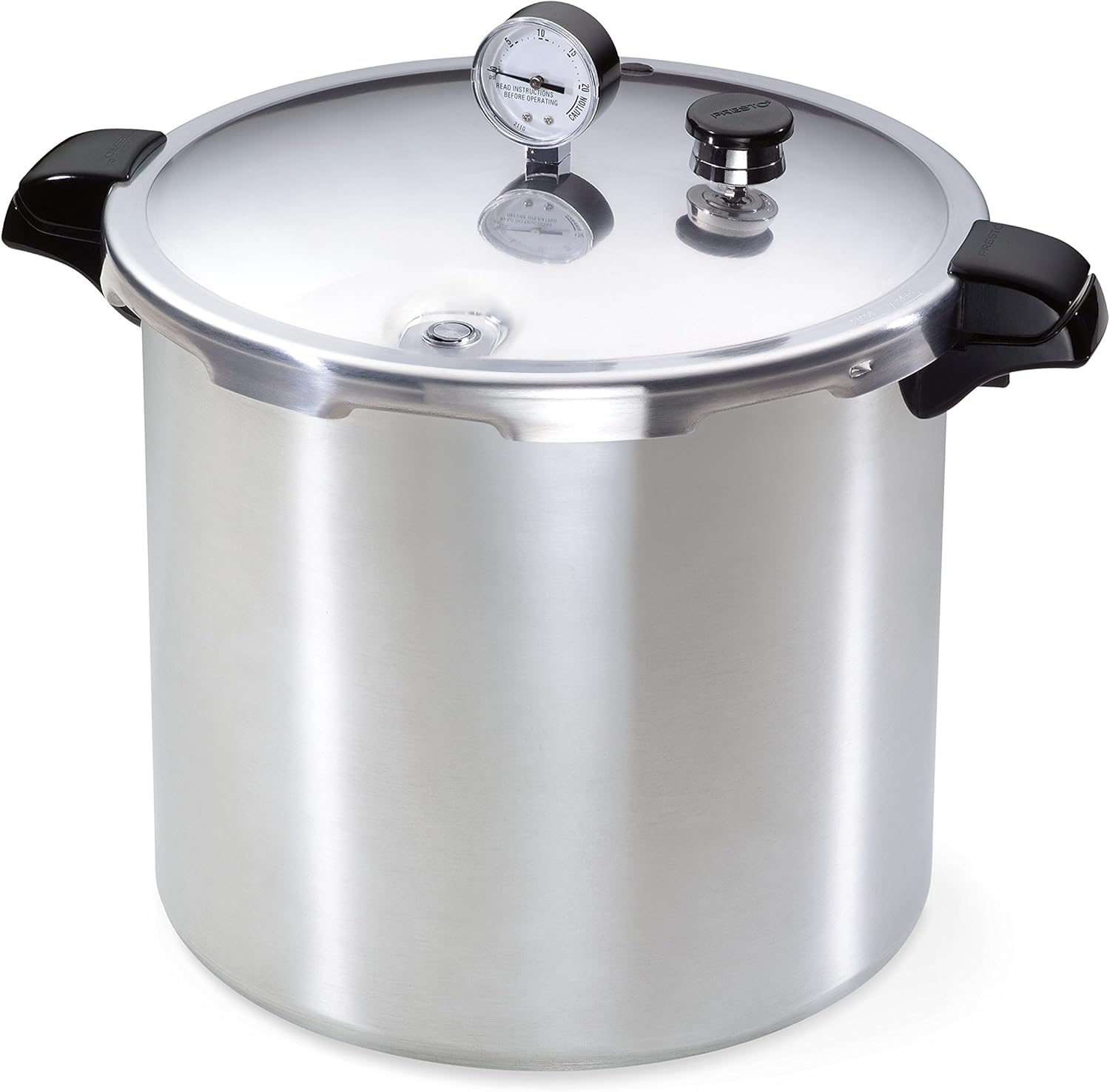
If you’re serious about canning or regularly cook for a crowd, stop reading and just get this one. The Presto 23-Quart isn’t just a pressure cooker; it’s an institution. It’s the only pressure canner recommended by the USDA for home canning, a testament to its reliability and safety. Made from warp-resistant, heavy-gauge aluminum, it feels incredibly sturdy without being impossibly heavy.
Our Testing Experience
The first thing I did was run a water bath canning test with seven quart jars of tomatoes from my garden. The capacity is fantastic—it holds 7 quart jars or 20 pint jars, which is a huge time-saver. The deluxe pressure dial gauge gave a precise reading, which is absolutely critical for canning safety, especially at different altitudes. I live at about 800 feet, so I adjusted my processing time accordingly, something a simple “jiggler” only model wouldn’t allow with such precision.
Next, I cooked a 10-pound pork shoulder for pulled pork. In just under 75 minutes, the meat was fall-apart tender, shredding with just a fork. The aluminum construction, while not as pretty as stainless steel, heats up remarkably fast and evenly, which is a significant advantage.
I also tested it with a batch of homemade chicken stock. I loaded it with four pounds of chicken carcasses, onions, carrots, celery, and herbs, then cooked at pressure for 90 minutes. The resulting stock was rich, gelatinous, and deeply flavorful—the kind of stock that normally requires eight to twelve hours of simmering on the stove. The 23-quart capacity meant I could make a massive batch and can it in pint jars for months of future use. This is where the Presto truly shines: it’s not just a cooker, it’s a food preservation system.
Key Specifications
| Capacity | 23 Quarts (21.8 Liters) |
| Material | Heavy-Gauge Aluminum |
| Key Safety Features | Overpressure plug, cover lock indicator, dial pressure gauge |
| Stovetop Compatibility | Gas, Electric Coil. Check manual for Glass/Flat-top. |
| Dimensions | 15.4″D x 15.1″W x 14.8″H |
| Weight | Approximately 10.5 pounds (empty) |
| Jar Capacity | 7 quart jars or 20 pint jars (double-stacked) |
| Warranty | 12-year limited warranty |
What We Love
- Massive Capacity: A dream for canning season and batch cooking.
- USDA Recommended: The gold standard for safe home pressure canning.
- Precise Dial Gauge: Essential for accurate pressure adjustments based on altitude.
- Built Like a Tank: The heavy-gauge aluminum is incredibly durable.
- Heats Quickly: Gets up to pressure faster than many stainless steel models.
What Could Be Improved
- Bulky Storage: This is a large piece of equipment that needs dedicated space.
- Aluminum Material: Can stain and isn’t dishwasher safe (hand-wash only).
- Not Induction Compatible: A dealbreaker for those with induction cooktops.
The Verdict: For anyone serious about food preservation or cooking large quantities, the Presto 23-Quart is an indispensable tool. Its safety features, robust build, and sheer capacity make it the undisputed champion in its class. It’s an investment that will pay for itself over decades of use.
Presto vs. The Competition: How Does It Stack Up?
Presto doesn’t exist in a vacuum. The pressure cooker market includes several strong competitors, each with its own strengths and weaknesses. Understanding how Presto compares to alternatives like All American, T-fal, and the ubiquitous Instant Pot will help you make an informed decision. Let’s break down the key comparisons.
Presto vs. All American Pressure Canners
The All American brand is Presto’s most direct competitor in the pressure canner space. Both are USDA-recommended for home pressure canning, and both have loyal followings among serious home preservers. However, there are significant differences that matter depending on your needs and budget.
Construction and Design: All American canners are made from cast aluminum and feature a unique metal-to-metal seal design—no gasket required. This eliminates the need for gasket replacement, which is a genuine advantage for heavy users. Presto canners use a traditional rubber gasket seal, which needs periodic replacement but creates a very reliable seal when properly maintained.
Price: This is where the difference is most stark. A Presto 23-Quart typically costs a fraction of what you’d pay for a comparable All American model. For budget-conscious buyers or those new to canning, this price difference is often the deciding factor. The Presto delivers excellent performance and USDA-recommended safety at a much more accessible price point.
Weight and Handling: All American canners, with their heavier cast construction, are noticeably heavier than Presto models. When you’re lifting a canner full of hot water and jarred food, weight matters. The Presto’s lighter aluminum construction makes it easier to handle, especially for those with limited strength or mobility.
The Bottom Line: If you’re a high-volume canner who processes hundreds of jars per season and values the gasket-free design, All American is worth the premium. For everyone else—including beginners, moderate-volume canners, and budget-conscious shoppers—the Presto offers outstanding value and performance.
Presto vs. T-fal Pressure Cookers
T-fal (known as Tefal outside North America) is another well-established name in pressure cookers, particularly for everyday cooking models. T-fal cookers are known for their distinctive locking system and European engineering.
Safety Systems: Both Presto and T-fal incorporate multiple safety features, but their approaches differ. T-fal uses a unique pressure indicator and locking system that some users find more intuitive. Presto’s system is more traditional but equally effective. Both brands have excellent safety records.
Cooking Performance: In our testing, both brands delivered comparable cooking results. Tough cuts of meat became tender in similar timeframes, and vegetables retained their color and texture equally well. The T-fal models we tested had a slight edge in heat distribution on electric stovetops, while the Presto performed marginally better on gas ranges due to its wider base design.
Price and Availability: Presto generally offers better value, especially for larger-capacity models. Replacement parts for Presto are also more widely available in North America, which is a practical consideration for long-term ownership. T-fal parts, while available, can sometimes be harder to source depending on your location.
Presto vs. Instant Pot
The Instant Pot has revolutionized home cooking in recent years, and many people wonder whether they need a traditional stovetop pressure cooker at all. The answer depends on what you want to accomplish.
Canning: This is the critical distinction. No electric pressure cooker, including the Instant Pot, is recommended by the USDA for pressure canning. Electric models cannot maintain the consistent, verified pressure required for safe home canning of low-acid foods. If canning is your goal, a Presto stovetop canner is not just preferable—it’s the only safe choice.
Convenience: The Instant Pot wins on convenience. Set it and forget it, with programmable timers and automatic pressure release. A Presto stovetop model requires you to monitor the heat source and adjust the flame or burner to maintain proper pressure. For beginners or those who prefer a more hands-off approach, the Instant Pot is easier to use.
Cooking Quality: This is subjective, but many experienced cooks prefer the results from a stovetop pressure cooker. Stovetop models typically reach higher pressures (15 PSI vs. 11-12 PSI for most electric models), which means faster cooking and, in some cases, better texture. The Presto also allows for more precise pressure control, which matters for certain recipes.
Durability and Lifespan: A Presto pressure cooker can last for decades with basic maintenance. Electric pressure cookers have electronic components that can fail, and their lifespan is typically measured in years, not decades. From a long-term value perspective, the Presto is the clear winner.
The Bottom Line: These aren’t really competing products—they serve different purposes. If you want convenience for everyday cooking and don’t plan to can, an Instant Pot is great. If you want to can, prefer stovetop control, or want a tool that will last a lifetime, get a Presto. Many serious home cooks own both.
| Feature | Presto | All American | T-fal | Instant Pot |
|---|---|---|---|---|
| USDA Canning Approved | Yes (23-Quart) | Yes | No (cookers only) | No |
| Max Pressure (PSI) | 15 | 15 | 15 | 11-12 |
| Gasket Required | Yes | No (metal-to-metal) | Yes | Yes (silicone ring) |
| Typical Price Range | $70-$120 | $200-$400+ | $50-$100 | $80-$150 |
| Induction Compatible | SS models: Yes | No | Most models: Yes | N/A (electric) |
| Expected Lifespan | 20+ years | 30+ years | 10-15 years | 3-5 years |
| Best For | Canning + cooking | Heavy-duty canning | Everyday cooking | Convenience cooking |
Deep Dive: Presto 01362 6-Quart Stainless Steel Pressure Cooker
Best for Everyday Meals & Small Kitchens

Maybe you aren’t planning to preserve the entire farmer’s market. Maybe you just want to make delicious, tender meals in a fraction of the time. Enter the Presto 6-Quart Stainless Steel Pressure Cooker. This is the perfect size for a family of 2-4 and shines for weeknight dinners, soups, and stocks.
Our Testing Experience
I was immediately impressed by its appearance. The polished stainless steel is beautiful and feels premium. It features a special “tri-clad” base—a layer of aluminum sandwiched between two layers of stainless steel—which provides the fast, even heating of aluminum with the durability and non-reactivity of steel. This is a huge plus, as it means you can sear meat directly in the pot without worrying about discoloration or off-flavors.
I made a batch of risotto, a dish notorious for its constant stirring. In the Presto, it was hands-off and ready in 7 minutes flat, perfectly creamy and al dente. Cleanup was also a breeze; the main pot is fully immersible and dishwasher safe, a major convenience over its aluminum cousins.
It uses a simple pressure regulator weight that maintains the standard 15 PSI (pounds per square inch). While not suitable for high-altitude canning adjustments, it’s perfect and foolproof for everyday pressure cooking.
Beyond risotto, I tested a variety of dishes to push this cooker to its limits. A beef stew that normally takes three hours of simmering was done in 35 minutes, with meat so tender it fell apart at the touch of a fork. Hard-boiled eggs cooked in just five minutes at pressure, and the shells slipped off effortlessly—a game-changer for meal prep. I even made a cheesecake using a springform pan set on the trivet, which came out creamy and perfectly cooked in 25 minutes. The versatility of this compact cooker is genuinely impressive.
What We Love
- Elegant & Durable: Stainless steel looks great and is built to last.
- Tri-Clad Base: Excellent heat distribution for even cooking.
- Dishwasher Safe: The pot (not the lid) is easy to clean.
- Induction Compatible: Works on all stovetops, including induction.
- Perfect Size: Ideal for daily meals without taking over your kitchen.
What Could Be Improved
- Single Pressure Setting: Only cooks at 15 PSI, no lower option.
- Not a Canner: This model is too small for pressure canning jars safely.
The Verdict: If you’re looking for a fast, efficient, and beautiful tool to revolutionize your weeknight cooking, this is it. It’s the perfect introduction to pressure cooking, offering simplicity and performance in a package that’s easy to use and clean.
Best Recipes for Your Presto Pressure Cooker
One of the most common questions we hear from new pressure cooker owners is: “What should I make first?” The answer depends on which model you have, but the possibilities are nearly endless. Here are some of our favorite recipes that showcase what a Presto pressure cooker can do, organized by category to help you get started whether you’re using the 23-Quart canner or the 6-Quart cooker.
Weeknight Dinner Heroes (6-Quart Cooker)
These recipes are designed for the Presto 6-Quart Stainless Steel Cooker and are perfect for busy weeknights when you need dinner on the table fast.
Classic Pot Roast (45 minutes at pressure)
A three-pound chuck roast, quartered onions, carrots, potatoes, and a cup of beef broth. Brown the roast on all sides using the sauté function or a separate pan, then add everything to the cooker. Forty-five minutes at 15 PSI, followed by a natural pressure release, yields a roast that’s fall-apart tender with vegetables that have absorbed all that rich, beefy flavor. This is comfort food at its finest, and it’s ready in under an hour total—compared to the three to four hours it would take in a conventional oven.
Creamy Chicken and Rice (8 minutes at pressure)
One of the fastest weeknight meals in our repertoire. Boneless, skinless chicken thighs, long-grain rice, chicken broth, cream of mushroom soup, and frozen peas. Everything goes into the pot at once. Eight minutes at pressure with a quick release, and you have a complete one-pot meal that feeds the whole family. The rice comes out perfectly fluffy, the chicken is juicy, and cleanup is minimal.
Pulled Pork (75 minutes at pressure)
A four-pound pork shoulder rubbed with your favorite spice blend, sitting on a bed of sliced onions with a cup of apple cider vinegar and a cup of broth. Seventy-five minutes at pressure, followed by a natural release, and the meat shreds with just two forks. Toss with your favorite barbecue sauce and serve on buns. This rivals any slow-cooker pulled pork and takes a fraction of the time.
French Onion Soup (20 minutes at pressure)
Six large onions (thinly sliced), butter, beef broth, thyme, and a splash of sherry. Twenty minutes at pressure caramelize the onions beautifully—a process that would normally take over an hour on the stovetop. Ladle into oven-safe bowls, top with crusty bread and Gruyère cheese, and broil until bubbly. Restaurant-quality soup made easy.
Batch Cooking and Meal Prep (Both Models)
These recipes work in either the 6-Quart or the 23-Quart (scaled up), and they’re perfect for meal prepping for the week ahead.
Perfect Hard-Boiled Eggs (5 minutes at pressure)
This might be the single best reason to own a pressure cooker. Place eggs on the trivet, add one cup of water, and cook at pressure for five minutes with a quick release followed by an ice bath. The shells slide off effortlessly every single time, no matter how fresh the eggs. Make a dozen at once for easy snacks, salads, and breakfasts all week.
Rich Bone Broth (90 minutes at pressure)
Chicken carcasses, beef bones, or a combination—along with onion, carrot, celery, garlic, apple cider vinegar, and water to cover. Ninety minutes at pressure produces a broth so rich and gelatinous that it sets like Jell-O when chilled. This is the kind of broth that normally requires twelve to twenty-four hours of simmering. Make a huge batch in the 23-Quart and can it in quart jars for months of shelf-stable stock.
Dried Beans from Scratch (25-30 minutes at pressure)
Forget soaking overnight. One pound of dried beans (black beans, pinto beans, chickpeas—any variety), six cups of water, and your choice of aromatics. Twenty-five to thirty minutes at pressure, depending on the bean variety, yields perfectly cooked beans with creamy interiors and no mushiness. A pound of dried beans makes the equivalent of four cans, at a fraction of the cost and without any additives.
Canning Favorites (23-Quart Canner)
These recipes are designed for the Presto 23-Quart Pressure Canner and focus on preserving food for long-term storage.
Home-Canned Green Beans
Fresh green beans, trimmed and packed into hot pint or quart jars with boiling water and salt (if desired). Process at 10 PSI (adjust for altitude) for 20 minutes for pints or 25 minutes for quarts. The result is shelf-stable green beans that taste far superior to store-bought canned varieties. One batch of twenty pint jars provides side dishes for months.
Chicken Stock Concentrate
Make a rich, double-strength bone broth, then pressure can it in half-pint jars. These concentrated jars become instant flavor boosters for soups, sauces, rice, and gravies. Process at 10 PSI for 20 minutes. One jar replaces two cans of commercial broth, and the flavor difference is remarkable.
Tomato Sauce
While tomatoes are high-acid and can be water bath canned, pressure canning them is faster and allows you to add low-acid vegetables like onions, peppers, and garlic safely. Process quart jars at 10 PSI for 15 minutes. Stock your pantry with homemade sauce that puts store-bought to shame.
Venison or Beef Stew
Canned meat is a revelation for busy weeknights. Pack raw cubed meat and vegetables into jars, cover with hot broth, and process at 10 PSI for 75 minutes for pints or 90 minutes for quarts. The meat becomes incredibly tender during processing, and you’ll have ready-to-eat stew that just needs reheating. This is a game-changer for hunters and bulk meat buyers.
Pro Tip: The “Pot-in-Pot” Method
Want to cook two things at once? Use the pot-in-pot technique. Place your main dish in the bottom of the cooker, then set a heat-safe dish on a trivet above it. You can cook rice on the bottom and a curry on top, or a stew below and dumplings above. This technique works especially well in the larger 23-Quart model, where you have plenty of vertical space to work with.
Buyer’s Guide: How to Choose the Right Presto For You
Navigating the options can be tricky. Here’s a breakdown of the key factors to consider to ensure you get the perfect Presto pressure cooker for your needs.
1. Capacity: How Much Do You Cook?
- 4-6 Quart: This is the sweet spot for individuals, couples, and small families. It’s ideal for nightly dinners, side dishes, and soups. It’s also easier to store and handle.
- 8-Quart: A great all-around size for families of four or more, or if you enjoy meal prepping for the week. It offers more flexibility than a 6-quart without being overly bulky.
- 16-Quart and Up: These are primarily designed as pressure canners. If your main goal is preserving fruits, vegetables, and meats, you need a canner of this size to safely process jars. They can double as massive cookers for events like a chili cook-off or a family reunion.
2. Material: Aluminum vs. Stainless Steel
This is one of the biggest debates, and both have their merits. For easy cleanup of any pot, having good tools like the best fryer strainers to separate liquids and solids can be a huge help.
Aluminum Models (like the 23-Quart Canner):
- Pros: Excellent heat conductor (heats up fast), lightweight, and more affordable. The top choice for large-capacity canners where weight is a factor.
- Cons: Prone to staining from acidic foods (like tomatoes), can pit over time, and is strictly hand-wash only. Not induction compatible.
Stainless Steel Models (like the 6-Quart Cooker):
- Pros: Highly durable, non-reactive (won’t affect the taste of food), easy to clean (often dishwasher safe), and looks fantastic. Most are induction compatible thanks to a tri-clad base.
- Cons: Heavier, takes slightly longer to come to pressure, and typically more expensive.
3. Safety Features: What to Look For
Modern Presto pressure cookers are incredibly safe, a far cry from the sputtering relics of the past. Just as you’d use the best fryer gloves when working with hot oil, it’s crucial to understand the layered safety system built into today’s cookers:
- Cover Lock Indicator: Shows at a glance if there is pressure inside and prevents the lid from being opened until pressure is safely reduced.
- Overpressure Plug: A small rubber plug that will automatically pop out to release excess steam if the main vent pipe becomes blocked.
- Pressure Regulator: This is the “jiggler” on top that controls the internal pressure, automatically releasing steam to maintain a set level (usually 15 PSI).
- Dial Gauge (on Canners): Provides a visual, precise reading of the internal pressure, which is non-negotiable for safe canning at various altitudes.
4. Stovetop Compatibility
Not all pressure cookers work on all stovetops, and this is a critical consideration that many buyers overlook. Here’s what you need to know:
- Gas Stoves: All Presto pressure cookers work beautifully on gas ranges. The flame provides instant, responsive heat control, which is ideal for maintaining steady pressure. Gas is generally considered the best heat source for stovetop pressure cooking.
- Electric Coil Stoves: Presto cookers work well on traditional electric coil burners. The flat bottom of the pot makes good contact with the heating element. However, response time is slower than gas—you’ll need to anticipate pressure changes and adjust the dial accordingly.
- Glass/Ceramic Flat-Top Stoves: This is where things get complicated. The Presto 6-Quart Stainless Steel Cooker is generally safe for flat-top stoves, but the larger 23-Quart canner is NOT recommended. The canner’s large diameter may extend beyond the burner zone, creating uneven heating, and its weight when full could potentially crack the glass surface. Always check your stove manufacturer’s guidelines before using any large pressure canner on a flat-top range.
- Induction Stoves: Only Presto’s stainless steel models work on induction cooktops. Aluminum models (including the 23-Quart canner) are not induction compatible because aluminum is not ferromagnetic. If you have an induction stove, the Presto 01362 6-Quart Stainless Steel Cooker is your best option.
5. Budget Considerations
Presto pressure cookers represent exceptional value across the board, but there’s still a range to consider:
- Entry Level ($30-$50): Presto’s aluminum 6-quart models offer the most affordable entry into pressure cooking. They’re basic but effective, with all the essential safety features. Perfect for beginners who want to try pressure cooking without a significant investment.
- Mid-Range ($50-$100): The stainless steel 6-quart and 8-quart models fall in this range. You get the tri-clad base, dishwasher-safe construction, and a more polished appearance. This is the sweet spot for most home cooks.
- Canner Investment ($70-$150): The 23-Quart canner and larger models represent a larger upfront investment, but for anyone serious about food preservation, they pay for themselves quickly. Consider that a single season of canning garden produce can save hundreds of dollars compared to buying commercially canned goods.
- Accessories ($10-$40): Don’t forget to budget for accessories like a jar lifter, canning rack, extra gaskets, and a magnetic lid lifter. These tools make the canning process safer and more efficient.
Value Comparison
A Presto 23-Quart Pressure Canner costs roughly the same as purchasing about 50 cans of store-bought vegetables. If you can even a modest harvest from a small garden, the canner pays for itself in a single season. Factor in the superior quality, taste, and nutritional value of home-canned food, and the value proposition becomes even more compelling.
Pressure Canning for Beginners: A Step-by-Step Guide
If you’ve never pressure canned before, the process can seem intimidating. Images of exploding pressure cookers from old movies might be dancing in your head. Let us put your mind at ease: modern pressure canning is incredibly safe when done correctly, and the Presto 23-Quart makes the process straightforward. Here’s everything you need to know to get started.
Essential Equipment
Before you begin, gather the following equipment. Having everything ready before you start makes the process much smoother:
- Presto 23-Quart Pressure Canner: The canner itself, with the dial gauge tested for accuracy (many county extension offices offer free gauge testing).
- Canning Jars: Mason jars (Ball, Kerr, or other reputable brands) in the size you prefer. Inspect each jar for cracks or chips—any imperfection can cause the jar to break during processing.
- New Lids: Always use new lids for each canning session. The sealing compound on used lids may not create a reliable seal. Rings can be reused if they’re not bent or rusted.
- Jar Lifter: A specialized tool for safely lifting hot jars in and out of the canner. This is non-negotiable—regular tongs can slip, and you’re handling jars full of boiling liquid.
- Lid Wand: A magnetic wand for retrieving lids from hot water without touching them with your fingers.
- Bubble Remover / Headspace Tool: A plastic tool for removing air bubbles from jars and measuring headspace (the gap between the food and the lid).
- Large Pot or Kettle: For heating water and preparing food.
- Clean Towels and Rags: For wiping jar rims and cleaning up spills.
Step-by-Step Canning Process
Step 1: Prepare Your Canner
Place the canner on your stove and add two to three inches of hot water. Place the rack inside the canner. Turn the heat to medium to keep the water warm (but not boiling) while you prepare your food and jars. This preheating step saves time later.
Step 2: Prepare Your Jars
Wash jars in hot, soapy water and rinse thoroughly. Keep them warm until ready to fill—you can place them in a pot of simmering water or in a warm oven (200 degrees Fahrenheit). Filling cold jars with hot food can cause thermal shock and crack the jars.
Step 3: Prepare Your Food
Follow a tested recipe from a reliable source (the USDA Complete Guide to Home Canning, the Ball Blue Book, or your local cooperative extension service). Tested recipes have been scientifically validated to ensure safe processing times and temperatures. Never improvise or substitute ingredients in canning recipes—the safety of your preserved food depends on precise ratios of acid, salt, and processing time.
Step 4: Fill the Jars
Remove one jar at a time from the warm water. Using a funnel, fill the jar with your prepared food, leaving the headspace specified in your recipe (typically one inch for meats and vegetables, half an inch for fruits). Run the bubble remover tool around the inside of the jar to release any trapped air bubbles. Wipe the jar rim with a clean, damp cloth to ensure a clean sealing surface. Place a new lid on the jar and screw on the ring until fingertip-tight—not too tight, as air needs to escape during processing.
Step 5: Load the Canner
Using the jar lifter, carefully lower each filled jar into the canner, placing them on the rack. Leave at least one inch of space between jars for steam circulation. If you’re stacking jars (pint jars can often be double-stacked), place a second rack between layers.
Step 6: Seal and Vent
Lock the canner lid in place, leaving the vent pipe open. Turn the heat to high and wait for a steady stream of steam to flow from the vent pipe. Let the steam vent for ten minutes—this step is critical. Venting removes air from the canner, which is essential for reaching the correct processing temperature. Air pockets can create cold spots that prevent proper sterilization.
Step 7: Pressurize
After ten minutes of venting, place the pressure regulator (weight) on the vent pipe. The canner will begin to build pressure. Watch the dial gauge and adjust the heat to maintain the pressure specified in your recipe. For most low-acid foods at sea level, this is 10 PSI. Adjust for altitude if necessary (see our Altitude Adjustments section below).
Step 8: Process
Start your timer when the canner reaches the correct pressure. Maintain steady pressure throughout the processing time. If pressure drops below the required level, you must bring it back up and restart the timing from the beginning—this is a food safety requirement, not just a suggestion.
Step 9: Cool Down
When processing time is complete, turn off the heat and let the canner cool naturally. Do NOT attempt to speed up cooling by running cold water over it or removing the weight prematurely. Allow the pressure to drop to zero naturally—this can take 30 to 60 minutes. When the pressure gauge reads zero and the cover lock indicator drops, wait an additional ten minutes, then remove the weight. Wait another ten minutes, then carefully remove the lid, tilting it away from you to avoid steam burns.
Step 10: Remove and Cool Jars
Using the jar lifter, remove the jars and place them on a towel-lined counter. Leave at least one inch of space between jars for air circulation. Do not touch the lids or tighten the rings. Let the jars sit undisturbed for 12 to 24 hours. During this time, you’ll hear the satisfying “ping” of lids sealing as they cool.
Step 11: Check Seals and Store
After 24 hours, check each lid by pressing the center. A properly sealed lid will be concave (curved downward) and will not flex when pressed. Remove the rings, wipe the jars clean, label with the contents and date, and store in a cool, dark place. Properly sealed and stored, home-canned food is safe for one to two years, though it’s best consumed within one year for optimal quality.
Safety First: When to Discard Canned Food
Never taste food from a jar with a broken seal, bulging lid, or unusual odor. If you notice any of these signs, discard the entire jar—contents and all—without tasting. Botulism is rare in properly processed home-canned food, but the consequences of consuming contaminated food are severe. When in doubt, throw it out. You can also boil home-canned low-acid foods for ten minutes before tasting as an additional safety measure.
Maintenance and Care: Keeping Your Presto in Top Shape
A Presto pressure cooker is a long-term investment, and like any quality tool, it performs best with regular maintenance. The good news is that caring for a Presto is simple and inexpensive. A few minutes of attention after each use will keep your cooker functioning safely and efficiently for decades.
After Every Use
Cleaning the Pot
For aluminum models, hand wash with warm, soapy water and a soft sponge. Never use abrasive cleaners or steel wool on aluminum, as they can scratch the surface and create rough spots where food particles can accumulate. For stubborn stains (common with tomato-based recipes), fill the pot with water, add two tablespoons of cream of tartar or white vinegar, and bring to a boil. Let it soak for an hour, then wash normally.
For stainless steel models like the 6-Quart Cooker, the pot is dishwasher safe, making cleanup even easier. However, hand washing is still recommended for the lid and pressure regulator to ensure they’re thoroughly cleaned and inspected.
Cleaning the Lid and Gasket
Remove the gasket from the lid after each use. Wash both the gasket and the lid in warm, soapy water. Pay special attention to the vent pipe—use a small brush (a clean pipe cleaner works well) to ensure it’s clear of food particles. A blocked vent pipe is a safety hazard. Dry everything thoroughly before reassembling.
Inspecting the Gasket
Before each use, inspect the gasket for signs of wear: cracks, tears, hardening, or permanent deformation. A damaged gasket won’t create a proper seal, which means the cooker won’t reach or maintain pressure. Gaskets are inexpensive (typically under ten dollars) and should be replaced at the first sign of wear. Many experienced pressure cooker owners keep a spare gasket on hand to avoid downtime during canning season.
Monthly Maintenance
Checking the Overpressure Plug
The overpressure plug is a small rubber or silicone disc that sits in the lid. Its job is to pop out if the vent pipe becomes blocked, releasing excess pressure safely. Inspect the plug monthly for cracks, hardening, or deformation. Replace it immediately if it shows any signs of wear. Like gaskets, overpressure plugs are inexpensive and readily available from Presto or kitchen supply retailers.
Testing the Dial Gauge (Canners)
If you have a Presto canner with a dial gauge, have it tested for accuracy at least once a year, preferably before canning season begins. Many county extension offices offer free gauge testing. A gauge that reads even two pounds off can compromise the safety of your canned food. If your gauge is inaccurate, Presto offers replacement gauges that are easy to install.
Lubricating the Gasket
Some Presto models benefit from occasional gasket lubrication with food-grade mineral oil or petroleum jelly. A thin coating helps the gasket maintain flexibility and create a better seal. Check your model’s manual for specific recommendations—some newer gaskets don’t require lubrication.
Annual Maintenance
Deep Cleaning
Once a year, give your pressure cooker a thorough deep cleaning. Disassemble all removable parts (gasket, overpressure plug, pressure regulator, any removable handles or knobs) and clean each component individually. Inspect all parts for wear and replace as needed. This is also a good time to check that the lid locks and unlocks smoothly and that all safety features are functioning properly.
Replacing Wear Items
Even with perfect care, some parts have a finite lifespan. Plan to replace the following items periodically:
- Gasket: Every 1-3 years, depending on use frequency and care.
- Overpressure Plug: Every 2-3 years, or sooner if damaged.
- Pressure Regulator Weight: Rarely needs replacement, but inspect annually for damage or wear.
- Dial Gauge: Should be tested annually; replace if it cannot be calibrated.
Storage Tips
Proper storage extends the life of your pressure cooker and its components:
- Store the cooker with the lid inverted (upside down) or ajar—never sealed tightly. This prevents the gasket from taking a permanent set and allows air circulation to prevent odors.
- Store in a dry location. Moisture can cause corrosion, especially on aluminum models.
- If storing for an extended period (like between canning seasons), remove the gasket and store it separately in a cool, dry place. This prevents flat spots from forming on the gasket.
- Keep the pressure regulator and any small parts together in a labeled bag so they don’t get lost.
Pro Tip: The Vinegar Test
Not sure if your gasket is still good? Try this simple test: place the gasket in the lid, close the empty cooker, and try to pull the lid off. If the gasket creates enough vacuum that the lid resists removal, it’s still in good shape. If the lid comes off easily, it’s time for a new gasket.
Troubleshooting Guide: Common Issues and Solutions
Even the most reliable kitchen tools can have occasional issues. Here are the most common problems Presto pressure cooker owners encounter, along with their solutions. Most of these are simple fixes that don’t require any special tools or expertise.
Problem: Steam Escaping Around the Lid
Cause: This is almost always a gasket issue. The gasket may be worn, dirty, improperly seated, or dry.
Solution: Remove the gasket and clean both it and the groove it sits in. Inspect for damage and replace if necessary. Ensure the gasket is properly seated in the groove all the way around. If the gasket is old but intact, try applying a thin layer of food-grade mineral oil to restore flexibility. Also ensure the lid is properly aligned and locked before heating.
Problem: Cooker Won’t Reach Pressure
Cause: Insufficient liquid, a damaged gasket, or too much food in the cooker.
Solution: First, check that you have at least one cup of liquid in the cooker—steam needs liquid to generate pressure. Second, inspect the gasket for damage or improper seating. Third, ensure you haven’t overfilled the cooker; most Presto models should be filled no more than two-thirds full (half full for foods that expand, like beans and grains). Finally, check that the vent pipe is clear and the pressure regulator is properly seated.
Problem: Pressure Fluctuates During Cooking
Cause: Inconsistent heat source or the pressure regulator isn’t sitting properly.
Solution: Adjust your heat source to maintain a steady, gentle rocking or jiggling of the pressure regulator. On gas stoves, this means finding the right flame level. On electric stoves, you may need to toggle between two heat settings to maintain consistent pressure. Ensure the pressure regulator is clean and sitting squarely on the vent pipe.
Problem: Food is Burning on the Bottom
Cause: Heat too high, insufficient liquid, or food with high sugar/starch content sticking to the bottom.
Solution: Reduce heat once pressure is reached. Ensure adequate liquid—some recipes need more than the minimum. For sticky foods (like tomato sauces or sugary glazes), add a layer of liquid or broth at the bottom of the pot before adding other ingredients. Using the pot-in-pot method can also prevent scorching for delicate recipes.
Problem: Food is Overcooked or Undercooked
Cause: Incorrect cooking time, altitude not accounted for, or pressure not maintained consistently.
Solution: Use tested recipes from reliable sources and follow them precisely. If you’re at a higher altitude, increase cooking time according to guidelines (typically 5 percent more time for every 1,000 feet above 2,000 feet elevation). If pressure drops during cooking, you need to restart timing from the beginning once pressure is restored.
Problem: Lid Won’t Open After Cooking
Cause: Pressure hasn’t fully released, or the gasket has created a vacuum seal as the cooker cooled.
Solution: Wait until the pressure gauge reads zero and the cover lock indicator drops. If the lid still won’t open, try running cold water over the lid (not the pot) to break the vacuum seal. Never force the lid—this is a safety feature working as designed.
Problem: Gasket Smells or Has Absorbed Odors
Cause: The rubber gasket can absorb strong odors from foods like garlic, onions, or spices.
Solution: Wash the gasket with baking soda and water, then let it air dry in sunlight if possible. Some people keep separate gaskets for savory and sweet cooking. If odors persist, it may be time for a new gasket—they’re inexpensive enough that replacing a smelly one is perfectly reasonable.
Problem: Dial Gauge Reads Inaccurately
Cause: Gauge may need calibration or replacement.
Solution: Have the gauge tested at your local county extension office or a kitchen supply store that offers testing. If it’s off by more than one pound, replace the gauge. Presto sells replacement gauges that are easy to install. An inaccurate gauge is a serious safety concern for canning—never guess at pressure readings.
Altitude Adjustments: Canning and Cooking at High Elevations
If you live above 1,000 feet elevation, altitude adjustments are not optional—they’re essential for safe pressure canning and can affect cooking times as well. This is one of the most commonly overlooked aspects of pressure cooking, and it’s one of the key advantages of owning a Presto canner with a dial gauge.
Why Altitude Matters
At higher altitudes, atmospheric pressure is lower. This means water boils at a lower temperature, which directly affects both cooking and canning. In El Paso, Texas (about 3,700 feet), water boils at approximately 206 degrees Fahrenheit instead of the sea-level standard of 212 degrees. In Denver (5,280 feet), it’s about 202 degrees. At the top of a mountain in Colorado (10,000+ feet), water can boil at less than 195 degrees.
For cooking, this means food takes slightly longer to cook at high altitudes because the boiling temperature is lower. For pressure canning, the implications are more serious. The USDA processing times for pressure canning are based on reaching a specific temperature—typically 240 degrees Fahrenheit at 10 PSI. But “10 PSI” on your gauge doesn’t always mean the same internal temperature. At higher altitudes, you need to increase the pressure setting to compensate for the lower atmospheric pressure.
Altitude Adjustment Chart for Pressure Canning
| Altitude | Dial Gauge (Increase to) | Weighted Gauge (Increase to) |
|---|---|---|
| 0 – 1,000 feet | 11 PSI | 10 PSI |
| 1,001 – 2,000 feet | 11 PSI | 15 PSI |
| 2,001 – 4,000 feet | 12 PSI | 15 PSI |
| 4,001 – 6,000 feet | 13 PSI | 15 PSI |
| 6,001 – 8,000 feet | 14 PSI | 15 PSI |
| 8,001 – 10,000 feet | 15 PSI | 15 PSI |
This is precisely why the Presto 23-Quart’s dial gauge is so valuable. With a dial gauge, you can see exactly what pressure you’re at and adjust accordingly. With a weighted gauge model (like the 6-Quart Cooker), you’re limited to either 10 or 15 PSI, which means at certain altitudes, you may need to increase processing times rather than pressure. Always consult the USDA Complete Guide to Home Canning for specific altitude adjustments.
Altitude and Cooking Times
For everyday pressure cooking (not canning), altitude affects cooking times less dramatically but still noticeably. As a general rule of thumb, increase cooking time by approximately 5 percent for every 1,000 feet above 2,000 feet elevation. So if a recipe calls for 20 minutes of pressure cooking at sea level, you’d cook for about 25 minutes at 7,000 feet.
Some pressure cooker manufacturers provide altitude-specific cooking charts, and many modern cookbooks include altitude adjustment notes. Keep a log of your cooking times and results at your specific altitude—over time, you’ll develop an intuitive sense of how much to adjust for your favorite recipes.
Critical Safety Note
Never guess at altitude adjustments for pressure canning. Incorrect processing times or pressures can result in under-processed food that may harbor dangerous bacteria, including Clostridium botulinum (the cause of botulism). Always use current, scientifically tested guidelines from the USDA or your local cooperative extension service.
Electric vs. Stovetop Pressure Cookers: Which Is Right for You?
The rise of electric pressure cookers like the Instant Pot has introduced millions of people to the benefits of pressure cooking. But electric and stovetop models are fundamentally different tools with different strengths. Understanding these differences will help you choose the right approach for your cooking style and goals.
How They Differ
Heat Source: The most obvious difference is that stovetop cookers like the Presto use your stove’s burner as the heat source, while electric models have a built-in heating element. This seemingly simple distinction has far-reaching implications for performance, versatility, and maintenance.
Pressure Levels: Stovetop models typically reach and maintain 15 PSI, which is the standard pressure for most American pressure cooking recipes and the minimum required for safe pressure canning. Most electric models operate at 11-12 PSI, with some reaching up to 15 PSI on specific settings. This lower pressure means slightly longer cooking times for many recipes.
Temperature Control: With a stovetop cooker, you control the heat directly by adjusting your burner. This gives you immediate, responsive control—you can increase heat to bring the cooker up to pressure quickly, then reduce it to maintain steady pressure. Electric models use built-in thermostats and sensors to manage temperature automatically, which is more convenient but less responsive.
Advantages of Stovetop (Presto)
- Higher Pressure, Faster Cooking: At 15 PSI, stovetop models cook faster than most electric models. The difference is most noticeable with large cuts of meat and dense foods like dried beans.
- USDA-Approved for Canning: This is the big one. No electric pressure cooker is approved by the USDA for pressure canning. If you want to preserve low-acid foods safely, you need a stovetop canner like the Presto 23-Quart.
- Durability: With no electronic components to fail, a stovetop pressure cooker can last for decades. The Presto’s simple mechanical design means there’s very little that can break.
- No Electricity Required: During power outages, you can still cook with a stovetop model using a gas stove, camp stove, or even an outdoor grill. This makes it an excellent tool for emergency preparedness.
- Lower Long-Term Cost: No replacement electronic components, no proprietary parts—just simple, affordable maintenance items like gaskets and plugs.
Advantages of Electric
- Set-and-Forget Convenience: Program the time and walk away. The cooker heats, pressurizes, cooks, and switches to “keep warm” mode automatically. This is genuinely convenient for busy households.
- Multifunctionality: Many electric models combine pressure cooking with slow cooking, rice cooking, yogurt making, sautéing, and steaming. If counter space is limited, one appliance that does many things is appealing.
- Beginner-Friendly: The automated controls reduce the learning curve. There’s no need to monitor heat levels or listen for the jiggler—just press a button and wait.
- Safer Perception: While modern stovetop models are extremely safe, some people feel more comfortable with the enclosed, automated design of electric cookers. There’s no open flame and no jiggling weight to monitor.
The Verdict: It Depends on Your Goals
If you want to pressure can, there’s no choice—you need a stovetop model, and the Presto 23-Quart is the best value in the category. If you only want to cook and convenience is your top priority, an electric model is hard to beat. Many experienced home cooks end up owning both: an electric model for weeknight convenience and a Presto canner for seasonal food preservation.
For those who prefer the stovetop approach for everyday cooking, the Presto 6-Quart Stainless Steel Cooker offers a compelling middle ground. It’s as fast and capable as any electric model, with the added benefits of durability, simplicity, and the ability to use it on any heat source. The learning curve is minimal—after a few uses, managing the heat becomes second nature.
Common Pressure Cooking Mistakes (And How to Avoid Them)
Whether you’re a first-time pressure cooker owner or a seasoned pro, these common mistakes can lead to disappointing results, wasted food, or even safety hazards. Here’s what to watch out for and how to get the best results from your Presto every time.
Mistake 1: Not Using Enough Liquid
Pressure cookers need liquid to generate steam—the steam is what creates the pressure. Most Presto models require a minimum of one cup of liquid, though some recipes may need more. Using too little liquid can cause the cooker to fail to reach pressure, result in scorched food, or (in extreme cases) trigger the overpressure safety plug. Always follow the liquid minimums specified in your recipe and your cooker’s manual.
Mistake 2: Overfilling the Cooker
It’s tempting to cram as much as possible into the cooker, but overfilling is a recipe for disaster. Most pressure cookers should be filled no more than two-thirds full for solid foods and no more than half full for foods that expand (beans, grains, rice). Overfilling can block the vent pipe, prevent proper pressure buildup, and cause food to be forced into the safety valves. Leave room for steam circulation and food expansion.
Mistake 3: Quick-Releasing Foods That Foam
The quick pressure release method (opening the valve to release steam immediately after cooking) works well for vegetables and delicate proteins. But for foods that foam—like beans, pasta, oatmeal, and applesauce—quick release can cause the foamy liquid to shoot out of the vent pipe, creating a mess and potentially blocking the valve. For foamy foods, always use natural pressure release (letting the cooker cool on its own) or the intermittent release method (opening the valve in short bursts).
Mistake 4: Not Browning Meat First
While you can technically cook meat in a pressure cooker without browning it first, you’ll miss out on enormous flavor. The Maillard reaction—the chemical process that creates the brown crust on seared meat—requires high, dry heat that pressure cooking doesn’t provide. Take the extra five minutes to brown your meat on all sides before pressure cooking. The depth of flavor it adds is well worth the effort. This is especially important for dishes like pot roast, beef stew, and braised short ribs.
Mistake 5: Using the Wrong Release Method
There are three pressure release methods, and using the wrong one can ruin a dish:
- Natural Release: Let the pressure drop on its own (15-30 minutes). Best for meats, soups, and foamy foods. Allows continued gentle cooking.
- Quick Release: Open the valve immediately. Best for vegetables, seafood, and foods you want to stop cooking right away.
- Intermittent Release: Open the valve in short bursts. A compromise for foods that might foam but need to stop cooking soon.
Using quick release on a tough cut of meat can result in tough, chewy protein because the sudden temperature drop causes the muscle fibers to contract. Using natural release on vegetables can result in mushy, overcooked produce. Match the release method to the food.
Mistake 6: Ignoring the Gasket
The gasket is the most critical maintenance item on any pressure cooker, and it’s the part most often neglected. A worn, cracked, or improperly seated gasket means the cooker can’t maintain pressure, leading to longer cooking times, inconsistent results, and potential safety issues. Inspect the gasket before every use and replace it at the first sign of wear.
Mistake 7: Opening the Lid Too Soon
Patience is a virtue with pressure cooking. Never attempt to open the lid while there’s still pressure inside the cooker. The cover lock indicator is there for a reason—wait until it drops and the gauge reads zero. Forcing the lid open can result in serious burns from escaping steam and boiling liquid. Even after the pressure drops, tilt the lid away from you when opening to direct any remaining steam away from your face and hands.
Mistake 8: Not Adjusting for Altitude
As we covered in our Altitude Adjustments section, failing to account for elevation can result in under-processed canned food or slightly undercooked meals. This is especially critical for canning—always follow altitude-specific guidelines.
Mistake 9: Using Abrasive Cleaners on Aluminum
Aluminum pressure cookers (like the Presto 23-Quart) can be permanently damaged by abrasive cleaners, steel wool, or dishwasher detergent. These can scratch the surface, creating pits where food particles accumulate and making the pot harder to clean over time. Stick to soft sponges and mild dish soap for aluminum models.
Mistake 10: Storing with the Lid Sealed
Storing your pressure cooker with the lid clamped shut compresses the gasket and can cause it to develop a permanent set (flat spots). This compromises the seal. Always store with the lid inverted or ajar to allow the gasket to maintain its shape and allow air circulation inside the pot.
Energy Efficiency: How Pressure Cooking Saves Money and the Planet
In an era of rising energy costs and growing environmental awareness, the energy efficiency of our cooking methods matters more than ever. Pressure cooking is one of the most energy-efficient ways to prepare food, and the savings add up quickly over time.
The Numbers
A conventional oven typically uses 2,000 to 5,000 watts of electricity per hour. A stovetop burner uses 1,000 to 2,500 watts. A pressure cooker, because it cooks food in a fraction of the time, uses significantly less total energy per meal—often 50 to 75 percent less than conventional methods.
Consider a pot roast that takes four hours in a conventional oven at 350 degrees Fahrenheit. In a Presto pressure cooker, the same roast is done in about 45 minutes at pressure, plus perhaps 15 minutes of preheating and 15 minutes of natural release. That’s roughly 75 minutes total, compared to 240 minutes in the oven. Even if the pressure cooker uses a similar wattage during its active cooking time, the total energy consumption is dramatically lower because the cooking time is so much shorter.
Real-World Savings
For a family that uses a pressure cooker three to four times per week, the energy savings can be substantial. Over the course of a year, switching from oven-based cooking to pressure cooking for appropriate dishes (stews, roasts, beans, grains) can save an estimated $50 to $150 on energy bills, depending on your local utility rates and cooking habits. Over the decades-long lifespan of a Presto pressure cooker, those savings add up to thousands of dollars.
Environmental Impact
Beyond the financial savings, pressure cooking has a smaller environmental footprint. Less energy consumption means fewer greenhouse gas emissions from power plants (for electric stoves) or less natural gas consumption (for gas stoves). The sealed cooking environment also means less moisture is released into your kitchen, which can reduce the load on your air conditioning system during warm months.
Canning and Food Waste
Perhaps the most significant environmental benefit of owning a Presto canner is the reduction in food waste. Home canning allows you to preserve surplus produce from your garden, farmers’ market purchases, or bulk buying—food that might otherwise spoil and end up in a landfill. The USDA estimates that American households waste approximately 30 to 40 percent of their food supply. Canning is a powerful tool for reducing that waste while ensuring a supply of nutritious, shelf-stable food year-round.
Consider the lifecycle of a home-canned jar of tomatoes: grown in your garden (no transportation emissions), processed in your kitchen (minimal energy use compared to commercial canning operations), stored in your pantry (no refrigeration required for one to two years), and consumed with zero packaging waste beyond the reusable jar and recyclable lid. Compare that to a commercially canned product that was grown on a large farm, transported to a processing facility, canned using industrial equipment, transported again to a distribution center, then to a retail store, and finally to your home—where it sits in your pantry until you use it and throw away the can. The environmental advantages of home canning are clear.
Pro Tip: Batch Cooking for Maximum Efficiency
Maximize your pressure cooker’s energy efficiency by batch cooking. Instead of cooking single meals, prepare large batches of versatile base ingredients—beans, grains, stocks, shredded meat—and portion them for the week or can them for long-term storage. This approach minimizes the total number of cooking sessions and makes the most of the energy used each time you bring the cooker up to pressure.
Frequently Asked Questions (FAQ)
Is Presto a good brand for pressure cookers?
Absolutely. Presto is one of the most established and trusted American brands in kitchen appliances, particularly for pressure cookers and canners. They have a long-standing reputation for producing durable, reliable, and safe products that are often passed down through generations. Their 23-Quart canner is widely considered the industry standard for home canning.
Are aluminum pressure cookers safe to cook in?
Yes, they are safe. While there have been debates about aluminum cookware, modern Presto pressure cookers are made from food-grade aluminum alloys that are perfectly safe for cooking. The aluminum is non-porous and will not leach into your food in any significant amount. The main drawback is aesthetic (staining) and care (hand-washing), not safety.
Can you use the Presto 23-Quart canner on a glass top stove?
This is a critical question. According to Presto’s official guidance, their large-capacity canners are not recommended for use on glass or flat-top ranges. The reason is twofold: the canner’s large diameter may exceed the burner size, causing uneven heating, and the sheer weight when full can potentially crack the glass. Always consult your stove’s manual and the Presto manual before attempting this.
How long do Presto pressure cookers last?
With proper care, a Presto pressure cooker can easily last for decades. The main metal body is incredibly robust. The parts that require occasional replacement are the rubber sealing ring (gasket) and the overpressure plug, typically every 2-3 years depending on use. These parts are inexpensive and widely available, making maintenance simple and affordable.
Can I use my Presto pressure cooker for canning low-acid vegetables?
Yes, but only with the Presto 23-Quart Pressure Canner (or larger models). The 6-Quart cookers are too small to safely process canning jars. For low-acid vegetables like green beans, corn, and carrots, pressure canning is the only safe method recommended by the USDA. The 23-Quart’s dial gauge allows you to precisely monitor the pressure needed for safe processing at your specific altitude.
What’s the difference between a pressure cooker and a pressure canner?
While the terms are sometimes used interchangeably, there’s an important distinction. A pressure cooker is designed primarily for cooking food quickly. A pressure canner is large enough to hold canning jars and includes a dial gauge for precise pressure monitoring—both essential for safe home canning. The Presto 23-Quart is both: it’s USDA-recommended as a pressure canner and works beautifully as a large-capacity pressure cooker.
Do I need to replace the gasket? How often?
Yes, the gasket (sealing ring) is a wear item that needs periodic replacement. How often depends on use—a gasket used weekly for cooking may last one to two years, while one used seasonally for canning may last three to five years. Inspect the gasket before each use for cracks, hardening, or deformation, and replace it at the first sign of wear. Replacement gaskets are inexpensive (typically under ten dollars) and readily available.
Can I cook frozen meat in my Presto pressure cooker?
Yes! One of the great advantages of pressure cooking is that you can cook meat from frozen without thawing. Simply increase the cooking time by approximately 50 percent compared to fresh meat. For example, if fresh chicken breasts take 10 minutes at pressure, frozen chicken breasts would take about 15 minutes. The results are surprisingly good—the pressure cooker’s moist, high-heat environment prevents the meat from drying out the way conventional oven cooking of frozen meat often does.
Is it normal for the pressure regulator to jiggle constantly?
Yes! A gently rocking or jiggling pressure regulator is exactly what you want to see. It means the cooker is at the correct operating pressure and excess steam is being released to maintain that pressure. The jiggling should be a steady, rhythmic motion—not frantic or continuous. If the regulator is barely moving, increase heat slightly. If it’s rocking vigorously or steam is escaping from multiple places, reduce heat. Over time, you’ll develop an ear for the right rhythm.
Can I use my Presto pressure cooker on an induction stovetop?
It depends on the model. Presto’s stainless steel cookers (like the 01362 6-Quart) have a tri-clad base that works on induction cooktops. However, Presto’s aluminum models (including the 23-Quart canner) are not induction compatible because aluminum is not ferromagnetic. If you have an induction stove, choose the stainless steel Presto models for everyday cooking. For canning, you may need to use a portable gas burner or a dedicated outdoor propane burner.
What should I do if my pressure cooker starts making unusual noises?
Some noise is normal—the hissing of steam, the jiggling of the regulator, and occasional gurgling sounds are all part of normal operation. However, loud banging, continuous high-pitched whistling, or hissing from the sides of the lid (rather than the vent pipe) indicate a problem. Turn down the heat immediately and check that the gasket is properly seated, the vent pipe is clear, and the lid is locked. If the problem persists, remove the cooker from heat, allow it to depressurize naturally, and inspect all components before attempting to use it again.
How do I know if my canned food is safe to eat?
Before opening a home-canned jar, check for these signs of a compromised seal: a bulging or concave lid, a lid that flexes when pressed, broken or leaking seals, unusual odors when opened, or spurting liquid when the jar is opened. If any of these signs are present, discard the entire contents without tasting. For extra safety with low-acid foods, you can boil the contents for ten minutes before tasting—this destroys any potential botulism toxin. Properly processed and sealed home-canned food is extremely safe, but vigilance is always warranted.
Can I make yogurt in a Presto pressure cooker?
While Presto’s stovetop models aren’t designed specifically for yogurt making, you can use them as an insulated vessel for the incubation process. Heat your milk in the pot, cool it to the proper temperature (around 110 degrees Fahrenheit), add your yogurt starter, and wrap the entire cooker in towels to maintain warmth during the incubation period (6-12 hours). Some home cooks find that the heavy pot retains heat beautifully for this purpose. For dedicated yogurt-making functionality, you’d need an electric multi-cooker like the Instant Pot.
What’s the best way to store my Presto pressure cooker between uses?
Store your Presto with the lid inverted (upside down) or placed ajar—never sealed tightly. This prevents the gasket from developing flat spots and allows air circulation to prevent odors. Remove the gasket and store it separately if you won’t be using the cooker for several months. Keep the pressure regulator and small parts in a labeled bag so they don’t get lost. Store in a dry location to prevent corrosion, especially on aluminum models.
Can I double a pressure cooker recipe?
You can double most pressure cooker recipes, but there are important caveats. Do not exceed the maximum fill line—typically two-thirds full for solid foods and half full for liquids that expand. The cooking time remains the same when you double a recipe (pressure cooking time is determined by the size of the individual food pieces, not the total volume). However, it will take longer to reach pressure with more food and liquid in the pot. Ensure you have adequate liquid (at least one cup) regardless of how much food you’re cooking.
Is pressure cooking healthier than other cooking methods?
In many ways, yes. Pressure cooking retains more water-soluble vitamins (like vitamin C and B vitamins) than boiling because less water is used and cooking time is shorter. The sealed environment also preserves more of the food’s natural flavor and aroma compounds. Studies have shown that pressure-cooked vegetables retain up to 90 percent of their vitamins, compared to 40-50 percent when boiled. Additionally, the high-pressure environment is effective at reducing anti-nutrients in legumes and grains, making them easier to digest.
Do I need any special accessories for my Presto pressure cooker?
For basic pressure cooking, no special accessories are needed beyond what comes with the cooker. However, for pressure canning, you’ll want: a jar lifter (essential for safely handling hot jars), a canning funnel, a bubble remover/headspace tool, a magnetic lid lifter, and extra racks if you plan to stack jars. For everyday cooking, a steamer basket and a trivet are useful additions for pot-in-pot cooking and steaming vegetables. All of these accessories are inexpensive and widely available.
Can I use my Presto on a camp stove or outdoor burner?
Yes, and this is actually an excellent use case, especially for the 23-Quart canner. Many home canners prefer to do their canning outdoors on a propane burner to keep the heat and moisture out of the kitchen. A high-BTU outdoor burner also brings the canner up to pressure faster than most residential stovetops. Just ensure the burner is stable enough to support the weight of a full canner (which can exceed 50 pounds) and that you have adequate ventilation. Camp stoves work well for the smaller 6-Quart cookers for outdoor cooking adventures.
Final Verdict: The Presto Legacy Continues
After weeks of rigorous testing, I can confidently say that Presto pressure cookers absolutely live up to their legacy. They are not flashy, they don’t have Bluetooth, and they won’t talk to you. What they will do is perform their job flawlessly, safely, and reliably for years to come.
If you are a homesteader, gardener, or serious home cook, the Presto 23-Quart Pressure Canner is a non-negotiable, must-have tool. It’s the pinnacle of home food preservation. With its USDA-recommended status, precise dial gauge, and massive capacity, it’s the only canner most home preservers will ever need. Whether you’re putting up bushels of green beans, making stock from Thanksgiving turkey carcasses, or preserving your garden’s tomato harvest, this canner handles it all with confidence and ease.
If you’re looking to simplify weeknight cooking, both a pressure cooker and a modern appliance like the Kalorik Maxx Air Fryer Oven or the Yedi Evolution can be game-changers. For the magic of fast, flavorful, pressure-cooked meals, the Presto 6-Quart Stainless Steel Cooker is a fantastic, modern, and easy-to-use choice that will quickly earn a permanent spot on your stove. Its tri-clad base delivers even heating, the stainless steel construction looks beautiful and cleans easily, and its compact size is perfect for everyday use.
The beauty of the Presto lineup is its simplicity and focus. These aren’t trying to be everything to everyone—they’re designed to do one thing exceptionally well, and they deliver on that promise. In a world of disposable gadgets and planned obsolescence, a Presto pressure cooker is a refreshing throwback to an era when products were built to last. Buy one, take care of it, and it will serve you faithfully for decades. Your grandchildren might just end up using it too.
In a world of disposable gadgets, Presto stands as a testament to American-made durability and function. It’s a smart investment in your kitchen and your health.


