Why Is My Air Fryer Smoking? The Ultimate Diagnostic Guide
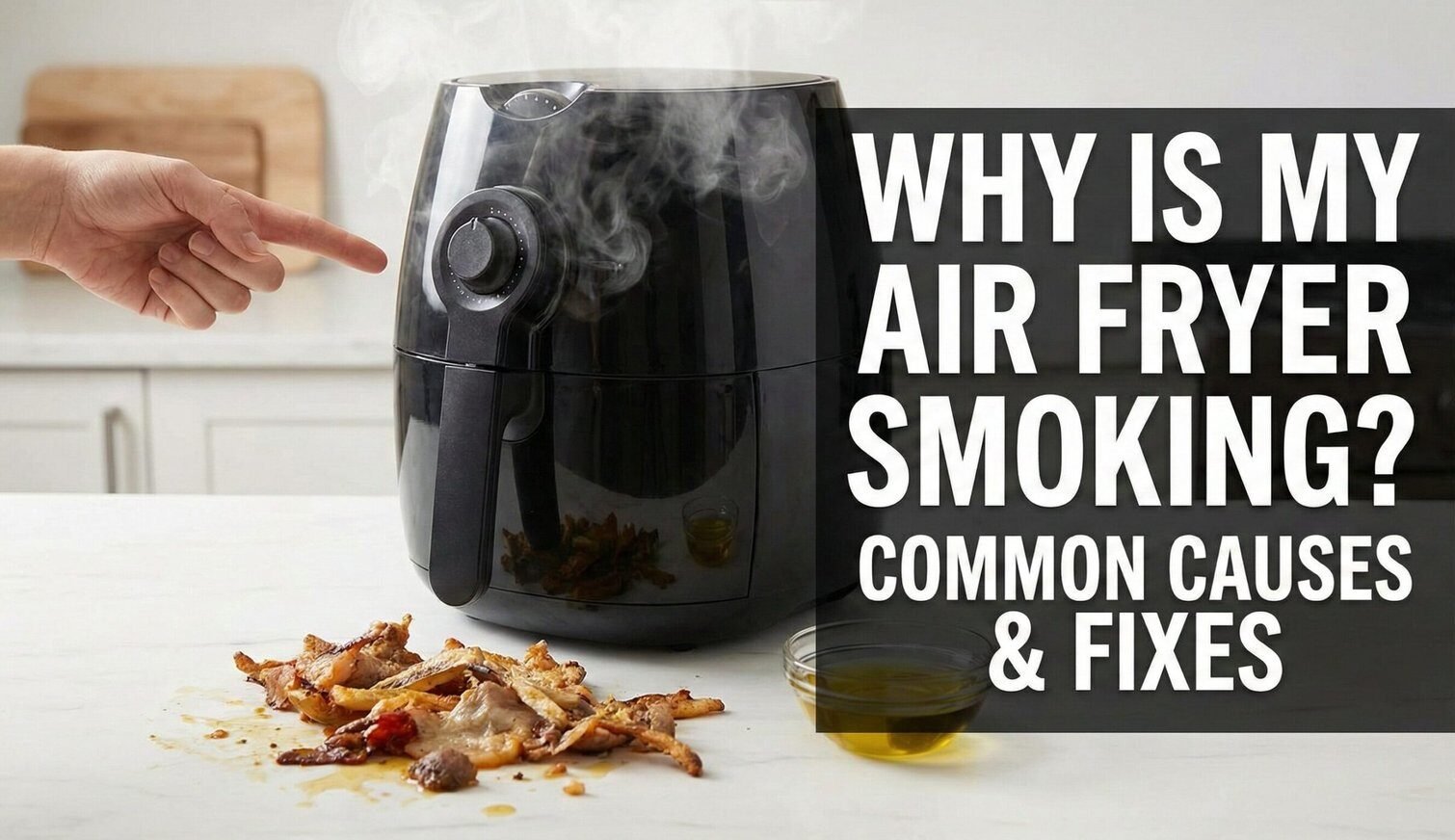
It is a scenario every home cook dreads. You have just seasoned a beautiful batch of chicken wings, placed them in your favorite kitchen appliance, and set the timer. Ten minutes later, instead of the delicious smell of roasted poultry, your kitchen is filled with a thick, acrid haze. The smoke alarm is blaring, the dog is barking, and you are frantically waving a kitchen towel at the ceiling.
First: Don’t Panic.
A smoking air fryer rarely means the machine is broken. In 90% of cases, it is a simple chemistry issue involving heat, fat, and airflow. However, knowing exactly why it is happening is crucial to fixing it and ensuring you aren’t breathing in harmful fumes.
Whether you own a basket-style model like the Cosori or Instant Vortex, or a larger oven unit like the Kalorik Maxx, the principles are the same. This comprehensive guide will walk you through diagnosing the smoke by color, immediate fixes to save your dinner, and the deep-cleaning maintenance required to prevent it from ever happening again.
Phase 1: The Smoke Color Test
Before you unplug everything or douse the unit in water (please don’t do that), take a second to observe the smoke. The color and smell are your best clues.
Smell: Like frying food or burning oil.
Severity: Low to Medium.
The Cause: Vaporized grease or steam. This is the most common issue and usually happens when cooking high-fat foods. It is annoying, but rarely dangerous.
Smell: Burnt toast, charcoal, or acrid chemicals.
Severity: High.
The Cause: Something solid is burning. This could be food residue stuck to the heating element, burning parchment paper, or melting plastic.
Smell: Ozone, melting plastic, or electrical burning.
Severity: Critical.
The Cause: Electrical failure. Internal wiring is melting or short-circuiting. This is a safety hazard.
Phase 2: Troubleshooting White Smoke (Grease Issues)
If the smoke is white, your air fryer is working correctly, but physics is working against you. Air fryers operate by circulating superheated air (usually between 350°F and 400°F) rapidly around the food.
When you cook fatty foods—think bacon, sausages, ribeye steak, or chicken thighs with the skin on—that fat renders out and drips into the bottom of the basket. In a deep fryer, that fat would join the pool of oil. In an air fryer, it hits a hot metal pan.
The “Flash Point” Problem
If the temperature of your air fryer is higher than the smoke point of the oil or fat dripping down, that liquid will instantly vaporize into smoke. Since the fan is blowing hard, it pushes that smoke out of the vents and into your kitchen.
If you are mid-cook and smoke starts billowing:
- Pause the air fryer.
- Carefully pull out the basket.
- Pour about 2 tablespoons (30ml) of tap water into the bottom drawer (underneath the basket where the grease collects).
- Resume cooking.
Why this works: The water mixes with the hot grease, instantly cooling the oil pool below its smoke point. It also stops the grease from splashing upward.
The “Bread Slice” Technique
For owners of the Power XL or similarly large units, the bread trick is legendary. Place a slice of stale white bread in the bottom drip pan before you start cooking. The bread acts as a sponge, absorbing the grease drips before they hit the hot metal. No splatter, no smoke, and easier cleanup.

The Prevention Solution: Silicone Liners
Stop grease from hitting the bottom pan entirely. These reusable silicone mats are designed to catch drips while allowing airflow through perforated holes. They are dishwasher safe and heat resistant up to 450°F.
View on Amazon →Phase 3: Are You Using the Wrong Oil?
One of the most common mistakes we see at Digital Fryer is the use of low-smoke-point oils. If you coat your veggies in Extra Virgin Olive Oil and set your fryer to 400°F, the oil itself will burn before the food is cooked.
Use this chart to select the right fat for your cooking temperature:
| Oil Type | Smoke Point | Best For |
|---|---|---|
| Avocado Oil | 520°F (271°C) | High heat searing, steaks, general air frying. |
| Ghee (Clarified Butter) | 485°F (250°C) | Flavorful roasting, indian dishes. |
| Light/Refined Olive Oil | 465°F (240°C) | General everyday cooking. |
| Canola / Vegetable Oil | 400°F (204°C) | Standard frying, baking cakes. |
| Extra Virgin Olive Oil | 375°F (190°C) | Salad dressings, finishing. Avoid for high heat. |
| Butter | 302°F (150°C) | Baking at low temps only. |
Phase 4: Troubleshooting Black Smoke (Burning Solids)
Black smoke is more alarming. It means something solid is combusting. In an air fryer, this usually happens in one of three places.
1. The “Hidden” Heating Element
When was the last time you looked at the roof of your air fryer’s interior? Gravity is the enemy here. When you cook lightweight foods (like spinach chips) or use light breading, the powerful convection fan sucks these particles upward.
These particles get stuck to the heating coil. Over time, they carbonize. When you turn the fryer on next, they burn, creating black smoke and a terrible smell that ruins your food.
2. The Flying Parchment Paper
We love using air fryer liners, but they must be used correctly. If you put a piece of parchment paper in the basket during preheating (without food on it), the fan will blow it upward into the heating element. It will catch fire instantly.
Rule of Thumb: Never put a liner in the fryer without food to weigh it down.
3. Overcrowding
If you stack food too high—like a mountain of french fries or a whole chicken that is too big for the basket—the food may physically touch the element. This causes instant charring. If you need to cook large quantities, consider upgrading to a large capacity fryer like the NuWave Brio or cooking in batches.
Phase 5: The Deep Clean (How to Fix It for Good)
If your air fryer smokes every time you turn it on, regardless of what you are cooking, it needs a deep clean. Old grease buildup on the walls and element is the culprit.
Safety First: Unplug the unit and let it cool completely. Wear protective gloves if you are using strong cleaning agents.
Step 1: The Upside Down Approach
To clean the heating element, you often need to turn the air fryer upside down (carefully!) so you can see the coil. Use a damp cloth or a non-abrasive sponge with warm soapy water. Gently wipe the coil. Do not use steel wool, as this can damage the element.
Step 2: The “Baked On” Grease Solution
For stubborn grease that looks like black tar, create a paste using baking soda and water. Apply it to the metal interior (avoiding the electrical parts) and let it sit for 15 minutes. Scrub gently with a specialized brush.
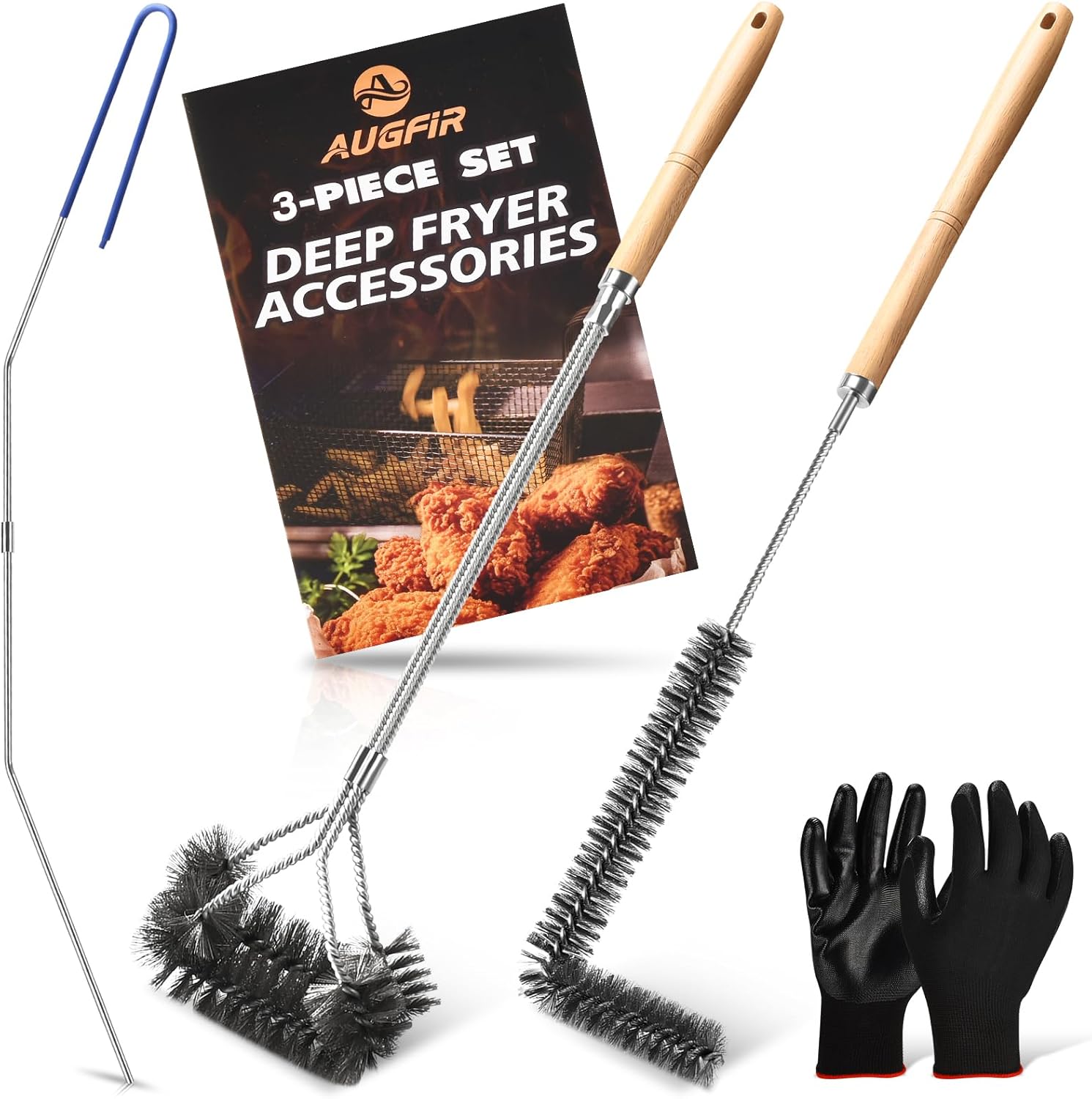
The Essential Tool: Angled Cleaning Brushes
Standard kitchen sponges can’t reach behind the heating coils of units like the Kalorik Maxx. This kit includes angled brushes specifically designed to clean air fryer vents and coils without scratching.
Check Price on Amazon →Phase 6: When to Replace (Blue Smoke)
If you see blue smoke, or if the smoke smells like melting plastic or burning rubber, this is rarely a cooking error. It usually indicates that the insulation around the electrical wires inside the unit has failed.
Do not attempt to fix electrical issues yourself unless you are a qualified appliance technician. Using an air fryer with compromised wiring is a serious fire hazard.
If your unit is under warranty (usually 1 year), contact the manufacturer. If it is an older unit, it is time to let it go. We have reviewed excellent, safe replacements, including the best digital air fryers of the year and affordable options in our under $100 guide.
Model-Specific Troubleshooting
PowerXL Air Fryer Smoking
The PowerXL series is famous for its high wattage. However, the basket sits quite close to the element in some models. Owners of this brand should be extra vigilant about the “Bread Trick” to prevent grease splatter.
Ninja Foodi Smoking
The Ninja Foodi is a dual-function device (pressure cooker + air fryer). Smoke often occurs if the “Splash Guard” (the metal screen protecting the element) gets clogged with grease. Ensure this screen is removed and scrubbed after every high-fat meal.
Oven-Style Fryers (Kalorik, NuWave)
Oven-style fryers like the NuWave IQ360 have racks instead of baskets. Grease from the top rack drips onto the bottom heating elements. Always use the drip tray on the absolute lowest level, covered in foil or a silicone mat, to catch these drips.
Final Thoughts
A smoking air fryer is a nuisance, but it is solvable. By understanding the difference between steam, burning grease, and electrical failure, you can troubleshoot the issue in seconds.
Remember the golden rules: Keep your unit clean, use oils with high smoke points, and never overcrowd the basket. With these tips, you can get back to enjoying your smart lifestyle upgrades and cooking healthy, crispy meals smoke-free.
Ready to test your clean machine? Try these beginner recipes (we recommend starting with something low-fat like roasted veggies!).
The Science Behind Air Fryer Smoke: Why It Happens
To truly understand why your air fryer smokes, you need to understand the physics happening inside that sealed chamber. Unlike a conventional oven that relies on radiant heat, an air fryer uses a powerful fan to circulate hot air at speeds of up to 1,700 RPM. This creates a phenomenon called the Maillard reaction—the same chemical process that makes seared steak taste incredible—but amplified to an extreme degree.
The Maillard Reaction and Smoke
When proteins and sugars in food are exposed to temperatures above 280°F (140°C), they undergo a complex series of chemical reactions that produce browning and flavor compounds. This is generally desirable. However, when temperatures exceed 350°F (175°C), the reaction accelerates dramatically, and the byproducts include volatile organic compounds (VOCs) that become visible as smoke.
In a conventional oven, these VOCs dissipate slowly into the larger cooking cavity. In an air fryer’s compact chamber, they are concentrated and then forcefully expelled through the vents by the fan. This is why even a small amount of smoke-producing grease can fill your entire kitchen within seconds.
Convection Intensifies Everything
The convection fan in your air fryer doesn’t just move air—it strips away the thin layer of cooler air that naturally forms around food (called the boundary layer). This means the food surface gets hotter, faster. While this is what makes air fryers produce that coveted crispy exterior, it also means any exposed fat or oil on the food’s surface reaches its smoke point much sooner than it would in a conventional oven.
This is the fundamental trade-off of air fryer cooking: the same rapid air circulation that creates crispiness is also the mechanism that turns rendered fat into visible smoke. Understanding this helps you make smarter decisions about oil application, food placement, and temperature settings.
The Role of Moisture
Water and oil don’t mix, but inside an air fryer, they create a volatile combination. When moisture from food evaporates at high temperatures, it creates steam. When this steam interacts with hot grease pooling at the bottom of the basket, it causes micro-spattering—tiny droplets of oil that vaporize instantly upon contact with the heating element or the superheated air stream.
This is why frozen foods often produce more smoke than fresh ones. The ice crystals on frozen chicken nuggets or fish fillets create excess moisture, which reacts with any oil present to produce sudden bursts of smoke. The solution? Pat frozen foods dry before cooking, or add a few extra minutes at a lower temperature to allow moisture to evaporate before cranking up the heat.
Steam vs Smoke: How to Tell the Difference
One of the most common mistakes air fryer owners make is confusing steam with smoke. While both appear as visible vapor rising from the unit, they have very different causes and require different responses.
| Characteristic | Steam | Smoke |
|---|---|---|
| Color | White, dissipates quickly | White, gray, or yellowish; lingers |
| Smell | Like the food you’re cooking | Acrid, burnt, or chemical-like |
| Texture | Moist, condenses on cool surfaces | Dry, leaves residue on surfaces |
| Duration | Stops once food surface dries | Persists or worsens over time |
| Effect on Smoke Alarm | Usually doesn’t trigger it | Often triggers it |
| Response | Normal; no action needed | Adjust cooking parameters |
The key indicator is the smell. Steam smells like whatever you’re cooking. Smoke smells like something burning. If you’re unsure, hold a cool plate above the vent for a few seconds. If water droplets form, it’s mostly steam. If a greasy residue forms, you’re dealing with smoke.
Understanding this distinction is important because many new air fryer users panic during the first few minutes of cooking frozen foods, when steam production is at its peak. This is completely normal and does not indicate a problem with your unit. The steam will subside as the food’s surface moisture evaporates and the Maillard reaction begins.
Complete Smoke Point Reference Guide: Every Oil Rated
Choosing the right oil for air frying is one of the most impactful decisions you can make to prevent smoke. Below is an exhaustive reference covering every commonly available cooking fat, organized by smoke point from highest to lowest.
| Oil / Fat | Smoke Point | Flavor Profile | Air Fryer Rating |
|---|---|---|---|
| Avocado Oil (Refined) | 520°F / 271°C | Neutral | ★★★★★ |
| Rice Bran Oil | 490°F / 254°C | Neutral, slightly nutty | ★★★★★ |
| Ghee (Clarified Butter) | 485°F / 252°C | Rich, buttery | ★★★★★ |
| Safflower Oil (Refined) | 465°F / 240°C | Neutral | ★★★★☆ |
| Light/Refined Olive Oil | 465°F / 240°C | Mild olive | ★★★★☆ |
| Peanut Oil (Refined) | 450°F / 232°C | Mildly nutty | ★★★★☆ |
| Soybean Oil (Refined) | 450°F / 232°C | Neutral | ★★★★☆ |
| Corn Oil | 440°F / 227°C | Neutral | ★★★★☆ |
| Sunflower Oil (High Oleic) | 440°F / 227°C | Neutral | ★★★★☆ |
| Canola Oil | 400°F / 204°C | Neutral | ★★★☆☆ |
| Vegetable Oil Blend | 400°F / 204°C | Neutral | ★★★☆☆ |
| Grapeseed Oil | 390°F / 199°C | Neutral, slightly tangy | ★★★☆☆ |
| Extra Virgin Olive Oil | 375°F / 190°C | Peppery, fruity | ★★☆☆☆ |
| Coconut Oil (Refined) | 350°F / 177°C | Neutral | ★★☆☆☆ |
| Coconut Oil (Virgin) | 350°F / 177°C | Sweet, coconutty | ★★☆☆☆ |
| Unsalted Butter | 302°F / 150°C | Rich, creamy | ★☆☆☆☆ |
| Animal Fats (Lard, Tallow) | 250–375°F | Meaty, savory | ★★☆☆☆ |
Match your oil’s smoke point to your cooking temperature. If you’re cooking at 400°F, your oil should have a smoke point of at least 420°F to provide a safety margin. Avocado oil is the gold standard for air frying—it handles virtually any temperature your unit can produce.
Why “Refined” Matters
Notice that refined versions of oils consistently have higher smoke points than their unrefined counterparts. This is because the refining process removes impurities, free fatty acids, and volatile compounds that would otherwise break down at lower temperatures. Extra virgin olive oil, for example, is packed with flavorful polyphenols—but those same compounds burn at just 375°F, making it unsuitable for most air frying applications.
If you love the taste of extra virgin olive oil, the solution is simple: add it after cooking. A drizzle of high-quality EVOO on finished air-fried vegetables gives you the flavor without the smoke.
The Budget-Friendly Smoke-Free Pick
Not everyone wants to spend $15 on a bottle of avocado oil. For budget-conscious cooks, refined canola oil is your best friend. At around $3–4 per bottle with a 400°F smoke point, it handles most air frying temperatures without smoking. It’s also virtually flavorless, making it versatile for everything from chicken to vegetables to baked goods.
Common Air Fryer Foods Ranked by Smoke Production
Not all foods are created equal when it comes to smoke. Here is a comprehensive ranking of the most popular air fryer foods based on their smoke-producing potential, along with tips for reducing smoke when cooking each one.
| Food | Smoke Risk | Why It Smokes | How to Reduce Smoke |
|---|---|---|---|
| Bacon | Very High | Extremely high fat content; grease drips and vaporizes | Add water to drip tray; cook at 350°F; use bread trick |
| Chicken Wings (skin-on) | High | Skin renders significant fat at high temps | Poke holes in skin to release fat; use drip tray liner |
| Frozen French Fries | Medium-High | Excess moisture + oil coating creates steam/smoke | Shake basket halfway; don’t over-oil; preheat properly |
| Ground Beef Patties | Medium-High | Fat renders and drips through basket holes | Use lower fat percentage (80/20); add water to tray |
| Pork Chops | Medium | Marbling renders at high temps | Trim visible fat; cook at 375°F instead of 400°F |
| Chicken Thighs (bone-in) | Medium | Dark meat has more fat than breast | Use skinless; pat dry before cooking |
| Salmon Fillets | Low-Medium | Fish oils can vaporize at high temps | Cook at 350°F; skin-side down; use foil pouch |
| Vegetables (fresh) | Low | Minimal fat; mostly steam | Light oil coating; don’t overcrowd |
| Toast / Bread | Low | No fat; crumbs may burn on element | Clean element regularly; don’t over-toast |
| Reheated Pizza | Low | Oil from cheese may drip | Use foil on bottom; quick 3-min reheat |
The pattern is clear: fatty foods + high temperatures = maximum smoke. If you’re cooking bacon or wings, expect some smoke and prepare accordingly with the water hack or bread trick. If you’re cooking vegetables or reheating, smoke should be minimal—and if it isn’t, your unit likely needs cleaning.
Preventive Maintenance: The Complete Schedule
The single most effective way to prevent air fryer smoke is regular maintenance. Most smoke issues that develop over time are caused by accumulated grease that carbonizes on the heating element and interior walls. Here is a complete maintenance schedule that will keep your unit running smoke-free.
After Every Use
Remove the basket and drip tray. Wash them with warm soapy water or place them in the dishwasher (if dishwasher-safe). Wipe down the interior with a damp cloth. This takes 2 minutes and prevents 90% of smoke issues.
Weekly (for regular users)
Inspect the heating element. Turn the unit upside down and look at the coil. If you see any residue, wipe it with a damp cloth while the unit is unplugged and completely cool. For stubborn spots, use a baking soda paste.
Monthly Deep Clean
Perform a full vinegar steam clean: place a bowl of equal parts white vinegar and water in the basket, run the unit at 350°F for 10 minutes, then wipe down all interior surfaces. This dissolves grease buildup and eliminates odors.
Every 3 Months
Inspect the exterior vents for dust and grease buildup. Use a soft brush or compressed air to clear them. Blocked vents cause overheating, which accelerates grease decomposition and increases smoke production.
Annually
Perform a complete disassembly (where your model allows) and deep clean all removable parts. Check the power cord for damage. If smoke persists after thorough cleaning, the element may need professional inspection.
Never submerge the main unit in water, spray it with a hose, or put it in the dishwasher. The electrical components are not waterproof. Always clean the main unit with a damp cloth only.
Best Cleaning Products for Air Fryers
While baking soda and vinegar are excellent natural cleaners, sometimes you need something stronger—especially for commercial kitchens or heavily used units. Here are the top-rated cleaning products specifically suited for air fryer maintenance.
Best Overall: Carbon-Off Heavy Duty Degreaser
This industrial-strength degreaser dissolves baked-on carbon and grease in minutes. Spray it on the interior walls and heating element (while cool and unplugged), let it sit for 5 minutes, then wipe clean. It’s the go-to choice for restaurant kitchens.
Pros: Extremely effective; works on carbon buildup
Cons: Strong chemical smell; requires ventilation; not food-safe until rinsed thoroughly
Best Natural: Arm & Hammer Baking Soda
Mix baking soda with water to create a paste, apply to greasy areas, and let sit for 15 minutes. Scrub gently with a non-abrasive sponge. This is the safest option for regular maintenance and is food-safe.
Pros: Cheap; food-safe; no harsh chemicals
Cons: Requires elbow grease; less effective on heavy carbon
Best Spray: Weiman Oven and Grill Cleaner
A foam-based cleaner that clings to vertical surfaces, making it ideal for the walls and ceiling of air fryer interiors. The foam dissolves grease on contact and can be wiped away without scrubbing.
Pros: Clings to surfaces; no scrubbing needed; works fast
Cons: More expensive per use; contains sodium hydroxide
Best for Coils: Angry Orange Degreaser
Originally designed for automotive use, this citrus-based degreaser is excellent for cleaning heating coils and hard-to-reach areas. The citrus scent is pleasant, and it cuts through grease without damaging metal surfaces.
Pros: Pleasant scent; safe on metals; versatile
Cons: Not specifically food-rated; strong scent may linger
Health Risks: Is Air Fryer Smoke Dangerous?
This is a question that deserves a serious answer. While occasional white smoke from cooking bacon is unlikely to cause lasting harm, chronic exposure to cooking fumes is a legitimate health concern.
What’s in Air Fryer Smoke?
Air fryer smoke contains a mixture of:
- Particulate Matter (PM2.5): Tiny particles that can penetrate deep into the lungs. Studies have shown that cooking with oil at high temperatures generates PM2.5 levels comparable to outdoor air pollution in heavily trafficked areas.
- Volatile Organic Compounds (VOCs): Including acrolein, formaldehyde, and polycyclic aromatic hydrocarbons (PAHs). These are known irritants and, with chronic exposure, potential carcinogens.
- Carbon Monoxide (CO): Produced when organic matter burns incompletely. In a well-ventilated kitchen, levels are negligible. In a closed kitchen, they can accumulate.
- Nitrogen Dioxide (NO2): A respiratory irritant produced when oils break down at high temperatures.
Risk Factors
The risk depends on several factors:
- Frequency: Cooking with an air fryer once or twice a week poses minimal risk. Cooking multiple times daily without ventilation is concerning.
- Ventilation: A kitchen with a range hood that exhausts to the outside dramatically reduces exposure. Recirculating hoods help but are less effective.
- Oil type: Oils with lower smoke points produce more harmful compounds when overheated.
- Food type: Processed meats (bacon, sausages) produce more PAHs and nitrosamines than fresh vegetables.
- Duration: Longer cooking times at high temperatures increase total exposure.
Protective Measures
- Always use your range hood or open a window when air frying at high temperatures
- Choose oils with high smoke points to minimize harmful compound formation
- Don’t reuse oil that has already been heated multiple times
- Keep your heating element clean—burnt residue produces more toxic fumes than fresh grease
- Install a carbon monoxide detector in your kitchen if you don’t have one
- If you have asthma or respiratory conditions, consider cooking outdoors or using a portable air purifier
- Avoid cooking fatty foods at maximum temperature—reduce to 375°F when possible
Indoor Air Quality: Ventilation Solutions
Proper ventilation is the most important factor in managing air fryer smoke. Even the best-maintained unit will produce some smoke when cooking high-fat foods, and without adequate ventilation, that smoke will linger in your home, trigger alarms, and affect air quality.
Range Hood Options
If your air fryer is near your stove, a range hood is your best defense. But not all range hoods are created equal:
| Range Hood Type | Capture Efficiency | Installation | Best For |
|---|---|---|---|
| External Vent (ducted) | 90–95% | Requires ductwork to outside | Best overall; removes smoke completely |
| Recirculating (ductless) | 50–70% | Easy install; no ductwork needed | Apartments; interim solution |
| Portable Range Hood | 40–60% | Countertop; plug-in | Renters; temporary setups |
| Window Exhaust Fan | 60–80% | Mounts in window | Kitchens near windows; budget option |
DIY Ventilation Hacks
Not everyone has a range hood, especially renters or those with older kitchens. Here are effective low-cost solutions:
- The Cross-Breeze Method: Open a window on one side of the kitchen and a window or door on the opposite side. This creates natural airflow that pulls smoke out of the room.
- The Box Fan Trick: Place a box fan in a window facing outward. Turn it on high before you start cooking. This creates negative pressure that pulls smoke and odors outside.
- The Bathroom Fan Hack: If your kitchen is near a bathroom with an exhaust fan, turn it on and leave the bathroom door cracked open. The fan creates suction that helps pull kitchen air toward the bathroom.
- The Air Purifier Solution: A HEPA air purifier placed near the air fryer can capture particulate matter and reduce smoke in the room. Look for units rated for your kitchen size (typically 200–400 sq ft).
If your kitchen has good natural ventilation, schedule your air frying sessions for times when you can open windows—spring and fall are ideal. In winter, when windows are sealed, consider using the air fryer in a well-ventilated area like a garage or enclosed porch (with proper electrical safety).
Air Fryer Placement and Ventilation Requirements
Where you place your air fryer significantly impacts smoke production and management. The manufacturer’s manual specifies minimum clearances, but understanding why those clearances matter helps you make better decisions.
The Clearance Rule
Most air fryers require at least 5–6 inches of clearance on all sides and 12 inches above. This isn’t just about preventing fire—it’s about airflow. The unit draws air in from the sides or back, heats it, and expels it through the top or rear vents. If the vents are blocked or too close to a wall, hot air recirculates back into the unit, raising internal temperatures and increasing the likelihood of grease combustion.
Surface Considerations
- Heat-resistant countertop: Granite, quartz, and stainless steel are ideal. They can withstand the heat radiating from the unit’s exterior.
- Avoid wood directly: While most air fryers don’t get hot enough to ignite wood, prolonged exposure to the exterior heat (which can reach 150–200°F) can damage wood finishes over time.
- Never place on a stove: It seems obvious, but people do it. If a burner accidentally turns on, you have a serious fire hazard.
- Avoid cloth surfaces: Never place an air fryer on a tablecloth, towel, or placemat. These can trap heat and become a fire risk.
Appliance Crowding
If your air fryer shares counter space with a toaster, coffee maker, or other heat-producing appliance, you’re creating a heat island that can cause both units to overheat. Give your air fryer its own dedicated space, ideally near a vent or window for maximum smoke management.
Advanced Troubleshooting: The Decision Flowchart
When your air fryer starts smoking, use this systematic approach to identify and resolve the issue quickly.
Is the smoke white or grayish?
This is likely grease vapor or steam. Continue to Step B.
Is it your first time cooking this food?
If yes, you may not know how much fat it will render. Reduce temperature by 25°F and monitor. If no, check if the drip tray needs cleaning—accumulated old grease will smoke at lower temperatures.
Did you add water to the drip tray?
If not, try the water hack now. If yes and it’s still smoking, the issue may be on the heating element itself. Proceed to Step D.
Inspect the heating element.
Turn the unit upside down (while unplugged and cool). If you see residue on the coil, it needs cleaning. Perform a deep clean before your next use.
Is the smoke black, blue, or has a chemical smell?
Stop cooking immediately. Black smoke means something is burning—check for food touching the element or burning parchment paper. Blue smoke means electrical failure—unplug and do not use until professionally inspected.
When to Replace vs Repair Your Air Fryer
Knowing when to cut your losses and buy a new unit can save you time, money, and potential safety hazards. Here’s how to decide.
Signs It’s Time to Replace
- Blue smoke or electrical burning smell: Unless the unit is under warranty and the manufacturer offers repair, replacement is safer and often cheaper than professional electrical repair.
- Smoke persists after thorough cleaning: If you’ve deep cleaned every surface and the heating element and still get smoke with every use, the element itself may be damaged or coated with carbon that can’t be removed.
- Uneven cooking with hot spots: This often indicates a failing heating element. Food burns in some spots while remaining raw in others, leading to smoke from the overcooked areas.
- The fan sounds different: A rattling, grinding, or unusually loud fan indicates bearing failure. A failing fan reduces airflow, which causes localized overheating and smoke.
- The non-stick coating is peeling: Exposed metal heats differently and can cause food to stick and burn. The flaking coating itself can also produce toxic fumes.
- The unit is more than 3–5 years old: Air fryers are generally not designed for long-term repair. After a few years of regular use, replacement is often more cost-effective than repair.
Signs It’s Worth Repairing
- Under warranty: If your unit is within its warranty period (typically 1–2 years), contact the manufacturer. Most will replace the unit rather than repair it.
- Simple part replacement: If the basket or drip tray is damaged, these are often available as replacement parts for $15–30. No need to replace the whole unit.
- Premium unit with replaceable elements: Some high-end models have user-replaceable heating elements. If yours does and you’re comfortable with basic appliance repair, a new element can extend the unit’s life by years.
Cost Comparison
| Repair / Replacement | Typical Cost | Worth It? |
|---|---|---|
| New basket or drip tray | $15–30 | Almost always yes |
| Professional electrical repair | $75–150 | Only for premium units over $200 |
| New heating element (DIY) | $30–60 | If you’re handy and the element is replaceable |
| New unit (budget) | $60–100 | Usually better than repair |
| New unit (mid-range) | $100–200 | Best value for most users |
| New unit (premium) | $200–400 | Worth it if you cook daily |
Seasonal Maintenance: Adapting to Weather Changes
Your air fryer’s performance and smoke production can change with the seasons. Understanding these changes helps you adjust your maintenance routine accordingly.
Summer Challenges
In hot weather, your kitchen is already warm. Running an air fryer at 400°F adds significant heat to the room, which can cause the unit to work harder and run hotter. The ambient heat also means grease stays liquid longer, increasing the time window for smoke production. In summer, try cooking at slightly lower temperatures (375°F instead of 400°F) and extend cooking times by a few minutes.
Winter Considerations
Cold kitchens can actually cause a different problem: thermal shock. When a cold air fryer is turned on to high heat, the rapid temperature change can cause any grease residue inside to crack and flake off the surfaces, creating debris that burns on the heating element. In winter, consider preheating your air fryer at a moderate temperature (300°F) for 2–3 minutes before increasing to your target temperature.
Humidity Impact
High humidity (common in summer or in coastal areas) means more moisture in the air, which means more steam production during cooking. This isn’t necessarily smoke, but it can trigger smoke alarms and create the appearance of smoke. In humid climates, a dehumidifier in the kitchen can help, as can running your range hood even during non-smoke-producing cooking sessions.
Smoke-Free Recipe Modifications
Sometimes the best way to prevent smoke is to modify your cooking technique rather than your equipment. Here are proven modifications for the smokiest recipes.
Bacon Without the Smoke
Bacon is the #1 smoke producer in air fryers. Here’s how to cook it with minimal smoke:
- Line the basket with a perforated parchment paper liner (with food on top to weigh it down).
- Add 2 tablespoons of water to the drip tray.
- Preheat to 350°F (not 400°F).
- Cook for 8–10 minutes, checking at 6 minutes.
- If smoke starts, pause and add more water to the drip tray.
Chicken Wings Without the Haze
Wings are delicious but smoky. The key is fat management:
- Pat wings completely dry with paper towels before seasoning.
- Poke 2–3 small holes in the skin of each wing with a fork to allow fat to render out gradually rather than all at once.
- Cook at 380°F instead of 400°F.
- Use the water hack in the drip tray.
- Cook in a single layer—never stack wings.
French Fries Without the Fog
Frozen fries produce smoke because of their oil coating and ice crystals:
- Spread frozen fries on a paper towel for 5 minutes to absorb surface moisture.
- Use minimal additional oil—a light spray is sufficient.
- Cook at 380°F and shake the basket at the halfway mark.
- Don’t overfill the basket—air needs to circulate around each fry.
Warranty and Manufacturer Support
Understanding your warranty can save you from replacing a unit that should be covered. Most air fryer manufacturers offer the following warranty structures:
| Brand | Warranty Period | Coverage | How to Claim |
|---|---|---|---|
| Cosori | 2 years | Defects in materials and workmanship | Online form or email support |
| Ninja | 1 year | Full unit replacement | Phone or online chat |
| Instant Pot (Vortex) | 1 year | Full unit replacement | Email with proof of purchase |
| PowerXL | 1 year | Defects only (not wear and tear) | Phone support |
| Kalorik | 2 years | Full unit replacement | Online registration required |
| NuWave | 1 year (extended available) | Full unit; extended covers accidental | Phone or website |
Register your air fryer immediately after purchase. Many manufacturers require registration to activate the full warranty. Keep your receipt—digital or physical—because most warranty claims require proof of purchase with date.
Energy Efficiency: Does Smoke Mean Wasted Energy?
Interestingly, a smoking air fryer is often an inefficient one. When grease smokes, it means energy is being wasted heating fat instead of cooking food. Here’s how to maximize efficiency while minimizing smoke:
- Preheat properly: A 3–5 minute preheat at cooking temperature ensures even heat distribution and reduces cooking time by 10–15%. Less time cooking means less time producing potential smoke.
- Don’t open the basket unnecessarily: Every time you open the basket, you lose 10–15°F of heat. The unit then has to work harder to recover, extending cooking time and increasing energy consumption.
- Cook in batches, not overcrowded: An overcrowded basket traps moisture, extends cooking time, and creates more smoke. Two smaller batches are faster and cleaner than one oversized batch.
- Match the unit to the meal: Don’t use a 10-quart air fryer to cook two chicken wings. The large empty space means the fan has to work harder to circulate heat, wasting energy and potentially causing uneven cooking.
- Use the shake function: Many modern air fryers have a shake reminder. Use it. Shaking or flipping food halfway through ensures even exposure to heat, reducing the likelihood of one side burning while the other remains undercooked.
Environmental Impact: Air Fryer Smoke and Your Carbon Footprint
While air fryers are generally more energy-efficient than conventional ovens (using up to 75% less energy for small batches), the smoke they produce has environmental implications that are worth considering.
Indoor Air Pollution Contribution
According to the EPA, cooking is one of the largest contributors to indoor air pollution, accounting for up to 60% of indoor particulate matter in some homes. Air fryers, with their concentrated airflow, can exacerbate this by producing high-density particulate plumes in short bursts.
Outdoor Air Quality
When cooking fumes are vented outside (through a range hood), they contribute to neighborhood air quality. While a single household’s contribution is negligible, multiplied across millions of air fryer users, it becomes a factor in urban air quality management.
Sustainable Practices
- Use high-smoke-point oils to minimize harmful emissions
- Maintain your unit regularly to prevent carbon buildup that produces black smoke
- Choose air frying over deep frying to reduce oil waste and emissions
- Recycle or properly dispose of old air fryers—don’t throw them in the trash where electronic components can leach into landfills
- Consider the total lifecycle impact when choosing between a cheap unit (short lifespan) and a quality unit (long lifespan)
Expert Tips and Tricks from Professional Kitchens
Chefs who use air fryers in commercial settings have developed techniques that go beyond the basics. Here are their top tips for smoke-free cooking:
Tip 1: The Ice Cube Method
Place 2–3 ice cubes in the drip tray before cooking fatty foods. As the unit heats up, the ice slowly melts, providing a continuous source of water that mixes with dripping grease, keeping the grease pool below its smoke point throughout the cooking process. By the time the ice melts, most of the fat has rendered and the danger period has passed.
Tip 2: The Foil Boat
Shape aluminum foil into a shallow boat or tray that sits beneath the basket (not inside it). This catches all grease drips before they hit the hot metal bottom of the unit. For oven-style air fryers, line the bottom rack with foil for the same effect. Replace the foil after each use—never reuse greasy foil.
Tip 3: The Two-Temperature Method
Start cooking at a lower temperature (325–350°F) for the first half of the cooking time. This allows fat to render slowly without reaching its smoke point. Then increase to the target temperature (380–400°F) for the final minutes to achieve crispiness. This method adds only 2–3 minutes to total cook time but dramatically reduces smoke.
Tip 4: The Onion Trick
Place a halved onion in the bottom of the drip tray. The onion absorbs grease and moisture while releasing sulfur compounds that neutralize smoke odors. Some chefs swear by this method for keeping their commercial kitchens smoke-free during high-volume service.
Tip 5: The Lemon Steam Clean
After cooking fatty foods, immediately place a bowl of water with lemon slices in the basket and run the unit at 300°F for 5 minutes. The steam loosens grease, and the citric acid cuts through residue, making your post-cooking cleanup easier and preventing buildup that causes future smoke.
Community Solutions: What Real Users Recommend
We’ve compiled tips from air fryer communities, forums, and social media groups to find the most popular and effective smoke-prevention strategies used by real home cooks.
- “The parchment paper weight trick” — Users recommend placing a metal rack on top of parchment paper to keep it in place. The rack presses the paper down while allowing air to circulate, preventing the paper from flying into the element.
- “The silicone mat revolution” — Silicone mats placed in the bottom of the basket catch drips while allowing airflow. Many users report a 90% reduction in smoke after switching to silicone liners.
- “Cook less, clean more” — The most common advice from long-term air fryer owners is to clean after every single use, no exceptions. The 2 minutes it takes saves hours of deep cleaning later.
- “The vinegar pre-treat” — Before cooking fatty foods, wipe the interior walls with a cloth dampened with white vinegar. The thin acid layer prevents grease from bonding to the metal, making post-cooking cleanup much easier.
- “The temperature staircase” — Instead of setting the fryer to 400°F immediately, start at 200°F, increase to 300°F after 3 minutes, then to 375°F for the final cook. This gradual approach prevents the initial grease-splatter smoke burst.
- “The drip tray water level” — Keep at least 1/4 inch of water in the drip tray at all times during cooking. Check and refill as needed during longer cook times. This single habit has the highest reported success rate for smoke prevention.
- “The aluminum foil shield” — Create a foil shield around the heating element (on oven-style models) by lining the ceiling with foil, leaving a gap around the element itself. This catches splatter before it reaches the coil.
- “The baking soda soak” — For heavily used baskets, soak in hot water with 1/4 cup baking soda for 30 minutes after each use. This dissolves grease that soap alone can’t touch.
Advanced Oil Science: What Happens Inside Your Air Fryer
Understanding the chemistry of oil degradation at high temperatures helps you make informed decisions about cooking fats. When oil is heated beyond its smoke point, a cascade of chemical reactions occurs that affects both the cooking process and your health.
The Three Stages of Oil Breakdown
When cooking oil is heated in an air fryer, it goes through three distinct stages:
- Stage 1: Normal Cooking (below smoke point). The oil behaves predictably—it conducts heat to the food surface, promotes browning, and prevents sticking. Volatile compounds are released in small amounts, and the oil maintains its chemical structure. This is the ideal operating range.
- Stage 2: Approaching Smoke Point (within 20°F). The oil begins to break down. Free fatty acids are released, and the oil starts to polymerize (form long chains of molecules). You’ll notice the oil becoming slightly darker and developing a faintly acrid smell. Smoke production begins in small wisps.
- Stage 3: Beyond Smoke Point. Full decomposition. The oil produces visible smoke, acrolein (a toxic aldehyde), and various free radicals. The oil turns dark and develops a bitter taste. Any food cooked in this oil will taste burnt and may contain harmful compounds.
In an air fryer, Stage 3 can be reached much faster than in a conventional oven because the concentrated airflow accelerates heat transfer. This is why oil management is more critical in air fryers than in any other cooking method.
Polymerization: The Enemy of Clean Air Fryers
When oil polymerizes (forms long molecular chains), it becomes a sticky, varnish-like substance that bonds tenaciously to metal surfaces. This is why old grease buildup looks like black tar—it’s literally petrified oil. Once polymerized, regular soap and water won’t remove it. You need either:
- Abrasive action: Baking soda paste with gentle scrubbing
- Chemical dissolution: Commercial degreasers or vinegar soaking
- Thermal decomposition: Running the unit empty at high heat to carbonize the residue (not recommended, as it produces smoke and fumes)
Prevention is always better than cure. By using oils with high smoke points and cleaning regularly, you prevent polymerization from occurring in the first place.
Oil Oxidation and Rancidity
Even before you start cooking, oil can degrade. Oxidation occurs when oil is exposed to heat, light, or air. Old or improperly stored oil has a lower effective smoke point because the oxidation products break down at lower temperatures. If your oil smells even slightly off before you cook, replace it. Using rancid oil not only produces more smoke but also imparts unpleasant flavors to your food.
Store your cooking oils in cool, dark places, and use them within 6 months of opening. For high-heat cooking oils like avocado or peanut oil, this ensures you’re always working with oil at its full rated smoke point.
The Complete Air Fryer Anatomy: Understanding Every Component
To truly master smoke prevention, it helps to understand what every part of your air fryer does and how each component contributes to or prevents smoke production.
The Heating Element
Located at the top of basket-style models (or distributed in oven-style models), the heating element is a coiled metal tube filled with a resistance wire. When electricity flows through the wire, it generates heat—typically reaching temperatures of 400–500°F. The element’s surface is what grease splatters onto, causing black smoke when residues accumulate.
The heating element is the most important component to keep clean. Even a thin layer of carbon buildup will reduce the element’s efficiency, create hot spots, and produce smoke when the unit is turned on. Most manufacturers design the element to be wipeable with a damp cloth, but accessing it requires turning the unit upside down.
The Convection Fan
The fan is the heart of the air fryer’s cooking mechanism. It circulates hot air at high velocity, creating the rapid heat transfer that makes air frying so effective. The fan typically sits above or beside the heating element, drawing air across the coil and pushing it down onto the food.
When the fan is obstructed (by food, grease buildup, or foreign objects), airflow decreases, causing uneven heating and potential smoke. A clean, unobstructed fan ensures consistent air distribution and prevents hot spots that cause localized burning.
The Basket and Drip Tray
The basket is where your food sits during cooking. Its perforated bottom allows hot air to circulate around the food from all angles. The drip tray sits below the basket and catches grease and food particles that fall through the basket holes.
The drip tray is your first line of defense against smoke. When grease collects here, it’s exposed to the radiant heat from the element above. If the tray is dry, the grease will heat up rapidly and eventually smoke. Adding water to the drip tray keeps the grease pool cool and prevents this.
The Non-Stick Coating
Most air fryer baskets and trays have a non-stick coating (typically PTFE or ceramic) that prevents food from sticking and makes cleanup easier. This coating also plays a role in smoke prevention—food that sticks to the basket burns, producing smoke. A well-maintained non-stick surface allows food to release easily, reducing burning.
However, non-stick coatings degrade over time. High temperatures, abrasive cleaning tools, and metal utensils can scratch or flake the coating, creating areas where food sticks and burns. When you notice food sticking despite adequate oiling, it’s time to replace the basket.
The Air Intake and Exhaust Vents
Air fryers draw cool air in through intake vents (usually on the back or sides) and expel hot air and moisture through exhaust vents (usually on the top or back). If these vents are blocked by walls, curtains, or other objects, hot air recirculates inside the unit, raising internal temperatures and accelerating grease decomposition.
Keep at least 5 inches of clearance around all vents. If your kitchen is small, consider wall-mounting the air fryer on a heat-resistant shelf to ensure proper airflow on all sides.
The Temperature Sensor
Modern air fryers use a thermocouple or thermostat to regulate temperature. If this sensor fails or becomes coated in grease, it may report inaccurate temperatures to the control board. This can cause the unit to heat beyond the set temperature, leading to oil combustion and smoke.
If your air fryer seems hotter than the temperature you’ve set (food burns faster than expected), the temperature sensor may need cleaning or replacement. This is typically a service-center repair, not a DIY fix.
Comparison: Air Fryer Smoke vs Other Cooking Methods
How does air fryer smoke compare to other common cooking methods? Understanding this helps set realistic expectations and shows where air frying excels.
| Cooking Method | Typical Smoke Level | Ventilation Needed | Primary Smoke Source |
|---|---|---|---|
| Air Fryer | Low to Medium | Window or range hood | Grease dripping onto hot surfaces |
| Deep Fryer | High | Range hood mandatory | Large oil volume at sustained high temp |
| Stovetop Pan Frying | Medium to High | Range hood recommended | Oil splatter on burner; open flame |
| Conventional Oven | Low | Minimal | Large cavity disperses smoke; lower air velocity |
| Grilling (outdoor) | High | Natural ventilation | Fat dripping onto charcoal or flame |
| Sous Vide + Sear | Low (during sear) | Range hood during sear | High-heat searing for 1–2 minutes only |
The air fryer’s smoke level is moderate—less than deep frying or stovetop cooking, but more than conventional oven cooking. The key difference is concentration: an air fryer produces a smaller total volume of smoke, but it’s expelled in a concentrated burst through the vents, which can make it seem worse than it is.
The Psychology of Air Fryer Smoke: Why We Overreact
This might seem like an odd section in a technical guide, but understanding your own reaction to air fryer smoke is important for managing it effectively.
The Alarm Response
When smoke appears in your kitchen, your brain activates a threat-response pattern. This is evolutionary—smoke historically meant fire. Your heart rate increases, your breathing becomes rapid, and your focus narrows to the threat. This is not the ideal state for calm, methodical troubleshooting.
The most common overreaction is unplugging the unit mid-cook, which wastes the food and doesn’t address the root cause. The second most common is opening the basket repeatedly to “check on it,” which lets more oxygen in and can actually intensify the smoke.
The Calm Approach
When smoke appears, take a breath and remember:
- White smoke from fatty food is normal and manageable.
- The water hack works in under 30 seconds.
- The smoke will dissipate once the grease pool cools.
- Your food is probably still fine—check it before panicking.
Developing a calm, systematic response to air fryer smoke will not only save your dinner but also reduce the stress of cooking. Print out the flowchart from the troubleshooting section and keep it near your air fryer for quick reference.
Smart Home Integration: Monitoring Air Quality
For the tech-savvy home cook, there are several smart home devices that can help you monitor and manage air fryer smoke in real-time.
Smart Smoke and CO Detectors
Modern smart detectors (like Nest Protect or First Alert Onelink) can send alerts to your phone when they detect smoke or carbon monoxide. This means you can monitor your kitchen’s air quality even when you’re in another room. Some models also integrate with smart home systems, automatically turning on exhaust fans when smoke is detected.
Indoor Air Quality Monitors
Devices like the Awair Element or IQAir AirVisual measure PM2.5, VOCs, CO2, temperature, and humidity in real-time. Placing one near your air fryer gives you objective data about your kitchen’s air quality, helping you determine when ventilation is needed and when it’s adequate.
Smart Range Hoods
Some modern range hoods can be controlled via smartphone apps or smart home assistants. You can set them to automatically activate when your air fryer starts cooking (via smart plug monitoring) or adjust their speed based on air quality readings from a connected sensor.
Smart Plugs for Monitoring
A smart plug between your air fryer and the wall outlet can track energy consumption and usage patterns. While it won’t detect smoke directly, the data can help you identify correlations between energy usage (which correlates with cooking temperature and duration) and smoke events.
Specialty Ingredients: Smoke Risks You Might Not Expect
Some ingredients produce smoke not because of their fat content, but because of their chemical composition. Here are the unexpected smoke producers:
- Honey and maple syrup glazes: Sugars caramelize and then burn at temperatures above 350°F. If you’re air frying glazed chicken or vegetables, reduce the temperature to 350°F and add the glaze only in the last 5 minutes.
- Soy sauce and teriyaki: The sugars and amino acids in these sauces burn quickly at high temperatures. Apply them as a marinade before cooking, not as a glaze during cooking.
- Garlic: Minced garlic burns at much lower temperatures than other ingredients. If your recipe includes garlic, add it mixed with oil to distribute the heat, or use garlic powder instead.
- Dried herbs and spices: Paprika, chili powder, and other ground spices can burn on the surface of food, producing acrid smoke. Apply spices mixed with oil to create a protective coating.
- Cheese: Cheese melts and then burns, creating both smoke and a sticky residue that’s difficult to clean. If you’re air frying anything with cheese, use the lowest temperature that still melts it (usually 350°F) and monitor closely.
- Breadcrumbs: Light, dry breadcrumbs can fly up into the heating element and burn. Press breading firmly onto food, and avoid loose breadcrumbs in the basket.
- Coconut flakes: Like breadcrumbs, coconut flakes are lightweight and can migrate to the heating element. Use large-flake coconut and press it onto food firmly.
Commercial Kitchen Applications: Managing High-Volume Smoke
Many restaurants and food trucks now use commercial-grade air fryers for their speed and consistency. Managing smoke in a commercial setting requires additional strategies beyond what home cooks need.
Dedicated Exhaust Systems
Commercial kitchens typically install dedicated exhaust hoods over air fryer stations, separate from the main cooking line exhaust. These hoods are designed to capture the concentrated plume of smoke that air fryers produce, with capture velocities of 100–200 feet per minute.
Staggered Cooking Schedules
In high-volume settings, cooking multiple batches of fatty foods in rapid succession creates cumulative smoke that can overwhelm even commercial exhaust systems. Smart operators stagger fatty items with lighter items (vegetables, bread) to allow the exhaust system to clear between smoky batches.
Staff Training
Restaurant staff who operate air fryers should be trained on the water hack, the bread trick, and proper cleaning schedules. Many commercial smoke incidents are caused by staff who don’t know how to manage grease in the drip tray during service.
Historical Context: How Air Fryers Evolved to Reduce Smoke
The air fryer as we know it was popularized by Philips in the early 2010s, but the underlying technology—rapid air convection—has been used in commercial kitchens since the 1970s. Early commercial convection ovens were notorious for smoke production because they lacked the drip tray and basket systems that modern air fryers include.
First Generation
Early consumer air fryers had simple basket designs with minimal grease management. Smoke was a common complaint, and manufacturers responded with basic user manual warnings about cooking fatty foods.
Second Generation
Manufacturers added improved drip trays, non-stick coatings, and removable heating elements that could be cleaned more easily. The water hack became widely known through online communities, significantly reducing smoke complaints.
Third Generation (Current)
Modern air fryers feature advanced grease management systems, including perforated drip trays that separate grease from the heat source, smoke-reduction modes that lower temperature automatically when smoke is detected, and self-cleaning functions that use steam to loosen grease. Some premium models even include grease collection cups that can be emptied without opening the basket.
The trend is clear: manufacturers are actively designing smoke out of the air fryer experience. If you’re using a first-generation model and struggling with smoke, upgrading to a modern unit may be the most effective solution.
Emergency Protocols: When Things Go Wrong
While rare, air fryer emergencies can occur. Here’s what to do in various scenarios:
Fire in the Basket
If food catches fire inside the basket (usually from parchment paper or food touching the element):
- Do NOT open the basket—this introduces oxygen and intensifies the fire.
- Unplug the unit immediately.
- If the fire doesn’t go out within 30 seconds, use a Class B (kitchen) fire extinguisher.
- Do NOT use water on a grease fire.
- Once the fire is out, ventilate the kitchen thoroughly before cleaning.
Electrical Sparking
If you see sparks or arcing from the unit:
- Unplug immediately—do not turn off via the control panel.
- Do not touch the unit until it has cooled completely.
- Inspect the power cord for damage.
- Contact the manufacturer for warranty service.
- Do not use the unit again until it has been professionally inspected.
Excessive Smoke (unit appears to be malfunctioning)
If the unit produces heavy smoke that doesn’t match the food being cooked:
- Unplug the unit and move it to a well-ventilated area (if safe to do so).
- Open all windows and turn on exhaust fans.
- Wait 15 minutes for the unit to cool completely.
- Inspect the interior for foreign objects, melted plastic, or damaged components.
- If you find damage, do not use the unit—contact the manufacturer.
Frequently Asked Questions
Is it normal for a new air fryer to smoke on the first use?
Yes, this is completely normal. New air fryers often have manufacturing residues (oils, protective coatings) on the heating element and interior surfaces that burn off during the first use. To minimize this, run the unit empty at 400°F for 10–15 minutes before cooking your first meal. Open windows and turn on your range hood during this initial burn-off.
Can I use cooking spray (like PAM) in my air fryer?
It depends. Aerosol cooking sprays contain lecithin and other additives that can build up on the non-stick coating and heating element over time, causing damage and increased smoke. If you must use cooking spray, apply it to the food directly rather than spraying the basket. Better yet, use a silicone brush to apply a thin layer of high-smoke-point oil.
Why does my air fryer smoke more with frozen foods than fresh?
Frozen foods contain ice crystals that create excess moisture. When this moisture hits hot oil or the heating element, it creates steam that vaporizes oil, producing smoke. To reduce this, let frozen foods thaw for 5–10 minutes before cooking, or pat them dry with paper towels. You can also start at a lower temperature for the first few minutes.
Should I preheat my air fryer?
For most foods, yes. Preheating for 3–5 minutes at your target temperature ensures even cooking and can actually reduce smoke because the food begins cooking immediately rather than slowly warming up in a cold chamber. However, for delicate foods or items that might blow around (like lightweight vegetables), skip preheating and start cold.
Can air fryer smoke set off my smoke alarm?
Absolutely. Air fryer smoke is dense and concentrated, which makes it particularly effective at triggering smoke alarms. To prevent false alarms, move your air fryer away from smoke detectors if possible, open windows before cooking fatty foods, and use your range hood. Some users temporarily disable their kitchen smoke alarm while air frying—this is not recommended for safety reasons.
Is the smoke from cooking bacon in an air fryer harmful?
Occasional exposure to cooking smoke from bacon is unlikely to cause lasting harm for healthy adults. However, the smoke contains particulate matter and VOCs that can irritate the eyes, throat, and lungs. For people with asthma, COPD, or other respiratory conditions, even occasional exposure can trigger symptoms. Always ensure good ventilation when cooking high-fat foods.
Why does my air fryer smoke even when cooking vegetables?
If vegetables are producing smoke, the most likely causes are: (1) residual grease from a previous cooking session on the heating element or basket, (2) too much oil applied to the vegetables, or (3) the temperature is set too high for the amount of moisture in the vegetables. Clean your unit thoroughly and reduce oil to a light spray or 1–2 teaspoons.
Can I line my air fryer basket with aluminum foil?
Yes, you can, but with caveats. Foil is safe for catching drips in the bottom of the basket, but never cover the entire basket with foil—it blocks airflow, which is essential for the air fryer to work properly. Also, never put foil in the unit without food to weigh it down, as the fan can blow lightweight foil into the heating element.
How often should I replace my air fryer basket?
The non-stick coating on air fryer baskets typically lasts 2–3 years with regular use. Replace the basket when you notice: the coating is peeling or flaking, food sticks significantly even with oil, the basket has warped from heat exposure, or the coating has deep scratches that expose the metal underneath. Replacement baskets cost $15–40 depending on the brand.
Do larger air fryers produce less smoke than smaller ones?
Generally, yes. Larger air fryers have more space for air circulation and larger drip trays that can hold more water (for the water hack). The larger cooking chamber also means grease droplets are more dispersed before hitting the heating element. However, a large air fryer used for small portions may waste energy, so match the unit size to your typical cooking volume.
Can I use my air fryer outdoors to avoid smoke inside?
Yes, and this is an excellent solution if you have access to an outdoor outlet. Use your air fryer on a covered patio, deck, or in a well-ventilated garage. Ensure the surface is heat-resistant and stable. Never use an air fryer in the rain or in direct sunlight for extended periods, as moisture and UV exposure can damage the electrical components.
What’s the difference between air fryer smoke and deep fryer smoke?
Deep fryer smoke comes from a large pool of oil at sustained high temperatures—it’s continuous and voluminous. Air fryer smoke comes from small amounts of grease hitting hot surfaces—it’s intermittent and less intense. Air fryer smoke is generally easier to manage because there’s less total grease involved, but the concentrated airflow can make it seem worse in a small kitchen.
Should I be worried about the plastic smell when my air fryer is new?
A slight plastic smell during the first 1–2 uses is normal—it’s the manufacturing residues burning off. However, if the smell persists beyond the initial burn-in period, or if you see blue-tinged smoke, this could indicate a defective heating element or wiring. Contact the manufacturer for a replacement under warranty.
Can I put water in the basket itself (not the drip tray)?
No, never put water directly in the cooking basket. Water in the basket will mix with food, creating steam that prevents crisping and can cause dangerous splattering. The water hack is specifically for the drip tray or bottom compartment—the area beneath the basket where grease collects. This keeps the water separate from the food while still cooling the grease pool.
My air fryer smokes only at certain temperatures—why?
This is likely because the grease in your drip tray or on the heating element has a smoke point that falls between your cooking temperatures. For example, accumulated bacon grease has a smoke point of around 375°F. If you cook at 350°F, no smoke. At 400°F, smoke. The solution is either to cook at the lower temperature or to clean the accumulated grease so there’s nothing to smoke at the higher temperature.
External Resource: Air Fryer World – Troubleshooting Smoke


