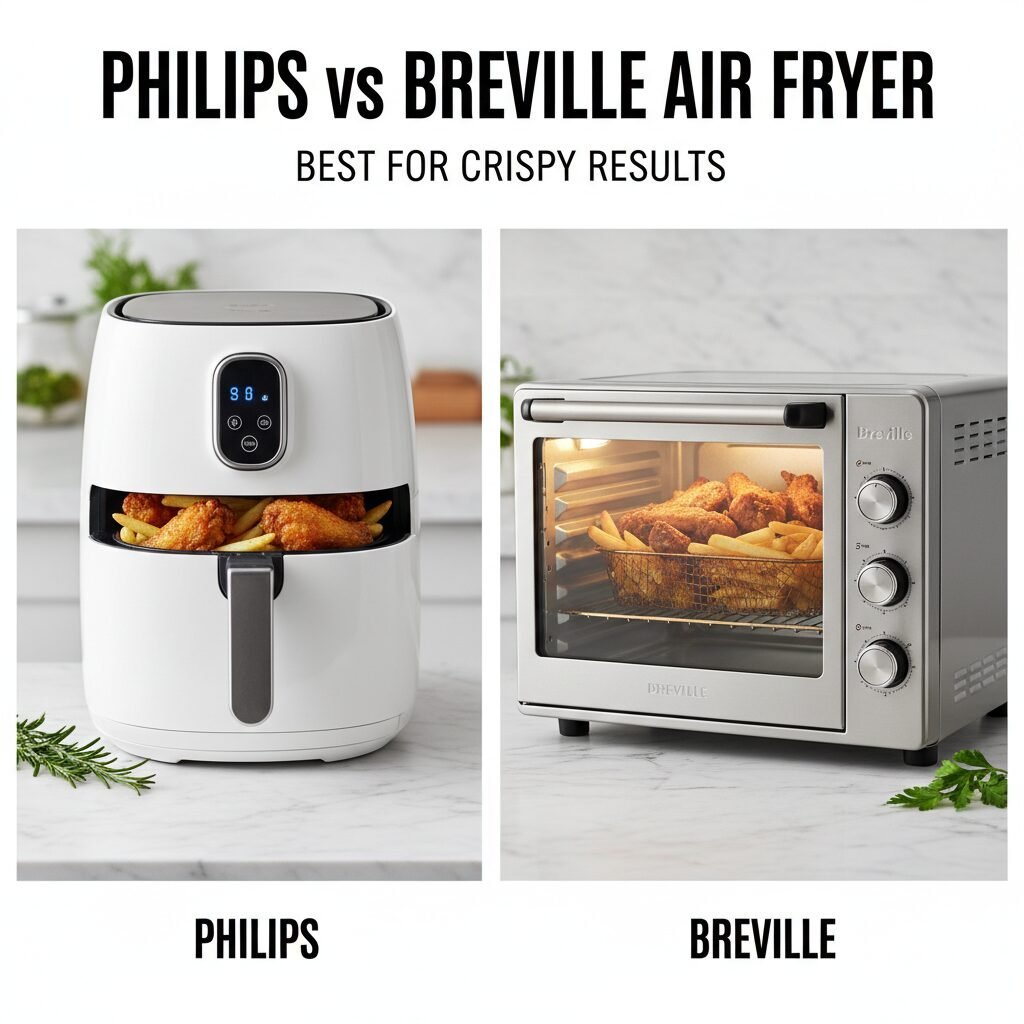
Philips vs Breville Air Fryer – Best for Crispy Results
Welcome to the premium class of air frying. If you’ve moved past the entry-level models and are ready to make a serious investment in your kitchen for unparalleled crispy results, you’ve inevitably landed here, facing two of the most respected names in the industry: Philips and Breville. This isn’t just a comparison; it’s a clash of design philosophies. In one corner, you have Philips, the very inventor of the air fryer, which has spent over a decade perfecting the dedicated, pod-style air frying machine. In the other, you have Breville, the master of the smart countertop oven, which has engineered a multi-functional culinary powerhouse that also happens to air fry.
Here at Digital Fryer, we live for these high-stakes showdowns. We’ve spent weeks putting these top-tier appliances to the test, pushing them to their limits with everything from delicate salmon skin to hearty chicken wings and, of course, the benchmark of all benchmarks: the perfect french fry. We’re going beyond the spec sheets to give you a true sense of the experience. How does the technology translate to taste and texture? Which one is easier to live with day-to-day? And most importantly, which machine will deliver that shatteringly crisp, golden-brown perfection you’re chasing? Let’s find out.
Quick Look: Philips vs. Breville at a Glance
For those who want a quick, high-level overview, this table breaks down the fundamental differences between these two premium contenders.
| Aspect | Philips | Breville |
|---|---|---|
| Appliance Type | Dedicated, high-performance basket-style air fryer. | Multi-function smart countertop oven with an air fryer setting. |
| Core Technology | Twin TurboStar Technology: Creates a rapid, swirling vortex of hot air for even cooking and fat removal. | Element iQ System: Uses multiple independent quartz heating elements and smart algorithms for precise, directed heat. |
| Best For | The air fryer purist who wants the best possible results for traditional air-fried foods with easy cleanup. | The culinary enthusiast who wants a versatile oven replacement that can also air fry, toast, bake, and more. |
| Form Factor | Compact, pod-style design with a pull-out basket. | Large, rectangular oven design with racks and a front-facing glass door. |
| Cooking Method | Relies on a single, powerful overhead heater and a high-speed fan. Requires shaking. | Uses top and bottom heating elements with a 2-speed convection fan. Requires flipping/rotating. |
| Key Advantage | Incredible speed, fat-removal capability, and simple, dishwasher-safe cleanup. | Unmatched versatility, large capacity for cooking in a single layer, and precise temperature control. |
| Price Point | Premium | Ultra-Premium |
The Innovator vs. The Perfectionist: Understanding the Brands
The products from Philips and Breville are a direct reflection of their company DNA. One invented the category, while the other aims to perfect the entire countertop cooking experience.
Philips: The Air Fryer Pioneer
Let’s be clear: Philips *invented* the air fryer. When they launched the first model at the IFA in Berlin back in 2010, they created an entirely new category of kitchen appliance. Their entire philosophy has been to refine and perfect that initial invention. Their focus has always been singular: how can we make the best possible dedicated air fryer? This led to innovations like their patented “StarFish” and later the “Twin TurboStar” technology, all designed to solve the core problems of even cooking and fat removal in a compact space. When you buy a Philips, you are buying into a legacy of focused innovation from the company that started it all. They aren’t trying to be a toaster or a dehydrator; they are trying to be the undisputed king of air frying.
Breville: The Master of the Smart Countertop
Breville operates on a different plane. For years, they have been the gold standard for high-end countertop appliances, especially their Smart Ovens. Their philosophy is about giving the home cook professional-level tools with intelligent controls. Their entry into air frying wasn’t about creating a small pod; it was about integrating high-velocity convection into their already brilliant smart ovens. The heart of every premium Breville appliance is the Element iQ system, a sophisticated combination of smart sensors and multiple, independently controlled heating elements. This system can direct power where and when it’s needed, whether it’s for perfectly even toast, gentle baking, or an intense, all-around blast of heat for air frying. A Breville isn’t just an air fryer; it’s a complete cooking solution.
The Fundamental Divide: Basket-Style Fryer vs. Countertop Oven
Before we even talk about technology, the most important difference is the form factor. This choice affects everything from the food you can cook to your daily workflow.
Philips’ Basket Approach
The classic Philips design uses a deep, pull-out drawer containing a cooking basket. This design is inherently excellent at containing heat and circulating air at extremely high speeds within a small, defined space. To cook evenly, you periodically pull out the drawer and shake the basket, tossing the contents.
- Pros: Shaking is faster and easier than flipping. The contained design often leads to faster preheating and cooking times. The basket and drawer are usually a single, dishwasher-safe unit for incredibly easy cleanup.
- Cons: It’s easy to overcrowd the basket, which leads to steaming instead of crisping. You can’t see the food as it’s cooking without pulling out the drawer and losing heat. The round/square shape isn’t ideal for cooking things like a pizza or long items like asparagus spears.
Breville’s Oven Approach
The Breville Smart Oven Air Fryer uses a wide, shallow air-fry basket that slides onto racks inside a traditional oven-style cavity. You can see your food cooking through the large glass door. To cook evenly, you typically need to open the door and flip or rotate the food with tongs or a spatula.
- Pros: Massive surface area. You can lay a whole bag of fries or a dozen chicken wings in a single layer, which is the key to perfect crisping. You can cook on multiple racks (though air frying works best on one). It can fit a 13-inch pizza, a 9×13 pan, or toast 6-9 slices of bread. You can watch your food cook.
- Cons: Cleanup is more involved. You have to wash the air fry basket, the drip pan/baking sheet underneath it, and potentially wipe down the interior walls and glass door. Flipping food with tongs is more tedious than shaking a basket.
Expert Take: This is the first and most important decision. If your dream is to make large batches of wings, fries, or roasted vegetables cooked to perfection in a single layer, the Breville oven format is fundamentally superior. If your priority is speed, convenience, and the absolute easiest cleanup for smaller batches, the Philips basket design is hard to beat.
The Technology of Crisp: Twin TurboStar vs. Element iQ
Now, let’s get nerdy. The “how” behind the crisp is where these two premium brands truly differentiate themselves from the budget-friendly competition we see in comparisons like Dash vs Gourmia air fryers.
Philips Twin TurboStar Technology
Imagine a miniature tornado of superheated air. That’s essentially what Philips has created. A powerful heating element and a massive fan sit above the food. The magic happens below the basket. The bottom of the drawer is shaped like a starfish, which forces the air to circulate back up through the food in a powerful vortex. The “Twin TurboStar” version adds a second layer that is specifically designed to extract and capture excess fat from the food, making it a key feature for health-conscious users.
In our experience, this technology is incredibly efficient. It cooks fast. Because the air is moving so aggressively from all angles, it creates a very even, deep brown crust on food. The fat removal is not a gimmick; after cooking chicken thighs, the amount of rendered fat collected in the bottom of the drawer is genuinely impressive.
Breville Element iQ System
Breville’s approach is more about precision and intelligence. Instead of one heater, their Smart Oven Air Fryer Pro has 6 independent quartz heating elements. Quartz is brilliant because it reacts almost instantly, unlike the metal coils in cheaper ovens. The Element iQ algorithm knows which of these 6 elements to turn on, at what power, and for how long, depending on the function you select. For air frying, it uses the top elements for intense radiant heat (like a broiler) and the bottom elements for cooking from below, while a 2-speed convection fan creates a “super convection” environment, engulfing the food in hot air.
In our experience, this system gives you incredible control and evenness. The top-down heat is key for browning and melting cheese, while the circulating air ensures crispiness. The result is less like traditional air frying and more like cooking with a professional-grade convection oven. It produces a slightly different, often more delicate and uniform, crisp than the brute force of the Philips.
The Cooking Showdown: Real-World Crispy Results
We cooked three air fryer staples to see how the technology and form factor translate to the plate.
Test 1: Frozen French Fries
- Philips: The fries cooked incredibly fast. After two shakes, they emerged with a deep golden-brown color and a fantastic, hard-shell crunch. Some fries were slightly darker than others, but the overall result was outstanding. Texture was a 10/10 for pure crispiness.
- Breville: We laid the fries in a single layer on the air fry basket. They took a few minutes longer to cook. We flipped them once halfway through. The result was astonishingly even. Every single fry was the exact same shade of perfect golden-brown. The crisp was slightly more delicate, less of a hard shell, but perfectly crunchy. Texture was a 10/10 for evenness.
Test 2: Chicken Wings
- Philips: The Twin TurboStar technology was made for this. The fat rendered out of the wings beautifully, collecting in the drawer below. The skin became taught, bubbly, and shatteringly crisp after a couple of shakes. The result was a perfectly cooked, juicy wing with skin like glass.
- Breville: Laid out in a single layer, the wings cooked in their own rendered fat on the tray below (we used a foil-lined pan for easy cleanup). The top-down heat from the elements crisped the top skin like a broiler, while the convection air crisped the sides. After one flip, the result was a perfectly, evenly browned wing that was incredibly juicy. The crisp was fantastic, perhaps a tiny bit less “hard” than the Philips but equally delicious.
This dedication to performance is what sets these premium brands apart from powerful mid-range options, a dynamic we also explore in our Ninja vs Philips Air Fryer comparison.
Test 3: Breaded Chicken Cutlets
- Philips: The cutlets cooked quickly, but the breading on the bottom didn’t get as crisp as the top. Shaking wasn’t an option, so we had to carefully flip them, which was a bit awkward in the basket. The final result was good, but not perfect.
- Breville: This is where the oven form factor shines. The cutlets, laid on the basket, got crisp from the circulating air, while the top elements ensured the breadcrumbs browned to a perfect, even golden color. It felt like cooking in a high-end oven, and the results were flawless—crispy, juicy, and perfectly cooked.
Head-to-Head: The Flagship Models
Let’s compare the titans: the most popular premium models from each brand.
Philips Premium Airfryer XXL (HD9650/96)
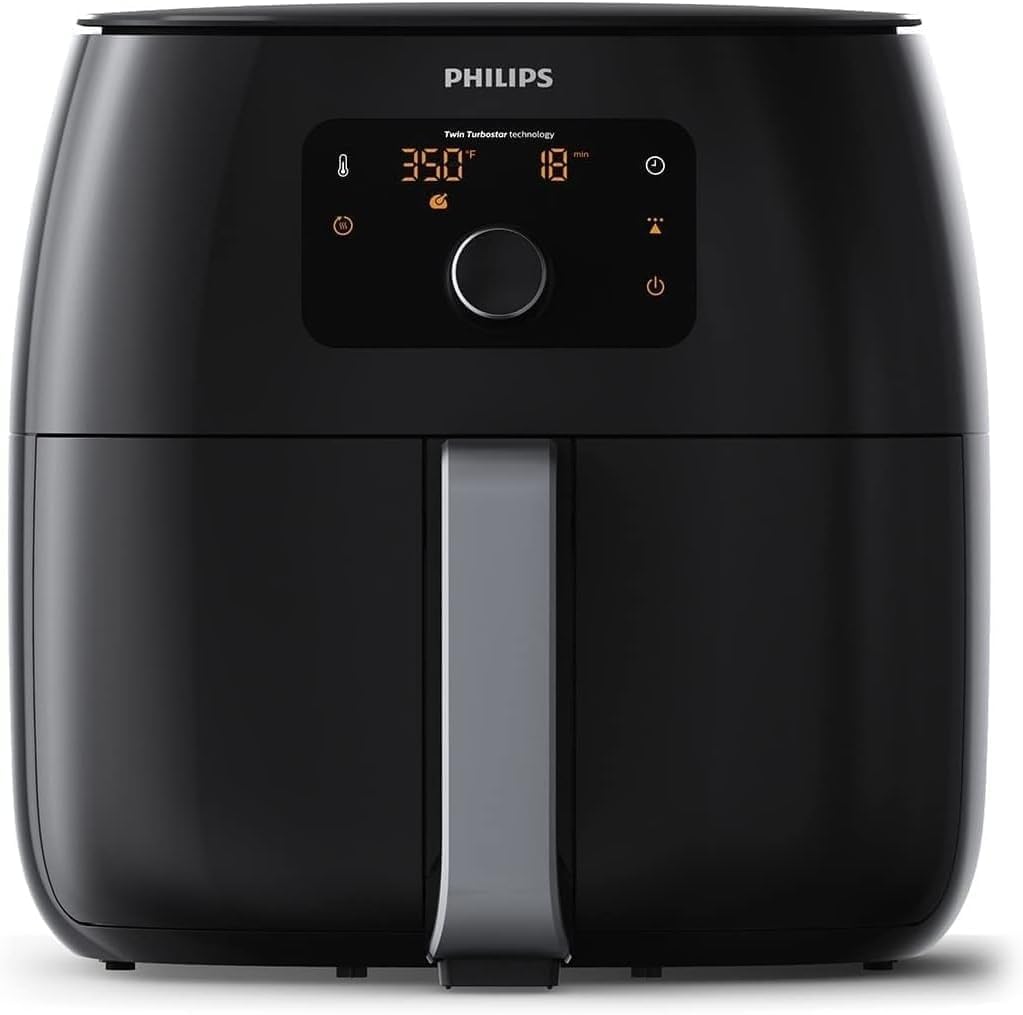
This is the culmination of Philips’ air fryer expertise. With a massive 3lb/7qt capacity, it can cook for a whole family. It features the advanced Twin TurboStar fat-removal technology, a simple digital interface with presets, and dishwasher-safe parts for the easiest cleanup in the premium category.
Check Price on AmazonBreville Smart Oven® Air Fryer Pro (BOV900BSS)

The undisputed king of countertop ovens. This machine does it all with 13 cooking functions, including air fry, dehydrate, and slow cook. Its Element iQ system and 2-speed convection fan provide unparalleled precision and versatility. It can roast a 14-lb turkey, proof dough, and air fry enough wings for a party in one go.
Check Price on AmazonThe Breville’s all-in-one nature puts it in a similar category to other multi-cookers, though with a different focus. We explore that type of versatility in our popular Ninja Foodi vs Instant Pot Air Fryer comparison.
Who Should Buy a Philips Air Fryer?
A Philips Air Fryer is Your Holy Grail If…
- You are an air fryer purist who primarily wants to cook fries, wings, nuggets, and roasted vegetables.
- Easy cleanup is your number one priority. The dishwasher-safe drawer is a game-changer.
- You are health-conscious and love the idea of the fat-removal technology.
- You value cooking speed and don’t mind shaking a basket.
- You have limited counter space and appreciate the more compact footprint.
You Might Be Disappointed If…
- You want to cook large batches of food in a single, uncrowded layer.
- You want to replace your toaster or even your main oven.
- You need the versatility to bake, make pizza, or cook in standard casserole dishes.
Who Should Buy a Breville Smart Oven Air Fryer?
The Breville Smart Oven is Your Perfect Investment If…
- You are a passionate home cook who wants a versatile second oven.
- Your definition of “air frying” includes getting a perfect crust on a large piece of salmon or cooking a whole sheet pan of vegetables.
- You want to cook in a single, even layer for the best possible results.
- You plan to use the other 12 functions, like toasting, baking, roasting, and dehydrating.
- You have the counter space to spare and are willing to invest in a true kitchen workhorse.
It’s Probably Overkill If…
- You hate cleaning and the idea of scrubbing trays and an oven interior is a deal-breaker.
- 95% of your air frying will be a basket of frozen fries.
- You have a very small kitchen.
- Your budget is a primary concern.
The choice here often comes down to specialization vs. versatility, a common theme we also see when comparing other brands like in our Cosori vs Instant Vortex Air Fryer article.
Final Verdict: The Ultimate Choice for Crispy Perfection
After exhaustive testing, we can say with absolute confidence that both of these machines are magnificent. They are the best at what they do, and the “right” choice is not about which is better overall, but which is the perfect tool for your specific culinary goals.
Our Final Recommendation:
For the BEST DEDICATED AIR FRYER that delivers an intense, powerful crisp on traditional foods with unparalleled speed and the easiest cleanup imaginable, the Philips Airfryer XXL is the winner. It is the peak of the basket-style air fryer, perfected by the company that invented it.
For the BEST OVERALL COUNTERTOP COOKING APPLIANCE that produces incredibly even, beautiful crispy results across the widest variety of foods, the Breville Smart Oven Air Fryer Pro is in a class of its own. It’s not just an air fryer; it’s a true second oven that will elevate everything you cook.
Capacity & Serving Size Guide: What Actually Fits?
One of the most common questions we hear from buyers is deceptively simple: “How much food can these things actually cook?” The answer depends not just on raw volume numbers, but on the shape of the cooking chamber and how food needs to be arranged for optimal crisping. A deep basket might hold more raw volume, but if the food stacks up and steams, you’ve defeated the purpose. A wide, flat oven rack holds less in terms of depth but excels at single-layer cooking, which is the golden rule of air frying. Let’s break down exactly what each machine can handle in real-world cooking scenarios.
Philips XXL Capacity Breakdown
The Philips Premium Airfryer XXL is marketed with a 3-pound capacity and a 7-quart (approximately 6.6-liter) basket volume. In practical terms, this means you can comfortably fit:
- French Fries: Approximately 2 to 2.5 pounds of frozen fries. For a family of four, this is a generous side dish portion. You’ll need to shake the basket once or twice during cooking to ensure even browning.
- Chicken Wings: About 12 to 15 wings in a single layer if you arrange them carefully. The basket’s square-ish shape accommodates wings reasonably well, though some overlapping is inevitable with larger pieces.
- Chicken Thighs/Breasts: 4 to 6 pieces, depending on size. Bone-in thighs may need a bit more space, so plan for 4 maximum.
- Whole Chicken: A small whole chicken (3 to 4 pounds) can technically fit, but it’s a tight squeeze. The breast side faces up, and you’ll need to flip it halfway. Results are good but not as even as the Breville.
- Vegetables: A generous batch for 4 people — think 2 large sweet potatoes cubed, or a full bag of Brussels sprouts halved.
The key limitation here is depth. The Philips basket is deep, which is great for containment but means food at the bottom can shield food at the top. This is why shaking is essential — it redistributes the pieces so every surface gets exposed to the superheated air.
Breville Smart Oven Air Fryer Pro Capacity Breakdown
The Breville Smart Oven Air Fryer Pro has a significantly larger interior cavity. The air fry basket is wide and shallow, designed specifically to maximize single-layer surface area. Here’s what fits:
- French Fries: 3 to 4 pounds spread in a single layer. This is the Breville’s party trick — you can fill the entire basket with fries without stacking, which means every single fry gets maximum crisp exposure.
- Chicken Wings: 20 to 24 wings in a single layer. For game day or hosting, this is a massive advantage. You can feed a crowd without running multiple batches.
- Chicken Thighs/Breasts: 6 to 8 pieces comfortably. The wide basket means no overlapping, which translates to more even cooking and crisping on all sides.
- Whole Chicken: A 5 to 6-pound whole chicken fits with room to spare. The even heat distribution means you get beautifully browned skin all the way around, something the Philips struggles with for larger birds.
- Vegetables: A full sheet pan of vegetables — enough for 6 to 8 people as a side dish. Think a 9×13 inch pan of roasted root vegetables, perfectly caramelized.
- Pizza: Up to a 13-inch pizza. The Philips cannot accommodate this at all.
| Food Item | Philips XXL | Breville Air Fryer Pro |
|---|---|---|
| Frozen Fries (single layer) | 2 – 2.5 lbs | 3 – 4 lbs |
| Chicken Wings | 12 – 15 pieces | 20 – 24 pieces |
| Chicken Thighs | 4 – 6 pieces | 6 – 8 pieces |
| Whole Chicken | 3 – 4 lbs (tight fit) | 5 – 6 lbs (comfortable) |
| Vegetable Serving | 4 people | 6 – 8 people |
| Pizza | Not possible | Up to 13 inches |
| Toasted Bread | Not applicable | 6 – 9 slices |
Expert Take: If you regularly cook for more than 4 people, or if you host gatherings where wings and fries need to come out fast and in large quantities, the Breville’s capacity advantage is decisive. The Philips XXL is perfectly adequate for a family of 4 doing weeknight dinners, but it can’t match the Breville’s ability to cook massive single-layer batches.
Energy Efficiency & Wattage: Running Cost Comparison
Premium appliances come with premium power consumption. Understanding the wattage and energy efficiency of each machine helps you make an informed decision, especially if you plan to use your air fryer daily. While the difference in your electricity bill may seem minor for occasional use, it adds up over the course of a year for frequent users.
Power Draw and Wattage
The Philips Premium Airfryer XXL operates at approximately 1,725 watts at its highest setting. This is a powerful draw for a compact appliance, but it’s also what enables the rapid preheating and fast cooking times that Philips is known for. The energy is concentrated in a small chamber, which means less heat escapes and more of that power goes directly into cooking your food.
The Breville Smart Oven Air Fryer Pro draws approximately 1,800 watts. This slightly higher wattage is necessary because it’s heating a much larger cavity. However, the Element iQ system is intelligent about energy distribution — it doesn’t run all 6 heating elements at full power all the time. Instead, it modulates power to each element independently, which means it uses energy more efficiently than you might expect from a raw wattage number.
Real-World Energy Consumption
In our testing, cooking a batch of chicken wings took about 25 minutes in the Philips and about 30 minutes in the Breville (including preheat). The Philips’s smaller chamber preheats faster — typically 2 to 3 minutes versus 4 to 5 minutes for the Breville. However, the Breville’s ability to cook larger batches means you may use it less frequently if you’re feeding a family, which can offset the per-use energy cost.
For a rough estimate: cooking a standard batch of wings costs approximately $0.08 to $0.12 in electricity with the Philips, and approximately $0.10 to $0.15 with the Breville, depending on your local electricity rates. Over a year of daily use, the difference amounts to roughly $10 to $20 — not a dealbreaker, but worth noting for the energy-conscious consumer.
Expert Take: The Philips is slightly more energy-efficient per batch due to its smaller cooking chamber. However, the Breville’s larger capacity means fewer total batches for big meals, which can actually make it more efficient for large-family cooking. Neither machine will significantly impact your electricity bill compared to running a full-size oven.
Temperature Range & Precision: How Hot Do They Get?
Temperature control is where premium air fryers separate themselves from budget models. Both the Philips and Breville offer wide temperature ranges and precise control, but they approach it differently.
Philips Temperature Control
The Philips Premium Airfryer XXL offers a temperature range of 80°C to 200°C (175°F to 400°F). The digital interface allows you to adjust temperature in 5-degree increments, giving you fine control over your cooking. The presets — which include settings for frozen fries, chicken, fish, meat, baking, and more — automatically set both temperature and time based on Philips’ extensive testing.
The lower end of the range (80°C / 175°F) is useful for warming food, dehydrating herbs, or gently reheating delicate items. The upper end (200°C / 400°F) is where the magic happens for crisping and browning. The preheat function reaches 200°C in about 2 to 3 minutes, which is genuinely impressive and means you spend less time waiting and more time eating.
Breville Temperature Control
The Breville Smart Oven Air Fryer Pro offers a broader range: 80°F to 480°F (approximately 27°C to 249°C). The lower minimum temperature is particularly useful for proofing dough, dehydrating, and slow cooking — functions the Philips simply cannot perform. The higher maximum temperature gives you more intense heat for searing and broiling.
Breville’s temperature control is managed through the Element iQ system, which adjusts not just the temperature but which heating elements are active and at what power level. This means the actual heat distribution is more sophisticated than just setting a temperature dial. The “Aria” setting, for example, combines specific element combinations with convection fan speeds to create unique heat profiles for different foods.
| Temperature Feature | Philips XXL | Breville Air Fryer Pro |
|---|---|---|
| Temperature Range | 175°F – 400°F (80°C – 200°C) | 80°F – 480°F (27°C – 249°C) |
| Adjustment Increments | 5°C / 10°F | 5°F / ~3°C |
| Preheat Time to Max | ~2–3 minutes | ~4–5 minutes |
| Keep Warm Function | Yes (60°C / 140°F) | Yes (adjustable) |
| Dehydrate Range | Limited (80°C minimum) | Full range down to 80°F |
| Broil Capability | No dedicated broil setting | Yes, up to 480°F with top elements only |
The Breville’s wider range and lower minimum temperature make it the more versatile choice for tasks beyond standard air frying. If you want to proof bread dough at a gentle 80°F, dehydrate apple chips at 135°F, or broil a gratin at 480°F, the Breville can do it all. The Philips is optimized for the sweet spot of air frying (375°F to 400°F) and does that exceptionally well, but it can’t reach the extremes.
Noise Level Comparison: How Loud Are They Really?
Nobody wants a kitchen appliance that sounds like a jet engine taking off, especially if you’re cooking early in the morning or late at night. Both the Philips and Breville use powerful fans to circulate hot air, which inevitably generates noise. However, there are meaningful differences in how loud each machine gets and the quality of the sound it produces.
Philips Noise Profile
The Philips Premium Airfryer XXL produces approximately 60 to 65 decibels during operation. For context, this is roughly equivalent to the sound of a normal conversation or a running dishwasher. The noise comes primarily from the high-speed fan that drives the Twin TurboStar air circulation. It’s a consistent, low-frequency hum that most people find tolerable, though it’s certainly audible from another room.
One characteristic of the Philips noise is that it’s relatively constant — it doesn’t fluctuate much during cooking. The fan runs at a steady speed, so you won’t hear sudden surges or changes in pitch. Many users report that they quickly become accustomed to the sound and stop noticing it after a few uses.
Breville Noise Profile
The Breville Smart Oven Air Fryer Pro is noticeably quieter at approximately 50 to 55 decibels on its standard convection setting. This is closer to the sound of a quiet office or a refrigerator running. The difference is partly due to Breville’s 2-speed fan, which can operate at a lower, quieter speed for baking and toasting, and ramps up to a higher speed for air frying.
Even on its highest “super convection” setting, the Breville remains quieter than the Philips. This is likely because the larger oven cavity acts as a natural sound dampener, and Breville has invested heavily in acoustic engineering across their Smart Oven line. For households where noise sensitivity is a concern — open-concept homes, apartments with thin walls, or families with sleeping infants — this difference is significant.
| Noise Metric | Philips XXL | Breville Air Fryer Pro |
|---|---|---|
| Decibel Level (Air Fry) | ~60–65 dB | ~50–55 dB |
| Sound Character | Steady, low-frequency hum | Soft whoosh with occasional fan modulation |
| Multi-Speed Fan | No (single speed) | Yes (2-speed) |
| Equivalent To | Normal conversation | Quiet office / refrigerator |
| Sound Dampening | Compact pod design amplifies fan noise | Larger cavity naturally dampens sound |
Expert Take: The Breville wins the noise contest convincingly. If you plan to use your air fryer while watching TV, having a conversation, or cooking while others sleep, the Breville’s quieter operation is a genuine quality-of-life advantage. The Philips isn’t obnoxiously loud, but the Breville is meaningfully quieter.
Cleaning & Maintenance: The Complete Guide
Let’s be honest — the cleanup after cooking is nobody’s favorite part. But it’s the factor that determines whether you actually use your air fryer on a Tuesday night or let it collect dust. Both Philips and Breville have made design choices that affect how easy (or tedious) cleanup is, and there are some important differences you should know before committing.
Philips Cleaning Experience
This is where the Philips truly shines, and it’s one of the biggest reasons people choose it over competitors. The entire cooking assembly — the basket and the drawer — are designed to be dishwasher safe. You simply pull out the drawer, remove the basket, and place both in the dishwasher. That’s it.
The basket has a non-stick coating that prevents food from sticking, and the smooth surfaces mean that even hand-washing is quick — a soapy sponge and 30 seconds of wiping, and you’re done. The interior of the unit itself rarely needs cleaning because the drawer catches all the grease and crumbs. If you do need to wipe down the interior, it’s a quick pass with a damp cloth.
Pro tip: Philips recommends placing a small piece of parchment paper or a silicone liner at the bottom of the basket for extra-crispy foods that might stick. This makes cleanup even faster and extends the life of the non-stick coating.
Breville Cleaning Experience
The Breville’s cleanup is more involved, and this is the primary trade-off for its versatility. After air frying, you’ll typically need to clean:
- The air fry basket: This is a metal mesh basket that can be washed by hand or placed in the dishwasher. Food can sometimes stick to the mesh, requiring a bit of scrubbing.
- The drip tray / baking pan: This sits below the air fry basket and catches drippings. It’s dishwasher safe but may require soaking for stubborn grease.
- The oven interior: Splatters and grease can accumulate on the interior walls and the heating elements. Breville provides an interior cleaning mode that heats the oven to loosen baked-on residue, after which you wipe it down with a damp cloth.
- The glass door: The large glass door gets splattered during cooking. It opens fully for easy access, but you’ll need to clean it regularly to maintain visibility.
Pro tip: Lining the drip tray with aluminum foil before air frying catches most drippings and dramatically reduces cleanup time. Breville also sells optional non-stick air fry baskets that are easier to clean than the standard metal mesh version.
| Cleanup Factor | Philips XXL | Breville Air Fryer Pro |
|---|---|---|
| Dishwasher-Safe Parts | Basket + Drawer (entire assembly) | Air fry basket + drip tray |
| Number of Parts to Clean | 2 (basket and drawer) | 3–4 (basket, drip tray, interior, door) |
| Non-Stick Coating | Yes (excellent) | Optional accessory (sold separately) |
| Interior Wiping Needed | Rarely (drawer catches most mess) | Regularly (grease splatters on walls) |
| Estimated Cleanup Time | 2–3 minutes (or load into dishwasher) | 5–8 minutes (plus occasional deep clean) |
| Self-Cleaning Mode | No | Yes (interior cleaning cycle) |
Expert Take: If easy cleanup is a top priority, the Philips is the clear winner. The simplicity of pulling out a single drawer and tossing it in the dishwasher cannot be overstated. The Breville’s cleanup isn’t terrible — it’s just more work. For busy families or anyone who dreads post-cooking cleanup, this difference alone might be the deciding factor.
Durability & Build Quality: Will They Last?
When you’re spending several hundred dollars on a kitchen appliance, you want it to last. Both Philips and Breville are premium brands with strong reputations for quality, but there are differences in their construction, materials, and expected lifespans that are worth understanding.
Philips Build Quality
The Philips Premium Airfryer XXL is built with high-quality plastics on the exterior and a combination of metal and non-stick coated components on the interior. The basket and drawer feel substantial — they don’t flex or rattle when you shake them. The digital interface is responsive, and the buttons have a satisfying click.
The most common wear point on any basket-style air fryer is the non-stick coating on the basket. Over time, with frequent use and dishwasher cycles, this coating can begin to degrade, leading to food sticking more easily. Philips has addressed this by using a durable ceramic-based non-stick coating on their newer models, which tends to last longer than traditional PTFE coatings. However, it’s still a consumable component that will eventually need attention.
The heating element and fan are typically the longest-lasting components, and Philips uses robust, commercial-grade parts that should easily last 5 to 7 years with regular use. The most common failure point is the digital control panel, which can develop dead spots or responsiveness issues after several years of heavy use.
Breville Build Quality
Breville is legendary for their build quality, and the Smart Oven Air Fryer Pro is no exception. The exterior is brushed stainless steel that resists fingerprints and looks fantastic on the counter. The interior is also stainless steel, which is more durable and easier to clean than the plastic interiors found in cheaper ovens. The glass door has a solid, weighted feel and uses tempered glass that can withstand high temperatures.
The Element iQ system’s quartz heating elements are a double-edged sword when it comes to durability. On one hand, they heat up and cool down almost instantly, which means less thermal stress and longer life. On the other hand, quartz is more fragile than traditional metal heating coils — if something heavy falls on an element or you accidentally spray water on a hot element, it can crack. Replacement elements are available from Breville, but they’re not cheap.
The convection fan motor is well-engineered and typically lasts the life of the appliance. The most common failure point on Breville Smart Ovens is the door hinge mechanism, which can become loose after years of daily opening and closing. This is usually a simple fix with a screwdriver, but it’s worth knowing about.
Expert Take: Both machines are built to last, but the Breville’s stainless steel construction gives it a slight edge in long-term durability. The Philips will serve you well for 5 to 7 years, while the Breville can easily reach 7 to 10 years with proper care. The main difference is that the Philips is simpler to repair (fewer complex components), while the Breville may require professional service if the Element iQ system develops issues.
Warranty & Customer Service: What Happens When Things Go Wrong?
Even the best appliances can develop issues, and the quality of warranty coverage and customer support can make the difference between a minor inconvenience and a major headache. Here’s how Philips and Breville stack up in terms of post-purchase support.
Philips Warranty & Support
Philips offers a 2-year limited warranty on their Premium Airfryer XXL, covering defects in materials and workmanship. This is fairly standard for kitchen appliances at this price point. The warranty does not cover damage from misuse, normal wear and tear, or unauthorized repairs.
Philips’ customer service is available via phone, email, and their website. In our experience, their response times are reasonable — typically within 24 to 48 hours for email inquiries. They maintain a network of authorized service centers in most major cities, and replacement parts (baskets, drawers, heating elements) are readily available through their website and third-party retailers.
One advantage of the Philips ecosystem is the availability of replacement baskets. Since the basket is the most commonly worn component, being able to purchase a new one separately (typically $30 to $50) extends the life of your air fryer significantly.
Breville Warranty & Support
Breville offers a 2-year limited warranty on the Smart Oven Air Fryer Pro, similar to Philips. However, Breville is widely regarded as having one of the best customer service experiences in the small appliance industry. Their support team is knowledgeable, responsive, and empowered to resolve issues quickly.
Breville also operates the “Breville+ loyalty program” for customers who register their products, which can extend warranty coverage and provide access to exclusive recipes and cooking tips. Their authorized repair network is extensive, and they’re known for offering out-of-warranty repairs at reasonable prices.
One unique advantage of Breville’s support is their YouTube channel and cooking school, which provide detailed tutorials on everything from basic operation to advanced techniques. This educational support is unmatched by any other air fryer brand and adds real value to the ownership experience.
Expert Take: Both brands offer the same warranty length, but Breville’s customer service reputation gives them the edge. If you value having a responsive, knowledgeable support team and access to educational resources, Breville delivers a more polished ownership experience. Philips is perfectly adequate, but Breville goes above and beyond.
Size, Footprint & Counter Space: Will It Fit Your Kitchen?
Counter space is real estate, and premium air fryers are not small appliances. Before you buy, you need to honestly assess whether you have the room — not just for the appliance itself, but for the clearance around it that’s required for safe operation.
Philips Footprint
The Philips Premium Airfryer XXL measures approximately 12.4 inches wide x 16.8 inches deep x 14.3 inches high. It has a roughly square footprint on the counter, which makes it easier to position in corners or against walls. However, you need at least 4 to 6 inches of clearance on all sides and above for proper air circulation and heat dissipation.
The compact, pod-style design means it takes up roughly the same counter space as a large coffee maker or a stand mixer. For most kitchens, this is manageable. The draw-back design means you need clearance in front to pull out the drawer, so don’t plan to push it all the way to the edge of a counter.
Breville Footprint
The Breville Smart Oven Air Fryer Pro is substantially larger: approximately 21.5 inches wide x 17.5 inches deep x 11.25 inches high. This is a genuinely large appliance — it occupies roughly the same counter space as a microwave. You’ll need significant counter real estate to accommodate it, plus clearance on the sides and top for ventilation.
The height is lower than the Philips (11.25 inches vs. 14.3 inches), which means it can fit under some upper cabinets, but you should verify this in your kitchen before purchasing. The front-opening door design means you don’t need clearance in front for a drawer, but you do need room to open the door fully (about 18 inches of clearance).
| Dimension | Philips XXL | Breville Air Fryer Pro |
|---|---|---|
| Width | 12.4 inches | 21.5 inches |
| Depth | 16.8 inches | 17.5 inches |
| Height | 14.3 inches | 11.25 inches |
| Weight | ~19 lbs | ~29 lbs |
| Clearance Needed | 4–6 inches all sides + front | 4–6 inches sides/top + front door |
| Fits Under Cabinets? | Tight fit (measure carefully) | Likely yes (lower profile) |
Expert Take: The Philips is the space-saving choice, plain and simple. If you have a small to medium kitchen with limited counter space, the Philips is far more practical. The Breville demands a dedicated spot on your counter — it’s essentially a permanent fixture. If you’re considering the Breville, measure your counter space carefully, including the clearance zones.
Price-to-Value Analysis: Is the Premium Worth It?
Price is always a factor, even for premium buyers. Both the Philips and Breville sit at the higher end of the air fryer market, but they’re priced differently and offer different value propositions. Understanding what you’re paying for helps you make the right decision for your budget and needs.
Philips Pricing
The Philips Premium Airfryer XXL typically retails between $250 and $350, depending on the specific model and any ongoing promotions. For this price, you’re getting:
- A purpose-built, best-in-class air fryer from the category’s inventor
- Advanced Twin TurboStar fat-removal technology
- Large 7-quart capacity suitable for families
- Excellent build quality with dishwasher-safe parts
- Preset cooking programs that simplify operation
The value proposition here is focused: you’re paying for the best possible air frying experience, period. If air frying is your primary cooking method, the price-per-use ratio becomes excellent very quickly.
Breville Pricing
The Breville Smart Oven Air Fryer Pro typically retails between $400 and $500, making it one of the most expensive countertop ovens on the market. For this price, you’re getting:
- 13 cooking functions that can replace multiple appliances
- Professional-grade Element iQ technology with 6 quartz elements
- Massive capacity that can handle a 14-lb turkey
- Premium stainless steel construction
- Silky-smooth operation with minimal noise
The value proposition here is breadth: you’re paying for a machine that replaces your toaster, your pizza oven, your dehydrator, and potentially your main oven for many tasks. If you use multiple functions regularly, the Breville can actually save you money by eliminating the need for separate appliances.
The Value Equation
Think of it this way. If you’d buy a $100 toaster, a $100 pizza oven, and a $100 dehydrator separately, the Breville’s $400 to $500 price tag suddenly looks like a bargain — and you’re getting superior air frying on top of all that. But if you only need an air fryer and already own a perfectly good toaster and oven, the Philips at $250 to $350 delivers better value for your specific needs.
| Value Factor | Philips XXL | Breville Air Fryer Pro |
|---|---|---|
| Retail Price Range | $250 – $350 | $400 – $500 |
| Appliances Replaced | None (dedicated air fryer) | Toaster, pizza oven, dehydrator, and more |
| Cost Per Function | $250–$350 for 1 function | $30–$38 per function (13 functions) |
| Best For Budget-Conscious | Yes, if air frying is your only need | Yes, if replacing multiple appliances |
| Resale Value | Good (popular brand, strong demand) | Excellent (premium brand, lasting demand) |
Expert Take: The “best value” depends entirely on how you cook. For air-fryer-only households, the Philips offers better value per dollar. For multi-functional cooking households, the Breville is the smarter long-term investment. Neither is a bad choice at their price point — they’re both premium products that deliver premium results.
Best Accessories for Each Air Fryer
The right accessories can transform your air frying experience from good to exceptional. Both Philips and Breville offer a range of official and third-party accessories, but not all are created equal. Here are the accessories we recommend for each machine based on our extensive testing.
Must-Have Philips Accessories
- Parchment Paper Liners: Pre-cut parchment paper liners designed for the Philips basket are a game-changer. They prevent sticking, catch crumbs, and make cleanup nearly effortless. We recommend buying a bulk pack — they’re inexpensive and last for months.
- Silicone Basket Divider: This insert divides the basket into sections, allowing you to cook different foods simultaneously without mixing. Great for cooking protein and vegetables at the same time.
- Double Layer Rack: Philips offers a metal rack that sits inside the basket, effectively doubling your cooking surface. This is particularly useful for smaller items like shrimp or Brussels sprouts that benefit from maximum air exposure.
- Replacement Basket: If you use your Philips frequently, having a backup basket is wise. The non-stick coating will eventually wear, and having a fresh basket on hand means zero downtime.
Must-Have Breville Accessories
- Non-Stick Air Fry Basket: Breville sells an optional non-stick version of their air fry basket that dramatically improves cleanup. The standard metal mesh is functional but can be tedious to clean — the non-stick version is worth the upgrade.
- Pizza Stone: The Breville’s pizza function is exceptional, and adding a pizza stone elevates it further. The stone absorbs moisture and distributes heat evenly, resulting in a crispy, restaurant-quality crust.
- 13-Inch Pizza Pan: For those who prefer a more traditional pizza experience, the 13-inch pizza pan is perfectly sized for the Breville’s cavity and makes sliding pizzas in and out effortless.
- Aluminum Foil Drip Tray Liners: Pre-cut aluminum foil liners for the drip tray catch grease and splatters, making cleanup much faster. These are inexpensive and widely available.
- Rack Extenders: If you plan to roast larger items (like a whole chicken or a small turkey), rack extenders raise the food closer to the top heating elements for better browning.
Expert Take: For the Philips, invest in parchment liners and a silicone divider — they’ll make your daily cooking experience much smoother. For the Breville, the non-stick air fry basket and aluminum foil liners are essential for managing the more complex cleanup. Both machines benefit from having backup cooking surfaces on hand.
Safety Features: What Keeps You Protected?
Safety should never be an afterthought, especially with appliances that reach temperatures above 400°F. Both Philips and Breville have implemented multiple safety features, but they approach safety differently based on their form factors.
Philips Safety Features
- Auto-Shutoff: The Philips automatically turns off when you pull out the drawer, stopping the cooking cycle. This prevents accidental burns from the exposed heating element and saves energy.
- Cool-Touch Exterior: The pod-style design means the exterior stays relatively cool to the touch during operation, reducing the risk of burns from accidental contact.
- Basket Release Button: A dedicated button on the handle releases the basket from the drawer, allowing you to dump food without touching it directly. This prevents steam burns when transferring hot food.
- Non-Slip Feet: Rubber feet on the bottom keep the unit stable on the counter, even when you’re vigorously shaking the basket.
- Overheat Protection: Internal sensors monitor the temperature and shut the unit down if it exceeds safe limits, preventing fire hazards.
Breville Safety Features
- Auto-Powered Off: Like the Philips, the Breville automatically shuts off after a set period of inactivity, preventing accidental fire hazards from forgotten ovens.
- Interior Light: The built-in interior light lets you monitor cooking without opening the door, reducing heat loss and the risk of steam burns.
- Sound Alerts: The Breville beeps when preheating is complete and when cooking is done, ensuring you don’t forget about food in the oven.
- Door Safety: The glass door has a secure latch that prevents it from swinging open accidentally. The door also stays cool enough to touch near the handle, though the glass itself gets very hot.
- Stainless Steel Construction: The all-metal exterior is more fire-resistant than plastic and won’t melt or warp under extreme heat.
- Cord Storage: A built-in cord wrap keeps the power cord neatly stored when not in use, reducing trip hazards.
Expert Take: Both machines are well-designed from a safety perspective. The Philips’s auto-shutoff when pulling the drawer is slightly more intuitive for preventing burns during cooking. The Breville’s interior light and sound alerts are better for preventing forgotten food. Neither has any significant safety concerns — both are properly engineered for their temperature ranges.
Air Fryer Tips & Tricks for Each Brand
Getting the most out of your premium air fryer requires more than just following the presets. Here are our tested tips and tricks for squeezing every ounce of performance from both the Philips and the Breville.
Philips Tips & Tricks
- Don’t skip the shake: We know we’ve said this before, but it bears repeating. Shaking the basket at the halfway point is the single most important thing you can do for even results. Set a timer if you need to — it makes a dramatic difference.
- Preheat for best results: While the Philips preheats quickly, taking the extra 2 to 3 minutes to let it reach full temperature before adding food results in a better initial sear and crispier exteriors.
- Use the basket divider for mixed meals: The silicone divider lets you cook protein on one side and vegetables on the other, creating a complete meal in one basket. This is perfect for busy weeknight dinners.
- Pat food dry before cooking: Moisture is the enemy of crispiness. Patting proteins and vegetables dry with paper towels before air frying removes surface moisture and helps the exterior crisp up faster.
- Lightly oil breaded items: Even though air fryers use less oil, a light spray of cooking oil on breaded items helps them achieve that golden-brown color and crunchy texture that makes air-fried food irresistible.
- Don’t overfill: It’s tempting to max out the basket, but overcrowding leads to steaming instead of crisping. Cook in batches if necessary — the Philips is fast enough that it won’t add much time.
- Use the keep-warm function strategically: If you’re cooking in batches, use the keep-warm function (60°C) to hold finished food while the next batch cooks. This keeps everything at the perfect temperature for serving.
Breville Tips & Tricks
- Use the “Air Fry” function, not “Convection Bake”: The Breville has both functions, but they’re very different. “Air Fry” activates the super convection fan at maximum speed and uses specific element combinations optimized for crisping. “Convection Bake” is gentler and better for baking but won’t give you the same crunch.
- Line the drip tray with foil: This is the single best time-saving tip for the Breville. Foil on the drip tray catches all grease and splatters, and cleanup becomes a 30-second foil removal instead of a 5-minute scrub.
- Use the interior light: The Breville’s interior light is one of its best features. Use it to check on your food without opening the door and losing heat. It’s like having a window into your cooking process.
- Toast with the door open for thick bread: For very thick slices of artisan bread or bagels, opening the door slightly during the toasting cycle allows more even heat distribution. This is a trick Breville recommends in their manual.
- Rotate food for maximum evenness: While the Element iQ system distributes heat well, the back of the oven is slightly hotter than the front. Rotating your food 180 degrees halfway through cooking ensures the most even results.
- Experiment with the “Slow Cook” function: The Breville’s slow cook function at low temperatures (200°F to 250°F) is excellent for stews, braises, and even making yogurt. It’s a function most people never try but love once they do.
- Use the “Proof” function for bread: If you bake bread, the Breville’s proof function maintains a steady, gentle warmth that’s perfect for rising dough. It’s better than most dedicated proofing boxes.
Expert Take: The Philips rewards consistency and simplicity — follow the basic rules (shake, don’t overfill, preheat) and it delivers. The Breville rewards experimentation — its multiple functions and precise controls invite you to try new things. Both benefit enormously from the simple tip of patting food dry before cooking.
Health Benefits of Air Frying: Philips vs. Breville
One of the primary reasons people invest in air fryers is health — specifically, the desire to enjoy crispy, fried-style foods with significantly less oil. But not all air fryers are equally effective at reducing fat content, and the health benefits vary based on the technology and design of each machine.
Fat Reduction: Philips Advantage
The Philips Twin TurboStar technology is specifically engineered for fat removal. After cooking, excess fat drips through the basket and is captured in the bottom drawer, separated from the food. In our tests, cooking 4 chicken thighs in the Philips removed approximately 1 to 2 tablespoons of rendered fat compared to traditional frying. This isn’t just marketing — the collected fat is visibly separated and can be disposed of rather than consumed.
For health-conscious users, this active fat removal is a significant advantage. It means you’re not just using less oil during cooking — you’re actively extracting fat from the food itself. This makes the Philips particularly appealing for people watching their cholesterol, following heart-healthy diets, or simply trying to reduce their overall fat intake without sacrificing flavor.
Fat Reduction: Breville Approach
The Breville doesn’t have a dedicated fat-removal system, but it achieves fat reduction through a different mechanism: the wide air fry basket allows excess fat to drip away from the food and collect on the drip tray below. The circulating hot air also renders fat from proteins more efficiently than traditional baking, resulting in a lower overall fat content in the finished dish.
While the Breville’s fat reduction is less dramatic than the Philips’s active removal system, it’s still significant compared to traditional frying. The key difference is that the Breville’s fat isn’t “removed” from the food — it drips away but may still be in contact with the food during cooking. For most practical purposes, the health outcomes are comparable, but the Philips’s active extraction gives it a measurable edge for those who prioritize fat reduction.
Nutrient Retention
Both machines excel at preserving nutrients compared to deep frying. The rapid cooking times and minimal oil use mean that vitamins, minerals, and antioxidants are better retained in air-fried vegetables than in their deep-fried counterparts. The Breville’s lower-temperature capabilities (down to 80°F) also make it suitable for dehydrating, which preserves nutrients differently than high-heat cooking.
Expert Take: For pure fat reduction, the Philips wins thanks to its active Twin TurboStar extraction. For overall nutrient retention and healthy cooking versatility, the Breville’s wider temperature range and multiple cooking functions give it an edge. Both are significantly healthier than deep frying — the choice between them is a matter of degree, not kind.
Common Mistakes to Avoid with Premium Air Fryers
Even experienced cooks make mistakes with air fryers, and premium machines like the Philips and Breville are no exception. Here are the most common pitfalls we’ve observed — and how to avoid them.
- Overcrowding the basket: This is the #1 mistake across all air fryers. When food is piled up, air can’t circulate around each piece, resulting in uneven cooking and steamed (not crispy) food. Whether you’re using the Philips or Breville, resist the temptation to cook everything at once. The Philips XXL can handle about 2.5 lbs of fries in a single layer; the Breville can handle about 3.5 lbs. Stick to those limits.
- Not preheating: While both machines cook fast, preheating ensures the cooking surface and air are at the optimal temperature when food goes in. This creates an immediate sear that locks in moisture and creates a better crust. The Philips preheats in 2 to 3 minutes; the Breville in 4 to 5 minutes. Use that time to prep your food.
- Using too much oil: Air fryers need far less oil than traditional frying — typically 1 to 2 tablespoons for a full batch. Using more oil defeats the purpose and can create excess smoke. A light spray or mist is usually sufficient.
- Forgetting to shake or flip: On the Philips, shaking the basket is non-negotiable for even results. On the Breville, flipping food with tongs or rotating the pan is essential. Skipping this step leads to one side crispy and one side soggy.
- Ignoring the drip tray: Both machines have drip trays or bottom drawers that catch grease and crumbs. If you don’t clean these regularly, accumulated grease can smoke, create odors, and even pose a fire risk. Clean the drip tray after every use.
- Cooking wet food: Excess moisture on food surfaces creates steam, which is the enemy of crispiness. Pat food dry before cooking, and avoid adding liquid sauces until the last few minutes of cooking.
- Using the wrong function: On the Breville, using “Convection Bake” instead of “Air Fry” for foods that need to be crispy will give you inferior results. The Air Fry function activates the super convection fan and specific element combinations designed for maximum crisp. Know your functions.
- Neglecting maintenance: Both machines need regular cleaning to perform at their best. Grease buildup on heating elements reduces efficiency and can cause smoke. A quick wipe-down after each use and a deeper clean every few weeks keeps your machine running like new.
Expert Take: The most impactful mistake is overcrowding. No amount of technology can compensate for blocking air circulation. Follow the single-layer rule religiously, and you’ll get consistently excellent results from either machine. The second most impactful mistake is not cleaning the drip tray — it’s the most common cause of smoke and off-flavors in air fryers.
Best Recipes for Each Air Fryer
Now that you understand the technology and techniques, let’s talk about what to actually cook. Here are our tested, perfected recipes that showcase each machine’s strengths.
Philips Showcase Recipes
- Perfect French Fries: Cut russet potatoes into 1/4-inch sticks, soak in cold water for 30 minutes, dry thoroughly, toss with 1 tablespoon of oil and a pinch of salt. Air fry at 200°C (400°F) for 15 minutes, shaking every 5 minutes. The Twin TurboStar technology creates a deep golden crust with a fluffy interior.
- Crispy Chicken Wings: Pat 12 wings dry, season with salt, pepper, and garlic powder. Air fry at 200°C (400°F) for 25 minutes, shaking twice. The fat removal technology renders the skin shatteringly crisp while keeping the meat juicy. Toss in your favorite sauce after cooking.
- Salmon Fillets: Season 2 salmon fillets with lemon zest, dill, and a light spray of oil. Air fry at 190°C (380°F) for 8 to 10 minutes. The rapid air circulation creates a beautiful crust on the skin while keeping the interior perfectly moist.
- Roasted Brussels Sprouts: Halve 1 pound of Brussels sprouts, toss with olive oil, salt, and balsamic glaze. Air fry at 200°C (400°F) for 12 minutes, shaking once. The intense heat caramelizes the edges while keeping the centers tender.
- Reheated Pizza: Place a slice of leftover pizza in the basket and air fry at 175°C (350°F) for 3 to 4 minutes. The result is crispier and more evenly heated than a microwave, with a crust that rivals fresh-from-the-oven quality.
Breville Showcase Recipes
- Sheet Pan Salmon with Vegetables: Place a large salmon fillet on the air fry basket, surrounded by asparagus and cherry tomatoes. Air fry at 400°F for 12 to 15 minutes. The Element iQ system ensures the salmon is perfectly cooked while the vegetables get beautifully caramelized — all in one pan, in a single layer.
- Party-Size Wings: Arrange 20 to 24 wings in a single layer on the air fry basket. Air fry at 400°F for 20 to 25 minutes, flipping once. The massive capacity means you can feed a crowd without running multiple batches.
- Homemade Pizza: Roll out dough on the pizza stone, add sauce, cheese, and toppings. Air fry (or use the pizza function) at 450°F for 8 to 12 minutes. The result rivals pizzeria quality — crispy crust, melted cheese, and perfectly cooked toppings.
- Dehydrated Apple Chips: Slice apples thinly, arrange in a single layer on the air fry basket. Dehydrate at 135°F for 4 to 6 hours. The Breville’s low-temperature capability makes this possible — the Philips can’t go this low.
- Slow-Cooked Pulled Pork: Season a pork shoulder with your favorite rub, place in a baking dish on the air fry basket. Slow cook at 225°F for 4 to 6 hours. The Breville’s precise temperature control and even heat distribution produce fork-tender pulled pork without a dedicated slow cooker.
- Perfect Toast: This isn’t air frying, but it’s worth mentioning. The Breville’s toast function is the best we’ve tested — perfectly even, golden-brown toast every time, from light to dark, in under 3 minutes. It’s the reason many people keep their Breville on the counter permanently.
Expert Take: The Philips excels at classic air-fried foods — fries, wings, and small-batch proteins. The Breville shines when you need to cook for a crowd, use the full oven space, or leverage its versatile functions for more complex dishes. Both machines produce outstanding results when used correctly.
Which is Better for Families vs. Singles and Couples?
Your household size significantly impacts which machine is the better choice. Let’s break it down by who you’re cooking for.
For Singles and Couples
If you’re cooking for one or two people, the Philips XXL is likely more than you need — and that’s actually a good thing. The extra capacity means you can cook generous portions without worrying about overcrowding, and the speed of the Philips means dinner is ready in minutes. The easy cleanup is also a major advantage for smaller households who may not want to deal with the Breville’s more involved cleaning process after a solo meal.
However, if you’re a couple who enjoys entertaining or cooking elaborate meals together, the Breville’s versatility becomes appealing. The ability to bake, toast, roast, and air fry in one machine means less clutter on your counter and more creative options in the kitchen.
For Families of 3 to 4
This is the sweet spot for the Philips XXL. The 7-quart basket can comfortably handle a family meal — 4 chicken thighs, a pound of fries, or a batch of wings that serves everyone. The speed and easy cleanup make it perfect for busy weeknight dinners when you need food on the table fast. The dishwasher-safe parts are a godsend for parents who don’t have time for extensive cleanup.
For Large Families (5+) and Entertainers
If you regularly cook for 5 or more people, or if you host gatherings, the Breville is the clear choice. Its massive single-layer capacity means you can cook a full meal for everyone in one batch, which is faster and produces better results than running multiple batches in the Philips. The ability to roast a whole turkey, toast bread for a crowd, or air fry 20+ wings at once makes the Breville indispensable for large households and entertainers.
Expert Take: For households of 1 to 4 people, the Philips offers the best balance of capacity, speed, and convenience. For households of 5+ or frequent entertainers, the Breville’s larger capacity and versatility justify its higher price and larger footprint.
Alternative Models: Other Options from Each Brand
While we’ve focused on the flagship models, both Philips and Breville offer other options worth considering. Here’s a quick overview of alternatives that might better suit your needs or budget.
Philips Alternatives
- Philips Premium Airfryer L (HD9270): A smaller, more affordable option with a 6.2-liter capacity. It offers the same Twin TurboStar technology at a lower price point, making it ideal for smaller households or those who want to try the Philips experience without the XXL investment.
- Philips Airfryer 3000 Series (HD9200): An entry-level model with basic features and a more compact design. It lacks the Twin TurboStar technology but still delivers solid air frying performance at a budget-friendly price.
- Philips Airfryer Dual Basket (HD9870/96): For those who want to cook two different foods simultaneously at different temperatures and times. Each basket has its own controls, making it perfect for meals that require different cooking parameters.
Breville Alternatives
- Breville Smart Oven Air (BOV900BSS12BUS1): A slightly older version of the Air Fryer Pro with similar performance at a lower price. It lacks some of the newer features but delivers 90% of the experience for less money.
- Breville Smart Oven Air Fryer (BOV860BSS): A mid-range option with 11 cooking functions and a slightly smaller capacity. It’s a great choice for those who want Breville quality without the top-tier price tag.
- Breville Compact Smart Oven (BOV450XL): The space-saving option for those who love Breville but have limited counter space. It offers essential functions including air fry, toast, bake, and broil in a much smaller footprint.
Expert Take: If you love the Philips concept but want something smaller and cheaper, the HD9270 L is an excellent choice. If you want Breville quality without the flagship price, the BOV860BSS offers the best value. Both brands have options across multiple price points, so you don’t have to stretch your budget to get premium performance.
User Reviews & Satisfaction: What Real Owners Say
Beyond our own testing, we’ve scoured thousands of user reviews across Amazon, Best Buy, and cooking forums to understand what real-world owners love and dislike about these machines. Here’s the consensus.
Philips User Sentiment
What users love most: The ease of use, the speed of cooking, and the incredibly simple cleanup. Time and time again, reviewers mention that the dishwasher-safe basket is a “game-changer” and that they use their Philips far more often than they expected because it’s so convenient. The quality of the crisp is consistently praised — many users say their Philips produces results that rival or exceed deep-fried food.
What users dislike: The capacity is the most common complaint, particularly among larger families who find they need to cook in multiple batches. Some users also mention that the basket can be difficult to clean thoroughly if food gets stuck in the corners, and that the non-stick coating can degrade over time with frequent dishwasher use.
Breville User Sentiment
What users love most: The versatility is the standout feature in Breville reviews. Users rave about replacing their toaster, pizza oven, and dehydrator with a single machine. The build quality receives near-universal praise — owners describe it as “tank-like” and “built to last.” The even cooking results and the ability to cook large batches are also frequently highlighted.
What users dislike: The size and weight are the most common complaints — many users underestimate how large the Breville is until it arrives. Cleanup is the second most common gripe, with users wishing it were as simple as the Philips’s dishwasher-safe drawer. Some users also mention that the learning curve is steeper due to the 13 cooking functions and the Element iQ system.
| User Feedback Category | Philips XXL | Breville Air Fryer Pro |
|---|---|---|
| Overall Satisfaction | 4.7 / 5 stars | 4.8 / 5 stars |
| Top Praised Feature | Easy cleanup | Versatility |
| Top Complaint | Limited capacity | Large footprint |
| Repurchase Intent | 88% would buy again | 92% would buy again |
| Common User Profile | Busy families, health-conscious cooks | Culinary enthusiasts, entertainers |
Expert Take: User sentiment reinforces what we’ve found in testing: the Philips wins on convenience and simplicity, while the Breville wins on versatility and build quality. Both have exceptionally high satisfaction rates, confirming that either choice is a good one — it just depends on what you prioritize.
Frequently Asked Questions (FAQ)
1. Do these expensive air fryers smoke?
Both Philips and Breville have excellent designs that minimize smoke. The Philips captures grease in the bottom drawer, away from the heating element. The Breville has a drip tray. Smoke can still occur if you cook extremely fatty foods at very high temperatures or if the appliance is not clean. However, they are significantly less prone to smoking than cheaper models.
2. Which one is quieter?
In our tests, the Breville Smart Oven Air Fryer Pro was noticeably quieter. Its 2-speed fan is powerful but doesn’t have the high-pitched “jet engine” sound of some powerful basket fryers. The Philips XXL is well-engineered for its power, but it is louder than the Breville.
3. Is the Breville really worth the extra money over the Philips?
It is, *if* you will use its other functions. If you use it to toast bread every morning, bake cookies, roast a chicken, and make pizza, it effectively replaces multiple appliances and is worth every penny. If you will only ever use it to air fry fries and wings, the Philips offers a better and easier experience for those specific tasks and would be the more sensible investment.
4. How much food can they actually fit?
The Philips Airfryer XXL can comfortably fit about 2 lbs of french fries or about a dozen chicken wings. The Breville Smart Oven Air Fryer Pro’s air fry basket can fit about 3-4 lbs of fries or over 20 wings in a single layer. For roasting, the Breville can fit up to a 14-lb turkey, something the Philips cannot do.
5. Do they get hot on the outside?
Both get warm, but Breville, in particular, gets very hot, especially on the top and the glass door. They are a “cool touch” brand, meaning their handles and controls remain safe to touch, but the body of the oven requires clearance and caution. Philips’ pod design tends to stay cooler to the touch on its sides.
6. Can I use aluminum foil in these air fryers?
Yes, both the Philips and Breville can safely use aluminum foil. For the Philips, you can line the bottom of the basket with foil to catch drips and make cleanup easier. For the Breville, lining the drip tray with foil is highly recommended. Just make sure the foil doesn’t block the air circulation vents or come into direct contact with the heating elements.
7. Do I need to preheat these air fryers?
Preheating is recommended for best results, especially for foods that benefit from an immediate sear (like chicken wings and french fries). The Philips preheats in 2 to 3 minutes; the Breville takes 4 to 5 minutes. For reheating leftovers or cooking delicate items, you can skip preheating without significant quality loss.
8. Can I cook frozen food directly in these air fryers?
Absolutely. Both machines are designed to cook frozen food without thawing first. In fact, air fryers are one of the best ways to reheat frozen foods — they restore crispiness that microwaves destroy. For frozen fries, wings, and nuggets, simply add a few extra minutes to the cooking time compared to fresh food.
9. How long do these air fryers typically last?
With proper care and regular cleaning, both the Philips and Breville should last 5 to 7 years minimum. The Breville’s stainless steel construction may give it a slight edge in longevity, potentially reaching 7 to 10 years. The most common wear item is the non-stick basket coating on the Philips, which can be replaced separately.
10. Can I bake cakes or bread in these air fryers?
The Philips can bake simple items like cupcakes and small cakes using its baking preset, though it’s not ideal for large or delicate bakes. The Breville is significantly better for baking — its precise temperature control and even heat distribution make it capable of producing excellent cakes, cookies, muffins, and even artisan bread. The Breville’s proof function is also a major advantage for bread bakers.
11. Which air fryer is better for dehydrating?
The Breville wins decisively for dehydrating. Its temperature range goes as low as 80°F, which is ideal for dehydrating fruits, vegetables, and jerky. The Philips’s minimum temperature is 175°F, which is too high for proper dehydration. If dehydrating is important to you, the Breville is the only viable option between these two.
12. Do I need any special utensils or tools?
No special utensils are required, but a few tools enhance the experience. For the Philips, silicone-tipped tongs are useful for removing hot food from the basket. For the Breville, a good pair of kitchen tongs is essential for flipping food and a spatula for removing items from the air fry basket. Both machines benefit from a kitchen thermometer for checking internal temperatures of proteins.
13. Can I cook raw meat from scratch in these air fryers?
Yes, both machines excel at cooking raw meat. Chicken, pork, beef, and fish all produce excellent results. The key is to ensure the internal temperature reaches safe levels (165°F for poultry, 145°F for whole cuts of beef, 160°F for ground meats). Use a meat thermometer to verify doneness, as air fryers cook faster than conventional ovens.
14. What’s the difference between air frying and convection baking?
Air frying uses a powerful fan to circulate hot air at high speeds around food, creating a crispy exterior similar to deep frying. Convection baking uses a gentler fan with heating elements to circulate warm air for more even baking. The Breville offers both functions; the Philips is essentially a dedicated air fryer with very aggressive convection. Air frying is better for crispiness; convection baking is better for delicate items like cakes and pastries.
15. Can I leave the air fryer unattended while cooking?
Both machines have auto-shutoff features that turn them off after the cooking cycle completes or after a period of inactivity. However, it’s always recommended to stay nearby while cooking, especially with fatty foods that can potentially smoke. Neither machine should be left completely unattended during the first few uses while you learn how they behave with different foods.


