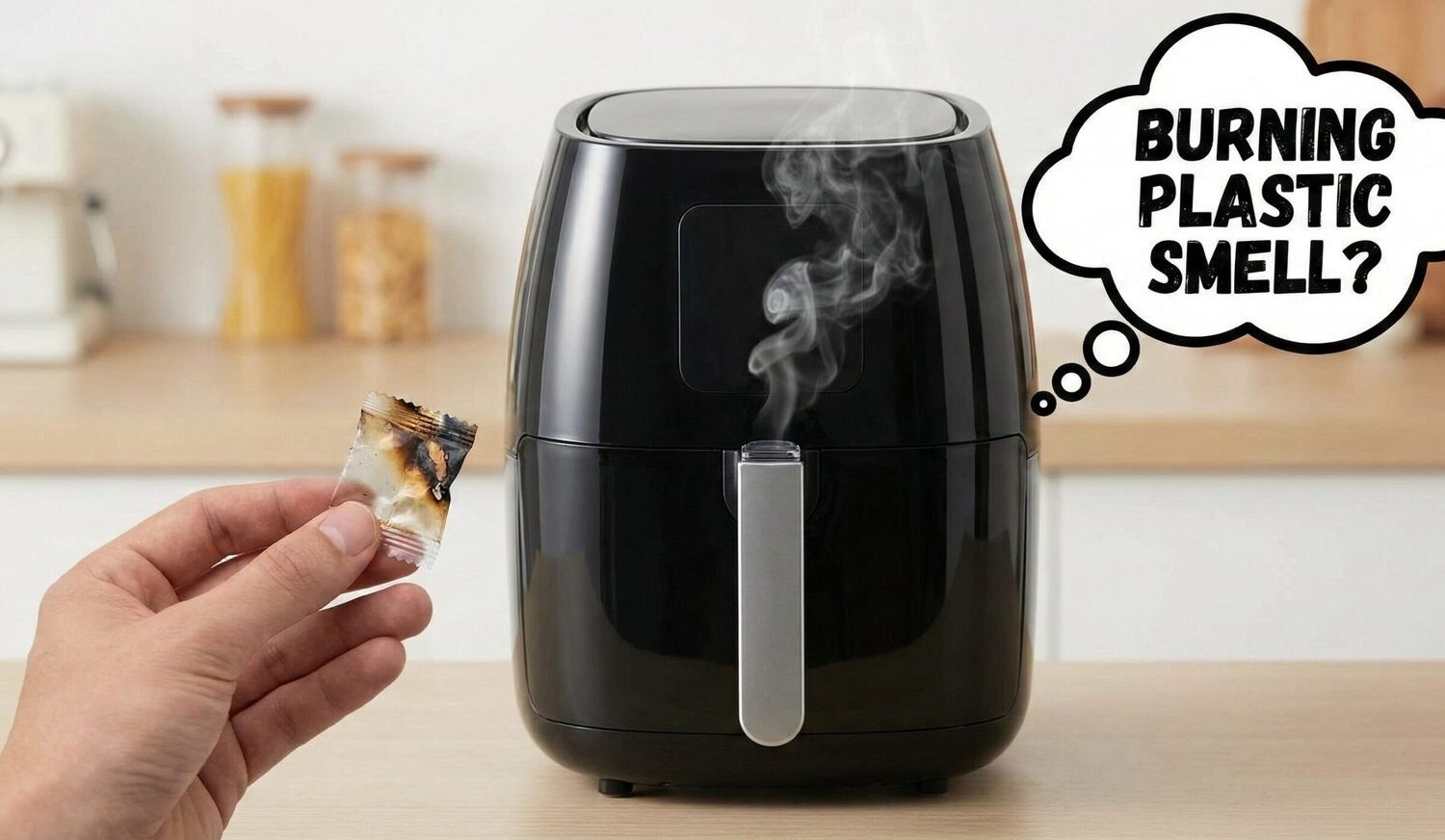
Troubleshooting: Why Your Air Fryer Smells Like Burning Plastic (And How to Fix It)
There are few things more alarming than turning on your kitchen appliance and smelling a chemical fire. Whether you just unboxed a brand new air fryer or your trusty unit has started acting up, a burning plastic smell is a signal you cannot ignore.
The good news? In 80% of cases, this is a harmless maintenance issue or a “new car smell” equivalent for appliances. The bad news? In the other 20%, it could be melting components. This guide will help you instantly diagnose which one it is.
Below, we go far beyond the basics. We’ll walk through exactly why the odor happens at a chemical level, how it differs between major brands like Ninja, Cosori, Philips, Instant Pot, Gourmia, and PowerXL, what it means when the smell transfers into your food, how to read smoke color like a technician, and a full maintenance calendar that keeps the smell from ever coming back. If you’ve searched anything from “air fryer smells like burning plastic first use” to “air fryer smell won’t go away after cleaning,” you’ll find the answer somewhere in this guide.
Quick Check: Is it Safe?
Before you panic, use this quick decision matrix to determine your next step.
| Your Situation | Likely Cause | Action Required |
|---|---|---|
| Brand New Unit (First 1-5 uses) | Protective Factory Coating | Safe. Run a “burn-off” cycle (see below). |
| Used Unit (Smells acrid/oily) | Baked-on Grease/Carbon | Safe (mostly). Needs deep cleaning. |
| Any Unit + Smoke | Electrical Failure | UNPLUG NOW. Do not use. |
| Plastic Warping | Overheating | UNPLUG NOW. Replace unit. |
| Smell only when empty preheating | Residual factory oil on element | Safe. Continue empty burn-off cycles. |
| Smell returns every few weeks | Grease building up in seams or drip tray | Safe. Tighten your cleaning schedule. |
| Smell paired with a burning smell from the outlet or cord | Wiring or plug fault | UNPLUG NOW. Do not use, inspect cord and outlet. |
Think of this table as a triage tool, not a final diagnosis. A single data point — like “it’s new” or “it smells acrid” — is rarely enough on its own. Combine it with how the unit looks, how long the smell lasts, and whether it changes when you run the appliance empty versus with food inside. The rest of this guide walks through each of these situations in far more depth so you can move from a guess to a confident conclusion.
Scenario A: The “New Air Fryer” Plastic Smell
If you just bought your air fryer, breathe (but maybe open a window). This is widely known as off-gassing.
Manufacturers coat the heating element and internal metal basket parts with a protective layer to prevent rust during shipping and storage. When you heat this coating for the first time, it burns off, releasing that distinct plastic/chemical odor.
It’s worth understanding exactly what that protective layer is made of, because it explains why the smell can vary so much between two air fryers that look nearly identical on a store shelf. Most manufacturers apply a thin food-grade mineral oil or a light lacquer to the metal heating coil and to the interior walls of the cooking chamber. This film prevents surface rust from forming while the unit sits in a shipping container, sometimes for months, as it travels from the factory to a warehouse and finally to your kitchen. The plastic housing itself also off-gasses slightly the first few times it’s heated, as trace amounts of the manufacturing process (mold-release agents, adhesives used to bond internal components, and the plastic resin itself) volatilize under heat.
None of this is unique to air fryers. The same phenomenon happens with brand-new ovens, toaster ovens, space heaters, and even hair dryers. Anything with an exposed heating element and nearby plastic housing will produce some version of this smell the first time it gets hot. Air fryers are simply more noticeable because the compact chamber concentrates the smell and pushes it out through the vents directly at nose level on your countertop.
1. Remove all packaging (check for hidden tape!).
2. Place the air fryer in a well-ventilated area (or under your stove hood).
3. Run it empty at 400°F (200°C) for 20 minutes.
4. Let it cool, wash the basket, and the smell should be gone.
Many home cooks find that a single burn-off cycle isn’t quite enough for particularly strong-smelling units. If you can still detect an odor after the first run, repeat the process two or three more times, letting the unit cool completely between cycles. Some people like to add a natural deodorizing agent to speed things along. A small oven-safe ramekin filled with equal parts water and white vinegar, or water with a few slices of lemon or lime, placed inside the basket during the burn-off run can help absorb lingering odor molecules as steam circulates through the chamber. This isn’t strictly necessary, but it noticeably shortens the number of cycles needed for sensitive noses.
Also double-check the box and manual insert for any protective plastic film that manufacturers sometimes leave on interior surfaces, control panels, or even the underside of the basket. It’s surprisingly easy to miss a thin, nearly transparent film on a stainless steel drip tray, and if it’s left on during the first heat cycle, it will melt slightly and produce a much stronger, more acrid smell than a normal factory coating would.

Stop plastic and grease from dripping onto your basket coating. These reusable liners are a game changer.
Check Price on AmazonThe Science of Break-In Odor: How Long Should It Actually Last?
One of the most common follow-up questions after the initial burn-off is simple: how long is this supposed to last? The honest answer is that it depends on the unit, but there are reliable benchmarks you can use to know whether you’re still in “normal” territory or whether something else is going on.
For most mainstream air fryers, a mild break-in odor fades noticeably within two to five heat cycles. If you’re using the appliance daily, that typically translates to about a week of ownership before the smell becomes undetectable during normal cooking. Larger basket or oven-style units with more internal plastic trim, glass doors, and multiple racks sometimes take slightly longer simply because there’s more surface area off-gassing at once.
A useful way to think about it is as a curve rather than a switch. The odor is strongest during the very first run, drops sharply after the second, and becomes a faint background smell by the third or fourth. If you graph “smell intensity” against “number of uses,” it should look like a steep downward slope that flattens out near zero. What you don’t want to see is a flat line — a smell that stays just as strong on use number eight as it was on use number one. That flat-line pattern is a signal to stop treating it as normal break-in odor and start troubleshooting it as a persistent issue, which we cover in the next sections.
- Uses 1–2: Strongest odor, may include light smoke. This is expected.
- Uses 3–5: Odor should be noticeably weaker, often only detectable during preheating.
- Uses 6–10: Odor should be minimal to nonexistent during normal cooking.
- Beyond 10 uses: Any lingering strong odor should be treated as a possible defect, not normal break-in.
Humidity and kitchen ventilation also play a role in how long you personally perceive the smell, even if the appliance itself is off-gassing at a normal rate. A small apartment kitchen with no exhaust fan will trap odor molecules far longer than an open-concept kitchen with a range hood running on high. If you live in a smaller space, don’t assume the appliance is defective just because the smell seems to “hang around” — try running the burn-off cycle with a window cracked and a fan pointed toward it before concluding there’s a real problem.
Scenario B: Why Your Old Air Fryer Smells
If your air fryer has been working fine for months and suddenly starts smelling like burning plastic, it is usually due to carbonized debris.
Air fryers work by circulating hot air rapidly. If you cook fatty foods (like bacon or wings) without cleaning the top heating element, grease splatters up and hardens. Eventually, this layer of old grease burns, creating an acrid smoke that smells surprisingly like melting plastic.
It might seem strange that burnt grease and burnt plastic smell so similar, but there’s a real chemical explanation. Both cooking oil and many plastics are built from long carbon-chain molecules. When either one is heated past its smoke point or melting point, those chains break apart into smaller volatile compounds — acrolein, aldehydes, and various short-chain hydrocarbons — that happen to trigger very similar smell receptors in the human nose. Your brain essentially can’t tell the difference between “burnt fat” and “burnt plastic” from smell alone, which is exactly why so many people panic the first time baked-on grease starts smoking on the heating coil.
This is also why the drip tray and the underside of the heating element are the two most overlooked cleaning spots. Most people wipe down the basket after every use, but far fewer regularly remove and clean the tray underneath it or invert the unit to check the coil itself. Grease that lands on the coil during cooking doesn’t wash away on its own — it bakes on, layer after layer, session after session, until it eventually reaches its own smoke point and starts producing that acrid, plastic-like smell you’re trying to track down.
See our guide on why air fryers smoke for more details on identifying grease smoke vs. electrical smoke.
Why Overcrowding the Basket Makes It Worse
Overcrowding is a secondary but very common contributor. When the basket is packed too full, hot air can’t circulate properly around each piece of food, which means oil and fat droplets are more likely to be flung upward and outward rather than staying contained near the food itself. Over time, this sends more grease toward the heating element and internal walls than the appliance was designed to handle between cleanings, accelerating the buildup that eventually causes odor.
Why Certain Foods Are Bigger Culprits
Not all foods contribute equally to grease buildup. High-fat items like bacon, chicken wings with skin on, sausages, and anything marinated in oil release far more airborne grease than lean proteins or vegetables. If you regularly cook these foods, you should expect to clean the heating element more often than someone who mostly air fries vegetables or reheats leftovers. Adjusting your cleaning frequency to match what you actually cook is one of the simplest ways to prevent the “sudden” burning plastic smell from ever showing up in an older unit.
When Your Food Tastes Like Plastic, Not Just Smells Like It
A slightly different — and more concerning — version of this problem is when the smell actually transfers into the food itself. If your chicken, fries, or vegetables come out with a faint chemical aftertaste, that’s a stronger signal than a smell alone, because it means volatile compounds are actually being absorbed by the food during cooking, not just floating in the air around the appliance.
In most cases, this happens during the break-in period on a brand-new unit, and it’s simply a more concentrated version of the same off-gassing described above. Cooking porous or absorbent foods like bread, potatoes, or anything battered during the first few uses tends to pick up more of that odor than a food with a tighter surface, like a whole chicken breast. The fix is straightforward: skip cooking anything you plan to eat until you’ve completed two or three empty burn-off cycles, and always do a first “test run” with something inexpensive and disposable, like a slice of bread, rather than a meal you were looking forward to.
If the plastic taste shows up on an older unit that previously cooked food normally, treat it the same way you’d treat a sudden smell: assume grease buildup or residue on the heating element until proven otherwise, and deep clean before cooking again. Do not continue eating food that tastes distinctly chemical or plastic-like. While an occasional faint off-flavor from new-unit off-gassing is unlikely to cause any real harm in a single serving, it’s not worth the discomfort, and repeated exposure is simply unnecessary when the fix is inexpensive and takes twenty minutes.
Reading the Smoke: A Color Guide
Not all smoke from an air fryer means the same thing, and learning to read it quickly can save you from either overreacting to something harmless or underreacting to something dangerous.
| Smoke Color | Most Likely Cause | What To Do |
|---|---|---|
| Thin white/gray wisps | Factory coating or grease burning off | Normal. Let it finish, then ventilate the room. |
| Thick white smoke, steady stream | Excess oil or fat dripping onto the element | Pause, wipe the tray, reduce oil next time. |
| Blue-gray smoke | Overheated oil residue reaching a true smoke point | Stop cooking, unplug, clean thoroughly before reuse. |
| Black smoke | Burning plastic, rubber, or heavily carbonized debris | Unplug immediately. Do not use until inspected. |
| Smoke with a visible orange glow inside | Active flame or arcing component | Unplug immediately and move away. Potential fire hazard. |
A good rule of thumb: light, brief wisps of smoke that clear up within a minute or two of starting a cycle are almost always cosmetic and related to residue burning off. Smoke that thickens, darkens, or persists well beyond the first few minutes of a cycle is your cue to stop and investigate rather than wait it out.
Brand-by-Brand Troubleshooting
While the underlying causes of a burning plastic smell are fairly universal, the specific design of your air fryer changes how strong the smell is, how long it lasts, and where you should look first when troubleshooting. Below is a quick breakdown of what to expect from some of the most popular brands on the market.
Ninja Air Fryers
Ninja units, including the AF101 line, are generally praised for a shorter break-in period thanks to ceramic-coated baskets rather than standard non-stick coatings. When a Ninja air fryer smells like burning plastic on a unit that isn’t new, the most common cause is grease buildup around the fan housing at the back of the unit, an area that’s easy to forget during routine basket cleaning.
Cosori Air Fryers
Cosori’s basket-style and oven-style models tend to have a slightly stronger initial off-gassing smell than some competitors, but it typically resolves within three to four burn-off cycles. Cosori ovens with multiple racks and a glass door sometimes trap odor near the door seal; wiping down the interior glass and door gasket during cleaning helps prevent lingering smells from grease condensation.
Philips Air Fryers
Philips popularized the original “Rapid Air” style air fryer, and many of its models use a starfish-shaped grill plate at the bottom of the basket. Grease and crumbs can become trapped underneath this plate, out of sight, and are a frequent hidden cause of a lingering smell in an otherwise clean-looking basket. Always remove the grill plate fully during deep cleaning.
Instant Pot / Instant Vortex Air Fryers
Instant Vortex models often include an “OdorErase” filter, which is genuinely effective at reducing ongoing cooking smells but does not eliminate the initial new-unit off-gassing smell. If you own a Vortex and the smell persists past the first few uses, check that the filter is seated correctly and hasn’t become clogged with grease itself, since a saturated filter can start contributing to odor rather than absorbing it.
Gourmia and PowerXL Air Fryers
Budget-friendly brands like Gourmia and PowerXL sometimes use thinner plastic housings and simpler non-stick coatings, which can mean a stronger and slightly longer-lasting break-in smell compared to premium brands. These models also tend to show wear on the non-stick coating faster with heavy use, so if you notice flaking or peeling inside the basket alongside a plastic smell, treat that as a sign the coating itself may be degrading rather than assuming it’s simply grease.
⚠️ Dangerous Symptoms (When to Throw It Out)
Sometimes, the smell actually is melting plastic. Cheap air fryers, or units that have been dropped, can suffer from internal mechanical failures.
- Fan Failure: If the air fryer fan is not spinning, the heat has nowhere to go. It will accumulate around the element and melt the plastic housing.
- Touching Wires: Internal wires may come loose and touch the heating element, melting the insulation.
- Warping: If the exterior housing looks distorted or feels extremely hot to the touch.
- Discolored or melted control panel: A digital display or button panel that looks warped, bubbled, or discolored near the top vent is a sign that heat is escaping where it shouldn’t be.
- Repeated tripped breaker: If plugging in or using the air fryer repeatedly trips a circuit breaker, this points to an internal short rather than a cooking-related smell.
- Smell that intensifies over the course of a single cook: Normal grease or break-in smells are usually strongest at the start of a cycle and fade. A smell that gets progressively worse the longer the unit runs suggests something is actively degrading inside the chamber.
If you experience any of the symptoms above, resist the temptation to “just finish this one batch” before investigating. Heat-related plastic failures can progress quickly, and an internal short that seems minor one moment can become a real fire risk within minutes. It costs you nothing to unplug the unit, let it cool, and inspect it in daylight before deciding whether it’s safe to use again.
The Deep Clean Fix
Before you buy a new one, try this deep cleaning method to remove the “fake” plastic smell caused by grease.
- Unplug and Cool: Ensure the unit is completely cold.
- Invert: Turn the air fryer upside down to access the heating element.
- Paste Mix: Mix baking soda and water into a thick paste.
- Scrub: Use an old toothbrush (or a specialized brush) to gently scrub the heating coil and the area around the fan.
- Rinse: Wipe clean with a damp cloth. Do not soak the main unit!
For units with especially stubborn, carbonized buildup, a second method that many owners swear by is the vinegar-and-citrus steam method. Combine equal parts distilled white vinegar and lime or lemon juice in a small oven-safe dish, place it in the basket, and run the unit at a moderate temperature (around 300°F) for ten to fifteen minutes. The acidic steam helps loosen grease from the coil and interior walls without any scrubbing, making it a good complementary step before or after the baking soda paste method, especially for hard-to-reach areas around the fan housing.
Don’t forget the basket and drip tray themselves. Soak them in warm, soapy water for fifteen to twenty minutes before scrubbing, which softens baked-on grease considerably and reduces the risk of scratching a non-stick coating with excessive scrubbing pressure. Avoid abrasive scouring pads on any non-stick surface; a soft sponge or silicone brush is much safer for the coating’s longevity, even if it takes slightly longer to see results.

Includes the perfect sized brushes to reach behind the heating element without damaging it.
Read ReviewOngoing Maintenance Schedule to Prevent the Smell From Returning
The single best way to avoid ever having to troubleshoot a burning plastic smell again is to build a simple, consistent maintenance routine. Most people only clean their air fryer when it starts to smell or look visibly dirty, which means grease has usually already had weeks to bake onto the heating element by the time anything gets done about it. A proactive schedule prevents that buildup from ever reaching the point of producing an odor.
| Frequency | Task |
|---|---|
| After every use | Wash the basket and drip tray in warm soapy water; wipe down the interior chamber walls. |
| Weekly (for frequent users) | Invert the unit and inspect the heating element for visible grease spots or residue. |
| Every 2–4 weeks | Perform a full baking soda paste scrub on the heating coil, even if no smell is present. |
| Every 1–2 months | Run a vinegar-and-citrus steam cycle to loosen any grease you may have missed with manual scrubbing. |
| Every 3–6 months | Check the power cord, plug, and any visible internal components (where accessible) for wear, fraying, or discoloration. |
If you cook high-fat foods like bacon or wings more than twice a week, consider tightening this schedule — moving weekly inspections to twice a week and monthly deep cleans to every two to three weeks. Conversely, if you mostly reheat leftovers or air fry vegetables, you can likely stretch these intervals out somewhat, though it’s still worth doing a quick visual check of the heating element every couple of weeks just to catch any early buildup before it becomes a smell problem.
Ventilation & Placement Tips
Where you place your air fryer on your counter has a bigger impact on how noticeable any smell will be than most people realize. Air fryers vent hot air out of the top or back, and if that vent is pointed toward a wall, a cabinet, or an enclosed corner, odor has nowhere to dissipate and will simply recirculate around your kitchen instead of clearing out.
- Leave at least 5 inches of clearance on all sides, and especially above the unit, so hot exhaust air can escape freely.
- Position the vent away from cabinets to avoid trapping warm, greasy air against your cabinetry over time, which can also lead to sticky residue buildup on cabinet doors.
- Run your range hood or a nearby window fan during the first few uses of a new unit, and during any deep cleaning burn-off cycle.
- Avoid using the air fryer in a small, closed room like a converted closet kitchenette without any airflow, since odor concentration builds up fast in tight spaces.
Common Myths About Air Fryer Smells, Debunked
Myth: “If it smells like plastic, the food is automatically dangerous to eat.”
Not necessarily. A faint break-in smell during the first couple of uses, especially on food you weren’t planning to eat anyway (like a test slice of bread), is a normal and low-risk part of using a new appliance. That said, a strong, persistent chemical taste on food you do plan to eat is a reason to discard that batch and investigate further, not a reason to panic about long-term harm from a single exposure.
Myth: “Non-stick coatings are always the source of the smell.”
Non-stick coatings can degrade and contribute to odor if they’re scratched, flaking, or extremely old, but in the vast majority of cases, the smell comes from either the factory protective coating on the heating element (new units) or grease buildup on that same element (older units) — not the basket coating itself.
Myth: “A more expensive air fryer will never have this problem.”
Premium brands tend to have shorter, milder break-in periods and better-designed ventilation, which reduces how often you’ll encounter the smell. But no air fryer, regardless of price, is immune to grease buildup if it isn’t cleaned regularly. Maintenance habits matter more than price point for long-term odor control.
Myth: “Running the air fryer longer will ‘burn off’ a grease smell just like it burns off the factory coating.”
This is risky advice. While a genuine factory coating smell is designed to dissipate safely with heat, continuing to run a unit with heavy grease buildup can push that grease past its smoke point and toward actual combustion, which is exactly the scenario that produces black smoke and potential fire risk. If a smell is caused by grease, clean it — don’t try to heat your way through it.
Warranty & Manufacturer Support
If you’ve completed several burn-off cycles on a new unit and the plastic smell hasn’t improved, or if you notice any of the dangerous symptoms described earlier on a unit that’s still within its warranty period, it’s worth contacting the manufacturer before attempting further troubleshooting on your own.
- Document the issue: Take a short video or photos of the smoke color and any visible damage before contacting support — this speeds up the claims process considerably.
- Check your warranty length: Most air fryers come with a one- to two-year manufacturer warranty, though this varies by brand and retailer, and extended warranties purchased at checkout may offer longer coverage.
- Keep your receipt and model number handy: The model number is usually printed on a small sticker on the underside or back of the unit, and manufacturers will need this to process any warranty claim.
- Don’t attempt to open sealed housing yourself: Doing so may void the warranty even if the appliance is genuinely defective.
Generally, if the smell is present on a new unit and doesn’t fade after five or more uses, most manufacturers will treat this as a qualifying defect and offer a replacement or repair. If the smell developed after months of normal use due to grease buildup, that’s typically classified as routine maintenance rather than a manufacturing defect, and won’t usually be covered.
When to Replace (And What to Buy)
If you have cleaned the unit and the smell persists, or if you suspect internal electrical damage, do not risk a kitchen fire. It is time to upgrade.
We recommend looking for units with ceramic coatings rather than cheap Teflon, as they tend to off-gas less.
1. The “Zero Plastic Smell” Pick: Ninja AF101
The Ninja Air Fryer is famous for its ceramic-coated basket and high build quality. It rarely suffers from the melting plastic issues seen in budget brands.
2. The Stainless Steel Upgrade: Instant Vortex Plus
This unit features an “OdorErase” filter specifically designed to trap smells, making it perfect for sensitive noses.
| Feature | Ninja AF101 | Cheap Generic Brands |
|---|---|---|
| Material | Ceramic Coated | Standard Teflon/Plastic |
| Initial Smell | Gone after 1 run | Can last 10+ runs |
| Durability | High (3-5 years) | Low (1-2 years) |
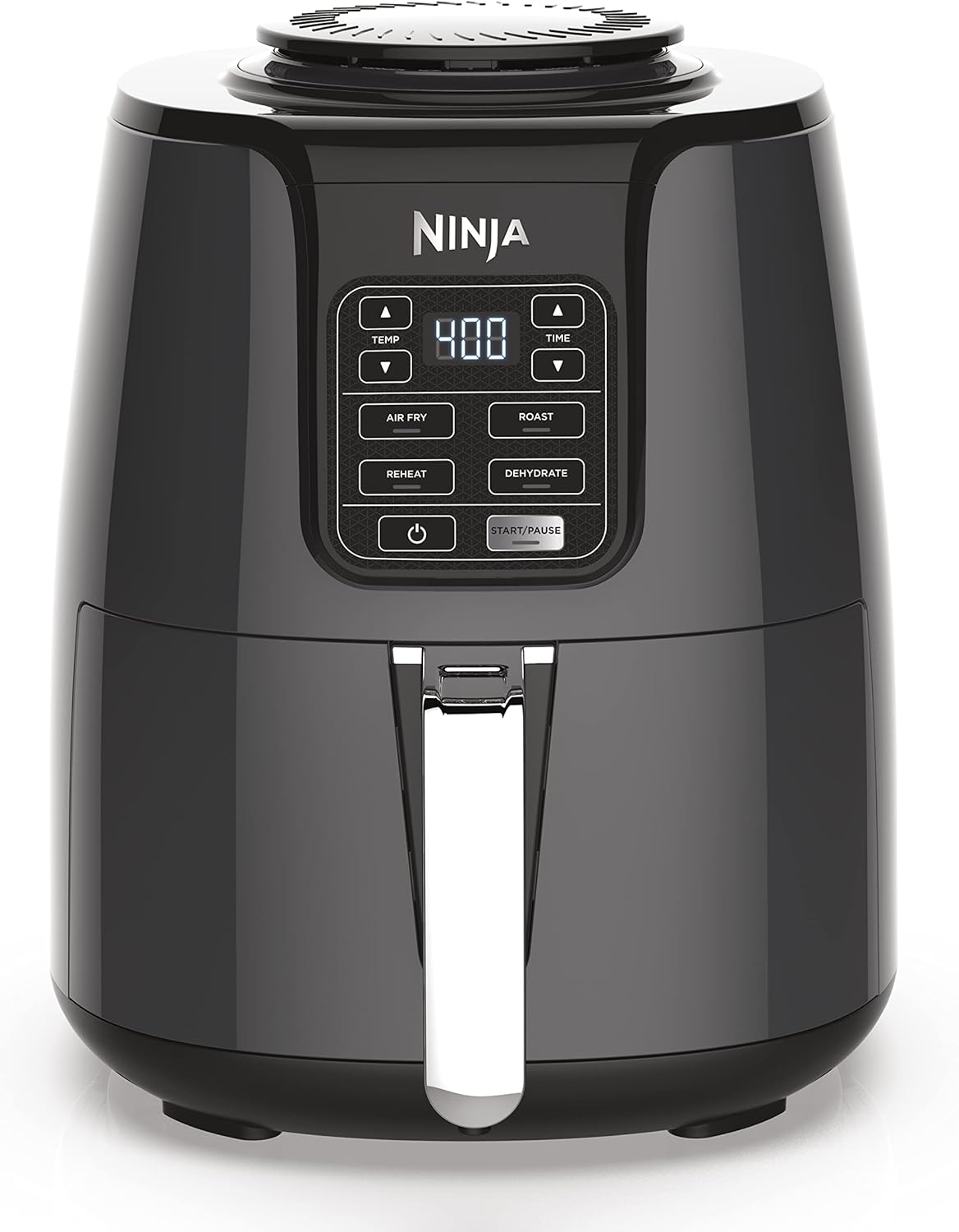
The gold standard for durability. Ceramic coated basket means zero peeling plastic issues.
Check Price on AmazonBuying Guide: What to Look for in a Low-Odor Air Fryer
If persistent smell issues are pushing you toward a replacement, it’s worth shopping with a few specific features in mind rather than just comparing price or basket capacity. These factors have the biggest real-world impact on how much off-gassing and grease-related odor you’ll deal with over the life of the appliance.
- Ceramic-coated baskets: These generally off-gas less during break-in and hold up better to repeated cleaning than standard non-stick coatings, extending the time before the coating degrades and starts contributing to odor.
- Removable, dishwasher-safe components: The more parts you can pull out and wash thoroughly (basket, tray, grill plate, and in some models even the interior chamber liner), the easier it is to stay on top of grease buildup.
- Wide venting with a straight exhaust path: Units with vents that don’t require air to squeeze through narrow gaps tend to clear smoke and steam faster during cooking, which reduces how much odor lingers in the chamber between uses.
- Odor-reducing filters: Some higher-end models include a charcoal or specialized filter designed to trap grease particles before they’re expelled into your kitchen air. These need occasional replacement or cleaning themselves, so factor that into long-term maintenance.
- Simple, accessible heating element design: Basket-style air fryers with an exposed, easy-to-reach coil are generally easier to deep clean than oven-style units with a fully enclosed heating chamber, where grease can accumulate in spots you can’t easily see or scrub.
Reading recent owner reviews specifically for mentions of “smell,” “odor,” or “burning plastic” before purchasing can also be more informative than general star ratings, since these issues are exactly the kind of detail that shows up in detailed reviews from people who’ve owned the unit for several months rather than in a quick unboxing impression.
Frequently Asked Questions
Is the plastic smell toxic?
The “new appliance” smell is generally considered annoying but safe in ventilated areas. However, smoke from melting plastic or electrical components is toxic and should not be inhaled.
Can I put lemon in my air fryer to clean the smell?
Yes! Placing an oven-safe dish with water and lemon slices in the basket and running it for 10-15 minutes is an excellent natural deodorizer.
Does the warranty cover burning smells?
If the unit is new and the smell persists after 5+ uses, it is likely a defect. Most manufacturers will replace it under warranty. If it’s an old unit with grease buildup, that is considered maintenance, not a defect.
How long does the new air fryer smell typically last?
Most units lose the bulk of their break-in odor within two to five heat cycles, roughly a week of regular use. If a strong smell is still present after ten or more uses, treat it as a persistent issue rather than normal off-gassing and consider contacting the manufacturer.
Why does my air fryer only smell like plastic when it’s empty and preheating?
This is usually residual factory oil or light grease on the heating element reacting to direct heat before food and moisture are introduced into the chamber. It’s one of the most common and least concerning versions of this smell, and it typically fades as the unit continues to be used and cleaned regularly.
My air fryer smell went away and then came back weeks later — why?
This pattern almost always points to grease buildup rather than a return of the original factory off-gassing. Grease accumulates gradually with each use, and once it reaches a certain thickness on the heating element, it starts producing a burnt smell again during cooking. A deep clean, particularly of the coil and drip tray, should resolve it.
Is it safe to use vinegar or lemon juice inside a non-stick basket?
Yes, diluted vinegar and citrus juice used in a burn-off or steam-cleaning cycle are mild enough not to damage a non-stick coating when used occasionally. Avoid leaving concentrated vinegar sitting on the coating for extended periods, and always rinse and dry the basket after any acidic cleaning method.
Can a burning plastic smell mean my air fryer is about to catch fire?
It can, in specific circumstances — namely when the smell is accompanied by black or dark gray smoke, visible warping of the housing, a burning smell from the cord or outlet, or any sparks. In those cases, unplug the unit immediately. A mild, brief smell during normal break-in or light grease burn-off is not a fire risk on its own.
Does every brand of air fryer have this smell issue?
To some degree, yes — any appliance with an exposed heating element and nearby plastic components will produce some off-gassing smell when new. The intensity and duration vary by brand, coating type, and housing material, with premium ceramic-coated models generally producing a milder, shorter-lived smell than budget models.
Should I run my air fryer with the window open the first time I use it?
It’s a good precaution, especially in a smaller kitchen without strong ventilation. Running the first burn-off cycle with a window cracked or a range hood fan on will help clear the initial off-gassing odor from your kitchen faster and make the whole process far less unpleasant.
What’s the difference between a “burnt plastic” smell and a “burnt rubber” smell from an air fryer?
Both can indicate similar underlying issues, but a distinctly rubbery smell more often points to a gasket, seal, or internal wire insulation problem rather than the factory coating or food grease. If you notice a rubber-like smell specifically, inspect any door seals or handle components for visible melting or discoloration, and treat it with the same caution as an electrical smell.
Looking for more ways to upgrade your kitchen experience? Check out our list of best air fryer accessories to get the most out of your appliance.


