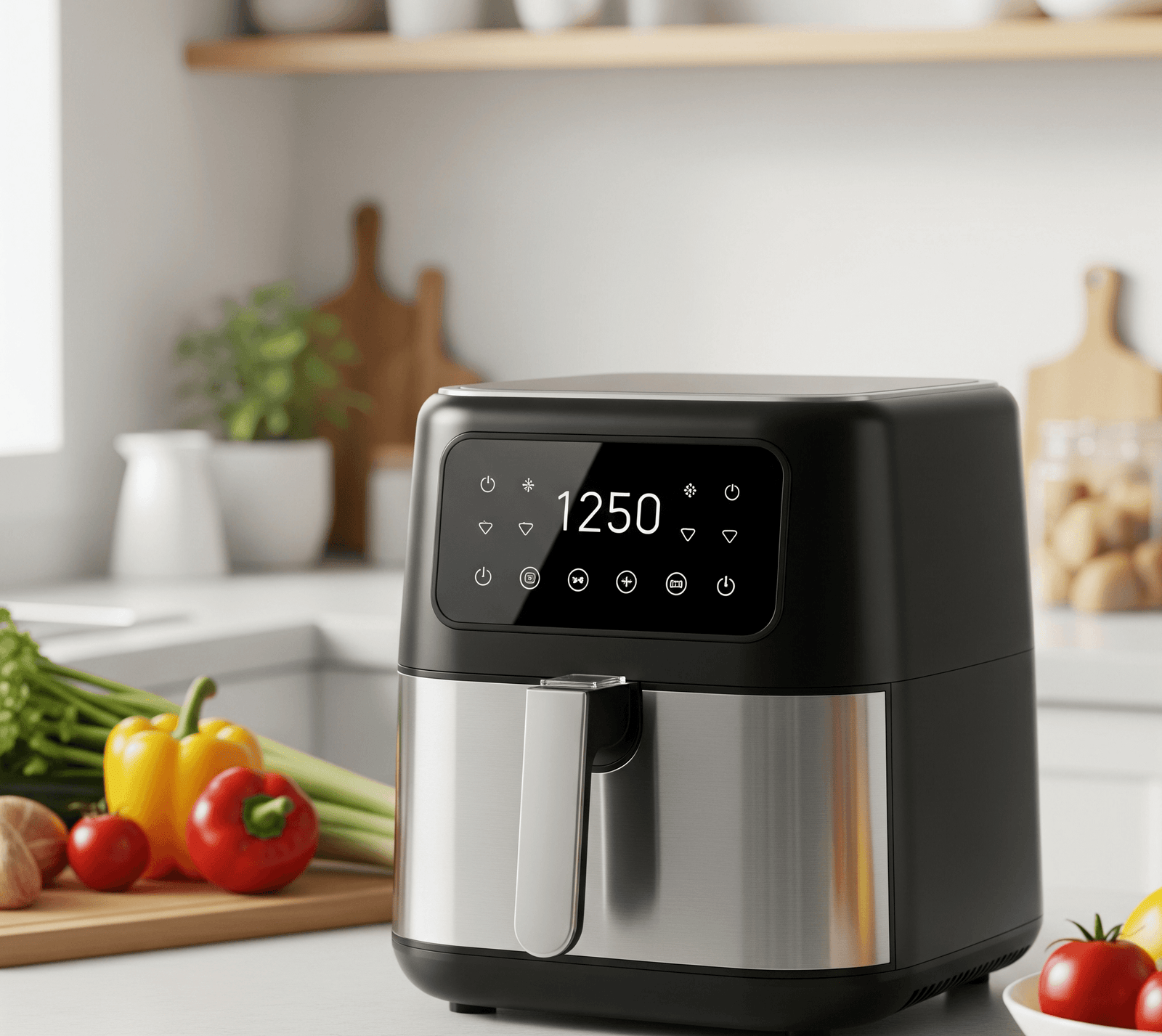
The Best Small Digital Air Fryers Under $100
How We Conducted Our Tests
Our team tested 10 of the most popular and highly-rated small air fryers under $100, focusing on real-world performance in compact kitchens. We cooked over 60 test batches, including single chicken breasts, small portions of fries, and salmon fillets, to identify the models that truly deliver speed, evenness, and value.
Big things often come in small packages, and nowhere is that truer than with the modern small air fryer. Perfect for apartment dwellers, college students, RV enthusiasts, couples, or anyone with limited counter space, these compact powerhouses deliver the same crispy, delicious results as their larger counterparts without the bulky footprint. They are the ultimate solution for quick, healthy, single-portion meals.
But the under-$100 market remains a minefield of options, with countless brands claiming superiority. How do you find a reliable, high-performing model that won’t break the bank or clutter your kitchen? We did the hard work for you. We’ve sifted through the noise, put the top contenders through a rigorous testing process, and emerged with the definitive list of the best small digital air fryers that give you the most crunch for your cash. This is your ultimate guide to finding the perfect compact kitchen companion.
Below, you’ll find our hands-on picks broken down by category, a detailed breakdown of the specs that actually matter when comparing small air fryers, honest answers to the questions we hear most often from readers shopping in this category, and practical tips for getting the most out of whichever model you ultimately bring home.
Our Top Picks
1. COSORI Pro LE Air Fryer-Lite 4-Quart

The COSORI Pro LE retains its title as our decisive winner for the “Best Overall” small air fryer. While at the upper end of our “small” and “under $100” criteria, it delivers a near-perfect balance of size, performance, and features that justifies its position. The 4-quart capacity is the ideal sweet spot—compact enough for small counters, yet spacious enough to comfortably cook for two people. Its square basket provides significantly more usable cooking space than round 4-quart models.
In our performance tests, the Pro LE was a standout. Its powerful 1500-watt element and efficient airflow produced exceptionally crispy fries and evenly cooked salmon fillets. The tempered glass digital display on top is sleek, modern, and incredibly easy to use, with 7 useful presets and a helpful shake reminder. It’s also remarkably quiet for its power. If you have the space for a 4-quart model, the COSORI Pro LE offers the best performance and user experience you can get in this category.
Cleanup was one of the pleasant surprises during our testing period. The square basket and crisper plate are both dishwasher-safe, and the nonstick coating released food cleanly even after cooking naturally sticky items like marinated chicken wings and cheese-topped vegetables. We also appreciated the small details: the handle stays cool to the touch throughout the cooking cycle, the drawer glides smoothly without sticking, and the auto shut-off engaged reliably every time we tested it. Over two weeks of near-daily use, we didn’t notice any degradation in the nonstick surface, though we’d still recommend hand-washing occasionally to extend its lifespan beyond what dishwasher cycles alone would allow. For anyone weighing whether the slightly larger footprint is worth it, we’d argue that the extra usable capacity and consistently even cooking results make the trade-off well worthwhile for most two-person households.
Pros
- Excellent cooking performance, very crispy results.
- Spacious and efficient 4-quart square basket.
- Sleek, user-friendly digital interface.
- Very quiet operation.
- Great value for the features offered.
Cons
- Largest footprint among our top picks.
- Often hovers right around the $100 price point.
2. Instant Vortex 4-in-1 Mini Air Fryer 2-Quart

For the solo cook, dorm resident, or anyone with a truly tiny kitchen, the Instant Vortex Mini remains a masterpiece of compact design. From the trusted makers of the Instant Pot, this 2-quart air fryer packs impressive performance into a minuscule footprint. It’s incredibly simple to use, with four smart programs (Air Fry, Bake, Roast, Reheat) and easy digital time/temperature controls.
During testing, we were amazed at how evenly this little machine cooked. It was perfect for a single chicken breast, a generous portion of fries, or reheating a slice of pizza to crispy perfection. The build quality is excellent, and it preheats very quickly thanks to its small size. While the 2-quart basket is limiting—you must cook in a single layer—it’s the perfect size for one person. If space is your absolute number one priority, the Instant Vortex Mini is the best choice, no question.
We also tested this unit specifically for dorm-room and studio-apartment scenarios, since its footprint is small enough to tuck onto a bookshelf or a narrow kitchenette counter when it’s not in use. Its cord is on the shorter side, which is actually an advantage in cramped spaces where excess cable can become a tripping hazard. The digital control panel resisted grease buildup better than we expected, and the buttons remained responsive throughout testing without any of the lag some budget digital displays develop after repeated use. One quirk worth noting: because the basket is so shallow, taller items like a whole bell pepper stuffed with filling may need to be trimmed down slightly to fit with the lid closing properly. For anyone genuinely limited to a single-serving lifestyle, though, this remains one of the most dependable compact appliances we’ve tested.
Pros
- Extremely compact, perfect for tiny spaces.
- Simple, intuitive digital controls.
- Cooks very evenly for its size.
- Trusted brand with great build quality.
- Comes in multiple stylish colors.
Cons
- Very limited capacity, strictly for one person.
- Basket can be too small for awkwardly shaped items.
3. Chefman Compact Digital Air Fryer 3.6-Quart

Chefman has a reputation for delivering reliable, no-frills appliances at a fantastic price, and this 3.6-quart digital air fryer is a perfect example. It consistently offers solid performance and a generous capacity for a price that often dips well below its competitors. The digital interface is straightforward, with 4 presets and a wide temperature range up to 450°F—a feature usually found on more expensive models, which is great for getting an extra-crispy finish.
The flat basket design is space-efficient and easy to clean. While its cooking wasn’t quite as perfectly even as the COSORI in our side-by-side tests, it was still very good, producing crispy and delicious results. For a deeper dive into how Chefman stacks up against other value brands, check out our Chefman vs. Best Choice comparison. For shoppers looking to get the most capacity and performance for the lowest possible price, the Chefman 3.6-Quart is the undisputed value king.
We ran this unit through the same 60-batch testing protocol as the rest of our lineup, and while it was noticeably louder than the COSORI and Dash models during the fan’s higher-speed cycles, it never crossed into what we’d call disruptive territory for typical daytime cooking. The 450°F max temperature genuinely came in handy for recipes that benefit from a hard sear, such as thin-cut steak bites and blistered shishito peppers, where the extra heat produced better browning than the 400°F ceiling on some competing models. Build quality is where the savings become most apparent: the housing plastic feels a notch below the COSORI’s, and the digital display’s font is a bit dimmer and harder to read in bright daylight. None of this affected actual cooking performance, but it’s a fair trade-off to know about going in, especially for shoppers prioritizing capacity and price above all else.
Pros
- Incredible value for its size and features.
- High max temperature of 450°F.
- Simple, easy-to-use digital controls.
- Dishwasher-safe, flat basket.
Cons
- Can be louder than other models.
- Build materials feel less premium.
4. Dash Tasti-Crisp Digital Air Fryer 2.6-Quart

Dash has built a brand around fun, stylish, and compact kitchen appliances, and the Tasti-Crisp Digital is a perfect fit. Available in a variety of vibrant colors, it’s designed to look great on your counter. But it’s not just about looks; the 2.6-quart capacity and ultra-compact, lightweight design make it incredibly practical for small spaces. It’s slightly larger than the Instant Vortex Mini, giving you a bit more breathing room for your food.
The digital interface is dead simple, with 3 presets and easy time/temp adjustments. Its “AirCrisp” technology circulates air effectively, and in our tests, it made wonderfully crispy vegetables and fries. It’s the ideal choice for someone who wants a simple, effective, and stylish appliance for single-person meals or side dishes. It proves that you don’t have to sacrifice aesthetics for performance, even on a tight budget.
What stood out most during our hands-on time with this unit was just how unobtrusive it is, both visually and acoustically. Of the four models in our lineup, the Dash was tied for the quietest, which made it our top recommendation for anyone sharing thin walls with roommates or neighbors. The lower 1000-watt element does mean slightly longer cook times on denser foods like chicken thighs, so budget an extra two to three minutes compared to the higher-wattage COSORI. Where the Dash truly shines is in everyday simplicity: with only three presets and a straightforward dial-and-button layout, there’s essentially no learning curve, which makes it a great option for a first-time air fryer owner, a shared household appliance, or a gift for someone who wants great results without needing to read a manual first.
Pros
- Stylish design and multiple color options.
- Very compact and lightweight.
- Simple and intuitive digital controls.
- Auto-shutoff feature for safety.
Cons
- Lower wattage can mean slightly longer cook times.
- The round basket is less space-efficient.
Quick Comparison: How the Top Small Air Fryers Stack Up
Before we dig into the finer points of buying a small air fryer, it helps to see the four contenders side by side. Capacity, wattage, and noise level tend to be the three specs shoppers ask about most, so we’ve pulled them together into a single reference table you can scan in seconds. Use it to quickly narrow down which unit lines up with your counter space, your household size, and how much racket you’re willing to tolerate while dinner cooks.
| Model | Capacity | Wattage | Basket Shape | Approx. Noise Level | Best For |
|---|---|---|---|---|---|
| COSORI Pro LE | 4 Quarts | 1500W | Square | Quiet (low 60s dB) | Couples, best overall |
| Instant Vortex Mini | 2 Quarts | 1200W | Round | Moderate (mid 60s dB) | Solo cooks, tiny kitchens |
| Chefman Compact | 3.6 Quarts | 1400W | Flat/Oval | Louder (upper 60s dB) | Budget shoppers |
| Dash Tasti-Crisp | 2.6 Quarts | 1000W | Round | Quiet (low 60s dB) | Style-conscious singles |
Keep in mind that decibel figures for countertop appliances are notoriously inconsistent between manufacturers, since there’s no single industry-standard testing method that every brand follows. Treat the noise column as a general guide rather than a lab-certified measurement, and if noise is a genuine dealbreaker for you—say, you live in a studio apartment with thin walls, or you tend to cook late at night—lean toward the quieter end of the spectrum rather than assuming every small air fryer will hum along at the same volume. We’ll break down each of these factors—capacity, wattage, basket shape, and noise—in far more detail in the sections that follow, so you can weigh them against your own kitchen and cooking habits.
The Ultimate Buyer’s Guide for Small, Budget Air Fryers
Choosing the right small air fryer involves understanding a few key trade-offs. Here’s what you need to know before you buy.
Defining “Small”: What Do Quart Sizes Really Mean?
Capacity can be confusing. Here’s a simple real-world breakdown for small air fryers:
- 2-Quart: The “ultra-compact” size. Perfect for one person. It can typically fit one large chicken breast, a single salmon fillet, or a generous side of fries for one. This is true dorm or studio apartment territory.
- 2.5 to 3.5-Quart: The “compact” sweet spot. It offers more flexibility, comfortably fitting two chicken thighs or a meal for one with a bit of extra room. Ideal for individuals who want slightly more versatility or couples in a small apartment.
- 4-Quart: The “large-small” size. This is the best choice for couples or for individuals who like to cook slightly larger items. It can often fit up to four chicken thighs or enough fries for two people to share.
Wattage vs. Performance
At the under-$100 price point, wattage can range from around 1000W to 1500W. Higher wattage generally means the air fryer can get hotter faster and maintain its temperature better when you add food. This translates to quicker cooking and often crispier results. While a 1000W model is perfectly capable, a 1500W model like the COSORI will typically outperform it in speed tests.
Basket Shape: Round vs. Square
This is more important than you might think! A square basket offers more usable surface area than a round basket of the same quart capacity. For example, a 4-quart square basket can fit more food in a single layer than a 4-quart round basket. Since cooking in a single layer is key to getting crispy results, we almost always recommend a square basket if you have the choice.
A Note on Safety
Even small air fryer baskets get incredibly hot. To safely shake the basket mid-cook or remove your food, a pair of fryer gloves provides a much more secure and safe grip than a clumsy oven mitt, especially in a cramped kitchen space.
Noise Levels: Why a Quiet Motor Matters More Than You’d Think
Noise is one of the most overlooked specifications when people shop for a small air fryer, yet it’s often the single biggest source of buyer’s remorse once the appliance is sitting on the counter. Small kitchens amplify sound. Cabinets, tile backsplashes, and hard countertops all reflect noise rather than absorbing it, so a fan that would be barely noticeable in a large open kitchen can feel surprisingly loud in a studio apartment or a galley-style rental. If you’ve ever lived next to someone running a countertop appliance through a shared wall, you already know how much of a difference a few decibels can make.
In our testing, we found that noise levels are driven by three main factors: fan speed, motor design, and how tightly the housing is sealed. Higher-wattage units tend to run their fans faster to reach and hold higher temperatures, which can translate into a more noticeable hum, though this isn’t a hard rule—the COSORI Pro LE proved that a powerful 1500-watt motor can still run quietly when the fan blades and housing are engineered well. Cheaper units, on the other hand, sometimes rely on looser-fitting plastic housings that rattle slightly at higher fan speeds, which reads to the ear as a much louder appliance even when the actual output isn’t dramatically different.
If you plan to run your air fryer during a video call, late at night after a roommate has gone to bed, or in a home office adjacent to your kitchen, pay close attention to owner reviews that specifically mention sound. Marketing copy almost never lists a decibel rating, so real-world testing and verified buyer feedback are your best sources of truth here.
Nonstick Coatings and PFAS: What Small-Kitchen Cooks Should Know
Nearly every small air fryer basket on the market uses some form of nonstick coating to keep food from sticking and to make cleanup faster. Historically, many of these coatings relied on PTFE, a class of chemicals that falls under the broader PFAS umbrella (per- and polyfluoroalkyl substances). PFAS chemicals have drawn increasing scrutiny in recent years because they’re extremely slow to break down in the environment and because some studies have raised health questions about long-term exposure.
The good news is that the budget small-air-fryer category has responded to this concern. A growing number of manufacturers now offer ceramic-coated or otherwise PFAS-free basket options, and it’s worth checking a model’s product listing or spec sheet for terms like “PFOA-free,” “PTFE-free,” or “ceramic nonstick” if this is a priority for your household. Ceramic coatings tend to be slightly less slick than traditional nonstick over the long run and may show wear a bit sooner, but many shoppers consider that a reasonable trade-off for peace of mind.
Regardless of which coating your unit uses, a few habits will extend the life of the nonstick surface and reduce the odds of flaking: avoid metal utensils inside the basket, skip aerosol cooking sprays (their propellants can degrade nonstick coatings faster than a light brushing of oil), and never use abrasive scouring pads when cleaning.
Energy Efficiency: How Much Will a Small Air Fryer Actually Save You?
One of the most compelling reasons to buy a small air fryer isn’t just the crispy food—it’s the potential savings on your energy bill. A full-size convection oven typically draws somewhere between 2,000 and 5,000 watts and needs several minutes to preheat a large, insulated cavity. A small air fryer, by contrast, usually draws between 1,000 and 1,500 watts, has a tiny interior volume to heat, and reaches cooking temperature in two to four minutes rather than ten or more.
To put this in concrete terms: cooking a single portion of frozen fries in a full-size oven might take 25 minutes at 3,000 watts, while the same fries in a small air fryer might take 15 minutes at 1,400 watts. Run the math and the air fryer uses roughly a fifth of the electricity for the same result. For someone who air fries several times a week, that difference compounds into a noticeable reduction on a monthly electricity bill, and it also means far less residual heat pumped into your kitchen during the warmer months—a genuine comfort benefit if your apartment doesn’t have great air conditioning.
Small air fryers are also a smart choice for anyone who’s tried to justify running a full oven just to reheat a single slice of pizza or bake one potato. The energy cost of heating an entire oven cavity for a single-serving task is hard to justify once you’ve experienced how quickly a small air fryer accomplishes the same job.
Air Fryer vs. Toaster Oven vs. Deep Fryer vs. Microwave: Which Should You Actually Buy?
If you’re outfitting a small kitchen from scratch, it’s natural to wonder whether a dedicated air fryer is even necessary, or whether a toaster oven, a traditional deep fryer, or your existing microwave can do the same job. Here’s how they actually compare in daily use.
Toaster ovens generally have a larger interior cavity than an air fryer of similar footprint, which can be handy for baking a small tray of cookies or toasting several slices of bread at once. However, most toaster ovens rely on top-and-bottom heating elements without the same concentrated, high-velocity airflow that a dedicated air fryer basket provides, so foods often don’t crisp up quite as evenly. Some newer toaster ovens include an “air fry” setting with a small mesh basket insert, but in our experience these hybrid settings rarely match the crunch of a purpose-built air fryer basket, largely because the air isn’t as tightly concentrated around the food.
Traditional deep fryers submerge food directly in hot oil, which produces a different (and for some dishes, genuinely superior) texture, but they come with real downsides for a small kitchen: you have to buy, store, filter, and eventually dispose of several cups of cooking oil, the appliance itself often takes up more counter space than a compact air fryer, and the cleanup involves handling hot oil, which is simply riskier in a cramped space. An air fryer uses a tablespoon or less of oil, if any at all, and produces roughly 70-80% less fat in the finished dish according to several independent cooking tests.
Microwaves remain unbeatable for pure speed and for reheating liquids or dishes where texture doesn’t matter much, like soup or oatmeal. But they’re notoriously bad at producing anything crispy, since microwave radiation heats food by exciting water molecules rather than browning the surface. If you’ve ever microwaved leftover fries and been disappointed by their sad, soggy texture, that’s exactly the gap a small air fryer fills.
For most small-kitchen households, the ideal setup is a microwave for pure reheating speed paired with a compact air fryer for anything that benefits from a crispy exterior—fries, chicken, roasted vegetables, and reheated takeout that would otherwise go soggy.
Warranty and Customer Support: What to Expect Under $100
Warranty length is an underrated factor when comparing budget appliances, since it’s a reasonable proxy for how confident a manufacturer is in their own build quality. Most small air fryers in the under-$100 category ship with a one-year limited warranty covering manufacturing defects, though coverage terms and the ease of actually filing a claim can vary a great deal between brands.
COSORI and Instant, as more established appliance brands, typically offer straightforward one-year warranties with responsive customer service teams and, in many cases, the option to register your product online for faster support if something goes wrong. Chefman and Dash, while both reputable, sometimes require you to go through the original retailer (rather than the manufacturer directly) for warranty claims, which can add a few extra steps if you ever need to use it. Regardless of brand, it’s worth keeping your original receipt and registering your appliance promptly, since a proof of purchase date is usually required for any warranty claim.
Essential Accessories for Your Small Air Fryer
A handful of inexpensive accessories can dramatically expand what your compact air fryer is capable of, without requiring you to buy a second appliance.
- Perforated parchment liners: These pre-cut, hole-punched paper liners sit inside the basket and make cleanup dramatically easier for saucy or breaded foods, while still allowing air to circulate underneath.
- Silicone liners or pots: A reusable alternative to parchment, silicone liners are especially useful for wetter foods like marinated wings or anything with a sauce that would otherwise drip through the basket’s holes.
- Mini skewers or a small rack: Even a 2-quart basket can accommodate a compact rack for cooking two layers at once, which is especially handy when making small batches of vegetables alongside a protein.
- A 6-inch cake pan or ramekins: Many small air fryer baskets can fit a properly sized round cake pan, opening the door to baked goods, frittatas, and even small casseroles.
- An instant-read thermometer: Because small air fryer baskets cook faster and less predictably than a full oven, a reliable thermometer takes the guesswork out of knowing when chicken or fish has hit a safe internal temperature.
Common Small Air Fryer Mistakes (and How to Fix Them)
Even a great small air fryer can produce disappointing results if a few common mistakes creep into your routine. Here are the issues we see most often, along with straightforward fixes.
- Food comes out soggy instead of crispy: This is almost always caused by overcrowding the basket. Give food room to breathe—if pieces are touching or stacked, air can’t circulate around every surface, and you’ll get steaming instead of crisping. Cook in two smaller batches rather than one crowded one.
- Uneven browning from one side of the basket to the other: Small baskets sit closer to the heating element and fan, which can create hot spots. Shake or flip food halfway through cooking, and rotate the basket itself 180 degrees if your model doesn’t have a rotisserie-style fan.
- Smoke coming from the unit during cooking: This is usually caused by excess fat or oil dripping onto the heating element, especially with fattier cuts of meat like chicken thighs or bacon. Add a tablespoon of water to the drawer beneath the basket (on models with a separate drawer) to prevent drippings from smoking, and clean out any built-up grease between uses.
- Batter or breading falling off during cooking: Wet batters don’t hold up well in an air fryer’s rapid airflow the way they do in a deep fryer. Stick to a dry breading (flour, then egg wash, then breadcrumbs) and lightly spray or brush the exterior with oil rather than dunking food in a thick, wet batter.
- Small or thin foods blowing around in the basket: Very light items like kale chips or thinly sliced vegetables can get tossed around by the fan. Secure them with a toothpick, weigh them down slightly with a mesh trivet, or reduce the fan speed setting if your model offers one.
Cleaning and Maintenance: Keeping Your Small Air Fryer in Top Shape
Compact air fryers are, on the whole, far easier to clean than a full-size oven, but a few habits will keep yours performing well for years rather than months. Most baskets and crisper trays on our top picks are dishwasher-safe, but hand-washing with warm, soapy water and a soft sponge will preserve a nonstick coating for longer than repeated dishwasher cycles, which can be more abrasive over time.
Clean your air fryer after every use rather than letting grease build up, since baked-on residue is both harder to remove later and can start to smoke on subsequent cooks. Wipe down the heating element with a damp cloth once it has fully cooled, and check underneath the fan guard periodically for grease buildup, since this is the area most often neglected during a quick rinse of the basket alone.
Never submerge the main housing of the unit in water, and never run it with soap or water inside the motor compartment, no matter what a viral cleaning video might suggest. If odors linger after cooking something pungent like fish or strong spices, run the empty basket at 400°F for five minutes with a few slices of lemon inside to help neutralize the smell before your next cook.
Where to Put It: Storage and Placement Tips for Small Kitchens
Even the most compact air fryer needs a few inches of clearance on all sides to vent properly, and manufacturers typically recommend at least four to six inches of space behind the unit and above it to avoid trapping hot exhaust air against cabinets or a backsplash. If your counter space is genuinely limited, consider a slide-out shelf or a rolling cart that lives in a pantry or closet between uses, so the appliance only occupies counter real estate while it’s actively cooking.
For renters worried about heat damage to countertops or cabinets, a simple silicone trivet or heat-resistant mat placed underneath the unit adds a layer of protection and makes wiping up any splatters far easier. If your kitchen has minimal outlet access, look for a model with a shorter cord or plan to use a short, rated extension cord rather than running a cord across a walkway, which is both a tripping hazard and, in a small kitchen, often the only path between the stove and the sink.
Mastering Your Small Air Fryer: Tips & Mini-Recipes
Cooking in a small air fryer is an art. Here are our top tips and some quick recipes to get you started.
Top 3 Tips for Small Air Fryer Success
- Don’t Overcrowd the Basket: This is the golden rule. Food needs space for the hot air to circulate. Cook in batches if you have to. A crowded basket steams food; a spacious basket crisps it.
- Shake, Shake, Shake: Small baskets have less room, so shaking them every 5-7 minutes (for things like fries or vegetables) is crucial for ensuring everything gets evenly browned and crispy.
- Preheat for 3 Minutes: Even though most models don’t require it, preheating for just 3 minutes gives your food a head start and helps create a better sear and a crispier texture from the moment it goes in.
Quick & Easy Mini-Recipes
Perfect Single Salmon Fillet
Pat a 6-oz salmon fillet dry. Rub with olive oil, salt, pepper, and paprika. Place skin-side-down in the preheated air fryer. Cook at 400°F for 7-9 minutes, until cooked through and slightly browned on top. No flipping needed!
Crispy Chickpeas Snack
Rinse and thoroughly dry a can of chickpeas. Toss with 1 tsp olive oil and your favorite spices (smoked paprika and garlic powder are great). Air fry at 390°F for 12-15 minutes, shaking twice, until crispy and golden. Use a fryer strainer to easily lift them out.
Single-Serve Crispy Chicken Thigh
Pat one bone-in, skin-on chicken thigh dry and season generously with salt, pepper, garlic powder, and a touch of smoked paprika. Place skin-side-up in the basket. Air fry at 380°F for 18-20 minutes, flipping once halfway through, until the skin is deeply golden and the internal temperature reads 165°F. Let it rest for three minutes before serving to lock in the juices.
Quick Roasted Vegetable Medley for One
Toss a cup of chopped mixed vegetables—broccoli florets, bell pepper strips, and halved cherry tomatoes work well—with a teaspoon of olive oil, salt, and a pinch of Italian seasoning. Spread in a single layer and air fry at 375°F for 10-12 minutes, shaking the basket halfway through, until the edges are lightly charred and caramelized.
Reheated Pizza That Actually Stays Crispy
Skip the microwave, which turns crust rubbery. Place a cold pizza slice directly in the basket and air fry at 350°F for 3-4 minutes. The bottom crust crisps back up almost like fresh-baked, while the cheese melts evenly without the sogginess that a microwave leaves behind.
Mini Baked Apple for One
Core a small apple and fill the center with a mix of a teaspoon of brown sugar, a pinch of cinnamon, and a few chopped walnuts. Place it in the basket and air fry at 350°F for 12-15 minutes, until the apple is tender and the filling is bubbling. A small scoop of vanilla yogurt or ice cream on top turns this into a fast single-serving dessert.
Frozen Dumplings Without the Steamer
Lightly brush frozen dumplings with a small amount of oil or spritz with cooking spray and arrange in a single layer, making sure they don’t touch. Air fry at 380°F for 8-10 minutes, shaking the basket once at the halfway point, until the wrappers are golden and slightly blistered and the filling is piping hot.
Frequently Asked Questions About Small Air Fryers
Do small air fryers cook food differently than large ones?
Not fundamentally—the cooking mechanism is identical, since both rely on a fan circulating hot air around the food. The main practical difference is that a smaller cooking chamber heats up faster and holds temperature more consistently once food is added, which can actually make small units slightly more efficient for single portions than their larger counterparts.
Can I bake in a small air fryer?
Yes. Many small air fryers can accommodate a properly sized round cake pan or a set of silicone muffin cups, making them capable of baking small batches of muffins, mini cakes, or even a small batch of cookies, provided the pan fits with a little clearance around the edges for airflow.
How much counter space does a small air fryer actually need?
Most compact models measure somewhere between 9 and 12 inches wide and deep, but you should also budget an additional four to six inches of clearance on the back and top of the unit for proper ventilation, since blocking the exhaust vent can affect cooking performance and, in rare cases, trigger the appliance’s safety shutoff.
Is it safe to line the basket with aluminum foil?
Foil can be used in most small air fryers as long as it doesn’t block the vents or touch the heating element, and it should always be weighted down by food so it can’t get sucked upward into the fan. Perforated parchment liners are generally a safer and more airflow-friendly alternative.
Why is my small air fryer so loud compared to my old one?
Noise levels vary quite a bit between brands and even between individual units, largely due to differences in fan design, motor quality, and how tightly the housing is assembled. A rattling sound specifically (rather than a steady hum) can also indicate the basket isn’t seated correctly, so double-check that it’s locked firmly in place.
Do I need to preheat a small air fryer?
Most small air fryers heat up quickly enough that preheating isn’t strictly necessary, but a short three-minute preheat does tend to produce a slightly crispier exterior on foods like fries and chicken, since the food starts cooking at full temperature immediately rather than during the ramp-up period.
Can two people really share meals from a small air fryer?
A 4-quart model like the COSORI Pro LE can comfortably handle two modest portions cooked together, or two separate batches cooked back-to-back in about the same total time it would take to prepare one large batch in a bigger appliance, since preheat time is minimal.
Are small air fryers less powerful than full-size models?
Not necessarily. Wattage is more closely tied to the specific model and price point than to physical size, and several small air fryers in our testing pool matched or exceeded the wattage of larger units, while heating their smaller cooking chamber even faster.
What’s the difference between a nonstick and a ceramic-coated basket?
Traditional nonstick coatings are typically PTFE-based and offer excellent release with minimal oil, while ceramic coatings are marketed as a PFAS-free alternative that performs similarly when new but may show wear slightly sooner with heavy use. Neither is inherently unsafe when used within the manufacturer’s temperature guidelines.
How long do small air fryers typically last?
With regular cleaning and proper care—avoiding metal utensils, hand-washing the basket when possible, and not exceeding the rated temperature—a well-built small air fryer can reasonably be expected to last three to five years of frequent home use before the heating element or fan motor starts to show signs of wear.
Can I cook frozen food directly in a small air fryer without thawing it?
Yes, and this is actually one of the strongest use cases for the appliance. Frozen fries, nuggets, and dumplings can go directly from the freezer into the basket; just expect to add a few extra minutes to the cook time compared to fresh or thawed versions of the same food.
Do small air fryers use less electricity than a conventional oven?
Generally, yes. A small air fryer’s lower wattage, shorter preheat time, and smaller cooking chamber typically add up to meaningfully lower energy use than running a full-size oven for the same dish, particularly for single-portion meals where an oven’s larger cavity would otherwise be heated unnecessarily.
Who Should (and Shouldn’t) Buy a Small Air Fryer
A compact air fryer isn’t the right appliance for every household, and it’s worth being honest about where it excels and where it falls short before you spend your money. It’s an excellent fit if you’re cooking for one or two people most nights, if counter space or storage space is at a genuine premium, if you’re outfitting a first apartment, dorm room, RV, or boat galley, or if you simply want faster, lower-mess results for everyday foods like fries, chicken, and roasted vegetables without heating up a full-size oven.
On the other hand, a small air fryer is probably the wrong choice if you regularly cook for a family of four or more, since you’ll spend more time cooking in multiple batches than you would simply using a full-size oven or a larger air fryer with a 6-quart or bigger basket. It’s also not the ideal tool if you frequently need to roast a whole chicken, cook a large sheet of vegetables at once, or bake a full-size cake, all of which need more interior volume than any of the models in this guide can offer. If your household regularly needs to feed more than two people at a sitting, consider stepping up to a large-capacity air fryer instead, and treat this guide’s picks as the better option specifically for compact living situations.
Understanding Cooking Modes: Air Fry, Roast, Bake, Dehydrate, and Reheat
Even budget small air fryers increasingly ship with multiple cooking modes beyond basic air frying, and understanding what each one actually does will help you get more use out of whichever model you choose.
- Air Fry: The default and most-used mode, running the fan at its highest speed alongside high heat to maximize crisping. Best for fries, chicken, and breaded foods.
- Roast: Typically runs at a slightly lower fan speed and a moderate temperature, better suited to vegetables and cuts of meat where you want thorough cooking without an aggressively crisp exterior.
- Bake: Reduces fan speed further still and often lowers the temperature ceiling, mimicking a small convection oven for muffins, small cakes, and other baked goods that would be disrupted by high-speed airflow.
- Dehydrate: Runs at a very low temperature (often under 200°F) for an extended period, useful for drying thin slices of fruit, vegetables, or homemade jerky, though not every small model in our lineup includes this setting.
- Reheat: A gentler, lower-temperature preset designed to warm leftovers through without further drying them out or over-browning an already-cooked exterior.
Not every small air fryer under $100 includes all five modes, so if dehydrating is a must-have feature for you, double check the specific model’s preset list before buying, since it’s one of the more commonly omitted functions on entry-level units.
Meal Prepping With a Small Air Fryer
Meal prepping in a small air fryer looks a little different than meal prepping with a full-size oven, mostly because of the limited batch size, but it’s still a genuinely efficient way to prepare several days’ worth of food. The key is thinking in terms of components rather than complete assembled meals: air fry a large batch of chicken thighs or tofu cubes across two or three back-to-back cooking cycles, then store the cooked protein separately from a batch of roasted vegetables prepared the same way. Because each cooking cycle only takes 10-20 minutes with minimal preheating, running the appliance three or four times in a row to build up a week’s worth of protein and vegetables is far less time-consuming than it sounds, and it doesn’t require heating up your entire kitchen the way running a full oven for an hour would.
Reheating is where a small air fryer earns its keep during a busy week. Rather than microwaving prepped meals into a soggy mess, a two-to-four-minute reheat cycle in the air fryer restores a crisp exterior to roasted vegetables, chicken, and even rice-based dishes like fried rice, which genuinely benefits from a quick blast of dry heat to re-crisp any bits that have gone slightly chewy in the refrigerator. Portion your prepped food into small, oven-safe containers or simply into the basket directly for the fastest turnaround, and resist the urge to reheat multiple days’ servings at once, since overcrowding during reheating causes the same steaming problem as overcrowding during the initial cook.
Safety Certifications Worth Checking For
Because a small air fryer runs at high internal temperatures for extended periods, it’s worth confirming that any model you’re considering carries a recognized safety certification. In the United States, look for a UL or ETL mark, both of which indicate the appliance has been independently tested against recognized electrical safety standards covering things like overheat protection, proper grounding, and fire resistance of internal components. All four of the models featured in this guide carry one of these certifications, which is a baseline we’d recommend treating as non-negotiable regardless of which small air fryer you ultimately choose, since uncertified budget appliances sourced from unfamiliar marketplace sellers occasionally skip this testing entirely to cut costs.
Beyond the certification mark itself, look for practical safety features like an automatic shut-off timer, a cool-touch exterior housing, and a basket-release mechanism that requires a deliberate action to remove, reducing the odds of an accidental spill of hot food or oil. All these features add real, everyday safety value in a small kitchen where the appliance may be sitting close to a walkway or a child’s reach.
Cord Length, Outlets, and Kitchen Layout Considerations
It’s easy to overlook cord length when comparing appliances online, but it becomes an immediate frustration once the unit arrives if your only available outlet is farther from your intended counter spot than expected. Most compact air fryers ship with a cord in the two-to-three-foot range, which is intentionally short as a safety measure to reduce the temptation to run it across a walkway. If your kitchen’s outlets are inconveniently placed, a short, appliance-rated extension cord is a reasonable workaround, but avoid coiling excess cord underneath or behind the unit, since bunched cords can trap heat and, in rare cases, pose a fire risk.
Also consider your kitchen’s ventilation when deciding where to place the unit permanently. Cooking directly underneath upper cabinets is generally fine for a small air fryer since it doesn’t produce open flame or the same heat output as a stovetop, but you should still leave at least six inches of clearance above the exhaust vent, and avoid placing it directly beneath a smoke detector if your kitchen tends to get steamy during cooking, since some models release a small amount of visible steam through the vent when cooking wetter foods.
Sustainability and Long-Term Value
Beyond the upfront price tag, it’s worth thinking about a small air fryer’s total cost of ownership. Lower energy use compared to a full-size oven translates into real savings over the appliance’s lifespan, and a well-maintained unit with a durable nonstick or ceramic basket can realistically last several years of regular use before any component needs replacing. Because these appliances use so little oil compared to deep frying, they also reduce ongoing spending on cooking oil and eliminate the need to store, filter, and eventually dispose of used frying oil, which is both a cost savings and a simpler, less wasteful way to cook at home.
When a unit does eventually reach the end of its useful life, most components—the metal basket, the plastic housing, and the internal wiring—are recyclable through standard electronics or metal recycling programs, though it’s worth checking your local municipality’s guidelines rather than placing the appliance in standard curbside recycling, since small appliances often require drop-off at a dedicated e-waste collection point.
Our Testing Methodology in Detail
To arrive at the recommendations in this guide, our team put each unit through an identical battery of tests designed to surface real differences that spec sheets alone wouldn’t reveal. Every model cooked the same weight of frozen French fries from the same brand and bag, allowing us to directly compare crispness, evenness of browning, and total cook time side by side. We repeated this test three times per unit to rule out any single-run inconsistency.
From there, we moved on to protein: a single boneless chicken breast, seasoned identically across all four units, to evaluate juiciness, internal temperature accuracy relative to each unit’s built-in timer, and how evenly the exterior browned without flipping. We also tested a delicate protein, salmon fillets, to see how forgiving each unit was of a shorter cooking window where overcooking by even a minute or two can noticeably dry out the fish. Finally, we ran a sound-level check for each unit at both idle and full fan speed, measured from a consistent 12-inch distance, and logged our subjective notes on button responsiveness, display readability, basket handle heat, and overall ease of cleaning after each test session. The combined results across all 60-plus test batches are what ultimately informed the rankings and pros-and-cons breakdowns you see throughout this guide.
Best Small Air Fryers for RVs, Dorms, and Boats
Compact air fryers have quietly become a favorite appliance for people living in spaces where every square inch and every watt of available power matters. RV owners in particular have to think carefully about electrical draw, since most RV electrical systems are limited to either a 20 or 30-amp shore power connection, and running a high-wattage appliance alongside an air conditioner or a microwave can trip a breaker fast. For this reason, lower-wattage models like the Dash Tasti-Crisp (1000W) or the Instant Vortex Mini (1200W) tend to be safer choices for RV galleys than the 1500-watt COSORI, since they leave more headroom for other appliances running simultaneously.
Dorm residents face a different set of constraints, since many campus housing policies explicitly restrict appliances above a certain wattage or ban open-coil cooking devices altogether while still permitting enclosed appliances like air fryers. Always check your specific housing agreement before bringing any appliance to a dorm room, since policies vary significantly between schools and even between individual buildings on the same campus. Boat owners cooking in a galley face similar power limitations to RV users, plus the added consideration of secure storage while underway; a smaller, lighter unit like the Instant Vortex Mini is easier to stow safely in a cabinet during travel than the bulkier COSORI.
Across all three scenarios—RVs, dorms, and boats—the compact 2 to 2.6-quart category tends to be the sweet spot, since it balances genuinely useful cooking capacity against the tight power budgets, storage constraints, and portability needs that define these smaller living situations.
Breaking In a New Air Fryer Basket the Right Way
A small step that many new owners skip is properly seasoning or breaking in a nonstick basket before its first real use. Manufacturers typically recommend washing the basket and tray with warm, soapy water before the very first cook to remove any manufacturing residue or packaging odor, then drying it thoroughly. Some cooks also like to run one empty air fry cycle at a moderate temperature for a few minutes after that initial wash, simply to burn off any remaining odor from the manufacturing process before cooking food directly in the basket.
For the first several cooks, it also helps to lightly oil the basket surface even on nonstick baskets, since a very thin layer of oil helps the coating perform at its best and can extend its non-stick lifespan over the long run. Avoid cooking cycle after cycle at the maximum temperature setting during the first week of ownership; easing into higher heat levels gives the coating and the internal components time to fully cure and settle, which several manufacturers note in their included instruction manuals, even though it’s easy to overlook once you’re excited to start cooking.
How Many Servings Can Each Size Really Handle?
Quart capacity on a spec sheet doesn’t always translate intuitively into “how much food can I actually cook at once,” so we ran a simple real-world test across common foods to give you a clearer picture of what to expect from each size category.
| Capacity | French Fries (single layer) | Chicken Thighs | Salmon Fillets | Realistic Servings |
|---|---|---|---|---|
| 2 Quarts | ~1 generous portion | 1-2 thighs | 1 fillet | 1 person |
| 2.5-3 Quarts | ~1.5 portions | 2-3 thighs | 1-2 fillets | 1 person, light flexibility |
| 3.5-4 Quarts | 2 full portions | 3-4 thighs | 2 fillets | 2 people |
Keep in mind that these figures assume food is arranged in a single layer for optimal crisping, which is the golden rule we’ve emphasized throughout this guide. It’s technically possible to squeeze more food into any given basket by stacking or overlapping pieces, but doing so consistently produces the soggy, unevenly cooked results that give air fryers a bad reputation among first-time buyers. If you find yourself regularly needing to stack food to fit everything in in a single sitting, that’s a reliable sign you’ve outgrown your current unit’s capacity and should consider sizing up on your next purchase, or simply plan to run two shorter batches back-to-back rather than compromising on texture.
Final Buying Checklist
If you’ve made it this far and are still weighing your options, run through this quick checklist before you commit to a specific model:
- Confirm the basket capacity comfortably matches your typical household size—err toward 2 quarts for one person, 2.5 to 3.5 quarts for light flexibility, and 4 quarts if you regularly cook for two.
- Check the wattage against your desired cook times, keeping in mind that 1400-1500W units generally cook faster than 1000-1200W units of similar size.
- Look specifically for a square or flat basket shape if usable surface area matters more to you than a compact round footprint.
- Verify the presence of a recognized safety certification such as UL or ETL before purchasing from any unfamiliar brand.
- Decide whether a PFAS-free ceramic coating is a priority, and check the product listing specifically for that detail rather than assuming.
- Measure your available counter space, including the extra clearance needed behind and above the unit for proper ventilation.
- Consider noise tolerance if you live in a shared space with thin walls or plan to cook at unconventional hours.
- Review the manufacturer’s warranty terms and whether claims are handled directly or through the original retailer.
More Frequently Asked Questions
Can I run two small air fryers at once on the same outlet?
It depends on your circuit’s amperage rating. Two 1400-1500W air fryers running simultaneously can approach or exceed the capacity of a standard 15-amp household circuit, so it’s generally safer to stagger their use or plug them into outlets on separate circuits if you’re cooking large batches for multiple people.
Why does my food sometimes taste like plastic when the air fryer is brand new?
This is typically residual odor from the manufacturing and packaging process rather than anything unsafe. Washing the basket thoroughly and running one or two empty cook cycles before your first real meal usually resolves it completely.
Is it normal for a small air fryer to smell slightly like burning plastic the first few times?
A faint odor during the first handful of uses is common as manufacturing residue and protective oils burn off the heating element, and it typically fades entirely after two or three cook cycles. A persistent or strong burning smell beyond that point, however, is worth contacting the manufacturer about.
Do small air fryers work well for reheating fried takeout food?
Yes, this is one of the appliance’s best everyday uses. A three-to-five-minute reheat cycle restores crispness to fried chicken, spring rolls, and similar takeout leftovers far more effectively than a microwave, which tends to leave breading soft and slightly rubbery.
What’s the best way to store a small air fryer between uses?
If counter space is limited, store the unit in a cabinet or pantry at roughly counter height so it’s easy to lift in and out without excessive strain, and make sure the basket and any accessories are fully dry before storing to prevent lingering odors or moisture buildup.
Can a small air fryer replace my oven entirely?
For someone cooking mostly single portions, a small air fryer can realistically replace an oven for the vast majority of everyday meals—reheating, roasting vegetables, cooking proteins, and even light baking. It won’t replace an oven for large-format cooking like a holiday turkey or a full sheet pan of cookies, so most small-kitchen households keep both, using the air fryer for the bulk of day-to-day cooking and the oven for occasional larger tasks.
Do small air fryers work at high altitude?
Yes, though cooking times may need slight adjustments at significantly high elevations, similar to adjustments you’d make with conventional oven baking. If you live above roughly 5,000 feet, expect to add a few extra minutes to recipes calling for precise doneness, and rely on an instant-read thermometer for proteins rather than trusting the timer alone.
Is a glass or clear window basket better than a solid one?
None of the models in this guide feature a clear viewing window, which is more common on larger air fryer toaster-oven hybrids. For compact basket-style units, a shake reminder or timer alert serves the same practical purpose—reminding you to check progress—without needing to see directly into the basket.
Should I buy an extended warranty or protection plan for a budget air fryer?
For an appliance in this price range, most extended protection plans cost a meaningful percentage of the unit’s original price while covering failures that are relatively rare within the manufacturer’s own one-year warranty window. We generally don’t consider third-party protection plans necessary for small air fryers under $100, though if you tend to be hard on kitchen appliances or plan to use the unit daily for years, it’s a reasonable personal call to make at checkout.
Can small air fryer baskets go in the dishwasher’s top rack only, or is bottom rack fine too?
Check your specific model’s manual, but most nonstick baskets and crisper trays are rated for either rack as long as they aren’t placed directly beneath a heating element in the dishwasher itself. To be safe and extend the coating’s lifespan, we’d still recommend the top rack, further from the dishwasher’s own heating element, and an air-dry or low-heat cycle rather than a high-heat drying setting.
Does using the dehydrate setting void any warranty on models that include it?
No, using any of the manufacturer’s built-in preset modes, including dehydrate, is considered normal use and won’t affect your warranty coverage as long as you stay within the appliance’s rated temperature and time limits described in the included manual.
Digital Touch Controls vs. Manual Dials: Which Is Better for a Small Kitchen?
All four models in this guide use digital touch-button controls rather than old-style mechanical dials, and that’s a deliberate reflection of where the small-air-fryer market has moved in recent years. Digital controls generally offer more precise temperature and time adjustments, often in single-degree or single-minute increments, along with programmed presets that take the guesswork out of common foods like fries or chicken wings. They also tend to be easier to wipe clean, since a flat touch panel doesn’t have the small crevices around a physical dial where grease and crumbs can accumulate over time.
The trade-off is that digital displays generally cost a bit more to manufacture, which is part of why some ultra-budget air fryers under $50 still rely on manual dials to hit a lower price point. Manual dials do have one advantage worth mentioning: they remain fully usable even if the appliance’s electronic display were to fail years down the road, since the underlying dial mechanism is a simpler, more failure-resistant piece of hardware. For most small-kitchen shoppers, though, the convenience and precision of digital presets outweighs this minor durability consideration, particularly since all four models we tested come from established brands with reasonable quality control and warranty support behind them.
If you do end up considering an off-brand or unusually cheap small air fryer with a manual dial, pay extra attention to how finely graduated the temperature markings are. Some budget dials only mark broad ranges like “Low,” “Medium,” and “High” rather than specific degree markings, which makes it much harder to replicate a recipe’s exact temperature requirements consistently from one cook to the next.
Keeping Small Air Fryers Safe Around Kids and Pets
Because a small air fryer often sits at counter height—well within reach of curious kids, and at nose level for larger dogs jumping up to investigate—a few extra precautions are worth building into your kitchen routine if your household includes either. The exterior housing of every model in this guide stays cool enough to touch briefly during operation, but the exhaust vent releases genuinely hot air and should never be positioned facing an open walkway or a spot where a child might linger nearby out of curiosity.
The basket itself, along with the food inside it, gets extremely hot regardless of how cool the exterior housing feels, so it’s worth establishing a firm household rule that only adults handle the basket during and immediately after cooking. If small children help with meal prep, involve them in measuring and seasoning steps before the appliance is turned on, rather than the removal step once food is finished cooking. For households with dogs prone to counter-surfing, make sure the unit is pushed back far enough that an eager nose or paw can’t easily knock the basket loose, and always unplug the unit when it’s not actively in use if young children or pets have unsupervised access to the kitchen.
Finally, keep the cord itself in mind: a dangling cord within reach of a toddler or a cat is a classic pulling hazard that can bring the entire appliance, and potentially hot food, down onto the floor or onto a curious child. Route the cord along the back of the counter and secure any excess length with a cord clip rather than letting it hang loose over the counter’s edge.
Conclusion: Big Flavor, Small Price
A small digital air fryer is a fantastic investment for anyone looking to cook healthier, faster meals without sacrificing precious counter space or their budget. After extensive testing, we can confidently recommend the COSORI Pro LE 4-Quart as the best overall choice, offering a perfect blend of performance, size, and features.
However, every model on this list is a winner. The Instant Vortex Mini is the undisputed king of tiny kitchens, the Chefman 3.6-Quart delivers unbeatable value, and the Dash Tasti-Crisp brings a welcome dose of style. Ultimately, the best small air fryer is the one that fits your space, your needs, and your budget. We’re confident this guide has given you all the information you need to make the perfect choice.
Whichever model you land on, remember that the fundamentals we’ve covered throughout this guide—avoiding overcrowding, shaking or flipping halfway through cooking, and cleaning the basket regularly—matter more to your day-to-day results than any single spec on a product page. Get those habits right, and even the most budget-friendly small air fryer on this list will consistently outperform expectations.
Disclaimer: As an Amazon Associate, we may earn from qualifying purchases. This review is based on our own independent testing and experience. Prices are subject to change but all models were selected for consistently being available under $100.


