Breville Barista Pro vs DeLonghi La Specialista: The Home Barista Showdown
You’ve reached a pivotal moment in your coffee journey. The pods are no longer satisfying, the drip machine feels uninspired, and you’re ready to take control, to craft café-quality espresso in your own kitchen. This ambition leads you to the exciting world of all-in-one, semi-automatic espresso machines, and two names stand out from the crowd: the Breville Barista Pro and the DeLonghi La Specialista. This isn’t just a choice between two appliances; it’s a choice between two distinct coffee-making philosophies.
Here at Digital Fryer, we’re passionate about all high-performance kitchen gear, and we’ve spent countless early mornings and late nights pulling shots, steaming milk, and dialing in beans on both of these incredible machines. We understand the pursuit of the perfect extraction—the syrupy body, the rich crema, the balanced flavor. This is our exhaustive, hands-on comparison. We’re going to dissect every component, from the grinder to the group head, compare their unique technologies, and walk you through the real-world workflow of each. Are you a budding coffee scientist who craves speed and precision, or an aspiring artisan who values guided consistency and classic Italian design? Let’s pull the shot and find out.
At a Glance: Breville Barista Pro vs. DeLonghi La Specialista
For those who need a quick answer before the caffeine kicks in, here’s a high-level breakdown of how these two espresso titans compare.
| Feature | Breville Barista Pro | DeLonghi La Specialista |
|---|---|---|
| Core Philosophy | Speed, Precision, and User Control. Empowers the user with data and rapid performance. | Guided Consistency and Craft. Aims to simplify the artisan process with clever engineering. |
| Heating System | ThermoJet System: 3-second heat-up time. Incredibly fast from power-on to ready. | Dual Thermoblock System: Fast heat-up (not as fast as Breville) with separate blocks for brewing and steaming. |
| Grinder | Integrated precision conical burr grinder with 30 stepped settings. | Integrated “Sensor Grinding” technology with 6 stepped settings and a finer internal adjustment. |
| Tamping Method | Manual Tamping: User tamps the coffee with a separate, included tamper. Requires user skill. | Smart Tamping Station: Pull a lever on the side of the machine for a consistent, level tamp every time. |
| User Interface | Intuitive LCD screen that displays grind size, shot duration, and other real-time data. | Analog pressure gauge and illuminated icons. More classic, less data-driven feel. |
| Best For | The tech-savvy enthusiast who wants to experiment, values speed, and enjoys the hands-on process. | The beginner-to-intermediate user who wants to eliminate variables like tamping and desires consistent, repeatable results. |
| Milk Steaming | Powerful manual steam wand capable of excellent microfoam for latte art. | Dual-function steam wand with a selector for “Flat” (lattes) or “Foam” (cappuccinos). |
The Contenders: A Tale of Two Coffee Cultures
To truly understand these machines, you need to understand the companies that build them. Their national origins and brand histories shine through in their engineering choices.
Breville: The Australian Innovator
Hailing from Australia, the epicenter of the “third wave” coffee movement, Breville is a brand obsessed with precision, data, and giving the home user professional-grade tools. Their entire Barista series is designed to demystify the art of espresso by applying science. They believe that if you have the right information—precise temperature control (PID), real-time shot clocks, and a capable grinder—you can learn to pull amazing shots. The Barista Pro, with its lightning-fast ThermoJet heater and clear LCD screen, is the embodiment of this philosophy. It’s a machine built for the curious, the tinkerer, the person who wants to understand the “why” behind their coffee. This commitment to engineering excellence is a hallmark of the brand, something we’ve also seen when comparing other powerful kitchen tools in our Breville vs KitchenAid stand mixer analysis.
DeLonghi: The Italian Traditionalist
DeLonghi is a storied Italian brand, and Italy is the birthplace of espresso. Their approach is steeped in tradition but executed with clever, modern engineering. DeLonghi understands that the most intimidating parts of making espresso for a beginner are dosing and tamping correctly. So, with La Specialista, they set out to solve those problems. The “Sensor Grinding” and “Smart Tamping Station” are designed to take the guesswork out of the most crucial steps, ensuring a perfect coffee puck every single time. Their design aesthetic is also classically Italian, with beautiful polished metal and analog gauges that evoke the feeling of a classic café espresso machine. It’s a machine built for the romantic, the artisan who values the ritual but appreciates a helping hand.
Deep Dive: The Core Technology Showdown
Let’s get into the nitty-gritty. The internal components and unique features are what truly set these machines apart and will define your daily coffee-making ritual.
1. Heating System: ThermoJet vs. Dual Thermoblock
The speed at which your machine is ready to brew is a massive quality-of-life factor on a busy morning.
Breville’s ThermoJet
This is Breville’s star player. The ThermoJet system is a revolutionary water heating technology that can go from a cold start to the ideal espresso brewing temperature in a mind-boggling **3 seconds**. It works by flash-heating only the water needed for your shot as it passes through the system.
Our Experience: This is not an exaggeration. You turn the machine on, and by the time you’ve moved the portafilter to the grinder, it’s ready to go. The transition from brewing to steaming is also nearly instantaneous. The downside? Some purists argue that this speed comes at the cost of the deep thermal stability you get from a large, heavy boiler. For back-to-back shots, you need to be mindful of purging the group head to maintain temperature consistency. However, for the average home user making one or two drinks at a time, the convenience is simply unmatched.
DeLonghi’s Dual Thermoblock
La Specialista uses a more traditional, yet highly effective, approach. It has two separate Thermoblock heating elements: one dedicated to brewing espresso at a precise temperature, and a second, more powerful one dedicated to creating steam.
Our Experience: Heat-up time is still very fast, typically under a minute, but it feels like an eternity compared to the Barista Pro’s 3 seconds. The huge advantage of the dual system is that you can brew your espresso and steam your milk *at the same time*, or at least with zero waiting time in between. This is a feature usually reserved for much more expensive, prosumer machines. It provides excellent temperature stability for both functions.
Expert Take: This is a fascinating trade-off. For sheer “I need coffee now” speed, Breville’s ThermoJet is in a league of its own and a true technological marvel. For workflow efficiency and the ability to steam and brew without a pause, DeLonghi’s Dual Thermoblock system is a killer feature that streamlines the process of making milk-based drinks.
2. The Grind and Tamp: Manual Precision vs. Assisted Perfection
This is the heart of the debate and the biggest difference in workflow. Creating the perfect “puck” of ground coffee is critical for a good extraction.
Breville’s Grinder and Manual Tamp
The Barista Pro features an excellent integrated conical burr grinder with 30 external grind size settings. You grind directly into the portafilter, then use the included (and quite hefty) tamper to manually compress the coffee grounds. This process is a core barista skill. You control the pressure, the angle, and the leveling of the tamp.
Our Experience: The grinder offers a fantastic range for dialing in different beans. The LCD screen makes it easy to see and adjust your grind time down to a tenth of a second. The manual tamping process, however, has a learning curve. Your first few tamps might be uneven or too hard/soft, leading to inconsistent shots (a phenomenon called channeling). But once you master it, you have complete control over this crucial variable. It’s a rewarding process that connects you to the craft.
DeLonghi’s Sensor Grinding and Smart Tamping Station
DeLonghi’s system is pure genius for consistency. You dock the portafilter, and the “Sensor Grinding” technology delivers the same dose of coffee grounds each time. Then, without removing the portafilter, you pull a large lever on the left side of the machine. This engages an internal mechanism that tamps the coffee grounds for you with a consistent pressure and a perfectly level surface. Every single time.
Our Experience: This feature is a game-changer for beginners. It completely eliminates the biggest and most frustrating variable in home espresso. The result is a perfectly prepared puck, shot after shot. The trade-off? You lose control. You cannot adjust the tamping pressure, and the system is designed to work as a cohesive whole. It’s less about learning the craft of tamping and more about enjoying the results of clever automation.
The power and precision of the grinder are paramount in high-end appliances. This is a recurring theme we see whether we’re comparing espresso machines or stand mixers, such as in the debate between the powerful motors in an Ankarsrum stand mixer vs KitchenAid.
3. User Interface and Experience
How the machine communicates with you is key to mastering it.
Breville’s LCD Screen
The Barista Pro’s bright, clear LCD screen is its secret weapon for learning. When you start your shot, a timer automatically begins, allowing you to follow the golden rule of espresso: aiming for a 2-to-1 ratio (e.g., 18g of coffee in, 36g of liquid out) in about 25-30 seconds. This real-time feedback is invaluable. If your shot runs in 15 seconds, you know you need to grind finer. If it chokes the machine and takes 45 seconds, you grind coarser. It turns every shot into a lesson.
DeLonghi’s Analog Gauges
La Specialista opts for a more classic, tactile experience. It features a prominent analog pressure gauge that shows you the pressure inside the group head during extraction. The goal is to keep the needle in the “Optimal Zone.” There are illuminated icons for other functions, but no timer. You have to time your shot yourself with a phone or a separate scale. This approach feels more romantic and less clinical, but it provides less data for a beginner trying to diagnose their shots.
Head-to-Head: The Flagship Models
Let’s put the specific machines under the microscope.
Breville Barista Pro Espresso Machine (BES878)

The choice for the tech-forward home barista. With its 3-second ThermoJet heat-up, intuitive LCD interface for real-time feedback, and a powerful 30-step grinder, the Barista Pro gives you all the tools and data you need to learn, experiment, and perfect your craft at remarkable speed.
Check Price on AmazonDeLonghi La Specialista Espresso Machine (EC9335M)
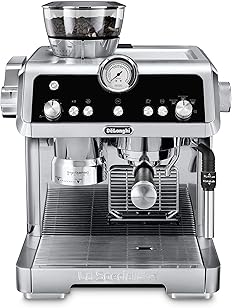
The artisan’s assistant. La Specialista is for the coffee lover who wants to eliminate guesswork. Its Sensor Grinding and Smart Tamping Station ensure a perfect coffee puck every time, while the dual heating system allows for seamless brewing and steaming. It’s all about repeatable quality and a guided, satisfying ritual.
Check Price on AmazonChoosing between these two is about identifying which workflow and feature set best matches your personality. It’s a decision as personal as choosing between the raw power of different high-end blenders, a topic we cover in our Blendtec blender vs Vitamix comparison.
Who Should Buy the Breville Barista Pro?
The Barista Pro is Your Perfect Co-Pilot If…
- You are a data-driven learner who loves real-time feedback.
- Speed is paramount. You want your machine ready to go, instantly.
- You want to learn and master the manual skill of tamping.
- You enjoy tinkering and experimenting with grind size and shot times to dial in the perfect shot.
- You primarily make espresso or Americanos, where the instant heat-up truly shines.
You Might Find it Frustrating If…
- You are easily frustrated by inconsistency when you’re first learning.
- The idea of a “bad tamp” ruining your morning coffee sounds like a nightmare.
- You want to brew and steam milk simultaneously.
Who Should Buy the DeLonghi La Specialista?
La Specialista is Your Dream Machine If…
- You want to eliminate the biggest variables and ensure a consistent shot, every time.
- The Smart Tamping Station sounds like a brilliant, hassle-free solution.
- You make a lot of lattes and cappuccinos and value the dual heating system for a smooth workflow.
- You love the classic, robust look and feel of traditional Italian espresso machines.
- You value consistency over ultimate control.
It Might Not Be The One If…
- You want to learn the art of tamping yourself.
- You need the instant, 3-second heat-up time of the Breville.
- You prefer a digital screen with a built-in shot timer over analog gauges.
This decision between automation and manual control is common in the world of high-end kitchen appliances. It’s a similar choice one might face when looking at the different philosophies behind a KitchenAid Artisan vs Professional 600 stand mixer, where one offers simplicity and the other offers professional-level control.
The Complete Buying Guide: What Every Home Espresso Shopper Should Know
Before you commit hundreds of dollars to either machine, it helps to zoom out and understand the broader landscape of home espresso equipment. Both the Breville Barista Pro and the DeLonghi La Specialista sit in a specific category often called “prosumer” or “super-automatic-adjacent” machines: semi-automatic, integrated-grinder espresso makers designed to bridge the gap between a fully automatic bean-to-cup machine and a separate, standalone grinder-and-machine setup favored by enthusiasts. Understanding where these two fit in the wider market will help you feel confident that you’re choosing the right category of machine, not just the right brand.
When people search for their first serious espresso machine, they often don’t realize how many sub-decisions are baked into that single purchase. You’re not just choosing a brand; you’re choosing a boiler type, a grinder type, a workflow, a footprint, and a maintenance schedule that will follow you for years. Let’s break down the variables that matter most, many of which explain exactly why the Barista Pro and La Specialista behave so differently in daily use.
Single Boiler vs. Dual Boiler vs. Thermoblock vs. Thermocoil
Espresso machines heat water using one of several methods, and this single spec has an outsized effect on your daily workflow. A single boiler machine uses one chamber for both brewing and steaming, meaning you typically have to wait between pulling a shot and steaming milk while the machine adjusts temperature. A dual boiler machine, usually found on machines costing well over a thousand dollars, has two completely separate boilers so you can brew and steam at the exact same time with zero compromise. Thermoblock systems, like the one in La Specialista, heat water on demand as it passes through a metal block, offering a middle ground between speed and simultaneous functionality. Thermocoil and Breville’s proprietary ThermoJet system take this on-demand philosophy even further, prioritizing near-instant readiness over the thermal mass and stability of a traditional boiler.
Neither approach is objectively superior; they simply optimize for different things. If your morning routine is “one shot of espresso, then out the door,” a fast on-demand system like ThermoJet is hard to beat. If your household regularly makes multiple lattes back-to-back for several people, a dual thermoblock or true dual-boiler design saves real time and hassle.
Built-In Grinder vs. Separate Grinder
Both machines in this comparison include an integrated grinder, which is a huge convenience and a major reason they’re popular with beginners. However, it’s worth knowing that many espresso purists eventually migrate to a separate, standalone grinder paired with a grinder-less machine. Why? Integrated grinders, while good, are still constrained by the internal footprint of an all-in-one unit. A dedicated grinder can house larger burrs, more precise stepless adjustment, and better dosing consistency. For the vast majority of home users, though, the built-in grinders on the Barista Pro and La Specialista are more than capable of producing café-quality shots, and the space savings and simplicity of an all-in-one unit is a significant advantage worth preserving.
Portafilter Size and Basket Compatibility
Both machines use a 54mm portafilter, which happens to be a popular size in the aftermarket accessory world. This means you can upgrade either machine down the road with precision baskets from brands like IMS or VST, bottomless (naked) portafilters for visually diagnosing your extraction, and different basket depths for ristretto or lungo shots. If you anticipate wanting to tinker with aftermarket parts eventually, this shared portafilter size is good news no matter which machine you choose.
Water Quality and Filtration: The Overlooked Variable
Here’s a keyword-worthy secret that most buying guides skip entirely: the single biggest factor in your espresso’s taste, after the beans themselves, is often your water. Espresso is roughly 98% water, and if that water is loaded with chlorine, chloramine, or excessive mineral content, no amount of machine wizardry will save your shot.
Both the Breville Barista Pro and the DeLonghi La Specialista include water reservoirs designed to accept filtration cartridges. Breville uses a Claro Swiss water filter, while DeLonghi machines typically ship with their own proprietary filter cartridges. We strongly recommend using filtered water in either machine, and if your tap water is very hard, consider using a dedicated pitcher filter or even a blend of filtered and remineralized water for optimal flavor extraction.
Hard water is also the primary driver of limescale buildup inside your machine’s internal plumbing, heating elements, and boiler. Left unaddressed, limescale narrows the internal tubing, reduces heating efficiency, and can eventually cause pressure and temperature inconsistencies, or in severe cases, permanent damage to the heating element. This is why both manufacturers build in reminders for regular descaling, which we’ll cover in detail in our maintenance section below.
If you live in an area with notably hard water, you may find that the La Specialista’s dual thermoblock system, with more surface area than the ThermoJet’s flash-heating coil, is slightly more forgiving of mineral buildup before you notice a performance dip. That said, neither machine is immune, and consistent filtration and descaling routines matter far more than which brand you choose.
Coffee Bean Freshness, Roast Level, and Storage
A five-hundred-dollar espresso machine paired with stale, poorly roasted beans will always lose to a fifty-dollar Moka pot paired with fresh, well-roasted beans. Beans are not a minor detail; they are arguably more important than the machine itself.
Why Roast Date Matters More Than Roast Type
Many shoppers focus on whether to buy light, medium, or dark roast beans, but the far more important number to check on any bag is the roast date, not the roast level. Coffee begins losing its volatile aromatic compounds within days of roasting, and by the time beans are three to four weeks old, they’ve lost a significant portion of the complexity that makes espresso enjoyable. For the best results in either the Barista Pro or La Specialista, aim to buy beans roasted within the past one to three weeks, and try to use them within four to six weeks of that roast date.
Freshly roasted beans also need a short resting period, typically four to fourteen days, before they’re ideal for espresso. Beans that are too fresh release excess carbon dioxide during extraction, which can cause channeling and inconsistent shots regardless of how good your tamp or grind setting is.
Light Roast vs. Medium Roast vs. Dark Roast for Espresso
Contrary to popular belief, dark roast is not a requirement for good espresso. Third-wave coffee culture, which both of these machines are somewhat designed around, has embraced lighter and medium roasts for espresso, prizing bright acidity, complex fruit and floral notes, and a lighter body. Darker roasts produce a heavier body, more bitterness, and classic “cafe” flavor notes like chocolate and caramel, but at the cost of some of the bean’s original character. If you’re new to dialing in espresso, a medium roast is often the most forgiving starting point, offering a wide window of acceptable extraction before the shot tastes either sour (under-extracted) or bitter (over-extracted).
Storing Beans for Maximum Freshness
Store your beans in an airtight, opaque container at room temperature, away from direct sunlight and heat sources like the espresso machine itself, which generates ambient warmth. Avoid the freezer for beans you’ll use within a month; the moisture and temperature cycling from repeated opening does more harm than good for short-term storage. Only consider freezing beans in small, vacuum-sealed portions if you’re storing a large quantity for longer-term use.
Cost of Ownership: What You’ll Actually Spend Over Time
The sticker price is only the beginning of the financial picture. Understanding the total cost of ownership will help you budget realistically and avoid surprises down the road.
Descaling Solution and Frequency
Both machines require regular descaling, typically every one to three months depending on your water hardness and usage frequency. A single descaling cycle uses a dedicated descaling solution, which typically costs between eight and fifteen dollars per bottle and treats several cycles. Over a year, budget roughly thirty to sixty dollars for descaling products on either machine, more if you have notably hard water and skip filtration.
Water Filters
Replacement water filter cartridges for both brands typically need swapping every two to three months, or roughly every 40 to 60 gallons of water processed. Expect to spend somewhere in the range of thirty to fifty dollars per year on replacement filters if you keep up with the recommended schedule.
Portafilter Baskets, Steam Wand Tips, and Gaskets
Over several years of daily use, the rubber gasket that seals your portafilter to the group head will wear out and may need replacement, typically a ten to twenty dollar part that’s straightforward to swap yourself with basic tools. Steam wand tips can also become clogged with dried milk over time if not cleaned diligently after every use; a spare tip or two, along with pipe cleaners for the internal channels, is a wise low-cost addition to your maintenance kit.
Cleaning Tablets and Group Head Care
Both manufacturers recommend using dedicated espresso machine cleaning tablets or powder periodically to break down coffee oil buildup inside the group head and portafilter. These typically cost around ten to twenty dollars for a supply that lasts several months. Skipping this step doesn’t just affect flavor; built-up coffee oils can turn rancid and genuinely degrade the taste of every subsequent shot, so it’s a small expense well worth budgeting for.
Estimated Annual Maintenance Budget
All told, most owners of either the Breville Barista Pro or the DeLonghi La Specialista should budget somewhere between eighty and one hundred and fifty dollars per year for descaling solution, water filters, cleaning tablets, and the occasional replacement gasket. This is a modest cost relative to what you’d spend on daily café espresso drinks, and it’s an important line item to factor into your overall decision, especially if you’re comparing these machines against cheaper alternatives that may seem less expensive up front but cost more in the long run due to less durable components.
Step-by-Step: Pulling Your First Shot on Each Machine
If you’re new to semi-automatic espresso, the first few days can feel intimidating. Here’s a practical walkthrough of the actual workflow for each machine, from bean to cup.
Breville Barista Pro Workflow
- Power on and wait for ThermoJet: Flip the machine on. Thanks to the 3-second heat-up, you’ll barely have time to grab your portafilter before it’s ready.
- Grind directly into the portafilter: Lock the portafilter into the grinder cradle, select your grind size on the dial, and press the single or double shot button to dispense the correct dose.
- Distribute the grounds: Use a distribution tool or the back of your finger to level the grounds evenly before tamping, minimizing the chance of channeling.
- Tamp manually: Apply firm, even, level pressure with the included tamper, roughly 15 to 20 pounds of force, then give a light polishing twist.
- Lock in and start the shot: Insert the portafilter into the group head and press the manual or automatic shot button. Watch the LCD timer as your shot builds toward the 25-30 second target window.
- Steam your milk: Once your shot is pulled, purge the wand, then steam your milk to a silky microfoam texture using the manual wand.
- Pour and enjoy: Combine your espresso and steamed milk, and if you’re feeling ambitious, try your hand at a bit of latte art.
DeLonghi La Specialista Workflow
- Power on and wait for the Thermoblocks: Turn the machine on and give it roughly 30 to 40 seconds to reach brewing temperature.
- Dock the portafilter for Sensor Grinding: Attach the portafilter to the grinding cradle. The Sensor Grinding technology automatically doses a consistent amount of coffee based on your selected settings.
- Engage the Smart Tamping Station: Slide the portafilter into the tamping station and pull the lever. This applies a consistent, level tamp without you lifting a finger beyond the lever pull itself.
- Lock in and start the shot: Insert the freshly tamped portafilter into the group head and start your shot using the illuminated icons. Time it yourself with a phone or scale, watching the analog pressure gauge for the optimal zone.
- Steam using the dual-function wand: Select “Flat” for microfoam suited to lattes, or “Foam” for the airier texture cappuccinos require.
- Pour and enjoy: Combine and serve. Many La Specialista owners find this repeatable process becomes second nature within just a few days.
Troubleshooting Common Espresso Problems
Both machines are excellent, but every new espresso owner runs into the same handful of issues while learning. Here’s how to diagnose and fix the most common ones on either the Barista Pro or La Specialista.
Shot Runs Too Fast (Sour, Weak, Watery Espresso)
If your shot finishes in under 20 seconds and tastes sour or thin, your grind is too coarse, letting water rush through the puck without extracting enough flavor. Adjust your grind size finer in small increments and, on the Breville, watch how the shot timing shifts on the LCD; on the DeLonghi, retime manually and observe the pressure gauge, which should show a needle climbing more assertively into the optimal zone.
Shot Runs Too Slow or Chokes the Machine (Bitter, Burnt Espresso)
A shot that takes 45 seconds or longer, or that barely trickles out at all, indicates a grind that’s too fine, over-tamping, or too much coffee dosed into the basket. This typically produces a harsh, bitter, over-extracted flavor. Coarsen your grind slightly and, on the Breville, double-check that your tamp pressure isn’t excessive; on the DeLonghi, confirm the Sensor Grinding dose setting matches your basket size.
Channeling (Uneven Extraction, Spurting Shots)
Channeling occurs when water finds a path of least resistance through the coffee puck rather than flowing evenly, usually visible as sporadic spurting or one side of the portafilter spout running differently than the other. This is almost always caused by uneven distribution before tamping. On the Breville, focus on your distribution technique before you tamp; the DeLonghi’s Smart Tamping Station largely solves this problem automatically, which is one of its biggest selling points for beginners.
Milk Won’t Foam Properly
If your milk isn’t developing the silky microfoam you’re after, check that you’re using cold milk, that the steam wand tip is fully purged and clear of dried residue, and that you’re introducing air only in the first few seconds of steaming before submerging the tip to create a whirlpool. Whole milk and many barista-formulated oat milks foam most reliably; ultra-low-fat milks are notoriously difficult to texture well.
Machine Displays an Error or Descale Reminder
Both machines will alert you when it’s time to descale, either through an LCD message on the Breville or an illuminated icon on the DeLonghi. Don’t ignore these prompts. Run the built-in descaling cycle promptly using the manufacturer-recommended solution to protect your investment and keep flavor consistent.
How These Machines Compare to Other Popular Options
The Barista Pro and La Specialista are far from the only contenders in this price bracket. If you’re still shopping around, here’s how they stack up against a few other machines that frequently come up in the same searches.
Gaggia Classic Pro
The Gaggia Classic Pro is a budget-friendly, no-frills semi-automatic machine with a commercial-style group head and no built-in grinder. It appeals to enthusiasts who already own a separate grinder and want a simple, durable, endlessly upgradeable machine. Compared to the Barista Pro or La Specialista, the Gaggia is more manual and less convenient out of the box, but it offers a lower entry price and a huge aftermarket modification community.
Rancilio Silvia
The Rancilio Silvia is a beloved prosumer machine known for its commercial-grade build quality and single boiler design. Like the Gaggia, it lacks an integrated grinder, positioning it as a step up in build quality but a step down in convenience compared to our two main contenders. It’s a popular choice for enthusiasts who have outgrown an all-in-one machine and want to build a more customized setup.
Breville Barista Express
The Barista Express is the Barista Pro’s more affordable sibling, sharing a similar integrated grinder and manual tamping workflow but using a traditional boiler instead of the ThermoJet system, meaning a longer heat-up time. It’s a great entry point for those who want the Breville philosophy at a lower price but don’t need the Barista Pro’s speed or LCD screen.
DeLonghi Dedica or Stilosa
DeLonghi’s more compact and affordable Dedica and Stilosa lines lack the Sensor Grinding and Smart Tamping Station found on La Specialista, along with the grinder itself in most configurations. They’re a good fit for small kitchens or those who already have a separate grinder and simply want a compact, attractive brewing unit.
Fully Automatic Bean-to-Cup Machines
If even the La Specialista’s guided workflow sounds like more hands-on involvement than you want, fully automatic bean-to-cup machines from brands like Jura or the DeLonghi Magnifica line grind, dose, tamp, brew, and even steam milk at the touch of a single button. You lose a significant amount of control and the tactile, ritualistic experience that draws many people to espresso in the first place, but you gain maximum convenience. Neither the Barista Pro nor La Specialista goes quite this far, intentionally preserving some hands-on engagement with the process.
Espresso vs. Other Brewing Methods: Is a Machine Like This Right for You?
It’s worth stepping back and asking whether a semi-automatic espresso machine is even the right category for your coffee habits, especially if you’re comparing it against simpler brewing methods.
Drip coffee makers and pour-over methods extract coffee at a much lower pressure over a longer period, producing a fundamentally different flavor profile: lighter body, more clarity, and no crema. They’re far cheaper to buy and maintain but can’t replicate the concentrated, syrupy intensity of true espresso or espresso-based milk drinks like lattes and cappuccinos. Moka pots sit somewhere in between, using steam pressure to create a strong, espresso-like brew, but without the fine control over grind, dose, and pressure that a real espresso machine provides.
If your daily habit revolves around lattes, cappuccinos, flat whites, or straight espresso shots, a dedicated machine like the Barista Pro or La Specialista is genuinely the right category of product. If you mostly drink black coffee and rarely want milk-based drinks, you may find a good drip machine or pour-over setup delivers excellent results for a fraction of the cost and maintenance commitment.
Milk Frothing and Latte Art: A Deeper Look
Milk texturing is often the hardest skill for new espresso owners to master, even more so than dialing in the shot itself. Both machines are capable of excellent microfoam, but the technique differs slightly given their different wand designs.
The Two-Stage Steaming Technique
Professional baristas generally break milk steaming into two stages. First, the “stretching” phase introduces air into the milk while it’s still cold, increasing its volume and creating the foam that will later be incorporated into your latte art. This should happen quickly, within the first five to ten seconds, with the wand tip positioned just below the milk’s surface to create a light hissing or tearing sound. Second, the “texturing” phase submerges the tip deeper to create a whirlpool that breaks down any large bubbles into the fine, glossy microfoam that pours like wet paint. Both the Breville and DeLonghi wands support this technique, though the Breville’s more powerful manual wand gives slightly more granular control over the stretching phase for those chasing advanced latte art.
Getting Started with Latte Art
If latte art is a goal, start with simple pours like a heart before attempting rosettas or tulips. Use a stainless steel pitcher with a pointed spout, pour from a height initially to allow the espresso and milk to combine, then lower the pitcher close to the surface as you finish the pour to “draw” your pattern using gentle side-to-side wrist motion. Both machines’ microfoam quality is more than sufficient for latte art; the limiting factor is almost always the barista’s pouring technique and practice, not the equipment.
Glossary of Espresso Terms for Beginners
If some of the terminology in this comparison is new to you, here’s a quick reference to the vocabulary you’ll encounter as you get to know your new machine.
- Crema: The reddish-brown foam layer that sits atop a well-pulled espresso shot, created by emulsified oils and carbon dioxide.
- Dose: The amount of ground coffee, by weight, used for a single shot, typically 18 to 20 grams for a double shot.
- Yield: The amount of liquid espresso, by weight, produced by your shot, commonly targeted around a 2-to-1 ratio to the dose.
- Channeling: Uneven water flow through the coffee puck, causing inconsistent, often sour and bitter extraction in the same shot.
- Puck: The compacted disc of used coffee grounds left in the portafilter basket after a shot.
- Group Head: The part of the machine where the portafilter locks in and hot, pressurized water is delivered to the coffee.
- Microfoam: Finely textured, glossy steamed milk with tiny, uniform bubbles, ideal for lattes and latte art.
- WDT (Weiss Distribution Technique): A distribution method using a fine needle tool to break up clumps in the grounds before tamping, reducing channeling.
- Ristretto: A shorter, more concentrated espresso shot pulled with a lower yield than a standard shot.
- Lungo: A longer espresso shot pulled with a higher yield, resulting in a lighter, more diluted flavor.
Accessories Worth Adding to Your Setup
A few inexpensive accessories can meaningfully improve your results on either the Breville Barista Pro or the DeLonghi La Specialista, often for less than the cost of a few weeks of café visits.
- A digital coffee scale: Weighing your dose and yield rather than eyeballing it is the single fastest way to dial in consistent, repeatable shots on either machine, and it’s especially useful on the DeLonghi given its lack of a built-in shot timer.
- A knock box: A simple container for tapping out spent coffee pucks keeps your workspace clean and speeds up the process of resetting for your next shot.
- A milk frothing thermometer: While experienced baristas can judge milk temperature by touch, a clip-on thermometer helps beginners avoid the common mistake of scalding milk past the ideal 140 to 150 degree Fahrenheit range.
- A bottomless portafilter: Compatible with both machines’ 54mm portafilter standard, a bottomless or “naked” portafilter lets you visually diagnose channeling and extraction issues in real time, which accelerates the learning process considerably.
- A dedicated coffee canister with a one-way valve: Proper storage extends the useful life of your beans and protects the investment you’re making in quality, freshly roasted coffee.
Sustainability and Long-Term Value Considerations
Choosing a durable, repairable machine has value beyond the purchase price. Both Breville and DeLonghi design these models with some degree of user-serviceable parts, including replaceable gaskets, accessible descaling routines, and grinder burrs that can be swapped rather than requiring full machine replacement. Buying whole bean coffee rather than single-use pods also reduces packaging waste considerably over the life of the machine, an added benefit for environmentally conscious shoppers weighing the switch from pod-based systems to a semi-automatic setup like either of these two machines.
When a machine does eventually reach the end of its serviceable life, check whether your municipality offers small-appliance recycling programs, since espresso machines contain a mix of metal, plastic, and electronic components that shouldn’t go directly into general landfill waste.
Real Owner Feedback: What People Actually Say After Months of Use
Specs and first impressions only tell part of the story. What matters just as much is how these machines hold up after the honeymoon phase, once the novelty wears off and they become part of a daily routine.
Common Praise for the Breville Barista Pro
Long-term Barista Pro owners consistently highlight the ThermoJet heat-up time as the feature they’d miss most if they switched machines. Many describe it as the difference between “espresso as a project” and “espresso as a habit,” since there’s no mental barrier of waiting around before your first sip. Owners also frequently mention that the LCD screen’s feedback made them meaningfully better baristas over time, since it turns every shot into a small data point rather than a guess.
Common Complaints About the Breville Barista Pro
The most frequent critique centers on the manual tamping learning curve, particularly among buyers who expected a more “plug and play” experience. Some owners also note that the plastic components used in certain areas of the housing feel less premium than the machine’s price point might suggest, especially compared to the more metal-heavy DeLonghi. A smaller subset of long-term owners report that the water tank, while easy to access, could be slightly larger for households that make many drinks in a row.
Common Praise for the DeLonghi La Specialista
Owners of La Specialista frequently describe the Smart Tamping Station as “worth the price of admission alone,” since it removes what many consider the single most frustrating variable in home espresso. The dual thermoblock system’s ability to steam and brew without delay is also a frequently cited favorite, particularly among households that regularly make multiple milk-based drinks back to back for family members or guests. Many owners also simply love the classic Italian aesthetic, noting that it looks like a genuine piece of café equipment rather than a plastic kitchen appliance.
Common Complaints About the DeLonghi La Specialista
The most common critique is the lack of a built-in timer, which some owners find surprising at this price point given the machine’s otherwise sophisticated feature set. A handful of long-term owners also mention that the Sensor Grinding system, while convenient, offers less fine-tuned control than they’d like once they’ve developed more advanced palates and want to experiment with unconventional doses. Some owners also note that the tamping lever mechanism requires periodic cleaning to keep operating smoothly, as coffee dust can accumulate in the mechanism over time.
Warranty, Support, and Where to Buy
Both Breville and DeLonghi typically back their machines with a standard one-year limited warranty covering manufacturing defects, with the option to purchase extended coverage through certain retailers. Registering your machine promptly after purchase is a good habit, as it can streamline any future warranty claims and often unlocks slightly longer coverage windows directly through the manufacturer.
When shopping, pay attention to whether you’re buying from an authorized retailer, since gray-market units sold through unauthorized third parties sometimes come with reduced or void warranty coverage, even if the price looks attractive. Buying through recognized retail channels, including the manufacturer’s own site or major authorized online marketplaces, is the safest way to ensure your warranty is fully honored if you ever need it.
Energy Use and Standby Considerations
Because both machines use on-demand or near-on-demand heating rather than maintaining a large boiler at temperature all day, they’re relatively efficient compared to older-style single-boiler machines that are designed to stay hot for hours. The Breville’s ThermoJet in particular is well suited to being switched off between uses, since there’s essentially no heat-up penalty for doing so. Many owners simply turn the machine on right before use and off immediately after, rather than leaving it idling, which saves a modest amount of electricity over the course of a year without meaningfully impacting convenience given the fast heat-up times both machines offer.
Both machines also include an auto-off feature that powers the unit down after a period of inactivity, a helpful safety and efficiency feature for households that sometimes forget to switch the machine off manually.
A Practical Decision Framework: Answer These Questions First
If you’re still torn, walk through these five practical questions. Your answers will likely point you clearly toward one machine or the other.
- How much time do you want to spend learning a manual skill? If the idea of practicing tamping technique sounds fun, lean Breville. If it sounds like a chore, lean DeLonghi.
- Do you frequently make multiple milk-based drinks back to back? If yes, DeLonghi’s simultaneous brew-and-steam capability will save you real time daily.
- Do you want real-time data like shot timers to help you learn? If yes, the Breville’s LCD screen is a meaningful advantage for building skill quickly.
- Does aesthetic and classic design matter to you as much as function? If you love the idea of a machine that looks like it belongs in an Italian café, the DeLonghi’s design language may tip the scales.
- Do you want the absolute fastest path from “machine off” to “espresso in hand”? The Breville’s 3-second ThermoJet heat-up is difficult for any competitor, including the DeLonghi, to match.
There’s no wrong answer here. Thousands of happy owners exist on both sides of this comparison, and the “right” machine is ultimately the one whose daily workflow matches how you actually want to spend your morning.
Final Verdict: The Right Machine for Your Coffee Bar
After countless shots, it’s abundantly clear that both the Breville Barista Pro and the DeLonghi La Specialista are phenomenal machines that can produce exceptional espresso. They are both worthy of a place of honor on your counter. The “better” machine is simply the one that better aligns with your personality, your patience, and your ultimate coffee-making goals.
Our Final Recommendation:
Choose the Breville Barista Pro if you are a curious and aspiring coffee scientist. It’s the ultimate learning tool. Its speed is breathtaking, and its LCD screen provides the critical feedback you need to understand the relationship between grind, dose, tamp, and time. It empowers you to master the craft and gives you full control over the process.
Choose the DeLonghi La Specialista if you are an aspiring coffee artisan who values consistency and a guided experience. It is the master of repeatability. By brilliantly solving the tamping problem, it allows you to focus on the more enjoyable parts of the ritual—the aroma of the beans, the beauty of the extraction, and the art of steaming milk. It’s the faster path to consistently delicious coffee.
Frequently Asked Questions (FAQ)
1. Which machine is easier to clean?
Both are relatively easy to clean. Breville has an automated cleaning cycle prompt and a removable drip tray with a “Full” indicator. DeLonghi also has descaling programs and removable parts. We’d call it a tie, as daily cleaning (purging the steam wand, cleaning the portafilter) is identical and crucial for both.
2. Can I use pre-ground coffee in these machines?
No, neither of these machines is designed for pre-ground coffee. They are built as integrated “bean-to-cup” systems where the built-in grinder is essential for achieving the fine, precise grind necessary for espresso. Using pre-ground coffee will result in poor, under-extracted shots.
3. Which one makes better microfoam for latte art?
With practice, the Breville Barista Pro’s steam wand is slightly more powerful and capable of producing finer, silkier microfoam suitable for advanced latte art. The DeLonghi’s wand is excellent, especially with its “Flat” setting, but it’s geared more towards ease of use and may not offer the same level of precise control for intricate designs as the Breville’s fully manual wand.
4. What is a PID and do these machines have it?
PID stands for Proportional-Integral-Derivative, and it’s essentially a digital thermostat on steroids. It keeps the water temperature extremely stable (within 1-2 degrees), which is critical for consistent espresso flavor. Yes, both the Barista Pro and La Specialista have PID controllers, a key feature that elevates them above cheaper machines.
5. Are they noisy?
All espresso machines make noise, especially the grinder. Both machines have conical burr grinders that are relatively noisy for the 10-15 seconds they are operating. The vibration pumps also make a characteristic buzzing sound during extraction. We found them to be very comparable in overall noise level. Neither is whisper-quiet, but the sound is part of the authentic espresso-making experience.
6. How often should I descale my Breville Barista Pro or DeLonghi La Specialista?
Most owners should descale every one to three months, though the exact frequency depends heavily on your local water hardness and how often you use the machine. Both machines include built-in reminders that track water usage and alert you when it’s time. If you notice slower brewing, reduced steam power, or unusual noises from the pump, it’s a strong sign that descaling is overdue regardless of what the reminder says.
7. Do I need a separate coffee grinder if I already own one of these machines?
No, both machines include a capable integrated burr grinder specifically tuned for espresso, and most home users will never need to buy a separate one. Enthusiasts who eventually want more precise, stepless grind adjustment sometimes upgrade to a standalone grinder down the road, but this is an optional upgrade rather than a necessity for either machine.
8. What is the best water to use for espresso?
Filtered water with moderate mineral content produces the best flavor and protects your machine from scale buildup. Avoid distilled or reverse-osmosis water with zero minerals, as it can actually taste flat and, over time, may be more corrosive to internal metal components due to its lack of buffering minerals. Both manufacturers sell compatible filter cartridges designed to strike the right mineral balance.
9. Can beginners really get good results with the Breville’s manual tamping?
Yes, though it takes a bit more practice than the DeLonghi’s automated approach. Most new owners see a noticeable improvement in their tamping consistency within the first one to two weeks of daily use. Investing in a calibrated tamper that clicks at a set pressure can accelerate this learning curve significantly.
10. Which machine has a smaller footprint for a compact kitchen?
The two machines are fairly similar in overall footprint, though the exact dimensions vary slightly by model year. Both are considered mid-size countertop appliances, larger than a basic drip machine but smaller than a full prosumer dual-boiler setup. If counter space is extremely tight, measure your available area carefully against the current listed dimensions for each machine before purchasing, since both require clearance above for lifting the water tank and bean hopper lids.
11. How long do these machines typically last?
With proper maintenance, including regular descaling, filtered water, and periodic cleaning of the group head and steam wand, both machines can reliably last five years or more, and many owners report a decade or longer of service. The grinder burrs are also replaceable, so the machine’s usable life isn’t necessarily capped by grinder wear.
12. Is it worth upgrading from a pod-based machine to one of these?
For most coffee lovers, yes. Pod-based machines offer convenience but sacrifice flavor complexity, freshness, and the ability to customize grind, dose, and extraction. The upfront cost of either the Barista Pro or La Specialista is higher, but the ongoing cost per cup is typically lower than pod-based systems once you’re buying whole bean coffee, and the flavor ceiling is dramatically higher.
13. Can these machines make drinks other than espresso and lattes?
Absolutely. Once you have espresso and steamed milk mastered on either machine, you can make the full range of espresso-based drinks: cappuccinos, flat whites, macchiatos, mochas, cortados, and Americanos, which are simply espresso diluted with hot water. Both machines also typically include a hot water dispensing function for Americanos or for pre-heating cups.


