Air Fryer vs Microwave Oven: Ultimate Comparison for Modern Kitchens

Modern kitchens are evolving faster than ever. Among the most popular appliances transforming everyday cooking are air fryers and microwave ovens. Both devices bring speed, convenience, and efficiency to the table, yet they operate on very different principles. As more families look for healthier meal-prep options and faster cooking methods, the “Air Fryer vs Microwave Oven” debate has become more relevant than ever.
This comprehensive guide will help you understand the differences between these appliances — everything from cooking technology, speed, texture, versatility, reheating quality, energy usage, safety, convenience, and long-term durability. You’ll discover which appliance fits your lifestyle best, whether you’re a busy parent, a student, a meal-prepper, or someone upgrading your kitchen with smarter tools.
We’ll also include Amazon product comparisons (air fryers + microwaves), expert tips, and helpful internal resources from kitchenoutput.com/ including deep-dive guides on liners, egg molds, cleaning kits, temperature control, air fryer comparisons, toaster-oven hybrids, and smart lifestyle upgrades.
And for further reading, we also include an external expert reference: KitchenAid: Air Fryer vs Microwave Guide.
What Is an Air Fryer?
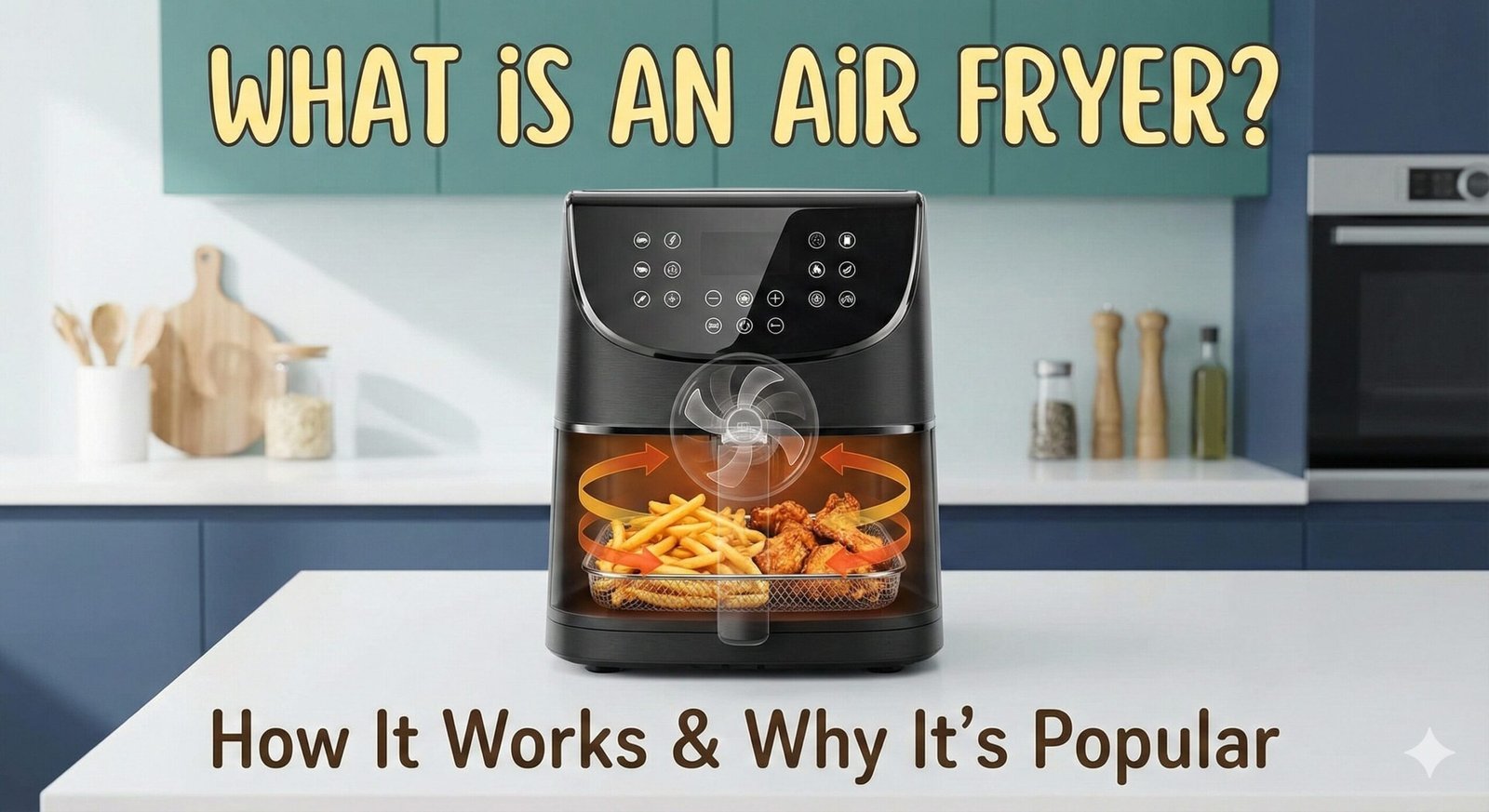
An air fryer is a compact, countertop convection cooker designed to mimic the crispiness of deep-fried food without needing large amounts of oil. Using rapid hot-air circulation, air fryers produce crispy textures that microwaves cannot replicate. They are extremely popular for healthier cooking, quick meals, frozen foods, and reheating leftovers without sogginess.
Key Features of Air Fryers
- Rapid hot air circulation
- Little to no oil needed
- Crisp, fried-like texture
- Fast preheating
- Versatile cooking modes
- Compact and energy-efficient
If you’re choosing your first model, explore: Best Digital Air Fryers and Best Small Air Fryers Under $100.
What Is a Microwave Oven?
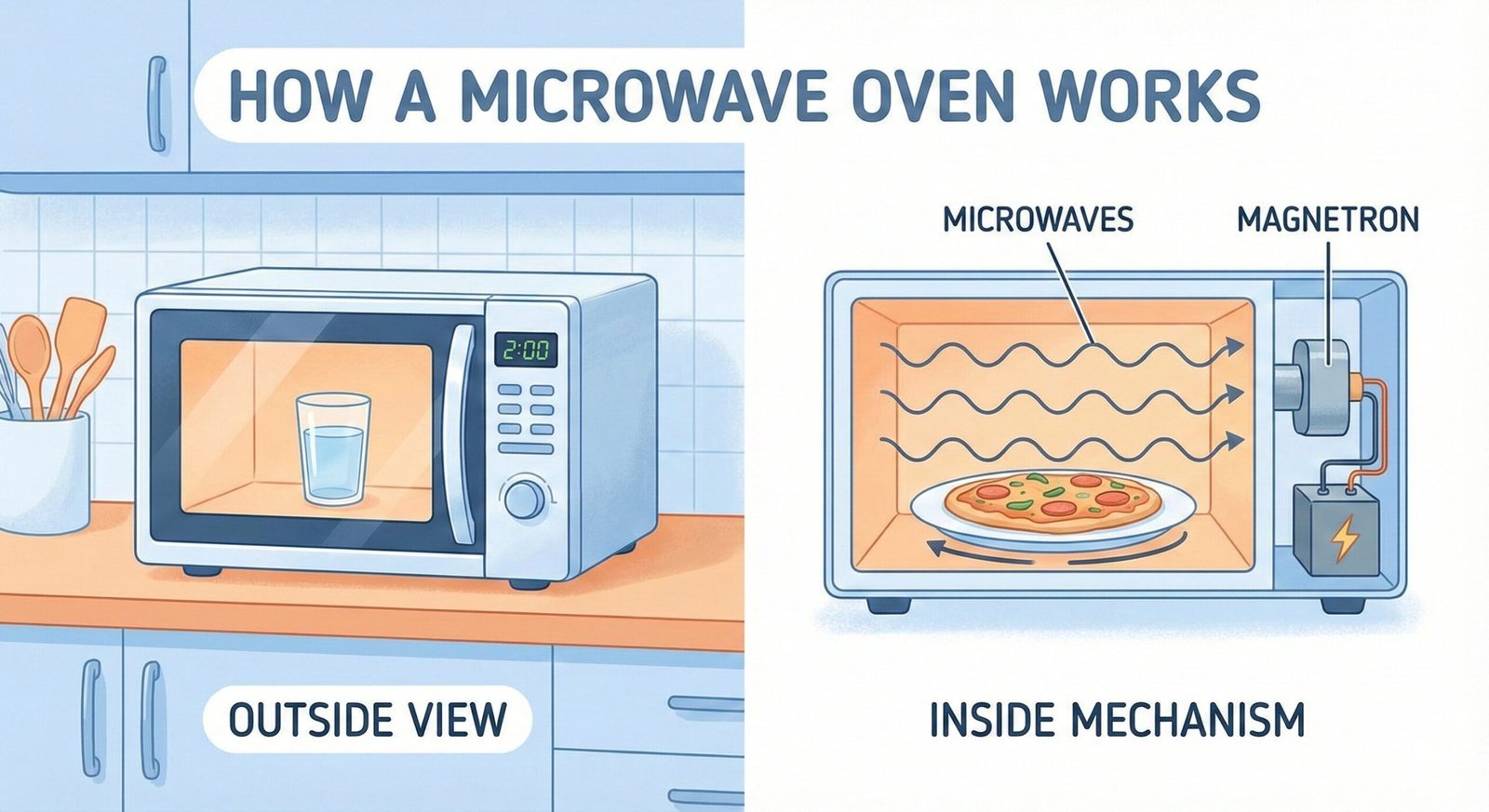
A microwave oven uses electromagnetic waves (microwaves) to heat water molecules inside food. This internal heating makes microwaves excellent for reheating, defrosting, and cooking certain foods quickly. While they are extremely efficient for speed, they generally cannot produce crispy textures unless they are combination microwave–convection models.
Key Features of Microwaves
- Rapid internal heating
- Best for reheating & defrosting
- Even cooking for liquids & soft foods
- Large internal capacity
- No preheating required
Microwave ovens excel at convenience — something air fryers cannot always match.
Air Fryer vs Microwave Oven: Side-by-Side Comparison
| Category | Air Fryer | Microwave Oven |
|---|---|---|
| Primary Cooking Method | Convection (hot air circulation) | Microwave radiation (internal heating) |
| Texture | Crispy, fried-like | Soft, steamed |
| Speed | Fast (but requires preheating) | Very fast (no preheating) |
| Best For | Crisping, frying, roasting | Reheating, defrosting, liquids |
| Oil Required? | Minimal or none | No |
| Energy Use | Low | Moderate to low |
| Capacity | Small to medium | Medium to large |
| Heating Style | Exterior-inward | Interior-outward |
Want to compare with another popular appliance? Read: Air Fryer vs Convection Oven.
How Does an Air Fryer Work?
Air fryers use rapid hot-air convection. A heating element warms the air, and a powerful fan circulates it around the food at high speeds. The result is intense surface heating, rapid moisture evaporation, and a crispy exterior.
Advantages:
- Perfect for French fries, nuggets, wings
- Healthier than deep frying
- Minimal oil for crisping
- Fast and versatile
- Great for frozen & homemade snacks
Understanding heat behavior is easier with guides like: Air Fryer Temperature Control.
How Does a Microwave Oven Work?
Microwave ovens use electromagnetic waves to excite water molecules in food. This vibrational heating warms food from the inside out. This is why microwaves excel at reheating, softening, and thawing.
Strengths of Microwaves
- Fastest cooking appliance
- Zero preheat time
- Perfect for liquids & soft foods
- Great for rice, pasta, steamed vegetables
- Reliable defrost function
Air Fryer Performance & Food Quality
Air fryers excel at crisping and browning foods — something microwave ovens simply cannot do. Air fryers are ideal for:
- Crispy chicken wings
- French fries
- Potato wedges
- Fried vegetables
- Dessert crisping
- Toasting bread
You can enhance performance using: Air Fryer Liners Egg Molds Cleaning Kits.
Microwave Performance & Food Quality
Microwave ovens produce soft textures due to their steam-like heating. They are unbeatable for:
- Reheating leftovers
- Defrosting frozen meats
- Heating soups & beverages
- Cooking oatmeal or pasta
- Melting butter & chocolate
However, microwaves cannot crisp food. They can only soften, steam, or rehydrate.
Reheating: Which Is Better?
Microwave ovens are the king of reheating — fast, simple, and convenient. But air fryers excel when you want to restore crispiness to leftovers.
Best for Reheating Pizza
- Air Fryer: Crispy bottom & melty cheese
- Microwave: Soft, soggy crust
Best for Reheating Rice
- Microwave: Moist and fluffy
- Air Fryer: Dries out rice
Best for Reheating Fried Foods
- Air Fryer: Revives crispiness
- Microwave: Soft & soggy
For everyday reheating guidance, explore: Air Fryer Beginner Recipes.
Cooking Versatility Comparison
Air Fryer Capabilities
- Air fry
- Bake
- Roast
- Broil
- Dehydrate
- Toast
Microwave Capabilities
- Heat
- Reheat
- Defrost
- Steam
- Boil
- Melt
Air fryers offer more ways to cook meals creatively, especially with the right tools like: Measuring Spoons, Mixing Bowls, Digital Scales.
Capacity Comparison
Air fryers are small but effective for 1–4 people. Microwave ovens have larger chambers suitable for reheating large plates or cooking multi-serving meals.
If you want large-capacity air fryers, explore:
Energy Efficiency
Air fryers are typically more energy-efficient due to:
- Smaller chamber
- Faster cooking
- Less heat loss
Microwaves also consume low energy but for different reasons — rapid heating and short cooking times.
For smart usage tips: Smart Lifestyle Upgrades.
Ease of Cleaning
Air fryers generally require cleaning after every use — especially the basket and tray. Microwaves need less frequent cleaning unless food splatters occur.
To simplify cleanup: Air Fryer Cleaning Kits Air Fryer Liners
Air Fryer vs Microwave: Safety Comparison
Air fryers get hot externally and require careful handling. Microwave ovens remain cool externally but can cause steam burns from overheated liquids.
Use accessories: Heat-Proof Fryer Gloves.
Cost Comparison: Upfront Price and Long-Term Running Costs
Price is one of the biggest factors buyers search for before choosing between these two appliances, yet it’s a topic most comparison guides skip. The upfront purchase price and the ongoing electricity cost both matter, and they don’t always point in the same direction.
Upfront Purchase Price
Basic microwave ovens tend to be cheaper to buy than air fryers of comparable build quality, largely because microwave technology has been mass-produced for decades and the manufacturing costs are low. Entry-level microwaves can be found at a lower price point than entry-level air fryers, while premium convection microwaves and large-capacity air fryer ovens sit in a similar higher price bracket. Digital displays, smart connectivity, larger baskets, and multi-function combo units all push the price of either appliance upward.
Running Costs Over Time
Air fryers typically use a heating element in the 1,200 to 1,800 watt range, but because cook times are short and the chamber is compact, total energy draw per meal is usually lower than a full-size convection oven. Microwaves generally draw between 600 and 1,200 watts, and because they heat food directly rather than heating air around it, they often use less energy per minute than an air fryer. However, since air fryers frequently finish cooking faster than a conventional oven would, and microwaves finish faster than almost anything else, the actual dollar difference between the two appliances over a year of typical use is usually small for the average household.
Cost Per Meal Breakdown
- Microwave: Extremely low cost per use due to short cook times and direct heating
- Air Fryer: Slightly higher cost per use due to preheating and longer cycle times, but still far cheaper than a conventional oven
- Combination Units: Higher upfront cost, but can replace two or three separate appliances, reducing overall counter footprint and total spend over time
For budget-conscious shoppers comparing entry-level models, our guide to Best Small Air Fryers Under $100 is a useful starting point.
Noise Level Comparison
Noise is a common concern for apartment dwellers, parents with sleeping infants, and anyone with an open-plan kitchen near a living or working space. Air fryers rely on a fan to circulate hot air, and that fan produces a steady hum that’s often compared to a small vacuum cleaner running at a distance. Larger air fryer ovens with bigger fans and higher wattage tend to be louder than compact basket-style models.
Microwave ovens are generally quieter in terms of pitch, though the turntable motor and the internal fan (used mostly for cooling the magnetron) still produce a low hum. Most people find microwave noise less noticeable because it’s a familiar, consistent sound most households have lived with for decades.
Practical Noise Tips
- Place air fryers on a stable, hard surface to reduce vibration noise
- Avoid running an air fryer directly under wall cabinets, which can amplify fan sound
- Choose a lower-wattage compact model if noise is a priority, and compare specs in our Best Digital Air Fryers roundup
- Keep microwaves on a solid countertop rather than a hollow cart to minimize turntable vibration
Health and Nutrition Comparison
Health is one of the most searched angles in the air fryer versus microwave debate, and the two appliances affect food very differently at the nutritional level.
Oil and Fat Content
Air fryers dramatically cut down on oil use compared to deep frying, often requiring only a light spray or brushing of oil to achieve a crisp exterior. This can meaningfully reduce the total fat content of fried-style foods compared to traditional deep frying, though it’s worth noting an air fryer will not reduce fat content compared to a microwave, since microwaves require no added oil in the first place.
Nutrient Retention
Microwaves tend to preserve more water-soluble vitamins, such as vitamin C and several B vitamins, in vegetables because cook times are short and less water is used compared to boiling. Air fryers can also retain nutrients reasonably well thanks to short cooking times, though the higher, drier heat can degrade some heat-sensitive nutrients more than steaming or microwaving would.
Acrylamide Formation
One consideration many buyers don’t realize matters: air frying starchy foods like potatoes at high temperatures can form acrylamide, a compound linked to health concerns at high exposure levels, similar to what happens with deep frying or oven roasting. Microwaving does not typically produce meaningful acrylamide because it doesn’t rely on the same dry, high-heat surface browning. Keeping air fryer temperatures moderate and avoiding over-browning starchy foods is a simple way to reduce this risk.
Calorie Comparison Snapshot
| Food | Deep Fried | Air Fried | Microwaved |
|---|---|---|---|
| French Fries | High fat, high calorie | Reduced fat, crispy | Soft, low fat, not crispy |
| Chicken Tenders | High fat | Moderate fat, crisp coating | Low fat, soft coating |
| Vegetables | Not typical | Good nutrient retention, roasted flavor | Best nutrient retention, steamed texture |
Foods You Should Never Put in an Air Fryer or Microwave
Understanding what not to cook in each appliance is just as important as knowing what they excel at. Using the wrong appliance for the wrong food can ruin a meal or, in some cases, create a safety hazard.
Avoid in an Air Fryer
- Wet batters (tempura-style coatings tend to blow off in the fan)
- Leafy greens (they can fly into the heating element)
- Whole large roasts without checking manufacturer capacity limits
- Foods with excessive loose seasoning that can scatter and burn
- Cheese-heavy dishes without a liner, which can create heavy melted messes in the basket
Avoid in a Microwave
- Metal containers, foil, or dishes with metallic trim
- Eggs in the shell, which can build pressure and burst
- Whole grapes, which can spark in some units
- Anything you want crispy, such as fried chicken skin or pizza crust
- Sealed containers or takeout boxes with sealed lids that trap steam
For appliance-safe accessories and prep tools, see our guides on Air Fryer Liners and Mixing Bowls.
Air Fryer vs Microwave for Meal Prep
Meal preppers searching for the right appliance often want to know which one saves the most time across a full week of cooking, not just a single meal.
Batch Cooking with an Air Fryer
Air fryers work well for batch-roasting vegetables, proteins, and crispy grain bowls components in rotating loads, since each basket load only takes a matter of minutes. The tradeoff is that most air fryer baskets are relatively small, so cooking for a family of four or more often means running multiple batches back to back.
Batch Reheating with a Microwave
Microwaves shine when it comes to reheating pre-portioned meals stored in the fridge or freezer throughout the week. A single microwave can reheat an entire prepped lunch in a couple of minutes, which makes it the appliance of choice for office lunches and quick weekday dinners.
A Combined Meal Prep Workflow
- Air fry proteins and vegetables in bulk on prep day for maximum crispness and flavor
- Portion into containers and refrigerate or freeze
- Use the microwave for quick daily reheating when convenience matters more than texture
- Reserve the air fryer for weekend re-crisping when time allows
For more structured routines, check our beginner-friendly Air Fryer Beginner Recipes guide.
Converting Recipes Between a Microwave and an Air Fryer
Many home cooks want to know how to adapt a recipe written for one appliance so it works well in the other. The conversion isn’t a simple one-to-one swap because the two appliances heat food through entirely different mechanisms.
Converting a Microwave Recipe to Air Fryer Use
- Reduce liquid slightly, since air frying evaporates moisture faster than microwaving
- Lower the temperature by around 25 degrees Fahrenheit compared to a standard oven recipe, then check for doneness a few minutes early
- Add a light coat of oil or cooking spray if you want browning, since microwaves never produce browning on their own
- Shake or flip halfway through cooking for even crisping
Converting an Air Fryer Recipe to Microwave Use
- Expect a softer final texture, since the microwave cannot replicate crisping
- Reduce cook time significantly, often to a fraction of the air fryer time, and check every thirty seconds to avoid overcooking
- Cover loosely with a microwave-safe lid or wrap to retain moisture
- Consider finishing under a broiler or toaster oven afterward if crispness is important
Countertop Space and Kitchen Design Considerations
Counter space is a frequent, practical concern that’s easy to overlook until an appliance actually arrives at the door. Air fryers, particularly larger oven-style models, can take up a meaningful footprint and often need clearance on all sides for airflow and heat dissipation. Microwaves are more commonly built into cabinetry, mounted over a range, or tucked onto a shelf, since they don’t need the same ventilation clearance.
Space-Saving Tips
- Choose a basket-style air fryer over an oven-style model if counter space is limited
- Consider a combination microwave-air fryer-convection unit to consolidate appliances into one footprint
- Store the air fryer in a cabinet if it’s not used daily, keeping the microwave as the always-accessible option
- Measure clearance requirements before buying a large-capacity model such as the Kalorik MAXX or NuWave IQ360
Longevity and Durability
Appliance lifespan is another frequently searched consideration that’s often missing from comparison articles. Microwaves, as a mature technology, tend to have a long track record of reliability, with many households reporting a decade or more of consistent use before replacement. The main point of failure is usually the magnetron or the door switch mechanism.
Air fryers are a newer category, and while build quality has improved significantly, the moving fan and heating element are subject to more mechanical wear than a microwave’s largely static internal components. Baskets and non-stick coatings also degrade faster with heavy daily use, especially if metal utensils are used inside them.
Tips to Extend Appliance Life
- Avoid metal utensils in non-stick air fryer baskets
- Let the air fryer cool fully before cleaning to protect the coating
- Clean microwave interiors regularly to prevent grease buildup that can affect the door seal
- Avoid running either appliance empty or beyond rated capacity
Combination Appliances: The Best of Both Worlds?
For shoppers who don’t want to choose, hybrid appliances that combine microwave, convection, and air fryer functions into a single unit have become increasingly popular. These units use a microwave emitter alongside a convection heating element and fan, letting you switch modes depending on what you’re cooking.
Advantages of Combination Units
- Saves counter space compared to owning two separate appliances
- Offers crisping and reheating in one device
- Often includes preset programs for common foods
Drawbacks of Combination Units
- Higher upfront cost than a standalone microwave or air fryer
- Smaller air fryer basket capacity compared to a dedicated air fryer
- More complex controls with a steeper learning curve
- If one function breaks, the whole unit may need replacing
Our full breakdown of one popular hybrid model is available above in the product section, and for more hybrid options see our Best Air Fryer Toaster Oven Hybrids guide.
Common Mistakes to Avoid With Each Appliance
Air Fryer Mistakes
- Overcrowding the basket, which blocks airflow and prevents even crisping
- Skipping preheating on recipes that specifically call for it
- Using too much oil, which can cause smoking and uneven texture
- Forgetting to shake or flip food halfway through cooking
- Using cooking sprays with propellants that can damage non-stick coatings over time
Microwave Mistakes
- Using non-microwave-safe containers that can leach chemicals or melt
- Not covering food, which leads to splatters and uneven heating
- Overheating liquids, which can cause sudden boil-over or steam burns when disturbed
- Reheating the same dish multiple times, which can dry it out or affect food safety
- Ignoring stir and rest times in the middle of a cooking cycle, leading to cold centers
Which Appliance Fits Your Lifestyle?
Students and Small Apartments
A compact microwave is usually the more practical first appliance for students due to low cost, minimal cleanup, and speed. A small air fryer can be a strong second appliance once budget allows, especially for reheating dorm-friendly frozen foods with better texture.
Busy Families
Families often benefit from owning both appliances, using the microwave for quick weekday reheating and the air fryer for weekend batch cooking of kid-friendly crispy foods like chicken tenders and fries.
Health-Conscious Cooks and Keto or Low-Fat Diets
An air fryer is generally the better fit for anyone trying to cut down on added oils while still enjoying crispy textures, while a microwave remains the go-to for quickly steaming vegetables without added fat.
Seniors and Accessibility Needs
Microwaves are often easier to operate for users who prioritize simplicity, with large buttons and short cook cycles. Some newer air fryer models with simple dial controls, rather than complex touchscreens, can also be a good fit if crisped textures are important for appetite and enjoyment.
Frequently Asked Questions
Can an air fryer fully replace a microwave?
Not entirely. Air fryers cannot heat liquids, steam vegetables, or reheat food as quickly as a microwave, and they are not designed for that kind of internal, moisture-based heating.
Can a microwave fully replace an air fryer?
No, unless it’s a combination convection-microwave-air fryer unit. A standard microwave cannot produce a crispy, browned exterior on food.
Is it cheaper to run an air fryer or a microwave?
Microwaves generally cost less per use due to lower wattage and shorter run times, though the difference for most households over a year is relatively small.
Which is healthier, an air fryer or a microwave?
Neither is universally healthier. Air fryers reduce oil compared to deep frying, while microwaves preserve more water-soluble nutrients and add no fat at all. The healthier option depends on the specific food and cooking method being replaced.
Do air fryers use more electricity than microwaves?
Air fryers typically have a higher wattage rating, but shorter overall cook times for many foods can offset that difference in real-world energy use.
Which appliance is better for reheating pizza?
An air fryer is better for reheating pizza because it restores a crispy crust, while a microwave tends to leave the crust soft or slightly soggy.
Can I put foil in an air fryer?
Small amounts of foil can generally be used in an air fryer basket if it doesn’t block airflow, unlike a microwave, where foil should never be used.
Is a combination microwave-air fryer worth the extra cost?
For kitchens with limited counter space, a combination unit can be worth the investment since it consolidates two or three appliances into one, though it typically has a smaller air fryer capacity than a dedicated unit.
How long do air fryers typically last compared to microwaves?
Microwaves often have a longer track record of long-term reliability, while air fryers, being a newer and more mechanically active appliance, may show wear on baskets and coatings sooner with heavy daily use.
Which is better for cooking frozen food?
Air fryers are generally better for frozen foods meant to be crispy, such as fries or nuggets, while microwaves are faster and better suited for frozen foods meant to be soft, such as frozen vegetables or ready meals.
Deep Dive: Understanding Wattage, Temperature, and Time Settings
One of the most confusing parts of switching between an air fryer and a microwave is understanding how their control settings actually relate to real-world cooking results. The two appliances measure and apply heat in completely different ways, and shoppers researching either device often want a clearer picture of what the numbers on the display actually mean for the food coming out the other end.
How Air Fryer Temperature Settings Work
Air fryer temperature dials or digital displays typically range from around 180 to 400 degrees Fahrenheit, mirroring a conventional oven. Because the fan constantly circulates hot air around the food, the effective cooking temperature at the food’s surface is often more consistent than in a standard oven, which is part of why air fryer recipes frequently call for temperatures roughly 20 to 25 degrees lower than a conventional oven recipe for the same dish. Higher wattage models can reach target temperatures faster, which shortens the preheat phase and contributes to the overall time savings air fryers are known for.
How Microwave Wattage Settings Work
Microwave wattage, usually somewhere between 600 and 1200 watts for household models, determines how quickly the appliance can excite water molecules inside food. A higher wattage microwave heats faster but can also overcook edges or create hot spots more easily if timing isn’t adjusted. Many microwave recipes are written for a specific wattage, which is why the same dish can come out perfectly in one household and undercooked or overcooked in another. Understanding your own microwave’s wattage, usually printed on a label inside the door or in the manual, helps you adjust cook times up or down when following recipes designed for a different power level.
Why Time Settings Aren’t Directly Comparable
Because air fryers heat through convection and microwaves heat through molecular excitation, a “10 minute air fryer setting” and a “10 minute microwave setting” are not interchangeable, even for the same food. A frozen chicken breast that takes eighteen minutes in an air fryer to become fully cooked with a browned exterior might only need six or seven minutes in a microwave to reach the same internal temperature, but it will come out pale and rubbery rather than browned. This is the core reason recipe conversion between the two appliances requires more than simply adjusting a timer.
Air Fryer vs Microwave: Environmental Impact
Sustainability-minded shoppers increasingly want to understand the broader environmental footprint of small kitchen appliances, not just the electricity bill impact. Several factors come into play beyond simple energy draw.
Manufacturing Footprint
Air fryers generally contain more components than a basic microwave, including a motorized fan assembly, heating coil, and often a non-stick coated basket that will eventually need replacement. Microwaves have fewer moving parts, with the magnetron and turntable motor being the primary mechanical components, which can translate to a somewhat simpler manufacturing footprint for a basic model, though larger convection-microwave combination units narrow this gap.
Replacement Cycles and Appliance Lifespan Impact
Because air fryer non-stick baskets can degrade with heavy use, especially if metal utensils are used regularly, some households find themselves replacing an air fryer sooner than they would replace a microwave. Choosing models with ceramic-coated baskets can extend the usable life of the appliance and reduce how often it ends up being replaced or discarded.
Everyday Energy Habits That Matter More Than Appliance Choice
- Running either appliance for the shortest necessary time, rather than adding extra minutes “just in case”
- Batching multiple items into a single air fryer cycle rather than running several small cycles back to back
- Keeping the microwave door seal in good condition, since a worn seal can force the unit to run longer to compensate for lost energy
- Unplugging either appliance when not in use, since standby displays and clocks draw a small amount of power continuously
Comparing Cook Times for Popular Foods
One of the most practical questions shoppers have is simply: how long does the same food take in each appliance? While exact times vary by wattage, model, and food thickness, the following general comparisons illustrate the pattern buyers can expect.
| Food Item | Approximate Air Fryer Time | Approximate Microwave Time |
|---|---|---|
| Frozen French Fries | 12 to 16 minutes, crispy result | 3 to 4 minutes, soft result |
| Frozen Chicken Nuggets | 10 to 12 minutes, crispy result | 2 to 3 minutes, soft result |
| Leftover Pizza Slice | 4 to 6 minutes, crispy crust restored | 45 seconds to 1 minute, soft crust |
| Baked Potato | 35 to 45 minutes, crisp skin | 5 to 8 minutes, soft skin |
| Bacon | 8 to 10 minutes, crispy | 4 to 5 minutes, chewier texture |
| Frozen Vegetables | 8 to 10 minutes, roasted edges | 3 to 5 minutes, steamed texture |
| Reheated Rice | Not recommended, dries out | 1 to 2 minutes with a damp cover |
These figures are general starting points rather than fixed rules, since actual results depend heavily on appliance wattage, portion size, and starting temperature of the food. For appliance-specific temperature guidance, see our Air Fryer Temperature Control guide.
Air Fryer vs Microwave for Specific Diets
Keto and Low-Carb Cooking
Keto cooks often gravitate toward air fryers because the appliance is well suited to preparing crispy proteins, roasted low-carb vegetables, and cheese-based snacks without relying on breading or carb-heavy coatings. Microwaves remain useful for keto meal prep too, particularly for quickly steaming low-carb vegetables like broccoli or cauliflower, or for melting cheese-based sauces.
Vegetarian and Vegan Cooking
Air fryers can produce excellent results with plant-based proteins such as tofu, tempeh, and breaded vegetarian alternatives, giving them a texture closer to fried versions without the added oil. Microwaves are convenient for steaming vegetables, reheating grain bowls, and softening plant-based proteins before further preparation, but they won’t replicate the browned, crisped exterior that many vegetarian air fryer recipes are designed to achieve.
Gluten-Free Cooking
Because gluten-free coatings and batters can behave differently under high, dry heat, air fryers are frequently recommended for gluten-free breaded foods, since the circulating hot air helps set a crisp coating without needing a large amount of oil that might otherwise need to be dedicated to gluten-free use only. Microwaves work well for reheating naturally gluten-free foods such as rice, soups, and vegetables.
High-Protein and Fitness-Focused Diets
Air fryers are popular among fitness-focused cooks for preparing lean proteins like chicken breast, turkey burgers, and fish with minimal added fat while still achieving a satisfying texture. Microwaves remain the fastest way to reheat pre-portioned protein-based meal prep containers during a busy week, which is why many fitness meal preppers keep both appliances in regular rotation.
Buying Guide: What to Look for in an Air Fryer
- Basket vs Oven Style: Basket-style units are more compact and often cheaper, while oven-style units with a viewing window and multiple racks offer more capacity for families
- Wattage: Higher wattage models typically preheat faster and handle larger loads more evenly
- Capacity: Measured in quarts, ranging from around 2 quarts for a single person up to 10 quarts or more for larger households
- Presets: Digital presets for common foods like fries, chicken, and fish can simplify everyday use, though manual temperature and time controls remain valuable for custom recipes
- Basket Material: Ceramic-coated baskets tend to be more scratch-resistant than standard non-stick coatings over long-term use
- Noise Rating: If available, comparing decibel ratings between models can help noise-sensitive households choose a quieter unit
- Ease of Cleaning: Dishwasher-safe baskets and trays significantly reduce daily maintenance time
For side-by-side model comparisons, see our reviews of the Kalorik MAXX, Nuwave Brio 8-qt, and Yedi Evolution.
Buying Guide: What to Look for in a Microwave Oven
- Wattage: Higher wattage microwaves cook faster and more evenly, particularly useful for larger households
- Capacity: Interior cubic footage should match your typical dish sizes, especially for households that regularly reheat large plates or casserole dishes
- Inverter Technology: Inverter microwaves deliver more consistent power throughout the cooking cycle rather than simply cycling full power on and off, which produces more even results, especially for delicate foods like defrosting
- Sensor Cooking: Sensor-equipped models can automatically adjust time based on the moisture and steam released by the food, reducing guesswork
- Mounting Style: Countertop, over-the-range, and built-in models each have different space and installation requirements
- Turntable vs Flatbed: Flatbed microwaves without a rotating turntable can accommodate larger dishes and are easier to clean, though even heating can vary by brand
- Child Lock and Safety Features: Useful for households with young children who might otherwise operate the appliance unsupervised
Real-World Use Case Scenarios
Scenario: Weeknight Dinner for a Family of Four
A parent defrosts chicken thighs in the microwave using the defrost setting, seasons them, and finishes cooking in the air fryer for a crispy, roasted exterior in under twenty minutes, while frozen mixed vegetables steam in the microwave alongside as a fast side dish.
Scenario: Office Lunch Reheating
An employee brings a pre-portioned lunch container to work and relies entirely on the breakroom microwave, since air fryers are rarely available in office kitchens and speed matters more than texture during a short lunch break.
Scenario: Late-Night Snack
Someone craving crispy leftover fried chicken reaches for the air fryer instead of the microwave specifically to avoid the sogginess a microwave would produce, accepting the extra few minutes of wait time in exchange for a better texture.
Scenario: College Dorm Cooking
A student with only a compact microwave and no air fryer relies on it for instant noodles, frozen burritos, and reheating dining hall leftovers, illustrating why many first-time kitchen setups start with a microwave before adding an air fryer later.
Scenario: Holiday Entertaining
A host uses the air fryer to keep appetizers like mini quiches or stuffed mushrooms warm and crisp in small batches throughout the evening, while the microwave handles last-minute reheating of side dishes that don’t need to stay crispy, such as mashed potatoes or gravy.
Troubleshooting Common Air Fryer and Microwave Problems
Air Fryer Not Producing Crispy Results
This is usually caused by overcrowding the basket, insufficient oil, or skipping the shake-and-flip step midway through cooking. Spreading food in a single layer with space between pieces allows hot air to circulate fully around each item.
Air Fryer Producing Smoke
Excess oil dripping onto the heating element is the most common cause. Using a light spray rather than pouring oil directly, and cleaning built-up grease from the basket and drawer regularly, usually resolves this.
Microwave Heating Unevenly
Uneven heating is often related to food shape and density rather than a malfunctioning appliance. Stirring or rotating dishes halfway through the cycle, and arranging food in a ring shape rather than a solid block, helps microwaves distribute energy more evenly.
Microwave Making Unusual Noises
A rattling turntable is usually just a matter of reseating the turntable ring and glass tray correctly. A persistent buzzing or humming that grows louder over time can indicate the magnetron is nearing the end of its service life and may need professional inspection.
Frequently Overlooked Accessories That Improve Results
- Air Fryer Liners: Reduce cleanup and prevent small food pieces from falling through the basket. See our Air Fryer Liners guide
- Silicone Egg Molds: Useful for cooking eggs evenly inside an air fryer basket. See our Egg Molds guide
- Heat-Resistant Gloves: Protect hands when removing hot baskets or trays. See our Heat-Proof Fryer Gloves guide
- Microwave-Safe Covers: Prevent splatters while allowing steam to vent properly during reheating
- Digital Kitchen Scales: Helpful for portioning meal prep items destined for either appliance. See our Digital Scales guide
How Air Fryers and Microwaves Compare to Toaster Ovens and Conventional Ovens
Shoppers researching an air fryer or microwave purchase are frequently also weighing toaster ovens and full-size conventional ovens against the same budget and counter space. Understanding where each appliance sits on the spectrum of speed, capacity, and texture helps clarify which combination makes sense for a given household.
Toaster Ovens
A toaster oven sits somewhere between an air fryer and a conventional oven in terms of capacity, and many modern toaster ovens now include a dedicated air fry setting, blurring the line between the two categories. Compared to a standalone air fryer, a toaster oven with air fry mode usually offers more interior space and the ability to bake larger items like a small pizza or a tray of cookies, though the crisping performance on smaller items such as fries can be slightly less intense due to the larger air volume inside the chamber.
Conventional Ovens
Full-size conventional ovens remain unmatched for capacity, making them the only realistic option for large roasts, multiple sheet pans, or big-batch baking. However, they take considerably longer to preheat than an air fryer and consume more energy per use due to the larger internal volume that needs to be heated. Neither an air fryer nor a microwave is intended to fully replace a conventional oven for large-format cooking, but both can reduce how often the big oven needs to be turned on for smaller, everyday meals.
Where Microwaves Fit In
Microwaves remain in a category of their own, since none of the other appliances mentioned can match their speed for reheating liquids, steaming vegetables, or defrosting frozen food. Even households with a full range of ovens and air fryers typically keep a microwave specifically for these tasks.
For a closer look at how air fryers stack up against another common alternative, see our Air Fryer vs Convection Oven comparison, and for hybrid options that combine several of these functions, see our Best Air Fryer Toaster Oven Hybrids guide.
Common Myths About Air Fryers and Microwaves
Myth: Air Fryers Cook Food With No Oil at All
While air fryers require far less oil than deep frying, most recipes still benefit from a light coating of oil to achieve proper browning and crisping. Completely oil-free cooking is possible for some foods, particularly those with natural fat content like chicken thighs or bacon, but not universally true across every recipe.
Myth: Microwaves Destroy Nutrients in Food
This is one of the most persistent misconceptions in home cooking. Because microwaving typically uses shorter cook times and less added water than boiling, it often preserves more heat-sensitive and water-soluble nutrients than several other common cooking methods, including some methods used with an air fryer at high, prolonged heat.
Myth: Air Fryers Are Just Small Convection Ovens With Marketing Spin
While air fryers do rely on convection principles similar to a convection oven, their smaller chamber size and closer proximity between the heating element, fan, and food produce a more intense and faster cooking effect than a standard convection oven set to the same temperature, which is why air fryer-specific recipes and temperature adjustments exist in the first place.
Myth: Microwaving in Plastic Always Releases Harmful Chemicals
Containers specifically labeled as microwave-safe are tested to withstand microwave heating without leaching harmful compounds into food under normal use. The concern applies primarily to containers not designed for microwave use, such as certain takeout containers or single-use plastics not rated for heat exposure.
Myth: You Need to Buy Both Appliances to Have a Complete Kitchen
While owning both appliances offers the most flexibility, plenty of households function well with just one, depending on their cooking habits. A household that rarely fries or roasts small batches of food may find a microwave alone sufficient, while a household that rarely reheats liquids or defrosts frozen meat may lean more heavily on an air fryer.
Sample One-Week Meal Plan Using Both Appliances
The following sample plan illustrates how a household might divide cooking tasks between an air fryer and a microwave across a typical week, balancing speed, texture, and variety.
Monday
Air fry salmon fillets and roasted asparagus for dinner; microwave leftover rice from the freezer as a quick side.
Tuesday
Microwave-defrost ground turkey, then air fry seasoned turkey meatballs; steam frozen corn in the microwave as a side dish.
Wednesday
Reheat Monday’s leftover salmon in the air fryer to restore texture rather than microwaving it, which would leave the fish rubbery.
Thursday
Air fry breaded chicken tenders and frozen sweet potato fries for a family-friendly dinner; microwave a quick side of steamed green beans.
Friday
Order-in or leftover pizza night, reheated in the air fryer for a crispy crust rather than the microwave.
Saturday
Batch-prep air fried vegetables and proteins for the following week’s lunches, portioning them into containers for the fridge and freezer.
Sunday
Use the microwave throughout the day to quickly reheat prepped lunch containers, saving the air fryer for a larger weekend dinner project.
Expert Tips for Getting the Best Results From Either Appliance
- Pat food dry before air frying to help achieve maximum crispness, since excess surface moisture works against browning
- Cover food loosely rather than tightly when microwaving to allow steam to escape while still retaining moisture
- Preheat the air fryer for foods that specifically call for it, such as items with a batter or coating, to lock in crispness from the first moment of contact with hot air
- Arrange food in a ring or donut shape in the microwave rather than a solid pile, since microwaves tend to heat the outer edges of a dish more quickly than the center
- Use a meat thermometer for proteins in either appliance rather than relying solely on time, since appliance wattage and food starting temperature both affect actual doneness
- Let air fried food rest for a minute or two after cooking, similar to a conventional oven, to allow residual heat to finish the cooking process evenly
- Rotate or flip food halfway through an air fryer cycle even if the manufacturer doesn’t explicitly require it, since even circulation of air rarely reaches every surface equally
Household Ownership Trends and Why the Comparison Matters
Air fryers have seen a dramatic rise in household adoption over the past several years, driven largely by demand for healthier alternatives to deep frying and the appliance’s relatively low price point compared to full-size ovens. Microwaves, meanwhile, remain one of the most universally owned kitchen appliances across households of nearly every size and budget, a position built over decades of reliable, everyday convenience.
As more households own both appliances side by side, understanding exactly where each one excels, and where each one falls short, has become increasingly important for avoiding wasted time, wasted food, and buyer’s remorse. Rather than treating the two as direct competitors, many home cooks are learning to treat them as complementary tools that cover different parts of the same overall cooking workflow.
Maintenance Schedules and Warranty Considerations
Long-term satisfaction with either appliance often comes down to routine maintenance habits rather than the initial purchase decision alone. Establishing a simple maintenance rhythm early on can meaningfully extend the working life of both an air fryer and a microwave, while also protecting any manufacturer warranty that might otherwise be voided by improper care.
Air Fryer Maintenance Schedule
- After every use: Wipe down the basket and tray once cooled, removing any oil residue before it hardens
- Weekly: Check the heating element area for grease buildup and wipe gently with a damp cloth once the unit is fully cooled and unplugged
- Monthly: Inspect the non-stick coating for scratches or peeling, which can signal it’s time to consider a replacement basket or a new unit
- As needed: Deep clean the drawer and fan vents with a soft brush to remove trapped crumbs that can affect airflow and increase smoke risk
Microwave Maintenance Schedule
- After every use: Wipe up any splatters immediately to prevent them from baking onto the interior walls
- Weekly: Steam-clean the interior using a bowl of water and lemon or vinegar to loosen stuck-on residue, then wipe clean
- Monthly: Check and clean the door seal and hinge area, since a damaged seal can allow energy to escape and force the unit to run less efficiently
- As needed: Replace the turntable glass tray if cracked, and check the roller guide underneath for debris that can cause uneven rotation
Understanding Warranty Coverage
Most air fryers come with a limited warranty covering one to two years, typically covering the heating element and control board but often excluding the non-stick coating on the basket, which is considered a wear item subject to normal use. Microwaves commonly carry a similar one to two year warranty on parts and labor, with some manufacturers offering extended coverage specifically on the magnetron, which is the most expensive internal component to replace.
Registering a new appliance with the manufacturer shortly after purchase, keeping the original receipt, and following the cleaning instructions in the included manual are all simple steps that can make a warranty claim go smoothly if something does go wrong within the coverage window.
When to Repair vs Replace
For a microwave outside of warranty, a straightforward door switch or turntable motor repair can sometimes be worth the cost given the appliance’s typical longevity, while a failed magnetron often costs close to the price of a new mid-range unit, making replacement the more practical choice. For an air fryer, a damaged basket alone is often cheap enough to replace directly, but a failed fan motor or control board repair frequently costs close to the price of a new unit, especially on lower-priced models, making replacement the more common outcome in that scenario as well.
Product Recommendations (Air Fryers + Microwaves)
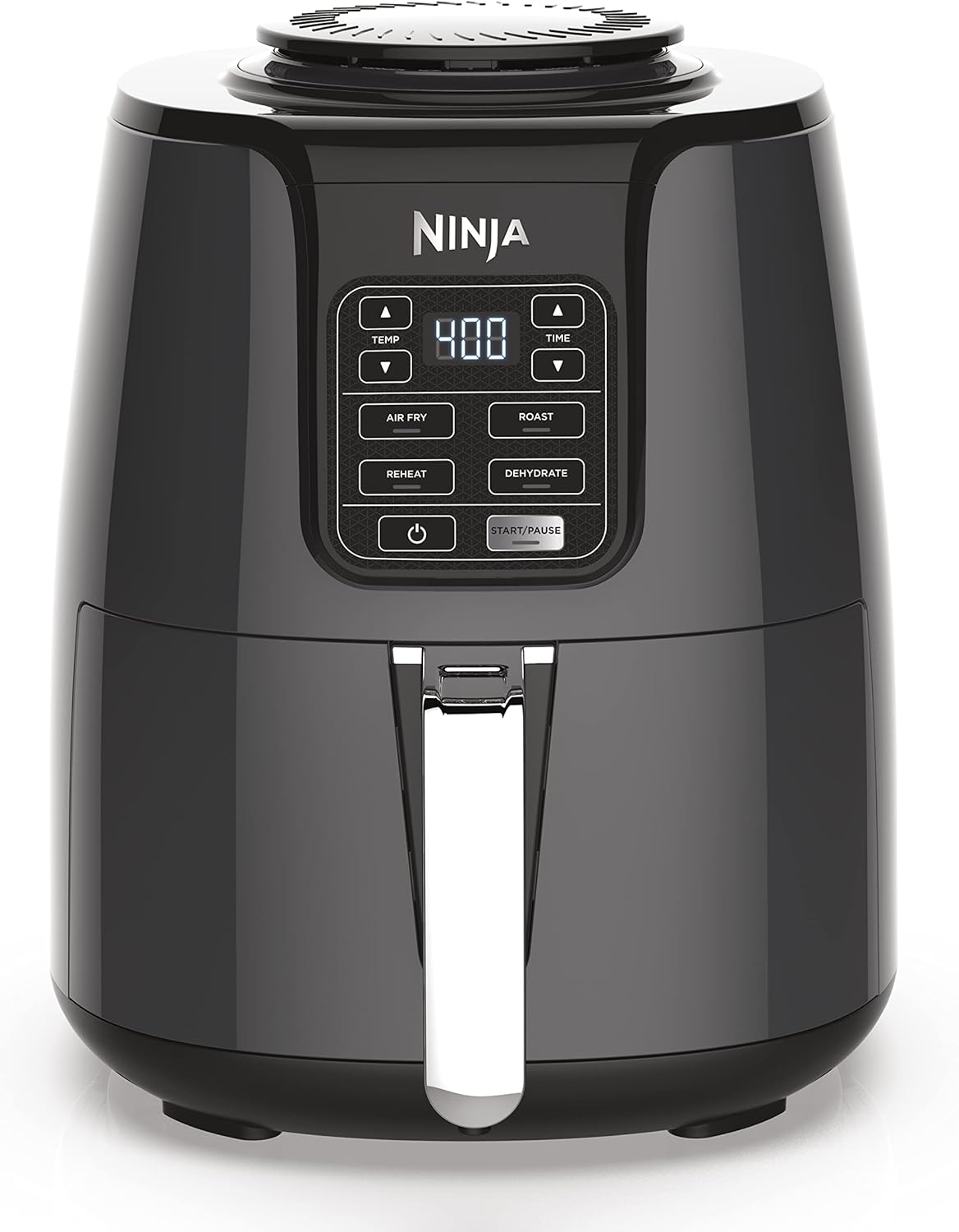
One of the most popular air fryers for fast, crispy, oil-free cooking.
Buy on Amazon

Large capacity, inverter heating, perfect for everyday reheating.
Buy on Amazon

Microwave, convection oven, and air fryer in one premium appliance.
Buy on Amazon
Final Verdict: Which One Should You Buy?
If you need fast reheating, soft textures, and convenient defrosting, a microwave oven is essential. It’s the quickest appliance for everyday meals and leftovers.
If you want crispy textures, roasted results, and healthier alternatives to deep frying, an air fryer is the clear winner.
Many modern kitchens benefit from owning both — each excels at different types of cooking. For hybrid performance, a combination appliance like a digital air fryer toaster oven is an excellent solution: Best Air Fryer Toaster Oven Hybrids.
For more comparisons, reviews, and smart cooking insights, visit: kitchenoutput.com/


