2 Quart vs 4 Quart Air Fryer: Which Size Actually Fits Your Life?
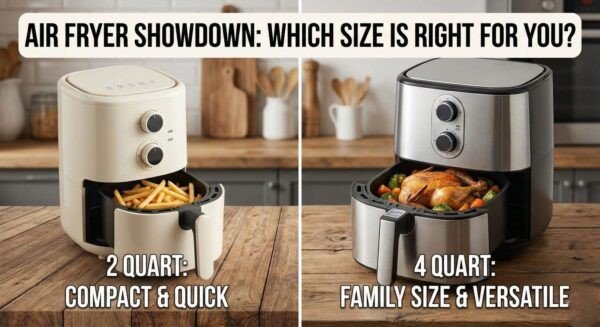
Size matters. It is the single most confusing factor for buyers looking for smart lifestyle upgrades in the kitchen. You see a sleek, tiny fryer on TikTok and think it’s cute, but will it actually cook dinner? Or you see a massive 4-quart machine and worry it will devour your counter space.
Choosing between a 2 Quart and a 4 Quart Air Fryer isn’t just about volume; it’s about physics, energy consumption, and how you plan to eat. Are you heating frozen nuggets, or roasting a whole chicken? Let’s break down the math.
The Quick Verdict
Buy the 2 Quart if: You are cooking strictly for one person (singles, college students), have extremely limited counter space (dorm/RV), and primarily cook snacks (wings, fries, reheating pizza).
Buy the 4 Quart if: You cook for 1-2 people regularly (couples), want to roast proteins (chicken breast, steak), or want the versatility to bake small cakes. It is the “Goldilocks” size for versatility without bulk.
The Technical Breakdown: By The Numbers
Before we look at specific models, let’s look at the raw data. Understanding these specs will help you decide if you need a small digital air fryer or something with more heft.
| Feature | 2 Quart (Compact) | 4 Quart (Medium/Standard) |
|---|---|---|
| Servings | 1 Person (Snack Size) | 2 People (Meal Size) |
| Chicken Wing Capacity | 4-6 Wings | 8-12 Wings |
| Counter Footprint | ~8×8 inches (Lunchbox size) | ~12×12 inches (Coffee Maker size) |
| Energy Usage | Low (~1000 Watts) | Medium (~1500 Watts) |
| Whole Chicken? | Impossible | Maybe (Small Cornish Hen) |
The 2 Quart Air Fryer: The Solo Specialist
The 2-quart air fryer is the master of efficiency. It heats up almost instantly because the chamber is so small. If you are comparing air-fried chicken vs deep fried chicken calories, the 2-quart makes portion control incredibly easy.
Who is it for?
This is the ultimate tool for the “dorm room chef” or the office breakroom. It fits easily in a cupboard. However, be warned: you cannot stack food in an air fryer. Air needs to circulate. In a 2-quart basket, you have very little surface area.
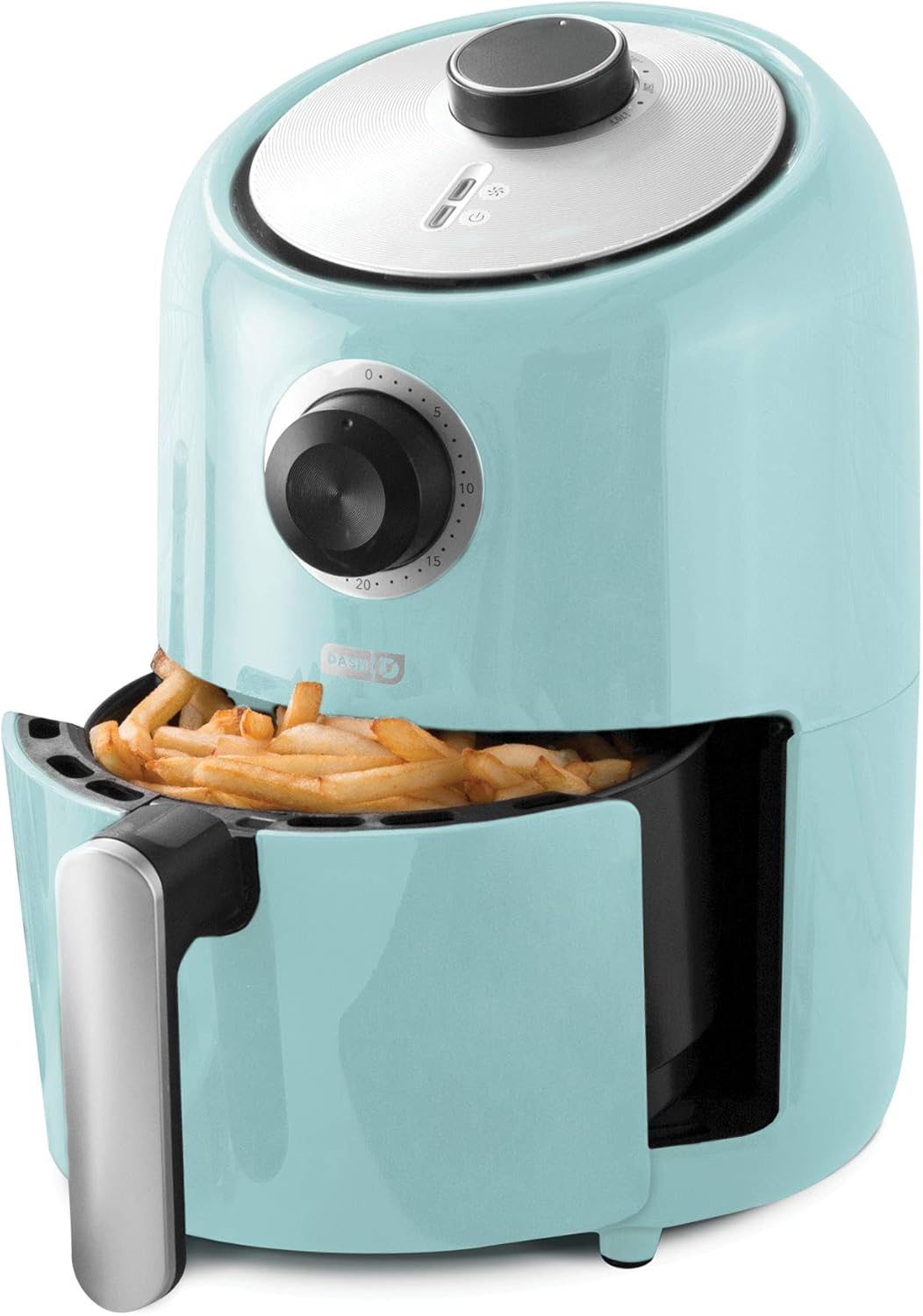
Top Pick: Dash Compact Air Fryer
- Ultra-lightweight
- Cool-touch housing
- Auto-shut off function
- Perfect for frozen sides
Limitations to Consider
If you buy a 2-quart model, you will likely need specialized accessories. Standard sizes won’t fit. You’ll need to look specifically for small air fryer liners to keep it clean. Also, baking is difficult as standard ramekins might not fit side-by-side.
Furthermore, manual dials are common in this size. Check our digital vs manual guide to see why we prefer digital for accuracy.
The 4 Quart Air Fryer: The Versatile Standard
Moving up to 4 quarts doesn’t just double your food; it transforms what you can cook. This size introduces the ability to cook main courses, not just side dishes. It is the sweet spot for couples.
Why 4 Quarts is often the “Smart” Choice
With 4 quarts, you have enough room to use silicone egg molds for breakfast or fit a small cake pan. You can also utilize fryer strainers to separate foods (cooking veggies and meat simultaneously).

Top Pick: Ninja AF101 (4 Qt)
- Ceramic Coated Basket
- Wide temperature range (105°F – 400°F)
- Dehydrate function included
- Dishwasher safe parts
Performance Benefits
Brands like Ninja and Philips shine in this category. The Ninja vs Philips air fryer debate often centers around the 4-quart size because it’s where their airflow technology works best. The larger fan has room to generate a true vortex, ensuring crispy skin without burning.
Real World Cooking Scenarios
Scenario A: The “Healthy Fries” Craving
If you just want a handful of french fries, the 2-quart wins on energy efficiency. It heats up in seconds. However, you must shake the basket frequently. We recommend using heat-resistant fryer gloves to handle the small, hot basket safely.
Scenario B: Meal Prepping Chicken
If you are meal prepping for the week, the 2-quart will fail you. You would have to cook in 4 or 5 batches. The 4-quart allows you to cook 2 large chicken breasts at once. Pair this with a meat thermometer from our 20 essential kitchen tools list to ensure perfect doneness.
Scenario C: Baking
Did you know you can bake in an air fryer? (See: Air Fry vs Bake). The 4-quart size allows for standard 6-inch cake pans. The 2-quart is generally too small for anything other than a single muffin or cookie.
Understanding Air Fryer Science: How Size Affects Cooking Performance
To truly understand why the choice between a 2-quart and 4-quart air fryer matters so much, you need to understand the physics of convection cooking. Air fryers are essentially compact convection ovens. A heating element generates intense heat while a powerful fan circulates hot air around food at high velocity. This rapid circulation strips away the moisture barrier on food surfaces, creating that signature crispy texture with minimal oil.
The fundamental principle at work here is surface-area-to-volume ratio. In a 2-quart basket, the ratio of basket surface area to internal volume is significantly higher than in a 4-quart basket. This has profound implications for how food cooks.
The Convection Effect in Small vs. Large Chambers
In a 2-quart air fryer, the heating element sits closer to the food. The air has less distance to travel before it reaches your fries or chicken nuggets. This creates several advantages:
- Faster preheat times — most 2-quart models reach 400°F in under 3 minutes
- More intense direct heat — the proximity of the element creates a stronger Maillard reaction on surfaces
- Lower energy consumption — smaller volume requires fewer watts to heat and maintain temperature
- Reduced hot spots — less air volume means more uniform temperature distribution
However, the 4-quart fryer has its own physics advantages. The larger chamber allows for better air circulation around each piece of food. When you’re cooking 12 chicken wings in a 4-quart basket, there’s enough space between each wing for hot air to flow freely. In a 2-quart basket with the same number of wings (if they even fit), the wings would be touching, creating steam pockets that prevent crisping.
Pro Tip: The Overcrowding Rule
No matter which size you choose, never fill the basket more than two-thirds full. Overcrowding is the number one reason people get soggy air-fried food. The hot air needs physical space to circulate. In a 2-quart basket, that means roughly 1 pound of food maximum. In a 4-quart basket, you can push that to about 2 pounds safely.
Temperature Recovery Time
One often-overlooked factor is temperature recovery. When you open the basket to shake or flip food, cold air rushes in and drops the internal temperature. A 2-quart fryer recovers faster because it has less air volume to reheat. However, a 4-quart fryer with a more powerful heating element can also recover quickly. The key specification to look for is wattage: models above 1500 watts will recover faster than those at 1000 watts, regardless of basket size.
This matters most when you’re cooking in batches. If you’re cooking fries for one person in a 2-quart basket, you might open it 3-4 times to shake. Each time, the fryer loses and regains heat rapidly. In a 4-quart model cooking the same portion, you might only need to shake once because the larger basket provides better airflow to all surfaces.
The Vortex Effect
Premium air fryers in both sizes advertise a “vortex” or “cyclonic” airflow pattern. This is created by strategically positioned air inlets and the shape of the basket. In a 2-quart fryer, the vortex effect is limited by the small chamber — the air simply doesn’t have enough room to develop a true cyclonic pattern. In a 4-quart fryer, manufacturers can engineer more sophisticated airflow paths that ensure hot air reaches every surface of the food, including the underside.
This is why the Ninja vs Philips air fryer comparison becomes so important at the 4-quart level. Both brands have invested heavily in airflow technology, and the 4-quart basket is where their engineering truly shines.
Food Capacity Guide: What Actually Fits in Each Size?
Specs and theory are one thing, but what can you actually cook? Let’s go through the most common air-fried foods and see how each size performs in real-world tests.
| Food Item | 2 Quart Capacity | 4 Quart Capacity |
|---|---|---|
| French Fries (Frozen) | 1 small bag (about 6 oz) | 1 full bag (about 12-16 oz) |
| Chicken Wings | 4-6 wings (single layer) | 8-12 wings (single layer) |
| Chicken Breast | 1 small breast (6 oz max) | 2 average breasts (6-8 oz each) |
| Steaks | 1 thin-cut steak only | 2 steaks (1-inch thick) |
| Fish Fillets | 1 fillet (4-5 oz) | 2-3 fillets |
| Burgers | 1-2 patties | 3-4 patties |
| Vegetables (Broccoli, etc.) | 1 cup (packed) | 2-3 cups |
| Mozzarella Sticks | 3-4 pieces | 6-8 pieces |
| Egg Rolls / Spring Rolls | 2 rolls | 4-6 rolls |
| Cupcakes | 1 cupcake | 4 cupcakes |
| Pizza (Personal Size) | 6-inch pizza (tight fit) | 8-inch pizza (comfortable) |
| Toast (Bread Slices) | 1-2 slices | 3-4 slices |
| Corn on the Cob | 1 ear (halved) | 2-3 ears |
| Bacon Strips | 2-3 strips | 5-6 strips |
| Tofu Cubes (Pressed) | 4 oz block (cubed) | 8-12 oz block (cubed) |
The numbers above assume single-layer cooking, which is critical for air fryer performance. When food is stacked, the bottom layer steams instead of crisps. This is especially important in a 2-quart basket where vertical space is already limited. In a 4-quart basket, some models include a rack or divider that creates a second cooking level — but even then, you’ll get the best results with single-layer cooking.
Meal Planning by Size
For the solo cook using a 2-quart fryer, meal planning becomes an exercise in portion precision. A typical dinner might look like: 5 oz of protein (chicken breast, fish fillet, or pork tenderloin) plus 1 cup of vegetables. That fills the basket to about 75% capacity, which is acceptable for good airflow.
For couples or small families using a 4-quart fryer, the planning expands significantly. You can cook a full dinner for two: 12 oz of protein plus 2 cups of vegetables, or a pound of french fries alongside 4 chicken tenders. The extra space means less strategic packing and more “just put it in and cook.”
Budget Tip: Buy in Bulk, Cook in Batches
If you’re using a 2-quart fryer, you can still buy family-sized bags of frozen foods and simply cook them in multiple batches. Yes, it takes longer, but the energy savings of the smaller fryer can offset the time investment. A 2-quart fryer at 1000 watts running for 30 minutes uses 0.5 kWh. A 4-quart fryer at 1500 watts running for 20 minutes uses 0.5 kWh. The math is surprisingly close when you factor in batch cooking.
Materials and Construction: What’s Inside the Basket?
Not all air fryer baskets are created equal, and the materials used in construction vary significantly between 2-quart and 4-quart models. Understanding these differences helps you make a more informed purchase and maintain your appliance longer.
Basket Materials
The cooking basket is the most important component of any air fryer. In 2-quart models, you’ll typically find:
- Non-stick coated aluminum — lightweight, affordable, but coating can degrade over time with frequent use
- Stainless steel mesh — durable, dishwasher safe, but food can stick without adequate oil
- Ceramic-coated — found in premium models, naturally non-toxic, heats evenly
In 4-quart models, the options expand to include:
- PTFE-coated (Teflon-like) — excellent non-stick properties, but avoid high-heat cooking above 400°F
- Ceramic-coated — increasingly popular, especially from brands like Ninja and Philips
- Stainless steel with perforations — commercial-grade durability, allows maximum airflow
- Cast iron (rare) — found in specialty models, retains heat exceptionally well
Build Quality Differences
Generally, 2-quart air fryers are constructed with simpler mechanisms. The housing is usually plastic, the heating element is basic, and the fan is a single-speed unit. This isn’t necessarily bad — it means fewer things that can break. However, it also means less temperature precision and fewer cooking modes.
4-quart air fryers, especially from established brands, tend to have:
- Dual-speed or variable-speed fans for better airflow control
- Digital temperature sensors for precise heat management
- Insulated housing to reduce external heat (safer for households with children)
- BPA-free plastic or stainless steel construction
- Anti-slip feet for countertop stability
Coating Safety Note
Always check that your air fryer basket is free of PFOA (perfluorooctanoic acid), a chemical previously used in non-stick coatings. While most manufacturers have phased out PFOA, some budget 2-quart models from unregulated brands may still use it. Look for “PFOA-free” in the product description. All major brands (Ninja, Philips, Dash, COSORI) have eliminated PFOA from their products.
Basket Handle Design
The basket handle design is a subtle but important factor. In 2-quart models, the handle is often integrated into the basket itself — a single molded piece. This keeps costs down and the unit compact, but it means the handle gets hot during cooking. You’ll need oven mitts to remove food.
4-quart models typically have a separate, insulated handle that stays cool to the touch. Some premium models feature a “cool-touch” button that releases the basket from the main unit with one hand. This ergonomic difference matters more than you might think, especially when you’re shaking hot fries or flipping chicken mid-cook.
The Basket Shape Factor
Baskets come in two primary shapes: round and square. Round baskets are more common in 2-quart models because they maximize volume in a compact footprint. However, round baskets waste corner space — you can’t fit square or rectangular items (like toast or bacon strips) efficiently.
Square baskets, more common in 4-quart models, use space more effectively. A square 4-quart basket has about 15% more usable cooking surface than a round 4-quart basket. This is why many food bloggers and meal preppers prefer square-basket models: they can fit more items in a single layer, reducing the need for batch cooking.
Budget Tiers: What You Get at Every Price Point
Air fryers span a wide price range, and the features you get at each tier differ dramatically between 2-quart and 4-quart models. Let’s break down what to expect at $30, $60, $100, and $150+.
The $30 Tier
At this price point, you’re looking at basic 2-quart models with manual dial controls. These units typically offer:
- Single temperature setting (usually around 400°F)
- Manual timer (mechanical dial)
- Non-stick coated basket
- Basic safety features (auto-shutoff)
- No digital display
These are perfectly fine for reheating frozen foods or cooking simple items like fries and nuggets. The Dash Compact Air Fryer falls near this range and offers surprisingly good build quality for the price.
The $60 Tier
This is where you start seeing 4-quart models with digital controls. Features at this tier include:
- Digital touch controls with preset programs
- Adjustable temperature (80°F to 400°F)
- Multiple cooking modes (air fry, bake, roast, reheat)
- Dishwasher-safe basket
- Timer with auto-shutoff
The Ninja AF101, our top 4-quart pick, sits in this range and delivers exceptional value. You get professional-grade airflow technology at a mid-range price.
The $100 Tier
Premium 2-quart models and entry-level 4-quart models from top brands compete in this space:
- Advanced airflow technology (cyclonic, dual-fan)
- Interior lighting to monitor cooking
- Keep-warm function
- Multiple accessory compatibility
- Wider temperature range (170°F to 450°F)
- Dehydrate function
The $150+ Tier
At this price point, you’re getting premium 4-quart (or larger) models with all the bells and whistles:
- Smart connectivity (WiFi, app control)
- Rapid air technology for even faster cooking
- Multiple basket configurations (split basket, double layer)
- Premium materials (brushed stainless steel, tempered glass)
- Extended warranties (3-5 years)
- Recipe libraries and cooking guides
The Sweet Spot Recommendation
For most buyers, the $50-$80 range offers the best value. You get a 4-quart model with digital controls, multiple cooking modes, and dishwasher-safe parts — features that would have cost $150+ just a few years ago. If you’re on a tight budget, a $30-$40 2-quart model will still serve you well for basic cooking tasks.
Energy Efficiency and Operating Costs
One of the most compelling arguments for air fryers over traditional ovens is energy efficiency. But how do 2-quart and 4-quart models compare when it comes to your electricity bill?
Wattage and Cooking Time
A typical 2-quart air fryer uses between 800-1000 watts, while a 4-quart model uses 1200-1500 watts. But wattage alone doesn’t tell the whole story — you need to factor in cooking time.
| Scenario | 2 Quart | 4 Quart |
|---|---|---|
| Frozen Fries (single serving) | 12 min at 1000W = 0.2 kWh | 12 min at 1500W = 0.3 kWh |
| Chicken Wings (4 wings) | 18 min at 1000W = 0.3 kWh | 15 min at 1500W = 0.375 kWh |
| Meal Prep (1 lb chicken) | 4 batches x 15 min = 1.0 kWh | 1 batch x 18 min = 0.45 kWh |
| Family Dinner (2 servings) | Not practical | 20 min at 1500W = 0.5 kWh |
The numbers reveal an interesting truth: for small, single-serving meals, the 2-quart fryer is more energy-efficient. But for larger cooking tasks, the 4-quart fryer actually uses less energy because it cooks everything in one batch instead of multiple rounds.
Annual Cost Comparison
Assuming you air fry 4 times per week (a common frequency for air fryer enthusiasts), here’s the annual energy cost breakdown:
- 2-quart model (single-serving use): approximately $15-$25 per year at average US electricity rates ($0.13/kWh)
- 4-quart model (cooking for 1-2): approximately $20-$35 per year
- Traditional oven comparison: approximately $60-$100 per year for equivalent cooking
Both air fryer sizes pay for themselves within a few months compared to oven cooking, especially when you factor in the reduced preheat time (air fryers preheat in 2-3 minutes vs. 10-15 minutes for a conventional oven).
The Preheat Advantage
This is where the 2-quart fryer has a genuine edge. Because the chamber is so small, it reaches cooking temperature almost instantly. You can go from opening the freezer to eating crispy fries in under 15 minutes with a 2-quart model. The 4-quart fryer adds 2-3 minutes to the preheat cycle, but this is negligible for most cooking tasks.
The real energy savings come from the fact that neither size requires the massive preheat cycle of a conventional oven. A standard oven uses 2000-5000 watts and takes 10-15 minutes to preheat — that’s 0.3-1.25 kWh just to get to temperature. An air fryer’s preheat cycle is virtually free by comparison.
Noise Levels: How Loud Is Each Size?
If you live in a small apartment, dorm, or RV, the noise level of your air fryer matters. Both sizes produce noise from their internal fans, but the characteristics differ.
2-Quart Noise Profile
A 2-quart air fryer typically operates at 50-55 decibels — roughly equivalent to a normal conversation or a running refrigerator. The smaller fan spins faster to compensate for the smaller chamber, which can create a higher-pitched sound that some people find more noticeable. However, the overall volume is lower because there’s less air being moved.
4-Quart Noise Profile
A 4-quart air fryer typically operates at 55-65 decibels — equivalent to a dishwasher or a moderate rainfall. The larger fan moves more air at a lower RPM, creating a deeper, more consistent hum. While the decibel reading is higher, many users find this sound less intrusive than the high-pitched whine of a smaller unit.
| Sound Level | Decibels | Comparison |
|---|---|---|
| 2-Quart Air Fryer | 50-55 dB | Normal conversation, refrigerator hum |
| 4-Quart Air Fryer | 55-65 dB | Dishwasher, moderate rainfall |
| Conventional Oven Fan | 45-55 dB | Quiet office environment |
| Blender | 80-90 dB | Lawn mower, busy traffic |
For context, most people don’t notice the sound of an air fryer once it’s been running for a few minutes. The initial 2-3 seconds when the fan kicks on is the loudest part. After that, the sound becomes background noise. If you’re air frying while watching TV, you likely won’t need to raise your voice.
Reducing Noise
Several factors affect air fryer noise:
- Surface: Placing your air fryer on a rubber mat or silicone pad dampens vibration noise
- Cleanliness: A dirty fan or clogged air intake increases noise; clean your fryer regularly
- Basket placement: Ensure the basket is fully inserted; a loose basket rattles
- Wattage: Higher-wattage models can run the fan at lower RPMs while maintaining the same airflow, reducing noise
Maintenance and Cleaning: Keeping Your Fryer in Top Shape
Cleaning an air fryer is significantly easier than cleaning a deep fryer or even a conventional oven, but the process differs between sizes. Let’s cover both.
Cleaning a 2-Quart Air Fryer
The 2-quart basket is small enough to clean by hand in seconds. Most models have a non-stick coating, so warm soapy water and a soft sponge are all you need. The entire basket fits easily in a standard kitchen sink.
- Unplug the unit and let it cool completely (at least 10 minutes after cooking)
- Remove the basket and drawer; discard any food debris
- Fill the basket with warm water and a drop of dish soap; let it soak for 5 minutes
- Gently scrub with a non-abrasive sponge; avoid steel wool which damages non-stick coatings
- Rinse thoroughly and dry completely before reinserting
- Wipe the exterior with a damp cloth; never submerge the main unit in water
Cleaning a 4-Quart Air Fryer
The 4-quart basket requires a bit more attention because of its larger size and the additional components (often a rack or divider). The process is similar, but there are a few extra steps:
- Remove the basket, drawer, and any racks or dividers
- Soak all removable parts in warm soapy water for 10 minutes
- Use a soft brush to clean the perforated holes in the basket; food particles get trapped here
- For stubborn residue, create a paste of baking soda and water; apply to the affected area and let sit for 15 minutes before scrubbing
- Most 4-quart baskets are dishwasher safe; check your model’s manual to confirm
- Clean the heating element area by wiping with a damp cloth; never use abrasive cleaners on the element
Deep Cleaning Trick
For both sizes, once a month, fill the basket with a mixture of equal parts water and white vinegar. Run the air fryer at 350°F for 5 minutes. This steam-cleans the interior and removes grease buildup from the heating element and fan. The vinegar smell dissipates within minutes.
Common Cleaning Mistakes
Avoid these errors that can damage your air fryer:
- Using cooking spray directly on the basket — aerosol sprays contain propellants that degrade non-stick coatings over time. Instead, brush a thin layer of oil onto food before cooking
- Ignoring the drip tray — grease accumulates in the drip tray and can become a fire hazard if left uncleaned
- Cleaning while hot — thermal shock can warp non-stick coatings; always let the basket cool first
- Using metal utensils — even with stainless steel baskets, metal tongs can scratch the surface; use silicone or wooden utensils
Safety Features: What Each Size Offers
Safety should be a top priority when choosing any kitchen appliance. Both 2-quart and 4-quart air fryers include basic safety features, but the 4-quart models typically offer more advanced protections.
Standard Safety Features (Both Sizes)
- Auto-shutoff — turns off the unit when the timer expires or the basket is removed
- Overheat protection — shuts down the unit if internal temperature exceeds safe limits
- Cool-touch exterior — prevents burns from accidental contact with the housing
- BPA-free construction — ensures no harmful chemicals leach into food at high temperatures
Advanced Safety Features (4-Quart Models)
- Basket-release button lock — prevents the basket from accidentally sliding out during cooking
- Square base design — more stable than round bases, reducing tip-over risk
- Insulated housing — the exterior stays cooler than smaller models, safer for households with children
- Non-slip feet — rubber grips prevent the unit from sliding on countertops
- Automatic fan speed adjustment — reduces noise and prevents overheating during long cooking sessions
Safety Tip: Placement Matters
Always place your air fryer on a flat, heat-resistant surface at least 6 inches away from walls, cabinets, and other appliances. The rear of the unit expels hot air — if this is blocked, it can cause overheating or even a fire. Never place an air fryer under a cabinet with limited clearance; the heat can damage the cabinet finish over time.
Troubleshooting Common Air Fryer Problems
Whether you choose a 2-quart or 4-quart model, you’ll encounter similar issues. Here’s how to solve the most common problems.
Problem: Food Isn’t Crispy
This is the most common complaint from new air fryer users. The culprit is almost always one of three things:
- Overcrowding the basket — food needs space for air to circulate; cook in batches if necessary
- Not preheating — even though air fryers heat quickly, preheating for 2-3 minutes ensures consistent results
- Wrong temperature — most crispy foods need 375-400°F; lower temperatures produce softer results
Problem: Uneven Cooking
Uneven cooking happens when food blocks airflow. The solution depends on your fryer size:
- In a 2-quart fryer: Shake the basket every 5 minutes; the small size makes this essential
- In a 4-quart fryer: Arrange food in a single layer with space between pieces; use the shake reminder if available
Problem: Smoke or Burning Smell
Smoke usually comes from grease dripping onto the heating element. This is more common in 4-quart models because they handle fattier foods (bacon, sausages) that produce more drippings. To prevent this:
- Add 1 tablespoon of water to the drip tray before cooking fatty foods
- Clean the drip tray after every use
- Don’t exceed the maximum fill line on the basket
Problem: Basket Sticking
If the basket doesn’t slide out smoothly, the locking mechanism may be misaligned. For 2-quart models, gently wiggle the basket while pulling. For 4-quart models, check that the release button is fully depressed. If the problem persists, apply a thin layer of food-safe lubricant to the rails.
Problem: Timer Not Working
On manual-dial models (common in 2-quart fryers), the timer mechanism can wear out over time. If the timer doesn’t count down or the unit doesn’t shut off automatically, the timer assembly needs replacement. Digital models (common in 4-quart fryers) are less prone to this issue because the timer is electronic rather than mechanical.
Complete Cooking Times and Temperatures Guide
Here’s a comprehensive reference chart for the most popular air-fried foods, with times and temperatures for both 2-quart and 4-quart models.
| Food | Temperature | 2-Quart Time | 4-Quart Time | Flip/Shake? |
|---|---|---|---|---|
| Frozen French Fries | 400°F | 12-15 min | 12-15 min | Shake halfway |
| Fresh Cut Fries | 380°F | 15-18 min | 15-18 min | Shake twice |
| Chicken Wings | 380°F | 18-20 min | 18-22 min | Flip once |
| Chicken Breast (boneless) | 375°F | 12-15 min | 12-15 min | Flip once |
| Steak (1-inch thick) | 400°F | 8-10 min | 8-10 min | Flip once |
| Salmon Fillet | 375°F | 8-10 min | 8-10 min | Flip once |
| Shrimp | 400°F | 6-8 min | 6-8 min | Flip once |
| Mozzarella Sticks | 375°F | 6-8 min | 6-8 min | No |
| Pork Chops | 400°F | 12-15 min | 12-15 min | Flip once |
| Vegetables (mixed) | 375°F | 10-12 min | 10-12 min | Shake halfway |
| Reheating Pizza | 350°F | 5-6 min | 5-6 min | No |
| Toasted Bread | 350°F | 3-4 min | 3-4 min | No |
| Baked Potato | 380°F | 35-40 min (1 potato) | 35-40 min (2 potatoes) | Flip once |
| Hard-Boiled Eggs | 270°F | 15 min | 15 min | No |
| Corn on the Cob | 380°F | 10-12 min | 10-12 min | Rotate once |
| Tofu Cubes | 375°F | 12-15 min | 12-15 min | Shake twice |
Always use a meat thermometer to verify doneness. The internal temperature for chicken should reach 165°F, steak 145°F (medium-rare) to 160°F (medium), and fish 145°F. The 20 essential kitchen tools list includes several thermometer options that work well with air fryer cooking.
Air Fryer Recipe Ideas for Every Size
Now that you know the technical specifications and cooking times, let’s explore some practical recipes that showcase the strengths of each size.
2-Quart Recipe Ideas
The 2-quart fryer excels at single-serving meals and quick snacks. Here are ten recipes designed specifically for this size:
- Crispy Avocado Fries — slice one avocado into wedges, coat in breadcrumbs, and air fry at 375°F for 8-10 minutes. The small basket is perfect for a single avocado’s worth.
- Single-Serving Mac and Cheese Bites — press leftover mac and cheese into a silicone mold, top with breadcrumbs, and air fry at 350°F for 8 minutes until golden.
- Personal Quesadilla — fold a small flour tortilla with cheese and beans, air fry at 360°F for 4-5 minutes per side until crispy.
- Mini Pizza Bagels — top half a bagel with sauce, cheese, and toppings, air fry at 350°F for 5-6 minutes until cheese melts.
- Crispy Chickpeas — toss a can of drained chickpeas in olive oil and spices, air fry at 390°F for 10-12 minutes for a crunchy snack.
- Single Salmon Fillet — season a 4-5 oz fillet with lemon and dill, air fry at 375°F for 8-10 minutes. The compact size ensures even cooking.
- Garlic Bread — spread garlic butter on a thick slice of bread, air fry at 350°F for 3-4 minutes until golden and crispy.
- Bacon-Wrapped Jalapeños — wrap halved jalapeños in bacon, air fry at 370°F for 8-10 minutes until bacon is crispy.
- Reheated Leftover Pizza — place a slice in the basket, air fry at 350°F for 5-6 minutes. Better than microwave, crispier than oven reheating.
- Cinnamon Apple Chips — slice one apple paper-thin, sprinkle with cinnamon, air fry at 300°F for 12-15 minutes for a healthy snack.
4-Quart Recipe Ideas
The 4-quart fryer opens up meal prep and multi-component cooking. Here are ten recipes that take advantage of the larger basket:
- Crispy Chicken Thighs with Vegetables — arrange 4 bone-in thighs with cubed potatoes and bell peppers. Air fry at 380°F for 25 minutes, flipping halfway.
- Sheet Pan Dinner (Air Fryer Style) — salmon fillets with asparagus and cherry tomatoes. Air fry at 375°F for 12-15 minutes.
- Homemade Chicken Tenders — bread 4 chicken tenderloins and air fry at 400°F for 12-14 minutes. Serve with dipping sauces.
- Loaded Sweet Potato Fries — cook a full basket of sweet potato fries, then top with cheese, bacon bits, and green onions.
- Breakfast Burritos — scramble eggs with peppers and onions, wrap in tortillas with cheese, and air fry at 350°F for 5 minutes to melt and crisp.
- Air Fried Tofu Bowl — cube 12 oz of pressed tofu, toss with cornstarch and soy sauce, air fry at 380°F for 15-18 minutes until crispy.
- Mini Meatloaves — form ground beef into 4 mini loaves, air fry at 375°F for 15-18 minutes. Glaze with ketchup in the last 3 minutes.
- Crispy Brussels Sprouts with Bacon — halve a pound of Brussels sprouts, toss with bacon pieces and balsamic glaze, air fry at 380°F for 12-15 minutes.
- Stuffed Bell Peppers — fill 4 halved peppers with rice and ground turkey, air fry at 370°F for 18-20 minutes until peppers are tender.
- Dessert: Air Fried Oreos — dip Oreos in pancake batter, air fry at 350°F for 5-6 minutes for a fair-food treat that serves two.
Recipe Adaptation Tip
Most air fryer recipes are written for 4-quart or larger models. To adapt a recipe for a 2-quart fryer, simply halve all ingredients and reduce cooking time by 2-3 minutes. The smaller chamber cooks faster, so check for doneness earlier than the recipe suggests.
Accessories Worth Buying (and Which Ones to Skip)
The air fryer accessory market has exploded, but not all accessories are created equal. Here’s what’s actually useful for each size.
2-Quart Must-Have Accessories
- Small silicone liners — prevent food from sticking and make cleanup a breeze; search specifically for “2 quart” or “mini” sizes
- Mini tongs — standard tongs are too large for a 2-quart basket; compact tongs give you better control
- Small ramekins — for baking individual portions of egg bites, dip, or custard
- Silicone oil brush — apply a thin layer of oil without over-saturating; important for small portions
4-Quart Must-Have Accessories
- Parchment paper liners with holes — the holes allow airflow while preventing sticking; essential for sticky foods like glazed chicken
- Double-layer rack — doubles your cooking surface by adding a second tier; great for cooking protein on top and vegetables below
- Silicone cupcake molds — fits 4 cups in a single layer; perfect for egg bites or mini cakes
- Meat thermometer — non-negotiable for proteins; the 20 essential kitchen tools guide has our top picks
- Baking pan (6-inch) — fits perfectly in most 4-quart baskets; opens up baking possibilities
- Heat-resistant gloves — check our best fryer gloves guide for models that handle the heat
Accessories to Skip
Marketing can be deceiving. These accessories sound useful but deliver minimal value:
- Air fryer “cookbooks” with 500 recipes — most are available free online; invest in one good cookbook instead
- Metal skewers — unless you regularly make kebabs, these collect dust; use wooden skewers soaked in water instead
- Pizza stones — the air fryer’s perforated basket already provides the crisping effect; a stone adds weight without benefit
- Replacement baskets from unknown brands — third-party baskets may not fit properly and can cause safety issues; always buy OEM replacements
Health Benefits: How Air Frying Compares to Other Cooking Methods
The health benefits of air frying are one of the primary reasons people purchase these appliances. But how do 2-quart and 4-quart models compare when it comes to healthy cooking?
Oil Reduction
Air fryers reduce oil usage by 70-80% compared to deep frying. A traditional deep fryer might require 2-3 cups of oil for a batch of fries. An air fryer requires just 1-2 tablespoons — or even zero oil for many foods.
The 2-quart fryer has a slight edge here because its smaller basket means you use less oil per batch. A single tablespoon of oil coats a 2-quart basket generously. In a 4-quart basket, you might need 2 tablespoons to achieve the same coverage. However, the difference is marginal and doesn’t significantly impact health outcomes.
Calorie Comparison
| Food | Deep Fried | Air Fried (2 Qt) | Air Fried (4 Qt) |
|---|---|---|---|
| French Fries (4 oz) | 340 calories | 150 calories | 150 calories |
| Chicken Wings (4 pieces) | 420 calories | 250 calories | 250 calories |
| Mozzarella Sticks (3 pieces) | 300 calories | 180 calories | 180 calories |
| Onion Rings (4 oz) | 330 calories | 160 calories | 160 calories |
The calorie savings are identical regardless of fryer size — the magic is in the cooking method, not the basket volume. What differs is how much you cook. A 4-quart fryer makes it easier to cook larger portions of healthy food, which can help with meal prep and reduce the temptation to order takeout.
Nutrient Retention
Air frying preserves more nutrients than deep frying because food isn’t submerged in hot oil. Water-soluble vitamins (B and C) are better retained because cooking times are shorter and temperatures are more controlled. The 2-quart fryer’s faster cooking time (due to smaller volume) gives it a tiny edge in nutrient retention for single servings.
Health Tip: The Oil Choice Matters
When you do use oil, choose wisely. Avocado oil has the highest smoke point (520°F) and is ideal for high-heat air frying. Olive oil (extra virgin) has a lower smoke point (375°F) but offers more antioxidants. For most air frying at 375-400°F, avocado oil is the safest and healthiest choice. Our air-fried vs deep-fried calories comparison has more details on cooking oil choices.
Indoor vs. Outdoor Use and Ventilation Requirements
Air fryers are primarily indoor appliances, but understanding ventilation requirements helps you place your unit safely and effectively.
Ventilation Needs
Every air fryer expels hot air and steam from a rear vent. The amount of heat and moisture varies by size:
- 2-quart models: produce less heat and steam; can be used in smaller spaces like dorm rooms and RVs with adequate airflow
- 4-quart models: produce more heat and moisture; require more counter clearance (at least 6 inches on all sides, 12 inches behind)
Dorm Room and RV Considerations
If you’re using an air fryer in a dorm room or RV, the 2-quart model is your best friend. Its smaller size means less heat output, lower power consumption (important for limited electrical circuits), and minimal steam that won’t set off smoke detectors or create condensation problems.
Most dorm rooms and RVs have 15-amp circuits that can handle a 1000-watt 2-quart fryer without tripping. A 1500-watt 4-quart fryer draws about 12.5 amps — close to the circuit limit. If you’re running other appliances on the same circuit (mini-fridge, microwave, laptop charger), you risk overloading it. Check your circuit capacity before plugging in a larger air fryer.
Outdoor Use
While air fryers aren’t designed for outdoor use (they’re not weatherproof), they can be used on covered patios, porches, or outdoor kitchens during fair weather. The key requirements are:
- Covered area to protect from rain and moisture
- Stable, flat surface (a wobbly outdoor table is a safety hazard)
- Adequate ventilation (outdoor air circulation actually improves performance)
- Access to a grounded electrical outlet (never use extension cords with high-wattage appliances)
Never Use an Extension Cord
Both 2-quart and 4-quart air fryers draw too much power for standard extension cords. Using an extension cord creates a fire hazard due to voltage drop and heat buildup. Always plug your air fryer directly into a grounded wall outlet. If your outlet is too far from your counter, consider relocating the fryer rather than using an extension cord.
Warranty and Customer Service: What to Expect
The warranty and customer service experience varies significantly between budget 2-quart models and premium 4-quart models. Here’s what you should know before purchasing.
Typical Warranty Coverage
| Feature | Budget 2-Quart | Mid-Range 4-Quart | Premium 4-Quart |
|---|---|---|---|
| Warranty Length | 1 year limited | 1-2 years | 2-5 years |
| What’s Covered | Manufacturing defects only | Defects + motor failure | Comprehensive (including basket coating) |
| Customer Support | Email only | Email + phone | Email + phone + live chat |
| Replacement Parts | Limited availability | Available for 2+ years | Available for 5+ years |
| Extended Warranty Option | Rarely offered | Usually available | Often included |
Premium brands like Ninja and Philips stand behind their products with longer warranties and better customer support. If you plan to use your air fryer daily, investing in a model with a 2+ year warranty is worth the extra cost. Budget models may be cheaper upfront, but if the basket coating peels or the timer breaks after 14 months, you’re out of luck.
What Warranty Doesn’t Cover
Most warranties exclude:
- Damage from misuse (using metal utensils on non-stick surfaces)
- Cosmetic damage (scratches, dents)
- Normal wear and tear (coating degradation over time)
- Damage from using unauthorized accessories
- Commercial use (many warranties specify “household use only”)
Technology Evolution: How Air Fryers Have Improved
Air fryers have come a long way since Philips introduced the first consumer model in 2010. Understanding this evolution helps you appreciate what modern models offer and what features actually matter.
Generation 1: Basic Convection (2010-2014)
The first air fryers were essentially countertop convection ovens with a basket. They had manual dials, limited temperature control, and noisy fans. Cooking was inconsistent, and many users were disappointed with results. These early models are still available in the budget 2-quart category.
Generation 2: Digital Controls (2015-2018)
The introduction of digital touch controls brought precision to air frying. Pre-programmed settings for common foods (fries, chicken, fish) took the guesswork out of cooking. Temperature accuracy improved from ±25°F to ±10°F. This generation introduced the 4-quart size as the new standard, balancing capacity with countertop footprint.
Generation 3: Advanced Airflow (2019-Present)
Modern air fryers feature sophisticated airflow technology that creates true cyclonic patterns inside the cooking chamber. Brands like Ninja and Philips have patented airflow designs that ensure every surface of the food receives equal heat. This generation also introduced:
- Dual-basket systems for cooking two foods simultaneously
- Smart connectivity with recipe apps and voice control
- Multi-function capabilities (air fry, dehydrate, roast, bake, broil)
- Rapid preheat technology (full temperature in 60 seconds)
- Automatic shake reminders
- Interior LED lighting for monitoring
When choosing between a 2-quart and 4-quart model, you’ll find the most advanced technology concentrated in the 4-quart category. Manufacturers invest their R&D budgets in the size that sells the most units, which is the 4-quart “sweet spot.”
Environmental Impact and Sustainability
As consumers become more environmentally conscious, the sustainability of kitchen appliances matters. Here’s how 2-quart and 4-quart air fryers compare in terms of environmental impact.
Manufacturing Footprint
A 2-quart air fryer uses approximately 30% less material than a 4-quart model — less plastic, metal, and electronic components. This means a lower carbon footprint during manufacturing. However, the difference is small in absolute terms (roughly 2-3 kg of CO2 equivalent).
Energy Consumption
As we calculated earlier, both sizes use surprisingly similar amounts of energy per cooking task when you factor in batch cooking. The 2-quart fryer’s lower wattage is offset by the need to cook in more batches. Over a typical 5-year lifespan, the difference in total energy consumption is negligible.
Longevity and E-Waste
This is where the 4-quart model wins. Premium 4-quart air fryers from established brands typically last 5-7 years with proper care. Budget 2-quart models often last 2-3 years before the non-stick coating degrades or the timer mechanism fails. Over 10 years, you might go through 3-5 budget 2-quart models versus 1-2 premium 4-quart models — meaning less electronic waste in landfills.
Disposal Tip
Never throw an air fryer in the trash. The heating element, wiring, and battery (if it has a digital display) contain materials that should be recycled. Take your old air fryer to an electronics recycling center or a retailer that accepts appliance trade-ins. Many communities offer free electronics recycling events several times per year.
Seasonal and Holiday Cooking Guide
Different seasons call for different cooking strategies, and your air fryer size determines what’s possible.
Summer: Quick, Light Meals
Summer is when the 2-quart fryer shines. No one wants to heat up the kitchen with a full oven when it’s 90°F outside. The 2-quart fryer heats up fast, cooks quickly, and doesn’t warm the kitchen significantly. Perfect for summer appetizers like:
- Grilled shrimp skewers (6-8 minutes)
- Crispy zucchini chips
- Fruit crisps with frozen berries
- Quick bruschetta with toasted bread
Fall: Comfort Food Season
As temperatures drop, the 4-quart fryer becomes more valuable. It can handle the comfort food that defines fall cooking:
- Mini pumpkin pies (4 at a time)
- Crispy apple slices with cinnamon sugar
- Stuffed acorn squash
- Warm cinnamon rolls for weekend breakfast
Winter: Holiday Entertaining
The 4-quart fryer is essential for holiday entertaining. Use it as a second oven for:
- Roasting side dishes while the main oven handles the turkey
- Keeping appetizers warm during parties
- Reheating leftovers without drying them out
- Making quick desserts like fried ice cream or churros
Spring: Fresh and Healthy
Spring is about fresh ingredients and lighter fare. Both sizes work well, but the 4-quart allows you to experiment with:
- Asparagus bundles wrapped in prosciutto
- Spring vegetable medleys
- Light fish tacos with crispy cod
- Fresh herb-crusted chicken
Warranty and Long-Term Value Analysis
When making a purchase decision, it’s important to look beyond the initial price tag and consider the total cost of ownership over the appliance’s lifetime.
Total Cost of Ownership Calculation
Let’s compare the 10-year cost of owning a budget 2-quart model versus a premium 4-quart model:
| Cost Factor | Budget 2-Quart | Premium 4-Quart |
|---|---|---|
| Initial Purchase Price | $35 | $80 |
| Expected Lifespan | 3 years | 6 years |
| Replacements Needed (10 years) | 4 units | 2 units |
| Total Hardware Cost | $140 | $160 |
| Annual Energy Cost | $20 | $28 |
| 10-Year Energy Cost | $200 | $280 |
| Total 10-Year Cost | $340 | $440 |
The premium 4-quart model costs about $100 more over 10 years, but you get significantly better cooking performance, more versatility, and less hassle with replacements. The budget 2-quart model wins on raw cost, but the premium model wins on value per dollar spent.
The Resale Value Factor
Premium air fryers from recognized brands retain value well on the secondhand market. A 2-year-old Ninja AF101 in good condition can sell for $40-$50 on local marketplace apps. A budget 2-quart model? You’d be lucky to get $10. Factor this into your decision if you like upgrading appliances every few years.
Expert Tips for Getting the Most from Your Air Fryer
Whether you choose a 2-quart or 4-quart model, these expert tips will help you achieve restaurant-quality results at home.
Tip 1: Don’t Trust the Presets Blindly
Most air fryers come with preset cooking modes for fries, chicken, fish, etc. These are starting points, not gospel. The preset temperature and time may not match your specific food’s thickness or starting temperature (frozen vs. thawed). Use the presets as a guide, then adjust based on visual cues. Food should be golden brown and sizzling when done — not pale or burnt.
Tip 2: Preheat for Best Results
While some manufacturers claim preheating isn’t necessary, experienced users know it makes a difference. Preheating for 2-3 minutes ensures the basket is at the correct temperature when food goes in, resulting in more consistent browning and crisping. For the 2-quart model, preheating takes just 60-90 seconds due to the small chamber.
Tip 3: Use the Right Oil Application Method
Avoid spraying oil directly from an aerosol can onto the basket. The propellants in cooking spray can damage non-stick coatings over time. Instead, toss food in a small amount of oil before placing it in the basket, or use a silicone brush to apply a thin layer. This gives you better coverage with less oil.
Tip 4: Shake, Flip, and Rotate
Air fryers cook from the top down, meaning the food closest to the heating element browns faster. To ensure even cooking:
- 2-quart: Shake the basket every 4-5 minutes; the small size makes uneven cooking more pronounced
- 4-quart: Shake or flip every 6-8 minutes; the larger size provides better airflow but still benefits from repositioning
Tip 5: Don’t Open the Basket Unnecessarily
Every time you open the basket, the temperature drops by 20-30°F. While checking on food is natural, try to limit basket openings to once or twice during cooking. Use the transparent window (if your model has one) to monitor progress without opening.
Tip 6: Let Food Rest
Just like with oven-cooked or grilled food, let air-fried items rest for 2-3 minutes after cooking. This allows the internal temperature to equalize and the juices to redistribute, resulting in juicier proteins and crispier exteriors.
Tip 7: Experiment with Breading Techniques
The standard three-step breading process (flour, egg, breadcrumbs) works in an air fryer, but there are shortcuts:
- Use crushed cornflakes or panko for extra crunch
- Try a cornstarch coating for an ultra-crispy, gluten-free option
- Spray a light mist of oil on breaded items before air frying to promote browning
Tip 8: Use the Drip Tray
The drip tray catches grease and prevents it from smoking. Always make sure it’s in place before cooking. For extra protection when cooking fatty foods, add a tablespoon of water to the drip tray to dilute the grease and reduce smoke.
Common Mistakes First-Time Air Fryer Owners Make
Whether you choose a 2-quart or 4-quart model, avoid these pitfalls that trip up beginners.
Mistake 1: Using Too Much Oil
Air fryers are designed to cook with minimal oil. Using too much defeats the purpose — you’ll end up with greasy food that’s no healthier than deep frying. One to two tablespoons is sufficient for most recipes. For vegetables, a light spray or toss in a bowl with a teaspoon of oil works perfectly.
Mistake 2: Not Shaking the Basket
Food that isn’t shaken or flipped cooks unevenly. The top browns while the bottom stays pale and soft. Set a timer to remind yourself to shake the basket at regular intervals. Most models have a built-in shake reminder — use it.
Mistake 3: Crowding the Basket
This is the cardinal sin of air frying. Air needs to circulate around every piece of food to create that crispy texture. If food is stacked or touching, the pieces in the middle steam instead of crisp. In a 2-quart basket, this means cooking 4-6 wings max. In a 4-quart basket, 8-12 wings max.
Mistake 4: Ignoring Preheating
Even though air fryers heat quickly, preheating ensures the basket is at the correct temperature when food goes in. Without preheating, the first few minutes of cooking are spent bringing the basket up to temperature, which can result in uneven results.
Mistake 5: Not Cleaning After Every Use
Grease buildup is the #1 cause of smoke and unpleasant odors. Clean your air fryer after every use — it takes less than 5 minutes. A monthly deep clean with vinegar and water keeps the heating element and fan in top condition.
Mistake 6: Using the Wrong Accessories
Standard oven accessories don’t always fit air fryer baskets. A 6-inch round pan fits a 4-quart basket, but a 9-inch pan is too large. Check dimensions before buying accessories, and stick to accessories specifically designed for your fryer size.
Mistake 7: Expecting Deep-Fried Taste
Air frying produces a similar texture to deep frying but with a different flavor profile. The taste is lighter and cleaner. If you’re expecting the exact same flavor as a deep fryer, you’ll be disappointed. However, most people find they prefer the air-fried version after a few uses.
Mistake 8: Skipping the Meat Thermometer
Visual cues aren’t reliable for determining if meat is cooked through. A chicken breast that looks done on the outside might still be raw in the center. Always use a meat thermometer to verify internal temperatures: 165°F for poultry, 145°F for beef (medium-rare), and 145°F for fish. Check our 20 essential kitchen tools for thermometer recommendations.
Storage Solutions for Air Fryers
Counter space is precious in most kitchens. Here’s how to store your air fryer efficiently, regardless of size.
Countertop Storage (Permanent)
If you use your air fryer daily (which most owners do for the first few months), keeping it on the counter makes sense. The 2-quart model takes up minimal space — roughly the same as a large coffee mug. The 4-quart model has a footprint similar to a standard coffee maker. Both can live comfortably next to your toaster or microwave.
Cabinet Storage (Occasional Use)
If you only air fry occasionally, cabinet storage keeps your counter clear. Both sizes fit in standard kitchen cabinets, but consider:
- 2-quart: fits in any cabinet, even shallow ones; easy to pull out and use on the spot
- 4-quart: requires a standard-depth cabinet (12-15 inches); make sure there’s enough clearance for the power cord
Appliance Garage
If you have an appliance garage (a cabinet with a roll-up or lift-up door), both sizes fit perfectly. This keeps the fryer accessible but hidden, maintaining a clean kitchen aesthetic.
Vertical Storage
The 2-quart model’s small size allows for vertical storage — standing it on its side in a cabinet or pantry. The 4-quart model should always be stored flat to protect the internal components.
The Final Verdict: Which Size Should You Buy?
After analyzing every aspect of these two sizes — from physics and food capacity to energy costs and environmental impact — here’s our definitive recommendation.
Choose the 2-Quart If:
- You live alone and cook single servings exclusively
- Counter space is extremely limited (dorm, RV, tiny apartment)
- Your cooking is primarily snacks and reheating (fries, nuggets, leftover pizza)
- You’re on a tight budget and want the lowest entry cost
- You want a secondary air fryer for quick tasks alongside a larger primary unit
- You prioritize fast preheat times and minimal energy use
- You cook on a limited electrical circuit (dorm room, older apartment)
Choose the 4-Quart If:
- You cook for 1-2 people regularly (couples, roommates)
- You want to cook full meals, not just snacks (proteins, vegetables, sides)
- You want the versatility to bake, roast, and dehydrate
- You meal prep and want to cook larger batches efficiently
- You want the best airflow technology and cooking performance
- You’re willing to invest a bit more for longer lifespan and better results
- You want a model that grows with your cooking skills
Our Overall Recommendation
For most buyers, the 4-quart air fryer is the better investment. The extra 2 quarts of capacity costs only $20-$40 more but dramatically expands what you can cook. The counter space difference is minimal (2-3 inches wider), and the cooking versatility is substantially greater. You’ll use a 4-quart fryer for years, while a 2-quart model may feel limiting within months.
However, if you’re certain you’ll only ever cook for one and space is at an absolute premium, the 2-quart model is a perfectly capable appliance that delivers crispy results with minimal fuss.
Frequently Asked Questions
No. A whole chicken requires at least 5-6 quarts of basket space. The largest chicken you can cook in a 2-quart fryer is a Cornish game hen (if it’s small enough) or chicken pieces (breasts, thighs, wings). For whole chickens, you’ll need a 5-quart or larger air fryer.
Yes, a 2-quart air fryer is ideal for one person cooking single servings. It can handle 4-6 chicken wings, a single chicken breast, a small portion of fries, or one fish fillet. It’s the perfect size for snacks, reheating leftovers, and quick meals.
A typical 4-quart air fryer has a footprint of approximately 12×12 inches. You’ll also need 6 inches of clearance on the sides and 12 inches behind the unit for ventilation. Total counter space needed is roughly 18×24 inches — about the same space as a standard coffee maker.
Most air fryer baskets and drawers are dishwasher safe (top rack recommended). Check your model’s manual to confirm. Silicone accessories, metal racks, and most第三方 accessories are also dishwasher safe. Never put the main unit (with the heating element and electronics) in the dishwasher.
Both use a fan to circulate hot air, but air fryers have a smaller cooking chamber that creates more intense airflow. This results in crispier food faster than a convection oven. Air fryers also preheat in seconds rather than minutes, making them more energy-efficient for small batches. For larger meals, a convection oven’s bigger capacity is more practical.
Absolutely. Air fryers are excellent for reheating food — often better than microwaves. They restore crispiness to fried foods, reheat pizza without making it soggy, and warm leftovers evenly. Use 350°F for 3-5 minutes for most foods. The 2-quart model is perfect for reheating single servings, while the 4-quart can reheat larger portions.
Budget 2-quart air fryers typically last 2-3 years with regular use. Mid-range 4-quart models last 4-6 years. Premium brands like Ninja and Philips can last 6-8 years or more. The most common failure points are the non-stick coating (which degrades over time), the timer mechanism (in manual models), and the heating element.
While most modern air fryers have safety features that prevent accidental activation, it’s best practice to unplug the appliance when not in use. This prevents phantom power draw and eliminates any risk of electrical issues. The power draw is minimal (0.5-1 watt in standby), but unplugging is the safest approach.
Yes, but with caution. Aluminum foil can be used to line the basket or wrap food, but it must not block airflow holes in the basket or come into contact with the heating element. Never line the entire basket with foil — this blocks the drip tray and can cause grease fires. Use foil sparingly and always weigh it down with food to prevent it from blowing into the heating element.
Some foods don’t air fry well: wet batters (they drip through the basket holes), very leafy greens (they blow around and burn), large roasts (they don’t fit in most home air fryers), and cheese (unless breaded, it melts through the basket). For best results, stick to foods that benefit from dry heat: proteins, starchy vegetables, and breaded items.
While not always necessary, preheating improves results. A 2-3 minute preheat ensures the basket is at the correct temperature when food goes in, resulting in more consistent browning and crisping. Preheat at the same temperature you plan to cook at. For the 2-quart model, preheating takes just 60-90 seconds due to the small chamber.
Yes. One of the best features of air fryers is cooking food directly from frozen. No thawing required. Add 3-5 extra minutes to the cooking time for frozen items. The air fryer’s rapid heating technology handles frozen food beautifully — often better than a conventional oven, which requires a long preheat and doesn’t crisp as effectively.
Smoke in an air fryer usually comes from grease dripping onto the heating element. Prevent it by: cleaning the drip tray after every use, adding a tablespoon of water to the drip tray when cooking fatty foods, not overcrowding the basket, and avoiding cooking very fatty meats (like bacon) without a drip tray. If smoke does occur, open a window and let the fryer cool before cleaning.
Not at all. While a 4-quart fryer can cook for two, it works perfectly for one person too. The extra space allows for better airflow, which means crispier results. You can also use it for meal prep — cooking larger batches of protein or vegetables to eat throughout the week. The counter space difference between 2-quart and 4-quart is only about 2-3 inches.
Final Thoughts
The choice between a 2-quart and 4-quart air fryer comes down to your cooking habits, available space, and budget. Both sizes deliver the crispy, delicious results that make air fryers so popular — the difference is in how much you can cook at once and how versatile the appliance is.
For the solo cook who wants a quick, efficient way to prepare snacks and single-serving meals, the 2-quart model is a compact powerhouse that earns its spot on the counter. For couples, small families, or anyone who wants the flexibility to cook full meals, the 4-quart model is the clear winner — offering better performance, more versatility, and better long-term value.
Whichever size you choose, you’re joining the millions of home cooks who have discovered that air frying is faster, healthier, and more convenient than traditional cooking methods. Ready to take the plunge? Check out our comprehensive review of the best digital air fryers to find the perfect model for your kitchen.


