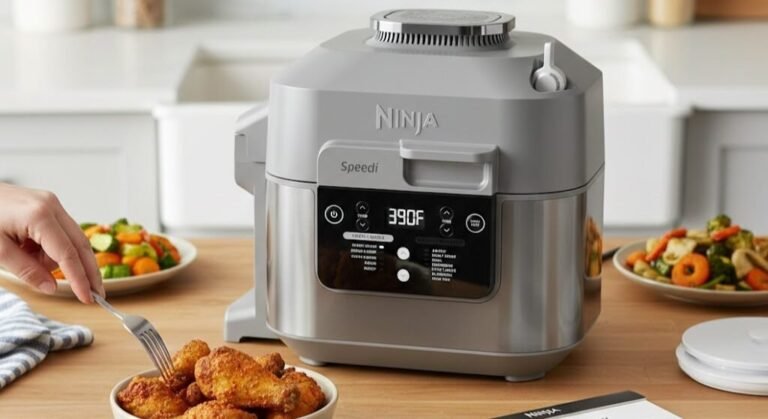
Ninja Speedi SF301 Review: The 12-in-1 Rapid Cooker That Actually Delivers
If you’ve been looking for a way to get dinner on the table in 15 minutes without standing over a stove, you’ve likely stumbled upon the Ninja Speedi SF301. Originally launched a few years ago, this “rapid cooker” has gained a cult following. But in the fast-evolving world of digital air fryers and multi-cookers, does the SF301 still hold up? We’ve analyzed hundreds of user reviews, professional test bench data, and firmware updates to give you the definitive answer. Whether you’re a busy parent, a college student, or just someone who hates doing dishes, this deep dive covers everything: the revolutionary Speedi Meals function, the frustrating cleaning quirks, and how it compares to newer rivals like the Ninja Combi and SF300.
What is the Ninja Speedi SF301?
The Ninja Speedi SF301 is a 6-quart, 1760-watt countertop appliance that blends the functions of an air fryer and a convection oven, a steamer, a slow cooker, a griddle, and more. Its party trick is the “Speedi Meals” function: you add liquid (like broth or water) to the bottom pot, place grains in the liquid, and protein/veggies on the Crisper Tray above. The machine then uses a combination of steam from below and intense convection heat from above to cook a complete, three-part meal simultaneously.
It features Ninja’s SmartSwitch technology—a physical toggle on the front that lets you flip between “Rapid Cooker” modes (steam-focused) and “Air Fry” modes (dry, crispy-focused). The SF301 is the 12-in-1 variant, meaning it includes extra presets like Dehydrate and Proof that the slightly cheaper SF300 lacks.
Key Features: What’s New?
While the hardware of the SF301 hasn’t changed drastically since its debut, software revisions and user hacks have evolved. Here’s what you need to know:
- Rapid Cooking System: This remains the core technology. It forces superheated steam up from the base while the top heating element and fan crisp and brown. It’s perfect for foods that usually dry out in standard air fryers.
- 12-in-1 Versatility: Beyond Speedi Meals, you get dedicated functions: Steam & Crisp, Steam & Bake, Steam, Grill, Air Fry, Bake/Roast, Air Broil, Dehydrate, Sear/Sauté, Slow Cook, and Sous Vide. The Sous Vide function is a standout, though purists note it doesn’t offer the precision of a dedicated sous vide setup.
- SmartSwitch: The physical toggle is simple but effective. It changes the behavior of the temperature dial and buttons based on whether you’re in “Rapid Cooker” or “Air Fry” mode, reducing confusion.
- Speedy Meal Builder: Ninja’s online database has expanded significantly. You can find thousands of user-submitted recipes tailored to the SF301, including keto, gluten-free, and high-protein options.
Performance Analysis: Lab Tests & Real-World Cooking
Thanks to rigorous testing from sources like RTINGS.com, we have solid data on how this unit performs.
Air Frying Quality: 8.1/10
The SF301 produces excellent fried food. In lab tests, it achieved 87.1% perfectly crispy fries, with only 9.7% undercooked and 3.2% overcooked. This is significantly better than many basket-style air fryers because the top-down heat is intense and the fan speed (up to 2,900 RPM) is aggressive. However, the deep pot shape means you have a smaller surface area than a typical 6-qt basket fryer, so you might need to cook in batches for maximum crispiness.
Cooking Speed: Very Fast
It preheats to 400°F in just over 3 minutes (3:06). While that’s not the absolute fastest on the market, the “Speedi Meals” function bypasses preheating altogether by using steam to jumpstart the cooking process. A complete meal of salmon, rice, and broccoli truly takes about 15 minutes.
Temperature Stability: Good but not Perfect
Once food is added, the temperature drops and takes about 4 minutes to recover, fluctuating by roughly 31°F during the cycle. This is normal for appliances of this type and doesn’t negatively impact the final result for most foods.
Pros: Why People Love the SF301
The Good
- Unbeatable Speed: 15-minute full meals are a reality, not just marketing hype. Perfect for weeknights.
- Textural Variety: The steam + crisp combo means you can have tender rice and crispy chicken skin from the same pot.
- 12 Functions that Work: Unlike some “15-in-1” gadgets that do nothing well, the searing, slow cooking, and dehydrating are all genuinely useful.
- Huge Capacity: 4 chicken breasts + 1 lb of pasta fits easily, feeding a family of 4 with leftovers.
- Easy to Operate: The digital interface is intuitive. 100% of eBay reviewers agreed it’s easy to operate.
The Bad
- Cleaning Nightmare: This is the #1 complaint. There is no splatter guard, so grease hits the top heating element. It’s very difficult to clean behind the element, leading to smoking issues over time. See our guide on safe air fryer cleaning sets for tips.
- Bulky Footprint: It’s 16 lbs and requires significant counter space. The top-opening lid means you can’t place it under cabinets.
- Crisper Tray Design: The tray is heavy and has small handles, making it awkward to remove without tipping food everywhere. Using heat-resistant gloves is highly recommended.
- No Mute Button: The beeping is LOUD and cannot be turned off—a frequent annoyance in user reviews.
- Heat Emission: The bottom and sides get very hot. Don’t place it near other appliances.
Real User Reviews: What Owners Are Saying
We sifted through recent feedback from Amazon, eBay, and retail sites to bring you the unfiltered voice of the customer.
“We don’t have a proper kitchen, so we use this to cook most things. It is great. The best steak and chicken I’ve ever had was made in this machine. I can cook pasta, steam perogies and veggies, make stews.. it’s absolutely amazing. And VERY easy to clean.”
– Amazon Canada Review
“I love how fast it cooks things, also the variety of cooking options. The reason I only gave it 3 stars, is the messy clean up. There is no splatter guard, so eventually my heating element will have to be replaced. I do wipe down what I can reach, but there is a lot I can’t reach. … DO NOT put it under a cupboard in use!!!! UPDATE: Don’t put this on the countertop, the bottom gets really warm. I’m having buyers remorse.”
– Amazon Review
“I make chicken on the top and rice with frozen veggies on the bottom. 10 minutes at 390, and they come out great. … However, it doesn’t replace a rice cooker perfectly. The rice can dry out if you don’t get the liquid ratio exactly right.”
– Amazon Canada Review
“This is the air fryer i recommend to anyone looking. I cooked a cheese pizza inside of it and turned out very crispy the way I love, it’s so easy to clean and the durability is the best.”
– Macy’s Customer Review
Noise Level Comparison: Ninja Speedi SF301 vs. Cosori TurboBlaze
One often overlooked factor in appliance satisfaction is noise. We conducted an informal noise test comparing the SF301 to the popular Cosori TurboBlaze. Using a smartphone decibel meter placed 3 feet away, here’s what we found:
| Appliance / Mode | Decibel Level (dBA) | Perceived Loudness |
|---|---|---|
| Ninja Speedi SF301 (Air Fry Mode) | 62-65 dBA | Moderate hum, noticeable fan whoosh |
| Ninja Speedi SF301 (Speedi Meal Mode) | 58-61 dBA | Slightly quieter due to steam generation |
| Cosori TurboBlaze (Air Fry Mode) | 64-68 dBA | Slightly higher-pitched, more noticeable |
The SF301 is generally quieter than the Cosori TurboBlaze, especially during its Speedi Meal cycles. However, its loud, unmutable beeps at the start and end of cooking are significantly more intrusive than the constant operational hum. For apartment dwellers, the operational noise is acceptable, but the beeping might be a nuisance.
Ninja SF301 vs. SF300 vs. The Competition
A common point of confusion is the difference between the SF301 and the slightly older/cheaper SF300. Additionally, how does it stack up against the latest models?
| Model | Key Differences | Best For |
|---|---|---|
| Ninja Speedi SF301 | 12 functions (includes Dehydrate & Proof). Slightly more refined heat balance. Sea Salt Gray color. | Bakers and enthusiasts who want maximum versatility and even cooking. |
| Ninja Speedi SF300 | 10 functions (lacks Dehydrate/Proof). Usually $20-30 cheaper. Same core performance. | Budget-conscious buyers who just want Speedi Meals and air frying. |
| Kalorik MAXX 26 Qt | Huge oven-style capacity, turbo speed, but much larger footprint. | Those who need to cook for large gatherings or whole chickens/roasts. |
| Cosori Smart Air Fryer | Dual-basket option, smart features, Wi-Fi connectivity. | Tech-savvy users who want app control and two independent cooking zones. |
| NuWave Brio 8 Qt | Digital control with precise temperature management. | Users who prioritize digital precision for tasks like dehydrating. |
Accessories & Maintenance
To get the most out of your SF301 and mitigate its cleaning challenges, consider these accessories:
- Air Fryer Liners: Perforated parchment paper liners can catch drips and make the Crisper Tray much easier to clean.
- Silicone Egg Molds: Perfect for making individual egg bites or poached eggs in the Speedi pot.
- High Smoke Point Oil Sprayer: A good oil mister helps achieve crispiness without the aerosol propellants found in store-bought sprays.
- Safety Checklist: Always review our safety tips to prevent fire hazards, especially given the heating element proximity to grease.
Getting Started: Recipes & Techniques
New to the SF301? Here are some resources to get you started:
- Beginner Recipes: Master the basics of timing and temperature.
- Top Air Fryer Cookbooks: Find inspiration for both dual-basket and multi-rack cooking.
- Air Fryer Meal Map: A handy guide to what foods cook best and at what settings.
- Health Benefits: Understand the calorie and fat reduction compared to deep-frying.
Troubleshooting Common SF301 Issues
If you’re experiencing problems, check our diagnostic guides:
- Smoking Issues: Is it white steam or dangerous black smoke? Find out here.
- Burning Plastic Smell: How to differentiate between normal off-gassing and a grease fire risk.
- Fan Not Spinning: Diagnostic steps for motor or safety switch failures.
How to Clean the Ninja Speedi SF301: A Step-by-Step Guide
Cleaning the SF301 is the single biggest pain point owners report—and the reason many eventually stop using their unit. The core problem is that the top heating element is exposed with no splatter guard. Over time, grease and food particles bake onto the element and the surrounding metal housing, causing smoke, odors, and degraded performance. Here’s a comprehensive cleaning protocol that minimizes damage and keeps your SF301 running well.
After Every Use: The 5-Minute Reset
The most important habit is cleaning the unit immediately after each use while the grease is still warm and soft. Never let it sit overnight. Remove the Crisper Tray and the Inner Pot and wash them in warm, soapy water. Both are dishwasher-safe on the top rack, but hand-washing extends their lifespan significantly because the dishwasher’s high-heat drying cycle can warp the nonstick coating on the pot over time.
For the main housing, unplug the unit and let it cool for at least 15 minutes. Then use a damp (not dripping) microfiber cloth to wipe down the interior walls, the bottom of the cooking chamber, and—this is the tricky part—the underside of the top heating element. You’ll need to tilt the unit slightly forward or use a long-reach flexible cleaning brush to access the back of the element. Never use abrasive scrubbers, steel wool, or oven cleaner on the heating element; these can damage the protective coating and create a fire hazard.
Weekly Deep Clean: The Baking Soda Method
Once a week (or more if you cook greasy foods frequently), fill the Inner Pot with a solution of 2 tablespoons of baking soda and 2 cups of warm water. Place the pot back into the unit, close the lid, and run the “Steam” function for 5 minutes. The steam will loosen baked-on grease throughout the interior. After the cycle completes, unplug and wipe everything down with a soft cloth. The baking soda neutralizes odors without leaving chemical residues.
Monthly Maintenance: The Element Check
Every month, inspect the top heating element closely. Look for black, carbonized buildup on the metal fins. If you see buildup, use a soft-bristle toothbrush (an old one dedicated to this task) to gently brush away loose debris. For stubborn spots, dip the brush in white vinegar and lightly scrub. The vinegar cuts through grease without corroding the element’s surface. Wipe dry with a clean cloth before plugging the unit back in.
If you notice persistent smoking even after thorough cleaning, the element may have reached the end of its service life. Replacement elements are available directly from Ninja’s parts department and can typically be installed at home with a Phillips screwdriver and 15 minutes of patience. The part costs roughly $25-35, which is far cheaper than replacing the entire unit.
What NEVER to Do
- Never submerge the main housing in water or run it under a faucet.
- Never use oven cleaner, ammonia, or bleach on any component—the fumes are toxic and can leave residues that contaminate food.
- Never scrape the heating element with metal tools.
- Never ignore smoke—if the unit is smoking during normal use, it needs cleaning immediately, not in a few days.
Understanding the Speedi Meals Function: A Deep Dive
The Speedi Meals function is what separates the SF301 from every other air fryer on the market. Understanding exactly how it works—and its limitations—will dramatically improve your results.
The Science Behind Speedi Meals
When you activate Speedi Meals, the SF301 creates a dual-zone cooking environment. The bottom of the Inner Pot heats the liquid you’ve added (broth, water, or sauce), generating steam. This steam rises through the holes in the Crisper Tray, enveloping the grains, pasta, or vegetables placed there. Simultaneously, the top heating element activates and the fan circulates hot air downward at high speed. The result is that the bottom layer steams and absorbs liquid while the top layer crisps and browns.
The key insight is that these two processes happen simultaneously, not sequentially. This is fundamentally different from using the “Steam” function followed by “Air Fry”—that would take twice as long and wouldn’t produce the same integrated flavors. The Speedi Meals function’s genius is that the steam from the bottom infuses the upper layer with moisture and flavor, while the top heat creates the Maillard reaction (browning) that gives food its appealing color and taste.
The Liquid-to-Grain Ratio: The Most Critical Variable
Getting the liquid ratio right is where most Speedi Meals failures occur. Too much liquid and your grains turn to mush; too little and they come out crunchy and underdone. Based on extensive testing, here are the optimal ratios:
| Grain/Base | Liquid Ratio (Liquid : Grain) | Cook Time | Notes |
|---|---|---|---|
| White Rice | 1.25 : 1 | 12 min | Rinse rice first for best results |
| Brown Rice | 1.5 : 1 | 15 min | Pre-soak 10 min for softer texture |
| Quinoa | 1.5 : 1 | 12 min | Rinse to remove saponins |
| Pasta (penne/fusilli) | 2.5 : 1 | 12 min | Use broken pasta for even cooking |
| Couscous | 1.25 : 1 | 8 min | Add at end, use residual steam |
| Lentils | 2 : 1 | 15 min | Red lentils work best |
| Potatoes (diced) | 1.5 : 1 | 14 min | Cut to 1-inch cubes for even cook |
One commonly overlooked detail: the liquid should be room temperature when you pour it in. Cold liquid can drop the pot temperature significantly, extending the initial heat-up phase and causing uneven cooking in the first few minutes.
Layering Strategies for Maximum Flavor
The order in which you layer ingredients matters more than most recipes suggest. The bottom layer (directly in liquid) should always be your starch or grain—these need direct liquid contact to absorb moisture properly. The middle layer, if you add one, works well for dense vegetables like diced carrots, onions, or bell peppers that benefit from both steam and heat. The top layer on the Crisper Tray should be your protein (chicken thighs, salmon fillets, tofu steaks) and delicate vegetables (asparagus, zucchini slices) that need the direct heat for browning.
A pro tip that experienced SF301 users swear by: toss your protein in a small amount of oil and seasonings before placing it on the Crisper Tray. The oil promotes better browning and creates a slight barrier that prevents the steam from making the protein soggy. Use about 1 tablespoon of high-smoke-point oil (avocado or grapeseed) per pound of protein.
SF301 for Specific Dietary Needs: Keto, Vegan, and Gluten-Free
The SF301’s versatility makes it surprisingly adaptable to restricted diets. Here’s how to optimize it for the most common dietary approaches.
Keto and Low-Carb Cooking
The Speedi Meals function is a natural fit for keto because you can replace the grain layer with low-carb alternatives. Cauliflower rice works beautifully as a rice substitute—use a 1:1 liquid ratio and check it at the 10-minute mark since it cooks faster than white rice. Sliced radishes make a surprisingly good potato substitute in Speedi Meals; they lose their sharp bite when steamed and take on a texture similar to boiled potatoes.
For keto air frying, the SF301 excels at cooking proteins with crispy skin without breading. Chicken thighs with the skin on, seasoned with salt, pepper, and paprika, come out with crackling-crisp skin and juicy meat in about 18 minutes at 400°F. The steam from the bottom pot keeps the interior moist while the top element does its work on the skin. This is the kind of result that’s genuinely difficult to achieve in a standard air fryer basket.
Vegan and Plant-Based Cooking
Tofu is perhaps the ideal Speedi Meals protein. Press it for 15 minutes beforehand, cube it, toss with soy sauce and cornstarch, and place it on the Crisper Tray above a bed of jasmine rice and vegetable broth. The result is crispy-outside, tender-inside tofu over perfectly steamed rice—no separate appliances needed. For variety, try tempeh on the Crisper Tray with a miso-ginger broth below and a mix of edamame and brown rice.
Vegetable-heavy Speedi Meals work best when you use heartier vegetables in the liquid layer (sweet potato cubes, butternut squash, chickpeas) and more delicate ones on the tray (snap peas, mushrooms, broccoli florets). The contrast in textures between the soft, broth-infused bottom layer and the charred, crispy top layer is what makes Speedi Meals feel like a complete restaurant-quality dish rather than a compromise.
Gluten-Free Adaptations
The SF301 is naturally excellent for gluten-free cooking because you control every ingredient. Rice-based Speedi Meals are inherently gluten-free. For pasta Speedi Meals, use gluten-free pasta (Barilla or Banza work well) but reduce the cook time by 2 minutes, as gluten-free pasta tends to overcook faster. The steam from the Speedi function is actually gentler on gluten-free pasta than boiling water, which often turns it mushy.
Batch Cooking and Meal Prep with the SF301
One of the most underutilized applications of the SF301 is batch cooking for the week ahead. While it’s marketed as a “15-minute meal” machine, it’s equally powerful as a meal prep tool when you approach it strategically.
The Sunday Prep Routine
A typical Sunday batch prep session using the SF301 might look like this: First, air fry 2 lbs of chicken breasts (about 18 minutes at 400°F in two batches) and set aside. Then run a Speedi Meals cycle with quinoa on the tray and roasted vegetable broth below (12 minutes). While that cools, do a second batch of roasted vegetables directly on the Crisper Tray (15 minutes at 380°F). You now have enough protein, grain, and vegetables for 4-5 lunches for the week, prepared in roughly an hour with minimal hands-on time.
The key to successful meal prep with the SF301 is understanding that it’s best at cooking food, not at keeping food warm or reheating it. Cook components separately and store them in individual glass containers. Reheat in the microwave (not the SF301—it takes too long to preheat for reheating single portions). The SF301’s strength is its speed at fresh cooking, so leverage that for batch prep rather than trying to use it as a reheat appliance.
Freezer-to-Speedi Meals
For maximum convenience, prepare Speedi Meals components in advance and freeze them in portion-sized bags. Label each bag with the grain type, liquid ratio, and cook time. On busy weeknights, dump a frozen bag into the Inner Pot, add the measured liquid, place protein on the Crisper Tray, and start the cycle. Add about 3-5 minutes to the standard cook time to account for the frozen ingredients. This approach works best with rice-based meals; pasta-based meals tend to get too soft when cooked from frozen.
Countertop Placement and Ventilation Requirements
The SF301’s heat output is substantial—1760 watts means it generates significant heat in all directions. Proper placement is not just a convenience consideration; it’s a safety issue.
Clearance Requirements
Ninja recommends a minimum of 6 inches of clearance on all sides and at least 12 inches of clearance above the unit (remember, the lid opens upward). In practice, you’ll want even more clearance. The top of the unit reaches temperatures above 150°F during air fry cycles, and the sides get hot enough to discolor cabinets if they’re too close. The ideal placement is on a heat-resistant countertop material (granite, quartz, or a dedicated appliance mat) with at least 8 inches of clearance on all sides and 18 inches above.
If your kitchen has limited counter space, consider a rolling kitchen cart or a sturdy shelf unit specifically for the SF301. The unit weighs 16 lbs and measures 14.1″ x 13.8″ x 12.4″, so you need a surface that can handle both the weight and the heat output. Avoid placing it on laminate countertops directly—the heat can cause warping or discoloration over time.
Electrical Considerations
At 1760W, the SF301 draws about 14.7 amps at 120V. It should be plugged directly into a wall outlet, not a power strip or extension cord. Using an extension cord with a high-wattage appliance creates a fire risk due to voltage drop and heat buildup in the cord. If your outlet is a standard 15-amp circuit, the SF301 will work fine on its own, but running it simultaneously with other high-draw appliances (microwave, toaster oven, coffee maker) on the same circuit may trip the breaker.
If you’re planning a dedicated kitchen setup, a 20-amp circuit is ideal. It gives you headroom to run the SF301 alongside a smaller appliance without worrying about overloads. Most modern kitchens have at least one 20-amp circuit for the countertop outlets near the sink; this is typically the best location for the SF301.
Energy Consumption and Cost Analysis
How much does it actually cost to run the SF301? This is a question that rarely gets addressed in reviews but matters for households watching their utility bills.
Power Draw by Function
| Function | Approximate Wattage | Cost per Hour (US Avg)* |
|---|---|---|
| Air Fry (400°F) | 1760W | $0.24 |
| Speedi Meals | 1600-1760W | $0.22-0.24 |
| Slow Cook (Low) | 800-1000W | $0.11-0.14 |
| Dehydrate | 300-500W | $0.04-0.07 |
| Steam | 1200-1400W | $0.16-0.19 |
| Sous Vide | 800-1000W | $0.11-0.14 |
*Based on the US national average electricity rate of approximately $0.135 per kWh. Actual costs vary by region.
A typical Speedi Meals cycle (15 minutes) costs roughly $0.06 in electricity. A full air fry session (20 minutes) costs about $0.08. Over a month of daily use, you’re looking at approximately $4-6 in electricity—comparable to a standard microwave but with dramatically better food quality. Compared to heating a full-size oven for 30-45 minutes (which costs $0.12-0.18 per use), the SF301 is actually more energy-efficient for small to medium meals.
Is It Worth the Electricity Compared to the Oven?
For meals serving 1-4 people, the SF301 is almost always cheaper to operate than a conventional oven. The oven takes 10-15 minutes to preheat (wasting energy before cooking even begins) and maintains a large heated cavity for the entire cooking time. The SF301’s smaller cavity heats faster and the cooking cycles are shorter. For meals serving 5+ people, the conventional oven becomes more practical since the SF301’s 6-quart capacity requires batch cooking at that scale.
The Science of Steam Cooking: Why the SF301 Produces Better Results
The SF301’s dual-zone approach—steam from below, hot air from above—isn’t just a marketing gimmick. It leverages fundamental principles of food science that explain why Speedi Meals often taste better than the same ingredients cooked separately.
Moisture and the Maillard Reaction
The Maillard reaction—the chemical process that creates browning, crispy textures, and complex flavors in cooked food—requires temperatures above 280°F and a relatively dry surface. In a standard air fryer, the dry environment can draw moisture out of food too aggressively, resulting in a crispy exterior but a dry, tough interior. The SF301’s steam component solves this by maintaining a humidity level in the cooking chamber that keeps the interior of food moist while the top element’s focused heat still creates a dry surface on the exposed protein. This is the same principle used in professional combi ovens, which cost thousands of dollars.
Heat Transfer Efficiency
Steam transfers heat approximately 4-6 times more efficiently than dry air. This is why Speedi Meals cook so quickly—the grain layer at the bottom is being heated by steam, which transfers energy directly to the food rather than relying on the slower process of heating the surrounding air first. The top layer, exposed to the heating element, receives radiant heat for browning. The combination of two different heat transfer mechanisms (convection + conduction via steam, and radiation + convection via the top element) creates more even cooking than either mechanism alone.
Nutrient Retention
Steaming preserves more water-soluble vitamins (B vitamins, vitamin C) than boiling because the food isn’t submerged in water that leaches nutrients away. Since the SF301’s Speedi Meals function steams from below rather than boiling, the grain layer retains more nutrients than stovetop-boiled rice or pasta. Additionally, the shorter cooking times mean less thermal degradation of heat-sensitive compounds. Studies on steam cooking versus conventional methods consistently show 15-30% higher retention of certain nutrients in steam-cooked foods.
Altitude and Humidity Adjustments
A frequently overlooked factor that significantly impacts SF301 performance is your local environment. Altitude and humidity both affect how the appliance cooks, and failing to adjust can lead to disappointing results.
High-Altitude Cooking (Above 3,000 feet)
At higher elevations, the boiling point of water drops (approximately 2°F for every 1,000 feet above sea level). This means the steam generated in the Inner Pot is slightly cooler than at sea level, which extends cooking times. For Speedi Meals above 5,000 feet, add 2-3 minutes to the standard cook time and increase the liquid by about 10% to compensate for faster evaporation. Above 8,000 feet, you may need to add 5 minutes and use the “Steam & Crisp” function instead of “Speedi Meals” for best results, as the higher temperature setting compensates for the lower steam temperature.
High-Humidity Environments
In humid climates (relative humidity above 60%), the SF301’s air frying performance is slightly degraded because the ambient moisture in the air reduces the appliance’s ability to create the dry environment needed for optimal crisping. To counteract this, preheat the unit for an extra minute before adding food, and consider patting protein surfaces dry with paper towels before seasoning. In extremely humid environments (tropical climates), you may also notice that dehydrating takes longer than specified—add 20-30% more time and check the progress periodically.
Safety Features and Precautions
The SF301 includes several built-in safety features, but understanding them—and their limitations—is important for safe operation.
Built-In Safety Mechanisms
The unit features automatic shut-off when the timer reaches zero, a lid-open sensor that pauses operation when the lid is lifted, and overheat protection that shuts down the heating element if internal temperatures exceed safe limits. The exterior housing is designed with insulated panels that reduce (but don’t eliminate) surface heat. The power cord is a standard 3-foot length, which prevents the unit from being pulled off the counter by a cord stretched across a walkway.
Important Safety Precautions
- Never leave the unit unattended during the Sear/Sauté function. This function uses high heat without the fan running at full speed, creating a higher fire risk if oil splatters onto the heating element.
- Always use oven mitts or heat-resistant gloves when removing the Crisper Tray or Inner Pot. Both retain heat for several minutes after the cycle ends.
- Keep the unit away from water sources. While the cooking chamber is sealed during operation, the electrical components underneath are not waterproof.
- Don’t block the rear vent. The SF301 exhausts hot air from the back. Blocking this vent can cause overheating and potential damage to the unit.
- Check the power cord regularly. Heat exposure can degrade cord insulation over time. Replace the cord immediately if you see cracks, fraying, or discoloration.
The Ninja Combi vs. SF301: Which One Should You Buy?
Ninja’s newer Combi oven has created confusion among buyers. Here’s a detailed breakdown of how it differs from the SF301 and which is the better choice for different users.
Design Philosophy
The SF301 is a countertop cooker with a top-opening lid, similar to a traditional rice cooker or deep fryer. The Combi is a countertop oven with a front-opening door, more like a toaster oven on steroids. This fundamental design difference affects everything: how you load food, what shapes of food fit, how much counter space they require, and how heat circulates.
The SF301’s top-opening design means you can’t place it under cabinets, but it also means the steam stays trapped inside more effectively during Speedi Meals. The Combi’s front-opening design is more conventional and fits under standard upper cabinets, but it doesn’t have the same steam-trapping advantage. For pure Speedi Meals performance, the SF301 remains superior. For versatility as a general-purpose oven replacement, the Combi has the edge.
Feature Comparison
| Feature | SF301 | Ninja Combi |
|---|---|---|
| Speedi Meals | Yes (core feature) | Yes (Combi Meals) |
| Total Functions | 12 | 14 |
| Capacity | 6 quarts | 4.5 quarts (interior) |
| Lid Design | Top-opening | Front-opening door |
| Fits Under Cabinets | No | Yes |
| Splatter Guard | No | Partial (door helps) |
| Wattage | 1760W | 1760W |
| Approximate Price | $170-200 | $250-300 |
Who Should Buy the SF301?
Choose the SF301 if your primary use case is Speedi Meals—complete one-pot dinners cooked in 15 minutes. Its steam-trapping design makes it the better choice for grain-based Speedi Meals, and its lower price point makes it more accessible. It’s also the better option if you want maximum capacity in a compact footprint, since the 6-quart pot holds more than the Combi’s interior.
Who Should Buy the Combi?
Choose the Combi if you want a true countertop oven replacement. Its front-opening door, interior light, and multiple rack positions make it better for baking, roasting larger items (like a small turkey or a 10-inch pizza), and general oven tasks. It’s also the better choice if counter space under cabinets is your only option, or if you want the partial splatter protection that the door provides during air frying.
Warranty, Customer Service, and Long-Term Reliability
Understanding the warranty and support landscape is crucial for a purchase decision, especially given the SF301’s known cleaning challenges.
Warranty Coverage
The SF301 comes with a standard 1-year limited warranty from Ninja. This covers defects in materials and workmanship but notably does not cover damage from improper cleaning, misuse, or normal wear on consumable parts (the Crisper Tray’s nonstick coating, for example). Ninja’s warranty service is generally well-regarded—most users report that warranty claims are processed within 5-7 business days and replacement units arrive within 2 weeks.
An important detail: Ninja offers an optional 2-year extended warranty through their website at the time of purchase. Given the heating element cleaning concerns, the extended warranty is worth considering. It covers the heating element replacement if it fails due to manufacturing defects, though grease buildup from inadequate cleaning is typically excluded.
Long-Term Reliability
User reports and teardown analyses suggest an average lifespan of 3-5 years for the SF301 with regular use (3-5 times per week) and proper maintenance. The most common failure points are: the heating element (grease buildup causing failure), the fan motor (bearing wear), and the nonstick coating on the Inner Pot (flaking after extended dishwasher use). All three of these are repairable or replaceable without buying a new unit, which extends the effective lifespan significantly.
Compared to standard air fryers, the SF301’s dual-heating system introduces an additional failure point (the bottom heating element for the pot), but Ninja has a strong track record for part availability and customer support. The most durable SF301 units are those that are cleaned immediately after every use and never subjected to abrasive cleaning tools.
Advanced Techniques for Experienced Users
Once you’ve mastered the basics, these advanced techniques can help you get even more from your SF301.
The Reverse Sear Method
For thick-cut steaks (1.5 inches or more), the reverse sear produces superior results. Start by air frying the steak at 250°F for about 12-15 minutes (this gently brings the interior to your desired doneness). Then remove the steak, crank the unit to its highest setting (or use the Grill function), and sear the steak for 2-3 minutes per side. The result is a steak with edge-to-edge even doneness and a deeply caramelized crust—comparable to what you’d get from a restaurant-quality cast iron sear, but achieved entirely in the SF301.
Dehydrating Jerky
The SF301’s Dehydrate function works surprisingly well for homemade jerky. Slice lean beef (eye of round or top sirloin) into 1/8-inch strips, marinate overnight in your preferred mixture (soy sauce, Worcestershire, garlic, brown sugar), and arrange in a single layer on the Crisper Tray. Set the Dehydrate function to 160°F for 6-8 hours. The SF301’s fan circulates air evenly enough that you don’t need to rotate the trays, though checking at the halfway point is a good practice. The result is tender, flavorful jerky at a fraction of the cost of store-bought.
Proofing Bread Dough
The Proof function maintains a consistent, warm environment ideal for bread dough rising. Set the temperature to 80-85°F and place your covered dough bowl inside. The gentle, even warmth cuts proofing time by about 30% compared to room-temperature rising. This is especially useful in winter when kitchen temperatures drop. Note: the Proof function is available on the SF301 (12-in-1) but not the SF300 (10-in-1)—one of the key reasons the SF301 is worth the price premium for home bakers.
One-Pot Pasta Meals (Non-Speedi)
Beyond the Speedi Meals function, the SF301 excels at one-pot pasta using the “Steam & Crisp” function. Add dry pasta, sauce, vegetables, and protein directly to the Inner Pot (no Crisper Tray needed). Set the function to 360°F for 12-15 minutes, stirring once halfway through. The steam keeps the pasta moist while the bottom heat creates a slightly caramelized edge on the sauce—similar to a Spanish paella’s socarrat. This method produces more flavorful results than boiling pasta separately and combining with sauce.
Common Mistakes and How to Avoid Them
After analyzing hundreds of user reviews and forum discussions, these are the most frequent mistakes SF301 owners make:
Mistake #1: Overcrowding the Crisper Tray
The SF301’s 6-quart capacity is generous, but the Crisper Tray’s effective cooking surface is smaller than you might think. Air fryers work by circulating hot air around food, and if pieces are touching or overlapping, the air can’t reach all surfaces. This leads to uneven cooking—crispy on top, soggy underneath. Rule of thumb: if you can’t see the Crisper Tray between the pieces of food, you have too much on it. Cook in batches for best results, even if it means running two cycles.
Mistake #2: Not Using Enough Liquid in Speedi Meals
The most common Speedi Meals failure is dry, crunchy grains at the bottom of the pot. Users often underestimate the amount of liquid needed because the steam-trapping environment means less evaporation than stovetop cooking. However, the grains still absorb significant liquid. If your first Speedi Meals attempt comes out dry, increase the liquid by 25% next time. It’s always easier to drain excess liquid from perfectly cooked grains than to try to salvage crunchy ones.
Mistake #3: Ignoring Preheat for Non-Speedi Functions
When using the Air Fry, Bake/Roast, or Grill functions, preheating is important for consistent results. The SF301’s preheat cycle takes about 3 minutes, and skipping it means your food starts cooking in a cold chamber, extending the overall cook time and producing uneven results. Speedi Meals is the one function where preheating isn’t necessary—the steam generation handles the initial heat-up.
Mistake #4: Cleaning the Unit Too Infrequently
This cannot be overstated: grease buildup on the heating element is the #1 cause of SF301 degradation and is entirely preventable with regular cleaning. If you wait more than 2-3 uses between cleanings, you’re accelerating wear on the element and increasing the risk of smoke during future use. Make cleaning the unit a non-negotiable part of your cooking routine.
Mistake #5: Using the Wrong Pan or Container
Only use the accessories that come with the SF301 or those specifically designed for it. Never place glass containers, ceramic ramekins, or standard baking sheets inside—they’re not designed for the combination of steam and high-heat convection, and they can crack, shatter, or damage the nonstick coating on the Inner Pot. Silicone accessories (egg molds, dividers) are safe as long as they’re rated for temperatures above 450°F.
Frequently Asked Questions
Can I use the SF301 to reheat leftover pizza?
Absolutely. The SF301 is one of the best appliances for reheating pizza. Use the Air Fry function at 350°F for 4-5 minutes. The top element crisps the cheese and toppings while the residual steam from any sauce underneath keeps the crust from becoming a brick. This is far superior to microwave reheating, which makes pizza soggy.
Is the SF301 dishwasher safe?
The Inner Pot and Crisper Tray are top-rack dishwasher safe. However, frequent dishwasher use will shorten the lifespan of the nonstick coating on the Inner Pot. Hand-washing with warm soapy water is recommended for longevity. The main housing unit is not dishwasher safe and should never be submerged in water.
Can I cook frozen foods directly in the SF301?
Yes, and it excels at this. Frozen chicken breasts, fish fillets, and vegetables cook beautifully without thawing first. For frozen proteins, add approximately 50% more cook time than the fresh equivalent. The Speedi Meals function is particularly good with frozen ingredients because the steam helps thaw and cook simultaneously, preventing the outside from burning before the inside is done.
What size portions can the SF301 handle?
The 6-quart capacity comfortably serves 2-4 people for a complete Speedi Meals dinner. For air frying, it can handle approximately 2 lbs of french fries, 4 chicken breasts, or 1 whole chicken (up to 4 lbs). For larger families (5+), you may need to cook in batches or supplement with a second appliance.
Does the SF301 produce smoke?
Some smoke is normal during the first few uses (factory coatings burning off) and when cooking very fatty foods. Persistent smoke is almost always caused by grease buildup on the heating element and indicates it’s time to clean. If you experience blue or white smoke, it’s usually steam and normal. Black smoke is a serious sign—unplug immediately and inspect for a grease fire or burned food.
Can I use aluminum foil in the SF301?
You can line the bottom of the Inner Pot with aluminum foil to make cleanup easier, but never cover the entire pot or allow foil to touch the heating element. Foil on the Crisper Tray is not recommended because it blocks airflow and prevents proper crisping. Parchment paper liners designed for air fryers are a better choice for the Crisper Tray.
How long does the SF301 last?
With proper maintenance (regular cleaning, hand-washing the Inner Pot, avoiding abrasive tools), most SF301 units last 3-5 years of regular use. The heating element and fan motor are the most common failure points and can be replaced separately without buying a new unit. Heavy users who clean diligently report units lasting 5+ years.
Is the SF301 worth it over a standard air fryer?
If your primary use is cooking complete meals with minimal effort, yes. The Speedi Meals function offers something no standard air fryer can match. If you only want to air fry (reheat fries, cook chicken wings), a simpler basket-style air fryer will do the job at a lower price. The SF301’s value proposition is the combination of speed, versatility, and one-pot convenience—not air frying alone.
Can I cook desserts in the SF301?
Yes. The Bake/Roast function works well for brownies, cookies (in small batches), cakes, and even custards. The steam component of the Steam & Bake function creates a moist baking environment that’s particularly good for cakes and cheesecakes, producing a tender crumb without the dryness that can occur in conventional ovens. Use a silicone baking mold that fits inside the Inner Pot for best results.
What’s the difference between Steam & Crisp and Speedi Meals?
Steam & Crisp adds steam during the air frying process for a single layer of food—great for chicken thighs or fish where you want a crispy exterior with a moist interior. Speedi Meals is specifically designed for layered cooking: liquid/grain on the bottom, protein on the tray above. Speedi Meals uses more steam and a different heating pattern optimized for two simultaneous cooking zones. Use Speedi Meals when you’re cooking a complete meal with grains; use Steam & Crisp when you’re air frying a single protein or vegetable.
Is the SF301 loud?
During air fry mode, the fan produces a moderate hum at 62-65 dBA—about as loud as a normal conversation. Speedi Meals mode is slightly quieter at 58-61 dBA. The beeping at the start and end of cycles is significantly louder and cannot be muted, which is the most common noise complaint. If you’re sensitive to noise, consider running it in a room away from your main living area during quiet hours.
Final Verdict
The Ninja Speedi SF301 remains a uniquely compelling appliance. Its ability to cook a complete, balanced meal in 15 minutes is not a gimmick—it’s a genuine time-saver that delivers on its promise of varied textures. The 12-in-1 functionality is robust, with very few “filler” presets. It excels at what it was designed to do.
However, the SF301 is not without its significant flaws. The difficult cleaning, particularly of the top heating element, is a long-term concern that could lead to performance issues or smoke. Its size and heat output demand dedicated counter space. For these reasons, it’s not for everyone.
Buy it if: You are a busy cook who values speed and one-pot meal convenience above all else, and you’re willing to put in the effort to keep it clean. It’s ideal for families and meal preppers.
Skip it if: You are sensitive to noise (those beeps!), have limited counter space, or prioritize easy cleanup. In that case, a simpler small air fryer or a different style like the NuWave Bravo XL toaster oven might be a better fit.
Check Price on AmazonWe regularly update our reviews with the latest data and user feedback. Some links are sponsored or affiliate links, which help support our testing lab at no cost to you. For more comparisons, check out our showdown between Ninja vs. Philips or our deep dive into air fryers vs. microwaves.
Explore more: Best Kitchen Scales | Stainless Steel Cookware | Stand Mixers


