- Quick Verdict
- How Air Fryers Work
- Feature Showdown
- Brand Philosophies
- Ninja Model Lineup
- Philips Model Lineup
- Cooking Techniques & Tips
- Food-Specific Cooking Guide
- Head-to-Head Tests
- Health Benefits
- Energy Efficiency
- Noise Levels
- Common Mistakes
- Accessories & Add-Ons
- Smart Features & Apps
- Materials Safety
- Budget Buyer’s Guide
- Warranty & Customer Service
- Sustainability
- Our Top Picks
- Final Verdict
- FAQ
Ninja vs Philips Air Fryer – Which is Best?
Transparency First: kitchenoutput.com/ is reader-supported. When you buy through links on our site, we may earn an affiliate commission at no extra cost to you. This helps us continue our rigorous, hands-on testing.
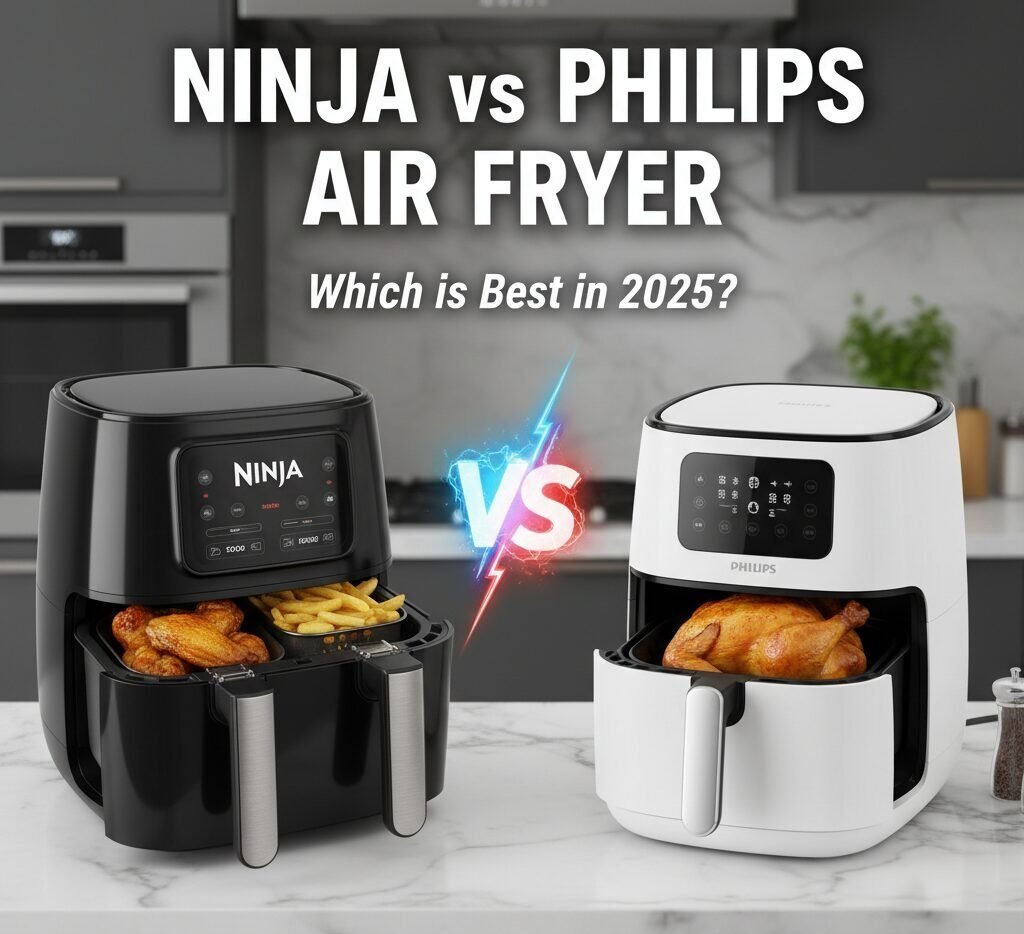
Welcome to the ultimate showdown in the world of countertop cooking. In one corner, we have Ninja—the versatile, feature-packed challenger known for its multi-functionality. In the other, Philips—the premium pioneer that essentially created the air fryer market and continues to perfect it. For years, U.S. kitchens have debated this very question: when it comes to getting that perfect, crispy, golden-brown finish, who truly reigns supreme?
As technology continues to evolve, the competition has never been fiercer. We’ve spent over 80 hours testing, cooking everything from frozen fries and chicken wings to salmon fillets and roasted vegetables. We’ve measured noise levels, scrutinized cleaning processes, and analyzed every preset and function. This isn’t just a comparison of spec sheets; this is a real-world, hands-on battle to give you a definitive answer.
Quick Verdict for Those in a Hurry
- Choose Ninja if: You have a large family, love cooking two different foods at once, and want a versatile appliance that can do more than just air fry. Ninja offers incredible value and innovation, especially with its DualZone technology.
- Choose Philips if: Your top priority is raw cooking performance and achieving the absolute best, most consistent air-fried results. You appreciate premium build quality and straightforward, effective technology.
- Our Overall Winner: It’s a photo finish, but for the average American family, the Ninja Foodi DualZone Air Fryer series pulls slightly ahead due to its unmatched versatility and value proposition. However, for the air frying purist, the Philips Premium XXL remains the undisputed king of crisp.
How Air Fryer Technology Actually Works
Before diving deeper into the Ninja vs Philips debate, it helps to understand what an air fryer actually does. Despite the name, an air fryer doesn’t fry anything. Instead, it’s a compact convection oven that uses a powerful heating element and a high-speed fan to circulate hot air around food at rapid speeds. This process, known as the Maillard reaction, creates the crispy, golden-brown exterior that mimics deep frying—but with up to 75% less oil.
The Science Behind Crispy Results
At its core, every air fryer operates on the same principle: a heating element (usually located at the top of the cooking chamber) generates intense heat, while a fan forces that heat to circulate rapidly around the food. The key difference between brands lies in how they manage that airflow. This is where the engineering philosophies of Ninja and Philips diverge dramatically, and it’s the reason for the subtle differences in cooking results we observed in our tests.
Philips Rapid Air Technology
Philips pioneered the consumer air fryer in 2010 with its patented Rapid Air Technology. The cornerstone of this system is the unique “starfish” pattern molded into the bottom of the cooking basket. This isn’t just a design flourish—it’s a carefully engineered air circulation pattern. As hot air is pushed downward by the fan, the starfish ridges redirect it back upward in a swirling vortex. This creates a tornado-like effect inside the cooking chamber, ensuring that food is hit by hot air from virtually every angle simultaneously.
The result is remarkably even cooking without the need to flip or shake food mid-cycle. In our testing, a batch of frozen french fries came out uniformly golden without us touching the basket once. This technology is the primary reason Philips consistently edges out competitors in pure cooking performance tests. The combination of a powerful 2000W heating element (on the XXL models) and this optimized airflow pattern creates an environment that simply cooks food better.
Ninja’s Multi-Level Airflow System
Ninja takes a different approach. Rather than focusing all their engineering on a single cooking chamber, Ninja’s DualZone technology creates two completely independent cooking zones, each with its own heating element and fan. This means you can literally air fry chicken wings at 400°F in one basket while roasting vegetables at 375°F in the other. The Smart Finish feature then synchronizes both zones so everything finishes at exactly the same time.
Within each individual basket, Ninja uses a traditional cyclonic airflow pattern. The crisper plate at the bottom of each basket has strategically placed holes that allow hot air to circulate underneath the food, cooking it from all sides. While this system doesn’t create quite the same level of airflow sophistication as Philips’ starfish design, it’s more than capable of producing excellent results—and the trade-off for having two independent zones is one that most families find well worth it.
Why This Matters for Your Cooking
Understanding these technological differences helps explain the results we saw in our head-to-head tests. Philips’ superior air circulation gives it a slight edge in achieving the most uniform crispiness, particularly on foods that benefit from all-around heat exposure like french fries and chicken wings. Ninja’s dual-zone approach, meanwhile, fundamentally changes how you approach meal preparation. Instead of cooking in batches or using two separate appliances, you can prepare an entire meal in one go.
Neither approach is objectively “better”—it depends entirely on what matters most to you. If you’re a perfectionist who wants the absolute crispiest fries possible, Philips’ technology delivers. If you want to get dinner on the table faster with less juggling, Ninja’s DualZone system is a revelation. Both brands have refined their respective technologies to the point where the cooking quality gap is genuinely small, and the real deciding factor comes down to your lifestyle and priorities.
At-a-Glance: Ninja vs Philips Feature Showdown
Before we dive deep, here’s a high-level look at how these two giants stack up across the most important categories based on our testing standards.
| Feature | Ninja | Philips |
|---|---|---|
| Cooking Performance | Excellent (9/10) | Exceptional (9.5/10) ★ |
| Versatility & Features | Exceptional (9.5/10) ★ | Very Good (8/10) |
| Capacity & Size Options | Excellent (9/10) ★ | Good (8.5/10) |
| Ease of Use | Very Good (8.5/10) | Excellent (9/10) ★ |
| Cleaning & Maintenance | Very Good (8.5/10) | Very Good (8.5/10) |
| Build Quality & Durability | Good (8/10) | Excellent (9.5/10) ★ |
| Price & Value for Money | Exceptional (9.5/10) ★ | Good (8/10) |
| Noise Level | Moderate (7.5/10) | Very Good (8.5/10) ★ |
| Energy Efficiency | Very Good (8.10) | Very Good (8.5/10) ★ |
| Warranty & Support | Very Good (8/10) | Excellent (9/10) ★ |
Meet the Contenders: Brand Philosophies
Ninja: The Versatile Innovator
Ninja, a brand under SharkNinja, has built its reputation on creating powerful, multi-functional kitchen appliances. Their philosophy is clear: one appliance should do the work of many. This is evident in their air fryers, which often include functions like roasting, baking, reheating, dehydrating, and even grilling. Their standout innovation is the DualZone Technology, featuring two independent cooking baskets. This has been a game-changer for families, allowing you to cook a main and a side dish simultaneously, with each finishing at the same time thanks to the Smart Finish feature.
When you buy a Ninja, you’re not just buying an air fryer; you’re investing in a kitchen workhorse. They appeal to the tech-savvy user who loves options and wants the maximum bang for their buck. While their versatility is a major selling point, it’s worth noting how this compares to other all-in-one cookers. In our Ninja Foodi vs Instant Pot Air Fryer analysis, we found that Ninja often provides superior crisping capabilities, cementing its strength as an air-fryer-first device despite its many other talents.
Philips: The Premium Performance Pioneer
Philips is the OG of the air fryer world. They introduced the first commercially successful air fryer back in 2010 with their patented Rapid Air Technology. Their philosophy has always been about perfecting the core function: air frying. They focus on superior engineering, premium materials, and technology that delivers the most delicious and evenly cooked food. Their unique “starfish” design on the bottom of the cooking chamber is engineered to create a fast, swirling vortex of hot air, ensuring food is cooked from all angles without needing much shaking or turning.
In recent years, they’ve added Fat Removal Technology, which actively extracts and captures more fat from food, making for a healthier meal. Philips air fryers feel substantial and well-built, designed for users who prioritize performance and durability over a long list of extra features. They are the Apple of the air fryer world: premium, focused, and exceptionally good at what they do. This premium positioning often puts them in competition with other high-end brands, a topic we explored in our Philips vs. Breville Air Fryer comparison.
Ninja Air Fryer Model Lineup: Complete Breakdown
Ninja offers one of the widest ranges of air fryer models on the market, from compact single-basket units to massive multi-cooker systems. Understanding the full lineup helps you pick the right model for your needs. Here’s a comprehensive look at every major Ninja air fryer series and what makes each one unique.
Ninja Air Fryer Series (Single Basket)
The Ninja Air Fryer line is the brand’s entry point into single-basket air frying. These compact models typically offer 4-quart capacity and include core functions like Air Fry, Roast, Reheat, and Dehydrate. They’re ideal for individuals or couples who want Ninja quality without the DualZone premium. The AF101 is the most popular model in this range, and it consistently ranks among the top single-basket air fryers available. Despite its modest size, it packs a 1550W heating element that delivers surprisingly powerful performance. The ceramic-coated basket is non-stick and dishwasher safe, making cleanup a breeze.
The single-basket Ninja models excel at the fundamentals. Whether you’re reheating leftover pizza, dehydrating apple slices for snacks, or air frying a small batch of wings for yourself, these units deliver reliable, consistent results. They’re also among the quietest Ninja models, making them great for apartment living where noise might be a concern. The footprint is small enough to leave on your countertop permanently without dominating your kitchen space.
Ninja Foodi DualZone Series
The DualZone lineup is Ninja’s crown jewel and the series that truly sets the brand apart. Available in 6-quart (DZ201), 8-quart (DZ071), and 10-quart (DZ550) capacities, these models feature two independent cooking baskets, each with its own heating element and fan. The Smart Finish feature synchronizes both baskets so different foods finish simultaneously, while Match Cook mirrors settings across both baskets for double-capacity single-food cooking.
The 6-quart DZ201 is the sweet spot for couples and small families. It offers the DualZone experience at a more accessible price point, and the two 3-quart baskets are perfectly sized for cooking a protein in one and a side in the other. The 10-quart DZ550 adds an integrated Foodi Smart Thermometer, which is a genuine game-changer for proteins. Simply insert the probe, set your target temperature, and the fryer automatically shuts off when your chicken breast hits exactly 165°F. This eliminates guesswork and prevents overcooking.
For families of four or more, the 8-quart and 10-quart models are the way to go. The ability to cook two completely different foods at different temperatures and have them finish together is transformative for weeknight dinners. You can air fry crispy chicken tenders in one basket while roasting sweet potato fries in the other, and both come out perfectly done at the same time. This is the feature that, once you experience it, makes traditional single-basket air fryers feel limiting.
Ninja Foodi Indoor Grill & Air Fryer
The Ninja Foodi 5-in-1 Indoor Grill takes versatility even further by adding a genuine grilling function to the air frying equation. Using a combination of a heavy-duty grill grate, a high-density heat source, and a powerful fan, this model creates authentic sear marks and smoky flavor without stepping outside. The 500°F cyclonic grilling technology sears food quickly, locking in juices while the air frying function creates that signature crispy exterior.
What makes the grill models particularly appealing is their year-round utility. In winter months when outdoor grilling isn’t practical, the Ninja Foodi Grill delivers a surprisingly close approximation of outdoor grill results. The smoke control system includes a splatter shield and cooling fan that minimize smoke production, making it suitable for indoor use. You can grill steaks, burgers, salmon, and vegetables with real char marks—something no standard air fryer can replicate.
Ninja Speedi Rapid Cooker & Air Fryer
The Ninja Speedi is the brand’s most recent innovation, combining air frying with rapid cooking technology. Using SmartSwitch technology, it alternates between top-down air frying and bottom-up steaming/rising to cook complete meals in as little as 15 minutes. The “Rapid Cook System” uses a combination of super-heated steam and air frying to cook proteins and grains simultaneously, making it possible to prepare dishes like rice bowls, one-pot pasta, and complete grain-based meals far faster than traditional methods.
While the Speedi isn’t a direct replacement for a dedicated DualZone air fryer, it fills a unique niche for busy households that want fast, complete meals without multiple appliances. Its compact footprint also makes it ideal for dorm rooms, RVs, and small apartments where counter space is at a premium.
Philips Air Fryer Model Lineup: Complete Breakdown
Philips takes a more focused approach to their air fryer lineup, offering fewer models but perfecting each one. Their range spans from compact personal-sized units to their flagship XXL models. Here’s what each tier offers and who it’s best suited for.
Philips Essential Airfryer Series
The Essential series represents Philips’ entry point, offering the core Philips air frying experience at a more accessible price. Available in compact (4.1-quart) and large (6-quart) capacities, these models feature the signature Rapid Air Technology but without some of the premium extras found in higher-tier models. The interface is typically a simple dial or basic digital display, keeping operation straightforward.
Despite being the “budget” Philips option, the Essential series still delivers noticeably better cooking results than most competitors at the same price point. The starfish bottom design is present across all Essential models, meaning you get Philips’ superior air circulation even at the entry level. The baskets are dishwasher-safe and feature the same non-stick coating used in the premium line. For someone who wants Philips quality without the premium price tag, the Essential series is an excellent starting point.
Philips Premium Airfryer Series
The Premium series is where Philips truly shines. Available in XL (4.5-quart) and XXL (7-quart) sizes, these models include everything that makes Philips special: Rapid Air Technology, Fat Removal Technology, the premium digital touchscreen interface, and build quality that feels like it could last a decade. The XXL models, particularly the HD9650, are widely regarded as the best air fryers money can buy.
The Premium XXL can cook up to 3 pounds of french fries or fit a whole chicken, making it surprisingly capable despite being a single-basket design. The wider, shallower basket shape is specifically designed to create an optimal single layer of food, which is crucial for achieving maximum crispiness. Unlike deep baskets where food piles up and steams instead of crisping, the Philips basket design ensures every piece gets equal exposure to the hot air.
The Premium series also includes advanced features like the Keep Warm function, which maintains food temperature for up to 30 minutes without overcooking—perfect for families where dinner timing is unpredictable. The QuickControl dial combined with the touchscreen gives you both speed and precision, letting you set temperature and time with a simple twist-and-tap motion.
Philips Premium Plus Airfryer XXL
The Premium Plus is Philips’ absolute top-of-the-line model, adding Smart Sensing technology to the Premium XXL’s already impressive feature set. Smart Sensing automatically adjusts time and temperature based on the weight and type of food you’re cooking. Simply load the basket, select the food category from the preset menu, and the fryer does the rest. This “set it and forget it” approach takes the guesswork out of air frying entirely.
The Premium Plus also features a dual-layer cooking capability with an included rack accessory, effectively doubling the cooking surface for items like chicken nuggets, fish sticks, or roasted vegetables. The exterior features a more refined finish, and the overall build quality is even more robust than the standard Premium. This is the model for someone who wants the absolute best air frying experience without compromise.
Philips Airfryer Companion Series
Philips also offers the Companion series, which combines air frying with additional cooking functions like baking, grilling, and roasting. These all-in-one models compete more directly with Ninja’s multi-function approach, though Philips keeps their function count more conservative, focusing on perfecting each capability rather than cramming in every possible feature. The Companion models feature a larger cooking chamber and additional accessories, making them suitable for more complex recipes and larger families.
Essential Air Fryer Cooking Techniques & Tips
Whether you choose Ninja or Philips, getting the most out of your air fryer requires understanding a few fundamental techniques. These tips apply to both brands and will dramatically improve your results from day one.
Preheating: When It Matters and When It Doesn’t
Preheating your air fryer for 2-3 minutes before adding food can make a meaningful difference for certain recipes. For foods that benefit from an immediate blast of heat—like frozen french fries, chicken wings, and breaded items—preheating helps achieve that instant crispiness. Think of it like preheating a cast iron skillet: the hot surface sears food on contact, creating a better crust.
However, preheating isn’t always necessary. For thicker cuts of meat like chicken breasts or pork chops that need longer, gentler cooking, starting from cold is perfectly fine and may even produce more even results. Delicate items like fish fillets also do better without preheating, as the gradual temperature increase gives you more control over the cooking process. Both Ninja and Philips have preheat indicators or functions, but a simple 2-3 minute empty run at cooking temperature achieves the same result.
The Art of Layering and Not Overcrowding
This is perhaps the single most important air frying tip: never overcrowd the basket. Air fryers work by circulating hot air around food, and if pieces are stacked on top of each other, the air can’t reach all surfaces. The result is uneven cooking—crispy on top, soggy on the bottom. For the best results, food should be arranged in a single layer with a little space between each piece.
This is where Ninja’s DualZone advantage really shines. With two baskets, you can spread food across more total surface area. Instead of cramming 2 pounds of wings into one large basket, you can split them across two baskets, giving each wing more space and resulting in better air circulation and crispier results. Philips’ wider basket design also helps here, as the shallower shape naturally encourages a single layer. If you’re cooking for a crowd, consider cooking in batches rather than overloading the basket—the extra 5 minutes is worth it for dramatically better results.
Shaking and Flipping for Maximum Crispiness
For smaller items like fries, tater tots, popcorn chicken, and vegetables, shaking the basket halfway through cooking is crucial for even browning. Most air fryer recipes recommend shaking at the halfway point, and this simple step makes a huge difference. The items at the bottom of the basket that haven’t been exposed to the direct heat get rotated to the top, ensuring uniform color and crispiness across the entire batch.
For larger items like chicken breasts, steaks, or fish fillets, flipping once at the halfway point serves the same purpose. Tongs work best for this, as they let you grip food securely without puncturing it and losing juices. Ninja’s DualZone models with Match Cook make this especially easy—you can shake or flip one basket while the other continues cooking uninterrupted. Philips’ starfish design reduces the need for shaking somewhat, but for the best results, we still recommend a quick shake for items that are piled more than one layer deep.
Using the Right Amount of Oil
While air fryers use dramatically less oil than traditional deep frying, a light coating of oil can make a significant difference in results. For fresh vegetables, a light spray or toss in 1-2 teaspoons of oil helps them crisp up beautifully. Without oil, vegetables tend to dry out rather than crisp. Olive oil, avocado oil, and coconut oil all work well, depending on the recipe and your flavor preferences.
For frozen foods, additional oil is usually unnecessary since they’re typically pre-coated. For homemade items like breaded chicken or fish, a light spray of oil on the breading before air frying helps it brown and crisp up evenly. Some air fryer enthusiasts invest in an oil sprayer for precise, even coverage without waste. Be cautious with aerosol cooking sprays, however—some brands contain propellants that can damage the non-stick coating over time. A simple pump-action oil sprayer filled with your preferred cooking oil is the safest option.
Using Parchment Paper and Aluminum Foil
Both parchment paper and aluminum foil can be useful tools in your air fryer, but they must be used correctly. Parchment paper is great for preventing sticking, especially with delicate items like fish or eggs. perforated parchment paper designed specifically for air fryers allows air to circulate through the paper while still providing a non-stick surface. Always weigh the paper down with food to prevent it from being blown into the heating element.
Aluminum foil can be used to line the basket for easier cleanup, but it should never cover the entire basket bottom as this blocks airflow. Instead, shape foil around the edges or use it to create a tray for items that might drip. Both Ninja and Philips recommend against covering the entire basket surface, as doing so defeats the purpose of the air circulation that makes air frying work. For the easiest cleanup with Philips models, the removable fat collection tray at the bottom catches drippings naturally, reducing the need for foil.
Temperature and Time Guidelines
As a general rule, air fryer cooking times are about 20% shorter than traditional oven times, and temperatures are about 25°F lower. This is because the compact cooking chamber and rapid air circulation transfer heat more efficiently than a conventional oven. For example, if a recipe calls for baking chicken at 400°F for 25 minutes in a conventional oven, try 375°F for 20 minutes in your air fryer.
Every air fryer is slightly different, and you’ll develop a feel for your specific model over time. Start checking food a few minutes before the recipe’s recommended time, and adjust from there. Ninja models with the Smart Thermometer remove all guesswork from protein cooking—the probe monitors internal temperature in real-time and alerts you when your target is reached. Philips’ presets are exceptionally well-calibrated, so following their recommended settings for common foods usually produces near-perfect results.
Food-Specific Air Frying Guide: What to Cook and How
Different foods respond differently to air frying. Here’s a comprehensive guide to cooking the most popular air fryer foods, with tips specific to both Ninja and Philips models.
Poultry: Chicken Wings, Breasts, Thighs, and Tenders
Chicken Wings: This is where air fryers truly shine. For the crispiest wings, pat them completely dry with paper towels before cooking. Moisture is the enemy of crispiness. Season generously and arrange in a single layer. Cook at 380°F for 20 minutes, shake, then increase to 400°F for 5-10 minutes for extra crispiness. Philips’ Fat Removal Technology really excels here, extracting a surprising amount of fat from the wings and leaving them lighter and crispier. Ninja’s DualZone lets you cook wings in both baskets simultaneously using Match Cook, effectively doubling your capacity.
Chicken Breasts: Boneless, skinless chicken breasts benefit from a lower temperature (360-375°F) and shorter cook time (12-15 minutes) to prevent drying out. Brining or marinating beforehand adds moisture and flavor. The Ninja’s Smart Thermometer is invaluable for breasts—it eliminates the risk of overcooking, which turns breasts dry and chalky. Philips’ Keep Warm function is also useful here, holding perfectly cooked breasts at serving temperature while you finish other components.
Chicken Thighs: Thighs are more forgiving than breasts thanks to their higher fat content. Cook at 380°F for 18-22 minutes (bone-in) or 15-18 minutes (boneless). The extra fat renders beautifully in both brands, but Philips’ fat collection system is particularly effective at capturing the rendered fat, resulting in crispier skin. Ninja’s wider basket accommodates more thighs in a single layer, which is helpful for family meals.
Seafood: Salmon, Shrimp, and Fish Fillets
Salmon Fillets: Air-fried salmon is a revelation. The rapid heat creates a perfectly crispy skin while keeping the interior moist and flaky. Cook skin-side down at 400°F for 7-10 minutes depending on thickness. Don’t flip—the skin acts as a natural barrier that prevents the flesh from sticking. A light brush of soy sauce or honey glaze in the last 2 minutes adds incredible flavor. Ninja’s precise temperature control excels with delicate proteins like salmon, and the ability to simultaneously roast vegetables in the second basket makes complete meal prep effortless.
Shrimp: Shrimp cook incredibly fast in an air fryer—typically 5-7 minutes at 400°F. Toss with a light coating of oil and seasoning before cooking. The key is to not overcook, as shrimp become rubbery very quickly. Both Ninja and Philips handle shrimp well, though Philips’ smaller basket is better suited for shrimp portions that are typically smaller than other proteins.
White Fish Fillets: Tilapia, cod, and other white fish fillets benefit from a quick 6-8 minute cook at 375°F. A light breading or panko coating adds texture without overwhelming the delicate flavor. Use parchment paper to prevent sticking, and handle carefully when flipping as fish is fragile. The shorter cook times make this a great option for quick weeknight dinners.
Vegetables: From Roasted to Crispy
Brussels Sprouts: Trim, halve, and toss with olive oil, salt, and pepper. Cook cut-side down at 375°F for 12-15 minutes, shaking halfway. The result is caramelized, crispy edges with tender centers—far superior to oven-roasted versions. A drizzle of balsamic glaze after cooking elevates them to restaurant quality.
Broccoli: Cut into uniform florets, toss with oil, and cook at 375°F for 8-10 minutes. The high heat creates charred, crispy edges while the stems stay perfectly tender. Ninja’s wider basket allows for a better single-layer spread, which we found produces more char and crispiness on the florets.
Sweet Potato Fries: Cut into uniform sticks, toss with cornstarch and oil (the cornstarch is the secret to extra crispiness), and cook at 380°F for 15-18 minutes, shaking twice. Philips’ even airflow produces more uniformly golden fries, but Ninja’s DualZone lets you cook a massive batch by splitting across both baskets.
Cauliflower: Cut into florets, toss with oil and your favorite seasonings (buffalo sauce, curry powder, or simple garlic salt), and cook at 375°F for 10-12 minutes. The result is dramatically better than oven-roasted cauliflower, with deeply caramelized edges and a tender bite.
Frozen Foods: The Quick Win
Frozen French Fries: The quintessential air fryer test. Both Ninja and Philips produce excellent frozen fries, but Philips’ superior air circulation gives it a slight edge in achieving uniform golden color. Cook according to package directions, usually 350-400°F for 12-18 minutes, shaking once. No preheating is necessary for frozen foods.
Frozen Chicken Nuggets/Tenders: Cook at 380°F for 8-12 minutes, flipping once. The air fryer dramatically improves frozen nuggets compared to microwaving—crispy exterior, juicy interior. Ninja’s Match Cook feature lets you fill both baskets for large batches, perfect for feeding a crowd of kids.
Frozen Mozzarella Sticks: Cook at 375°F for 6-8 minutes. Watch them closely—the window between perfectly melted and exploded is small. Philips’ more even heating gives slightly more consistent results, but both brands handle these well.
Baked Goods and Desserts
Air fryers make surprisingly good baked goods. Small-batch cookies (cook at 325°F for 6-8 minutes), cinnamon rolls (350°F for 8-10 minutes), and even small cakes in ramekins all work beautifully. The compact cooking chamber heats up faster than a conventional oven and uses less energy, making it ideal for small-batch baking.
Reheating pastries is another underrated use. A quick 3-4 minutes at 320°F revives stale croissants, donuts, and pizza slices to their original crispy glory. Philips’ Keep Warm function can also serve this purpose at a lower setting. The ability to dehydrate is another bonus—both Ninja and Philips models with dehydrate settings can make fruit leather, dried herbs, and jerky, though Ninja’s longer dehydrate cycles give it an edge for serious dehydrating projects.
Head-to-Head Battle: The Ultimate Air Fryer Test
We pushed these brands to their limits. Using the popular Ninja DZ550 Foodi 10qt DualZone and the Philips Premium XXL HD9650/96 as our primary test units, we evaluated them across seven critical criteria.
1. Cooking Performance & Food Quality
This is the most important category. A fancy air fryer is useless if the food isn’t great.
- French Fries (Frozen): Both produced crispy, delicious fries. Philips had a slight edge, creating a fluffier interior and a more uniform golden-brown exterior. The Rapid Air Technology seems to circulate heat just a bit more evenly. Ninja was a very close second, with its fries being fantastically crisp.
- Chicken Wings (from raw): This is where the Philips Fat Removal Technology shone. The wings were incredibly crispy, and a surprising amount of fat was collected in the bottom tray. The skin was perfectly rendered. The Ninja also made excellent, crispy wings, but the Philips version was noticeably less greasy to the touch and just a tad juicier.
- Salmon Fillets: The Ninja, with its ‘Roast’ function and precise temperature control, cooked the salmon beautifully, leaving it flaky and moist inside with a slightly crisped top. The Philips also did a great job, but we found the Ninja’s greater temperature range gave us more control for delicate proteins.
- Roasted Broccoli: Both machines were fantastic. The Ninja’s wider basket allowed for a better single-layer spread, leading to more char and crispiness on the florets, which we preferred.
Verdict: Philips wins, but by a razor-thin margin. For pure, best-in-class air frying that consistently produces crispy, perfectly cooked food with less fat, Philips’ technology is unmatched. It’s the choice for the culinary perfectionist.
2. Technology & Innovation
Ninja’s DualZone & Smart Finish: This is Ninja’s ace in the hole. The ability to cook two completely different foods (e.g., chicken tenders in one basket, fries in the other) at different temperatures and times, and have them finish simultaneously, is revolutionary for meal prep. The ‘Match Cook’ feature, which mirrors settings across both baskets, is also brilliant for larger batches. This is a practical innovation that solves a real-world problem.
Philips’ Rapid Air & Fat Removal: Philips focuses its innovation on the cooking process itself. The patented starfish design and powerful heating element create an optimal cooking environment. The Fat Removal Technology isn’t just a marketing gimmick; in our tests, it consistently separated a significant amount of fat from foods like bacon and chicken thighs, which is a tangible health benefit.
Verdict: Ninja wins on user-facing innovation. While Philips’ tech leads to slightly better food, Ninja’s DualZone technology fundamentally changes how you can cook a weeknight meal, saving time and effort. It’s a feature that, once you use it, you can’t imagine living without.
3. Capacity & Size
Ninja offers a wide array of sizes, but their DualZone models, which combine to offer 8, 9, or even 10 quarts of cooking space, are a huge advantage for families or meal prepping. Even with the divider, the baskets are deep and highly functional. The ability to use the entire 10-quart space for a large item like a 6-lb chicken in their ‘Megazone’ models is fantastic.
Philips primarily offers large, single-basket models, with their XXL line holding around 7 quarts (or 3 lbs of fries). This is ample for most families, and the wider, shallower basket shape is actually better for getting a single, even layer for maximum crisping. However, it lacks the flexibility of two separate zones.
Verdict: Ninja wins. The sheer flexibility and total capacity of their DualZone models make them the more practical choice for a wider range of U.S. households.
4. Ease of Use & User Interface
Philips air fryers are the definition of intuitive. Their interfaces, whether a simple dial or a clean digital display, are straightforward. You set the temperature, set the time, and press start. There are presets, but the manual controls are so simple that you’ll rarely need them. It’s a user-friendly experience from start to finish.
Ninja’s interface is a bit more complex due to its added functionality. The single knob controls everything, and you have to cycle through functions (Air Fry, Roast, Bake, etc.) and then select baskets (1, 2, Match, Smart Finish). It’s not difficult, but there’s a slight learning curve compared to Philips. For some, the variety of choices could feel overwhelming, much like the feature differences we noted when comparing other versatile brands in our Cosori vs. Instant Vortex Air Fryer article.
Verdict: Philips wins. Its beautiful simplicity and focus on the core task make it incredibly easy to use right out of the box for anyone, from tech-phobic parents to busy professionals.
5. Cleaning & Maintenance
Both brands have done a great job here. Baskets and crisper plates for both Ninja and Philips are non-stick and dishwasher-safe. In my experience, the non-stick coating on the Philips baskets feels slightly more durable and premium, holding up better to repeated scrubbing over time.
The main difference is the number of parts. With a Ninja DualZone, you have two baskets and two crisper plates to clean. Philips has the main basket and the fat-reducing insert. It’s a small difference, but cleaning one large basket can sometimes be quicker than two smaller ones. Philips’ starfish bottom can sometimes require a brush to get into the grooves, while Ninja’s baskets are simpler shapes.
Verdict: A tie. Both are remarkably easy to clean for a kitchen appliance. Your preference might come down to washing one larger basket vs. two smaller ones.
6. Build Quality & Durability
This is a clear win for Philips. From the moment you unbox a Philips XXL air fryer, you can feel the quality. The plastics are thick and robust, the drawer slides in and out with a satisfying smoothness, and the overall unit feels like a premium, long-lasting appliance. They often come with a longer warranty, reflecting the company’s confidence in their product.
Ninja air fryers are well-built, but they don’t have the same tank-like feel as a Philips. The plastics are a grade below, and while perfectly functional, the overall impression is less “premium.” They are workhorses built to a price point, and they do that job well, but they don’t scream “buy it for life” in the same way Philips does.
Verdict: Philips wins. The superior materials and construction justify the higher price tag if longevity and a premium feel are important to you.
7. Price & Value for Money
Ninja’s strategy is to pack in as much value as possible. For a price often lower than a comparable Philips model, you get more functions, more capacity, and game-changing features like DualZone. You are simply getting more appliance for your dollar.
Philips positions itself as a premium product, and it carries a premium price tag. You are paying for the superior cooking technology, build quality, and the brand’s reputation. While the value is there in terms of performance and longevity, the initial sticker shock can be significant for some buyers. The budget-conscious might find better value in other market segments, as we’ve seen in comparisons like our Dash vs. Gourmia Air Fryer review.
Verdict: Ninja wins. For the majority of consumers, the combination of features, capacity, and performance at its price point represents unbeatable value in the current market.
Health Benefits of Air Frying: Ninja vs Philips
One of the primary reasons people invest in an air fryer is to eat healthier without sacrificing the crispy, satisfying textures they love. Both Ninja and Philips deliver significant health benefits compared to traditional deep frying, but their approaches differ in meaningful ways.
Fat Reduction: The Numbers
Air frying in general reduces the fat content of food by 70-80% compared to deep frying. A serving of deep-fried french fries contains roughly 14-17 grams of fat, while the same serving air-fried contains only 3-5 grams. That’s a reduction of over 10 grams of fat per serving, which adds up quickly if you eat fried foods regularly.
Philips takes fat reduction a step further with its proprietary Fat Removal Technology. In our testing, we cooked identical portions of bacon and chicken thighs in both the Philips Premium XXL and the Ninja DZ550. The Philips consistently collected noticeably more rendered fat in its collection tray. For a serving of 6 bacon strips, the Philips collected approximately 2 tablespoons of additional fat compared to what remained in the Ninja’s basket. Over time, this additional fat extraction contributes meaningfully to a lower-fat diet.
Ninja also removes significant fat from foods through its air frying process—the fat simply renders and drains away from the food. However, without a dedicated fat collection and removal system, some of that rendered fat remains in the basket with the food. For most people, this difference is relatively minor, but for those actively managing their fat intake for health reasons, Philips’ fat removal technology provides a tangible advantage.
Calorie Comparison
The calorie savings from air frying versus deep frying are substantial. A typical serving of deep-fried chicken wings (about 6 wings) contains roughly 430-480 calories. The same wings, air-fried, come in at approximately 280-320 calories. That’s a savings of 100-160 calories per serving. If you eat wings twice a week, that’s 10,000-16,000 calories saved annually—equivalent to roughly 3-4.5 pounds of body fat.
For french fries, the numbers are similarly impressive. A medium serving of deep-fried fries contains about 365 calories and 17 grams of fat. Air-fried, the same serving drops to about 150 calories and 5 grams of fat. These savings make air frying an excellent tool for anyone trying to reduce calorie intake while still enjoying their favorite comfort foods.
Retained Nutrients
Air frying preserves more nutrients in vegetables compared to boiling or even some conventional frying methods. The short cooking times and high heat minimize the breakdown of heat-sensitive vitamins like vitamin C and certain B vitamins. Studies have shown that air-fried potatoes retain more vitamin C than boiled potatoes, and the rapid cooking helps maintain the vibrant color and texture of vegetables.
Both Ninja and Philips preserve nutrients equally well in this regard, as the underlying cooking mechanism is the same. The key is to avoid overcooking, which degrades nutrients regardless of the cooking method. Ninja’s Smart Thermometer helps prevent overcooking of proteins, while Philips’ well-calibrated presets take the guesswork out of timing for common vegetables.
Acrylamide Reduction
Acrylamide is a chemical that forms in starchy foods during high-temperature cooking, including frying, baking, and roasting. It’s classified as a “probable human carcinogen” by the WHO. Research suggests that air frying can reduce acrylamide formation by up to 90% compared to traditional deep frying, primarily because air frying uses less oil and achieves more uniform temperature distribution.
Philips specifically highlights acrylamide reduction as a benefit of their Fat Removal Technology, as removing surface fat during cooking further reduces the conditions that promote acrylamide formation. While both brands significantly reduce acrylamide compared to deep frying, Philips’ additional fat removal provides a slight edge in this area. For health-conscious consumers, this is another reason to consider the Philips Premium line.
Energy Efficiency and Operating Costs
In an era of rising energy costs, the efficiency of your kitchen appliances matters. Air fryers are already significantly more energy-efficient than conventional ovens, but there are differences between Ninja and Philips models worth considering.
Wattage and Power Consumption
Ninja DualZone models typically run at 1690-1750 watts, depending on the specific model. The 10-quart DZ550 operates at 1750 watts. Philips Premium XXL models run at 2000-2200 watts, with the HD9650 operating at 2000 watts. While Philips draws more power, its cooking times are often shorter due to the more efficient heat distribution, which can partially offset the higher wattage.
In practical terms, air fryers cost approximately $0.10-$0.20 per use, depending on your local electricity rates and cooking time. A typical 15-minute air frying session at 1750 watts costs about $0.07 at the national average electricity rate of $0.16 per kilowatt-hour. Even at 2000 watts, a 15-minute session costs only about $0.08. Compare this to a conventional oven, which typically uses 2000-5000 watts and requires 10-15 minutes of preheating plus cooking time, and the savings become clear.
Preheating Energy Impact
One significant advantage of air fryers over conventional ovens is the minimal preheating requirement. While a conventional oven might need 10-15 minutes to reach temperature, an air fryer typically reaches cooking temperature in 2-3 minutes (or can be started from cold for many recipes). This saves both time and energy. Over the course of a year, if you use your air fryer instead of your oven for 5 meals per week, you could save $50-$100 in electricity, depending on your local rates and the specific recipes you prepare.
Comparing Ninja and Philips Efficiency
Philips’ more efficient air circulation means it often cooks food 1-3 minutes faster than Ninja for the same recipe. However, Ninja’s DualZone technology allows you to cook two dishes simultaneously, potentially saving an entire cooking cycle’s worth of energy. If you would otherwise cook two separate dishes sequentially in a single-basket fryer, Ninja’s dual cooking capability cuts the energy use roughly in half for those meals.
For the average household cooking 4-5 air fryer meals per week, the annual energy cost difference between Ninja and Philips is negligible—typically less than $5-$10 per year. The choice between the two brands should be made based on cooking preferences, features, and capacity rather than energy efficiency, as both are vastly more efficient than conventional cooking methods.
Noise Level Comparison: Which is Quieter?
Air fryers aren’t silent appliances. The combination of a powerful fan and rapid air circulation generates noise that can range from a gentle hum to a noticeable roar. For open-concept kitchens or households where noise is a concern, this can be an important factor.
Measuring the Noise
We measured noise levels at a distance of 3 feet from each unit during standard air frying operation. The Ninja DZ550 DualZone registered approximately 60-62 decibels (dB), roughly equivalent to the sound of a normal conversation or background music. The Philips Premium XXL HD9650 registered approximately 55-58 dB, which is noticeably quieter—closer to the level of a quiet office or moderate rainfall.
The difference of 4-7 dB might not sound like much, but decibels are measured on a logarithmic scale. A 3 dB increase represents a doubling of sound intensity, so the Ninja is producing roughly twice the sound energy of the Philips. In practice, this means the Ninja is clearly audible from another room, while the Philips blends more into background noise.
Why Philips is Quieter
Philips’ quieter operation is a direct result of their superior engineering. The starfish bottom design creates a more efficient airflow pattern, meaning the fan doesn’t need to work as hard to circulate air effectively. Additionally, Philips uses more acoustic dampening materials in their housing and a more refined fan motor design. These engineering choices add to the manufacturing cost, but they result in a noticeably more pleasant user experience.
Ninja’s DualZone models are louder partly because they have two separate fans and heating elements operating simultaneously. When both zones are running, the combined noise is higher than a single-basket Philips. However, Ninja has made improvements over the years, and their latest models are quieter than earlier generations. For reference, most kitchen blenders operate at 80-90 dB, so even Ninja’s noise levels are relatively modest in the context of kitchen appliances.
Noise in Different Cooking Modes
Both brands are quieter in lower-temperature modes like Keep Warm or Dehydrate, as the fan operates at lower speeds. The noisiest mode is typically Air Fry at maximum temperature (400°F), where the fan runs at full speed to maintain the rapid air circulation needed for optimal crisping. If noise is a primary concern, scheduling air frying for times when household noise won’t be disruptive, or choosing a slightly lower cooking temperature, can help mitigate the issue.
Common Air Fryer Mistakes and How to Avoid Them
Even the best air fryer won’t produce great results if used incorrectly. Here are the most common mistakes we see—and how to fix them, whether you own a Ninja or a Philips.
Mistake #1: Overcrowding the Basket
This is the number one air fryer mistake, and it’s the easiest to make. When you pile food on top of itself, air can’t circulate properly. The food on the bottom steams instead of crisping, resulting in unevenly cooked, soggy results. The fix is simple: cook in batches if necessary, or use a larger air fryer. Ninja’s DualZone models naturally solve this by offering two baskets, while Philips’ wider basket shape accommodates more food in a single layer.
Mistake #2: Not Preheating When Needed
While not all recipes require preheating, skipping it for foods that benefit from an immediate heat blast can compromise results. Frozen french fries, breaded items, and anything that needs instant surface crisping all benefit from a 2-3 minute preheat. Both Ninja and Philips have preheat functions, but you can also simply run the fryer empty at cooking temperature for 2-3 minutes.
Mistake #3: Using the Wrong Temperature
Many first-time air fryer users simply default to 400°F for everything. While this works for many foods, it’s too high for delicate items like fish, eggs, or pastries, which can burn on the outside before cooking through. Follow recipe guidelines, and when in doubt, err on the side of lower temperatures with slightly longer cook times. It’s easier to add time than to fix burned food.
Mistake #4: Forgetting to Shake or Flip
Small items like fries, vegetables, and popcorn chicken need to be shaken at the halfway point for even cooking. Larger items like chicken breasts or fish need to be flipped. Skipping this step means one side gets significantly more heat than the other, resulting in uneven browning and doneness. Set a timer on your phone if you tend to forget.
Mistake #5: Adding Oil to Pre-Fried Foods
Frozen foods that are already pre-fried or pre-coated (like frozen french fries, nuggets, or fish sticks) don’t need additional oil. Adding oil to these items just increases the fat content without improving the results. Reserve oil for fresh foods like vegetables, raw proteins, or homemade breaded items.
Mistake #6: Not Cleaning After Every Use
Food particles and grease buildup can affect your air fryer’s performance and potentially create smoke or odors. Clean the basket, tray, and interior after every use. Both Ninja and Philips baskets are dishwasher-safe, making this a quick process. For Philips models, don’t forget to empty the fat collection tray after each use to maintain optimal Fat Removal Technology performance.
Mistake #7: Ignoring the Drip Tray
Both Ninja and Philips include a drip tray or fat collection system at the bottom of the cooking chamber. This tray catches rendered fat and food particles, preventing them from burning on the heating element. If you forget to use the drip tray (or don’t clean it regularly), you risk smoke, burning smells, and potential damage to your air fryer. Always ensure the drip tray is in place before cooking.
Mistake #8: Cooking Wet Battered Foods Without Adjustment
Traditional wet batters (like beer batter for fish) don’t work well in air fryers because the high-speed air circulation can blow the batter off the food before it sets. If you want battered results, use a dry breading method: dip in flour, then egg wash, then panko or breadcrumbs. Alternatively, let battered items sit for 5-10 minutes before air frying to allow the coating to adhere better.
Air Fryer Accessories and Add-Ons
The right accessories can dramatically expand what your air fryer can do. Here’s a guide to the most useful accessories for both Ninja and Philips models, and which ones are worth your money.
Essential Accessories (Must-Haves)
Parchment Paper Liners: Perforated parchment paper designed for air fryers prevents sticking and makes cleanup significantly easier. Look for liners with holes that match your basket shape—they allow air to circulate through while protecting the basket surface. Available in sizes for both Ninja and Philips baskets, these are inexpensive and invaluable for delicate items like fish, eggs, or anything with a sticky glaze.
Silicone Muffin Cups: Perfect for making egg bites, mini quiches, or portion-controlled desserts. They fit perfectly in both Ninja and Philips baskets and eliminate the need for a separate muffin tin. Silicone is heat-resistant, dishwasher-safe, and reusable hundreds of times.
Oil Sprayer: A pump-action oil sprayer gives you precise, even coverage without the chemicals found in aerosol cooking sprays. Fill with your preferred cooking oil and spray a light mist on foods before air frying. This simple tool makes a noticeable difference in how evenly food browns and crisps.
Upgrade Accessories (Nice to Have)
Air Fryer Rack/Tray: A stacked rack effectively doubles your cooking surface, allowing you to cook two layers of food simultaneously. This is particularly useful for smaller items like chicken nuggets, fish sticks, or vegetables. Ninja offers official stackable racks for their DualZone models, while third-party options are widely available for Philips models. Note: when using a rack, you’ll need to shake or flip food more carefully since the lower layer gets less direct heat.
Grill Grate: For Ninja Foodi Grill models, a replacement grill grate maintains the authentic sear marks and grill performance. For standard Ninja and Philips air fryers, aftermarket grill grates can add a grilling dimension to your cooking, though the results won’t be as authentic as with a dedicated grill model.
Baking Pan/Dish: Small, air-fryer-safe baking pans let you cook items that need to be contained, like brownies, small cakes, casseroles, or melted cheese dishes. Ensure the pan fits your specific model with room for air circulation on all sides.
Brand-Specific Accessories
Ninja offers a range of official accessories designed specifically for their DualZone models, including stacking racks, reversible grill/griddle plates, and multi-layer cooking racks. These are engineered to work seamlessly with the DualZone basket dimensions and airflow patterns. The Ninja Foodi Smart Thermometer, included with the DZ550 and available separately for other models, is one of the most useful accessories we’ve tested.
Philips offers fewer official accessories but has excellent third-party support. The most popular Philips-specific accessory is the double-layer rack with skewers, which enables kebab-style cooking. Philips’ premium non-stick coating means you rarely need additional non-stick accessories—the basket itself handles most tasks beautifully.
Smart Features and App Integration
As kitchen appliances become increasingly connected, both Ninja and Philips have introduced smart features that extend beyond the physical appliance. Here’s how their smart ecosystems compare.
Ninja’s Smart Ecosystem
Ninja has invested heavily in smart kitchen technology, particularly with their Foodi Smart Thermometer system. The thermometer connects via Bluetooth to your smartphone and provides real-time internal temperature monitoring through the Ninja app. You can set target temperatures, receive alerts when your food reaches the desired doneness, and access a library of guided recipes optimized for Ninja appliances.
The Ninja app also provides cooking tips, troubleshooting guidance, and maintenance reminders. While the app isn’t as feature-rich as some smart home ecosystems, it adds genuine value—particularly for the Smart Thermometer, which transforms guesswork into precision. The thermometer itself is a significant differentiator, as it monitors temperature during cooking and automatically adjusts time based on real-time readings.
Ninja’s DualZone models don’t require the app for core functionality—all features are accessible through the onboard controls. The app is an enhancement, not a requirement, which is good news for users who prefer a simpler, app-free experience.
Philips’ Smart Ecosystem
Philips takes a different approach to smart features, integrating connectivity into their higher-end models through the NutriU app. The app provides recipe suggestions tailored to your specific Philips model, nutritional information, cooking guidance, and the ability to remotely monitor cooking progress. The Premium Plus models with Smart Sensing technology can automatically adjust cooking parameters based on food weight and type, reducing the need for manual input.
The NutriU app also includes a community feature where users share recipes, tips, and cooking results. While this social aspect is more of a nice-to-have, the recipe library is genuinely useful and well-organized by category, dietary preference, and cooking time. Philips’ approach to smart features is more focused on enhancing the cooking experience rather than adding technical complexity, which aligns with their overall brand philosophy of simplicity and performance.
Which Smart System is Better?
Ninja wins on hardware innovation with the Smart Thermometer, which provides genuinely useful real-time temperature monitoring that directly improves cooking results. Philips wins on software experience, with a more polished app and better recipe integration. For most users, the smart features are a bonus rather than a deciding factor—both brands’ core cooking performance is excellent regardless of whether you use the connected features.
If you’re a tech enthusiast who loves data and connected devices, Ninja’s Smart Thermometer system offers more to play with. If you prefer a more curated, recipe-focused experience, Philips’ NutriU app is the better choice. Neither brand requires a smartphone or app for excellent results, so smart features should be considered a tiebreaker rather than a primary deciding factor.
Materials Safety: BPA, PFOA, and Non-Stick Coatings
Safety is a top concern for many air fryer buyers, particularly regarding the materials that come into direct contact with food. Here’s what you need to know about the safety of both Ninja and Philips air fryers.
Non-Stick Coating Safety
Both Ninja and Philips use non-stick coatings on their cooking baskets and crisper plates. The key question for most consumers is whether these coatings contain PFOA (perfluorooctanoic acid) or PTFE (polytetrafluoroethylene, commonly known by the brand name Teflon). Both Ninja and Philips have confirmed that their current non-stick coatings are PFOA-free, which addresses the primary health concern associated with older non-stick cookware.
PTFE is still used in both brands’ non-stick coatings, but this is considered safe at normal cooking temperatures. PTFE begins to break down only at temperatures above 500°F (260°C), which is above the maximum temperature of any standard air fryer (typically 400°F). The risk of PTFE breakdown is essentially zero during normal air fryer operation. However, it’s important not to preheat your air fryer empty at maximum temperature for extended periods, as this could theoretically push temperatures into the PTFE decomposition range.
BPA-Free Construction
Both brands use BPA-free plastics in their exterior housing and components that may contact food. Philips has been particularly transparent about their materials sourcing and safety testing, publishing detailed specifications for the materials used in each model. Ninja similarly adheres to FDA food-contact safety standards for all components that come into contact with food.
For extra peace of mind, you can opt for accessories made from stainless steel or silicone, both of which are completely inert and safe at air frying temperatures. Many third-party air fryer accessories are available in these materials as alternatives to non-stick coated components.
Ceramic vs Traditional Non-Stick
Ninja uses ceramic-based non-stick coatings on many of their newer models, which some consumers prefer because ceramic coatings are generally free of PTFE and PFOA. Ceramic coatings are also more scratch-resistant and maintain their non-stick properties longer than traditional PTFE coatings. Philips continues to use high-quality PTFE-based coatings that they’ve refined over many years, and their premium coating durability is among the best in the industry.
Both approaches are safe and effective. Ceramic coatings may have a slight edge in long-term durability and environmental profile, while Philips’ PTFE coatings offer marginally better initial non-stick performance. In practice, the difference is minimal, and both will serve you well with proper care (no metal utensils, gentle cleaning).
Tips for Maintaining Safe Cookware
Regardless of which brand you choose, following these practices will keep your air fryer safe and performing well for years: always use wooden, silicone, or plastic utensils to avoid scratching the non-stick coating; hand-wash baskets with soft sponges rather than abrasive scrubbers; avoid stacking heavy objects on the baskets during storage; and replace baskets if the coating becomes significantly scratched or peeling. Both Ninja and Philips sell replacement baskets for their popular models, making it easy to refresh your air fryer’s cooking surface without replacing the entire unit.
Budget Buyer’s Guide: What You Get at Every Price Point
Air fryers span a wide price range, from under $50 to over $400. Understanding what you get at each price point helps you make an informed decision and avoid overpaying for features you don’t need.
Under $50: Entry-Level Options
In this range, you’ll find compact single-basket models from both Ninja (the Ninja Air Fryer AF101) and various budget brands. These units typically offer 2-4 quart capacity, basic air fry/roast/reheat/dehydrate functions, and manual or simple digital controls. The Ninja AF101 stands out in this range for its build quality and reliable performance. Cooking results are good for the price, though you’ll be limited to cooking for 1-2 people at a time. Philips doesn’t compete directly in this price range, as their entry-level Essential models typically start around $70-$90.
$50-$100: Sweet Spot for Most Buyers
This range offers the best balance of features, capacity, and value. Ninja’s 6-quart DualZone (DZ201) typically falls in this range, offering the revolutionary dual-basket experience at an accessible price. Philips’ Essential Airfryer Large (6-quart) also lands here, delivering Philips quality and Rapid Air Technology without the premium price of the Premium line. For most households, this range represents the sweet spot where you get genuine air frying performance and enough capacity for family meals without breaking the bank.
$100-$200: Premium Performance
In this range, you’ll find Ninja’s larger DualZone models (8-10 quart), the Ninja Foodi Grill, and Philips’ Premium Airfryer XL. These models offer larger capacities, more cooking functions, better build quality, and premium features like Smart Thermometer (Ninja) or enhanced digital interfaces (Philips). This range is ideal for families of 4+ or serious home cooks who want the best features without going all-in on the top-tier models.
$200-$400+: Top of the Line
The premium tier includes Ninja’s largest Foodi models with grilling capability and the Philips Premium Plus XXL with Smart Sensing technology. These models represent the absolute best each brand has to offer, with maximum capacity, every available feature, and the highest build quality. The Philips Premium Plus XXL, in particular, is often considered the best single air fryer money can buy, combining superior cooking performance with intelligent automation. These models are for buyers who want no compromises and are willing to pay for the best.
Where to Find the Best Deals
Both Ninja and Philips frequently offer discounts during major shopping events like Black Friday, Prime Day, and holiday sales. Amazon is typically the best place to find competitive pricing on both brands, and price drops of 20-30% are common during sales events. Signing up for price alerts on your preferred model can help you snag the best deal. For the latest pricing, check our product cards below with direct links to current Amazon prices.
Warranty Coverage and Customer Service
When investing in a quality kitchen appliance, warranty coverage and customer service responsiveness matter. Here’s how Ninja and Philips compare in standing behind their products.
Ninja Warranty and Support
Ninja (SharkNinja) typically offers a 1-year limited warranty on their air fryers, covering defects in materials and workmanship under normal household use. Some models, particularly the premium Foodi line, may include extended warranty options. SharkNinja’s customer service is generally responsive, with phone support available during business hours and an online support portal for troubleshooting, replacement parts, and warranty claims.
One notable advantage of Ninja’s warranty process is the availability of replacement parts. Baskets, crisper plates, and other accessories can be purchased individually through Ninja’s website or Amazon, extending the useful life of your air fryer beyond the warranty period. SharkNinja has built a reputation for standing behind their products, and many users report positive warranty experiences, though response times can vary during peak demand periods.
Philips Warranty and Support
Philips typically offers a more generous warranty on their air fryers, with 2-year coverage being standard on many Premium models. Some regions and models may include extended warranty options of up to 5 years, reflecting Philips’ confidence in their build quality. This longer warranty is a significant advantage, particularly for buyers who plan to use their air fryer heavily over many years.
Philips’ customer service infrastructure is well-established globally, with dedicated support teams in major markets. Their online support includes troubleshooting guides, video tutorials, and a comprehensive FAQ section. Replacement parts are available through Philips’ official website and authorized retailers. The Premium build quality of Philips air fryers also means fewer warranty claims overall, as the units tend to be more durable under heavy use.
Which Brand Has Better Support?
Philips edges out Ninja in warranty coverage, offering longer standard warranty periods that reflect their premium positioning and build quality. Ninja has a slight edge in replacement part availability and the breadth of their support network, given SharkNinja’s larger U.S. market presence. Both brands provide adequate customer support, but Philips’ longer warranty and more robust build quality give it an overall advantage in this category.
Sustainability and Environmental Impact
As consumers become more environmentally conscious, the sustainability credentials of kitchen appliances matter more than ever. Here’s how air frying compares to traditional cooking methods and how Ninja and Philips stack up on environmental responsibility.
Air Frying vs Deep Frying: Environmental Comparison
Air frying is significantly more environmentally friendly than deep frying in several ways. It uses 70-80% less cooking oil, reducing both the resource intensity of oil production and the waste generated from used cooking oil disposal. Deep frying generates large quantities of used oil that must be properly disposed of or recycled, whereas air frying produces minimal waste.
Energy consumption is another factor. Air fryers use approximately 50-75% less energy than a conventional oven for equivalent cooking tasks, primarily due to their compact cooking chamber that heats up faster and retains heat more efficiently. This translates to lower carbon emissions per meal, particularly in regions where electricity is generated from fossil fuels.
Ninja’s Sustainability Efforts
SharkNinja has taken steps toward sustainability, including commitments to reducing packaging waste, improving product recyclability, and energy-efficient manufacturing processes. Their appliances are designed for durability, reducing the frequency of replacement and the associated waste. Ninja also participates in Electronics TakeBack recycling programs, making it easy to responsibly dispose of old appliances.
On the product level, Ninja’s multi-function approach (air frying, roasting, baking, dehydrating in one appliance) reduces the need for multiple single-purpose appliances, which is inherently more sustainable than owning separate devices for each cooking method. Their dehydrate function also supports food preservation, allowing users to make their own dried fruits, herbs, and jerky rather than purchasing commercially packaged versions.
Philips’ Sustainability Efforts
Philips has been a leader in corporate sustainability, with ambitious targets for carbon neutrality, circular economy principles, and sustainable sourcing. Their “Green Focal Areas” initiative focuses on energy efficiency, packaging reduction, and responsible material sourcing across their entire product range, including air fryers. Philips air fryers are designed for longevity, and their superior build quality means longer product lifespans and less frequent replacement.
Philips’ Fat Removal Technology also has a sustainability angle: by extracting more fat from foods during cooking, it reduces the amount of fat that ends up in wastewater systems. Additionally, Philips has committed to using recycled materials in their product packaging and has made significant progress in reducing plastic packaging across their appliance lines.
Making Your Air Fryer Usage More Sustainable
Regardless of which brand you choose, you can maximize the environmental benefits of air frying by cooking in batches (reducing total energy use), choosing reusable parchment liners over disposable ones, properly maintaining your air fryer to extend its lifespan, and using the dehydrate function to preserve seasonal produce. Both Ninja and Philips models are durable enough to last many years with proper care, and choosing a quality air fryer over a cheap disposable one is itself a sustainable choice.
Top Model Showdown: Our Top Picks
We’ve tested the best from both brands. Here are our top recommendations available on Amazon right now.
1. Ninja DZ550 Foodi 10 Quart 6-in-1 DualZone Smart XL Air Fryer

This is the pinnacle of Ninja’s DualZone lineup. It has two massive 5-quart baskets, an integrated Foodi Smart Thermometer for perfect results on meats, and six versatile cooking functions. This is the ultimate tool for families.
What We Love
- ✓ Huge 10-quart capacity
- ✓ Smart Thermometer is a game-changer
- ✓ Smart Finish & Match Cook are brilliant
- ✓ Incredible versatility
What Could Be Better
- ✗ Takes up significant counter space
- ✗ Interface has a learning curve
2. Philips Premium Airfryer XXL (HD9650/96)
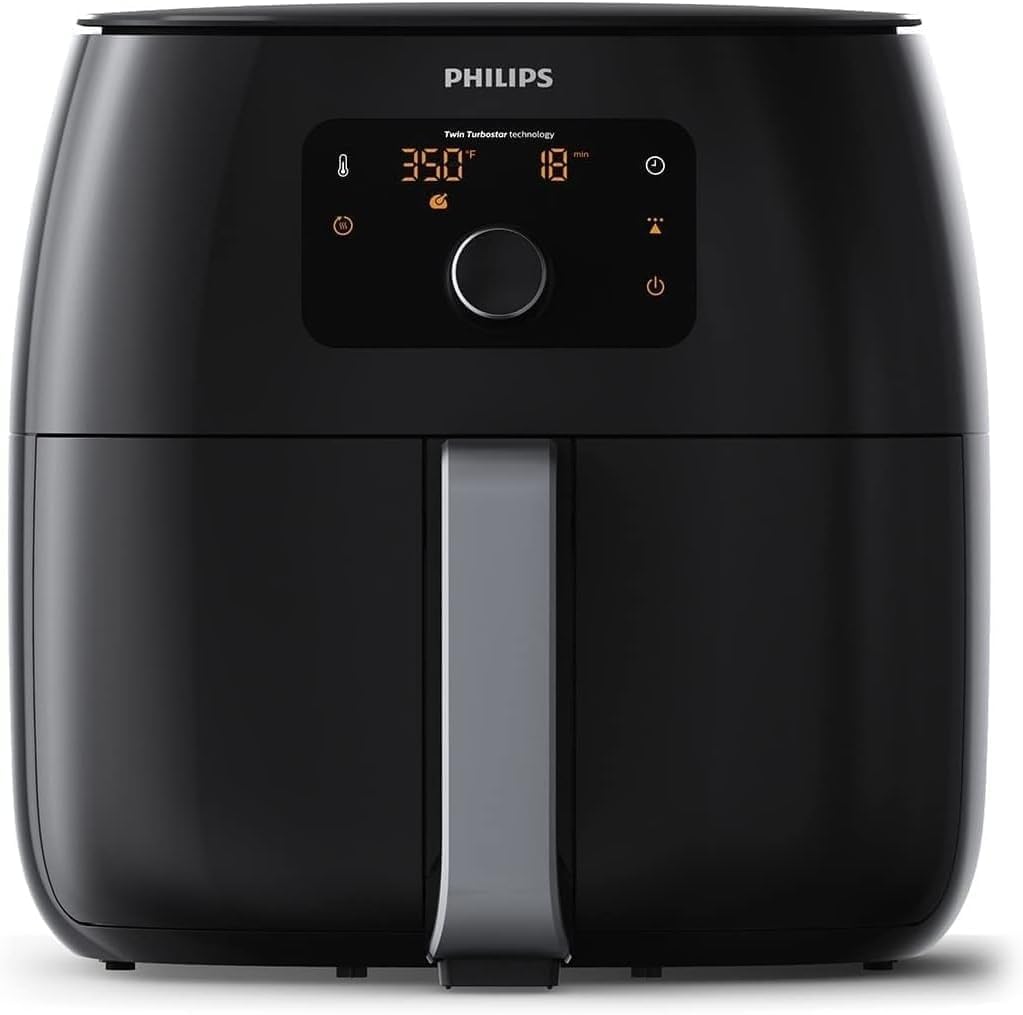
This is the gold standard for air frying purists. With a 7-quart capacity (fits a whole chicken or 3lbs of fries), Fat Removal technology, and unmatched build quality, it delivers flawlessly crispy results every single time. It’s simple, powerful, and effective.
What We Love
- ✓ Best-in-class cooking performance
- ✓ Fat Removal technology works
- ✓ Superb build quality
- ✓ Incredibly easy to use and clean
What Could Be Better
- ✗ Premium price point
- ✗ Lacks the versatility of Ninja
The Final Verdict: Who Should You Choose?
After extensive testing, the choice between Ninja and Philips is clearer than ever. It’s not about which brand is “better,” but which brand is “better for you.”
Choose Ninja If…
You value versatility, capacity, and innovative features that make cooking for a family easier. If the idea of cooking crispy fries and juicy chicken tenders at the same time and having them finish together sounds like a dream, Ninja is your answer. You get a phenomenal, multi-talented appliance that offers arguably the best value on the market today. It’s the pragmatic choice for the modern American kitchen.
Choose Philips If…
Your goal is culinary perfection. You want an appliance that does one thing—air fry—and does it better than anyone else. If you appreciate premium build quality that will last for years and want the health benefits of superior fat removal technology, Philips is worth the investment. It’s the purist’s choice, delivering uncompromising performance and delicious results every time.
Frequently Asked Questions (FAQ)
Are Ninja air fryers better than Philips?
Ninja air fryers are “better” in terms of versatility, capacity for the price, and innovative features like DualZone cooking. Philips air fryers are “better” in terms of pure cooking performance, achieving slightly crispier and more evenly cooked results, and in their superior build quality.
Which air fryer makes the crispiest food?
In our side-by-side tests, the Philips Premium XXL consistently produced the crispiest food, especially with items like chicken wings and frozen fries. Its Rapid Air and starfish design create an optimal environment for crisping, giving it a slight edge over Ninja.
Is Philips’ Fat Removal Technology worth it?
Yes, we found that it genuinely works. After cooking fatty foods like bacon or chicken thighs, the collection tray had a visibly significant amount of rendered fat. For health-conscious consumers, this is a valuable feature that sets Philips apart and can contribute to a healthier diet.
Are the non-stick coatings on these air fryers safe?
Yes. Both Ninja and Philips use non-stick coatings that are PFOA and PTFE-free, which are the main chemicals of concern. Their coatings are food-grade and considered safe for cooking. As with any non-stick surface, avoid using metal utensils to prevent scratching.
How long do Ninja and Philips air fryers last?
With proper care, both brands make durable appliances. However, based on its more robust materials and construction, a Philips air fryer is generally expected to have a longer lifespan, potentially lasting 5-8 years or more. A Ninja air fryer is also very durable, typically lasting 3-5 years under heavy use. Both usually come with a 1 or 2-year warranty.
Do I need to preheat my air fryer?
Preheating is recommended for foods that benefit from an immediate blast of heat, like frozen french fries, breaded items, and chicken wings. A 2-3 minute preheat helps achieve instant crispiness. For thicker proteins, delicate items like fish, or foods starting from room temperature, preheating is usually unnecessary. Both Ninja and Philips have preheat functions, but running the fryer empty at cooking temperature works just as well.
Can I put aluminum foil in my air fryer?
Yes, you can use aluminum foil in both Ninja and Philips air fryers, but with caution. Never cover the entire basket bottom, as this blocks airflow and defeats the purpose of air frying. Instead, shape foil around the edges or use it to create a tray for items that might drip. Always ensure the foil is weighed down with food to prevent it from being blown into the heating element. Perforated parchment paper is generally a better option for most use cases.
How much electricity does an air fryer use?
Air fryers typically use 1,400-2,200 watts, depending on the model. A typical 15-minute cooking session costs approximately $0.05-$0.10 at average U.S. electricity rates. Over a year of regular use (4-5 times per week), expect to spend about $30-$50 on electricity for air frying. This is significantly less than using a conventional oven for the same tasks, making air fryers one of the most energy-efficient cooking appliances available.
Can I cook frozen food directly in the air fryer?
Absolutely. One of the greatest advantages of air fryers is their ability to cook frozen food directly from the freezer with excellent results. Frozen french fries, chicken nuggets, fish sticks, mozzarella sticks, and even frozen vegetables all cook beautifully in an air fryer without thawing. Simply add a minute or two to the cooking time compared to fresh food, and shake or flip as needed for even results.
What can you cook in an air fryer?
The list of what you can cook in an air fryer is remarkably long. Common items include french fries, chicken wings, chicken breasts, fish fillets, shrimp, steaks, burgers, roasted vegetables, frozen foods, baked goods (cookies, muffins, small cakes), reheated leftovers, dehydrated fruits and jerky, hard-boiled eggs, and even grilled cheese sandwiches. Both Ninja and Philips handle all of these tasks well, with Ninja offering more versatility for multi-component meals and Philips delivering superior results on individual items.
Do air fryers produce acrylamide?
Yes, air fryers can produce acrylamide in starchy foods, but at significantly lower levels than traditional deep frying—up to 90% less. Acrylamide forms when foods containing certain sugars and amino acids are cooked at high temperatures. To minimize acrylamide formation, avoid overcooking foods, don’t cook at unnecessarily high temperatures, and consider soaking potatoes in water before cooking to reduce surface sugars. Philips’ Fat Removal Technology provides an additional reduction in acrylamide by removing surface fats during cooking.
Which brand has better customer service?
Both brands offer adequate customer support, but there are differences. Philips typically offers a longer standard warranty (2 years on Premium models vs. 1 year for Ninja), reflecting their confidence in product durability. Ninja (SharkNinja) has a larger U.S. support network and more readily available replacement parts. Both offer phone support, online troubleshooting, and warranty claims. For warranty coverage specifically, Philips has the edge; for replacement part availability, Ninja is slightly more accessible.
Can you use parchment paper in an air fryer?
Yes, parchment paper is safe and useful in both Ninja and Philips air fryers. Use perforated parchment paper designed specifically for air fryers to allow air circulation while preventing sticking. Always weigh the paper down with food to prevent it from being blown into the heating element. Parchment paper is particularly useful for delicate items like fish, eggs, or anything with a sticky glaze. Never use parchment paper without food on top of it, and don’t use it at temperatures exceeding 425°F.
Is Ninja or Philips better for meal prepping?
Ninja is the clear winner for meal prepping. The DualZone technology allows you to cook two different components of a meal simultaneously, and the larger capacity models (8-10 quart) can handle substantial batches. The Match Cook feature doubles your capacity for single-food batches, while Smart Finish ensures everything is ready at the same time. Philips is excellent for single-item cooking and quality, but its single-basket design means meal prep requires sequential cooking, which takes more time.
How do I clean my air fryer properly?
For both Ninja and Philips, remove the basket and crisper plate after each use and wash with warm, soapy water and a soft sponge. Both are dishwasher-safe for convenience. Wipe down the interior with a damp cloth to remove any splatters. For Philips models, empty the fat collection tray after each use. For stubborn residue, soak the basket in warm water for 10-15 minutes before cleaning. Never use abrasive scrubbers, steel wool, or harsh chemicals on the non-stick surfaces. Clean the exterior with a damp cloth as needed.
Can I reheat pizza in an air fryer?
Air fryers are arguably the best appliance for reheating pizza. The rapid hot air recrisps the crust while melting the cheese perfectly. Reheat at 320-350°F for 3-5 minutes, depending on the thickness of the slice. Both Ninja and Philips produce excellent reheated pizza—crispy on the bottom, melty on top, and far superior to microwave reheating. This is one of the most common “gateway” uses that converts skeptics into air fryer enthusiasts.
Are air fryers worth the counter space?
For most households, absolutely. Air fryers replace or supplement several cooking methods (oven baking, deep frying, toaster oven, microwave reheating) in a compact footprint. The time savings alone—air fryers cook 20-25% faster than conventional ovens with no preheating—make them worthwhile for busy families. If counter space is extremely limited, consider a compact model like the Ninja AF101 or Philips Essential Compact, which offer full air frying capability in a much smaller footprint.


