Air Fryer vs Convection Oven: Which One Is Better for Your Kitchen?
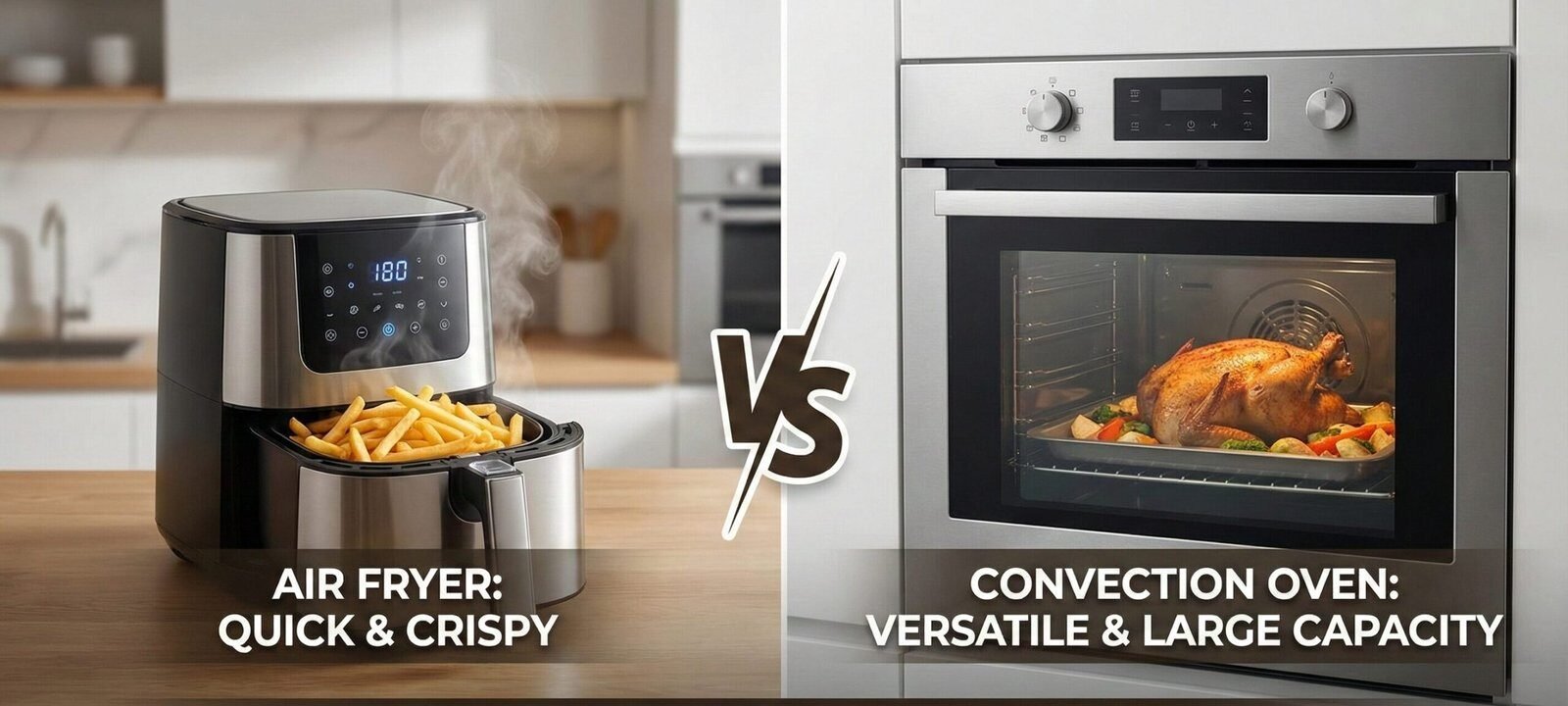
Air fryers and convection ovens are two of the most popular kitchen appliances for fast, crispy, and healthier cooking at home. Both use hot air circulation to cook food more efficiently than traditional ovens — but they have key differences in design, speed, heating technology, versatility, convenience, and energy efficiency. Whether you’re a beginner cook, a busy parent, or someone upgrading your kitchen with modern tools, choosing the right appliance can significantly affect your cooking habits.
This comprehensive guide compares Air Fryers vs Convection Ovens in every category — including heating performance, preheating speed, crispiness, moisture retention, cooking capacity, user control, energy use, versatility, safety, cleaning, and durability. You will also find Amazon product recommendations, expert tips, and internal resources from kitchenoutput.com/ that help you make the smartest kitchen upgrade decisions.
You will also find two trusted external references for extended reading: Whirlpool Air Fryer vs Convection Oven Guide Prestige Comparison Guide
What Is an Air Fryer?
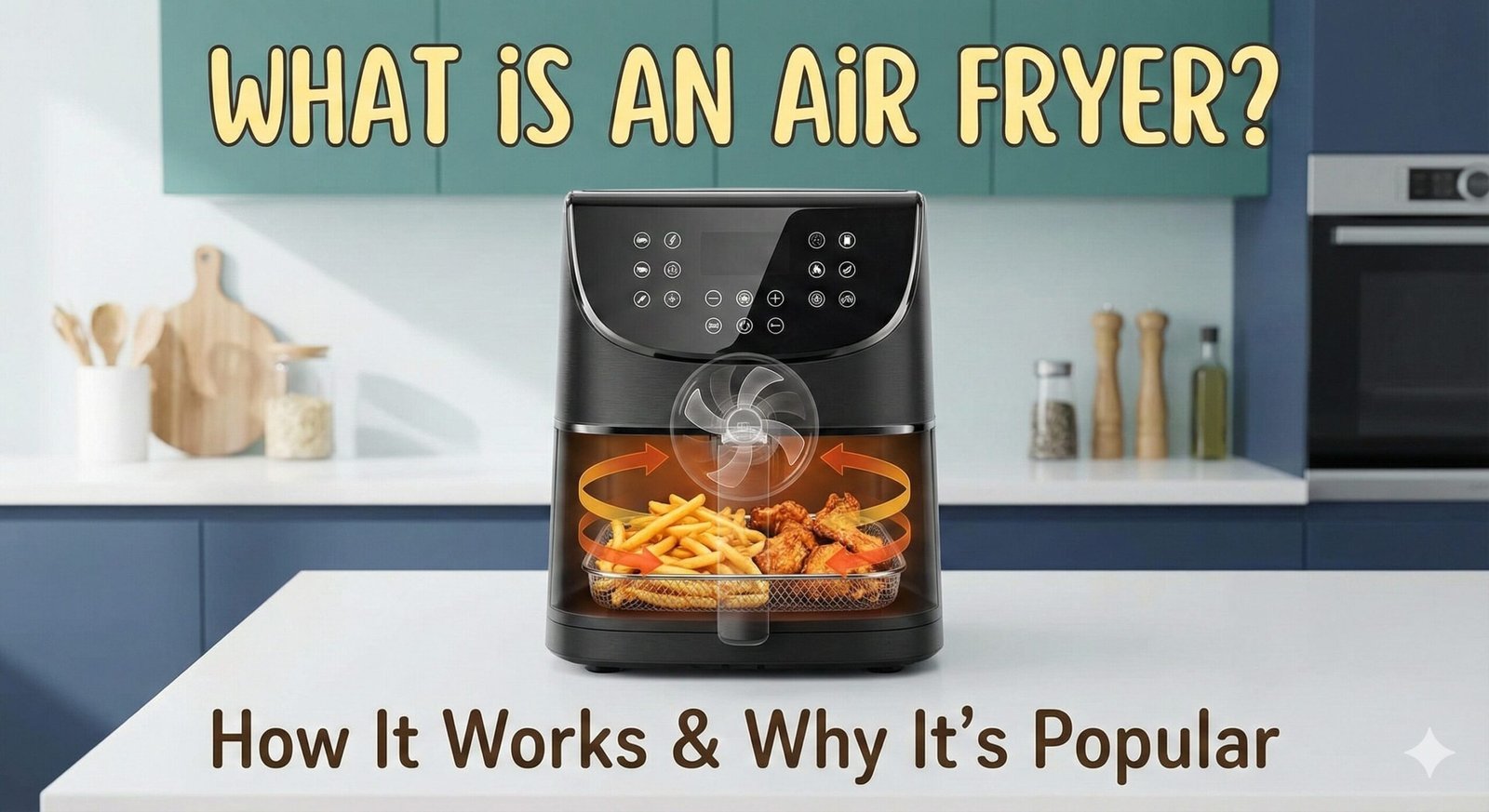
An air fryer is a compact countertop appliance that uses rapid hot air circulation — often called Rapid Air Technology — to cook food evenly with a crispy texture. Air fryers imitate deep-fat frying but require only a fraction of oil, or none at all. Their small chamber allows faster hot air flow, making them extremely efficient compared to large ovens.
Main features of an air fryer:
- Fast preheating (2–3 minutes)
- High-speed air circulation
- Basket-based chamber
- Crispier texture than ovens
- Energy-efficient
- Ideal for frozen foods
- Compact and beginner-friendly
To understand digital vs manual control differences, explore: Digital vs Manual Air Fryer
If you want to explore top models, see: Best Digital Air Fryers Best Small Air Fryers Under $100
What Is a Convection Oven?
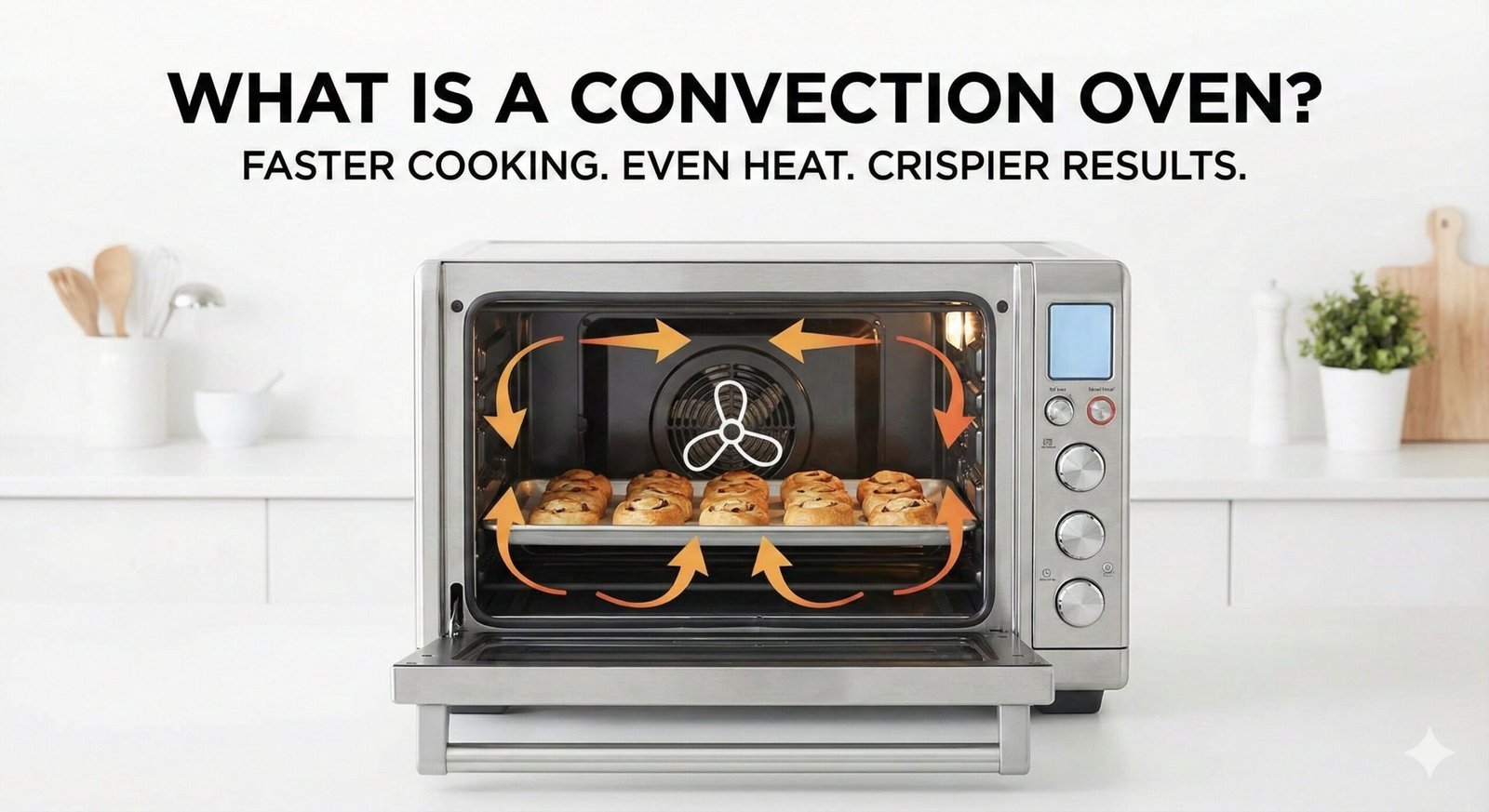
A convection oven is a full-size or countertop oven that uses a fan to circulate hot air around the food. This fan ensures more even cooking compared to traditional ovens. While a convection oven can crisp food like an air fryer, its larger size means slower circulation and longer cooking times.
Main features of a convection oven:
- Larger cooking chamber
- Fan-assisted heating
- More even baking and roasting
- Multiple rack levels
- Ideal for large meals and batch cooking
If you’re considering a hybrid-style oven, explore: Best Digital Toaster Oven Air Fryers
Air Fryer vs Convection Oven: Full Comparison
| Category | Air Fryer | Convection Oven |
|---|---|---|
| Cooking Speed | Very fast (30–50% faster) | Moderate |
| Crispiness | Superior crisping | Good, but less crispy |
| Capacity | Small | Large |
| Energy Use | Low | Moderate |
| Best For | Snacks, frozen foods, fast meals | Baking, roasting, large dishes |
To evaluate temperature differences, read: Air Fryer Temperature Control
How Air Fryers Work (Detailed Breakdown)
Air fryers use a concentrated heat chamber powered by a high-speed fan. The fan pushes hot air rapidly around the food, creating a rapid convection effect. Because the chamber is compact, the air speed is significantly higher than in convection ovens. This high-speed hot air creates the “fried” texture — crisp outside and tender inside — without needing deep oil.
Benefits of this design:
- Minimal preheat time
- Even browning
- Crispy results
- Energy savings
- Faster cooking
Learn more about the benefits here: Benefits of Using an Air Fryer
How Convection Ovens Work
Convection ovens distribute heat using a fan placed at the back of the chamber. The air circulation is strong, but due to the oven’s size, the air does not move as rapidly as in an air fryer. However, this slow-moving convection air is ideal for evenly roasting or baking larger dishes.
Convection ovens excel at:
- Roasting full chicken
- Baking pastries and cakes
- Cooking large trays of vegetables
- Preparing multiple dishes at once
Air Fryer Cooking Performance
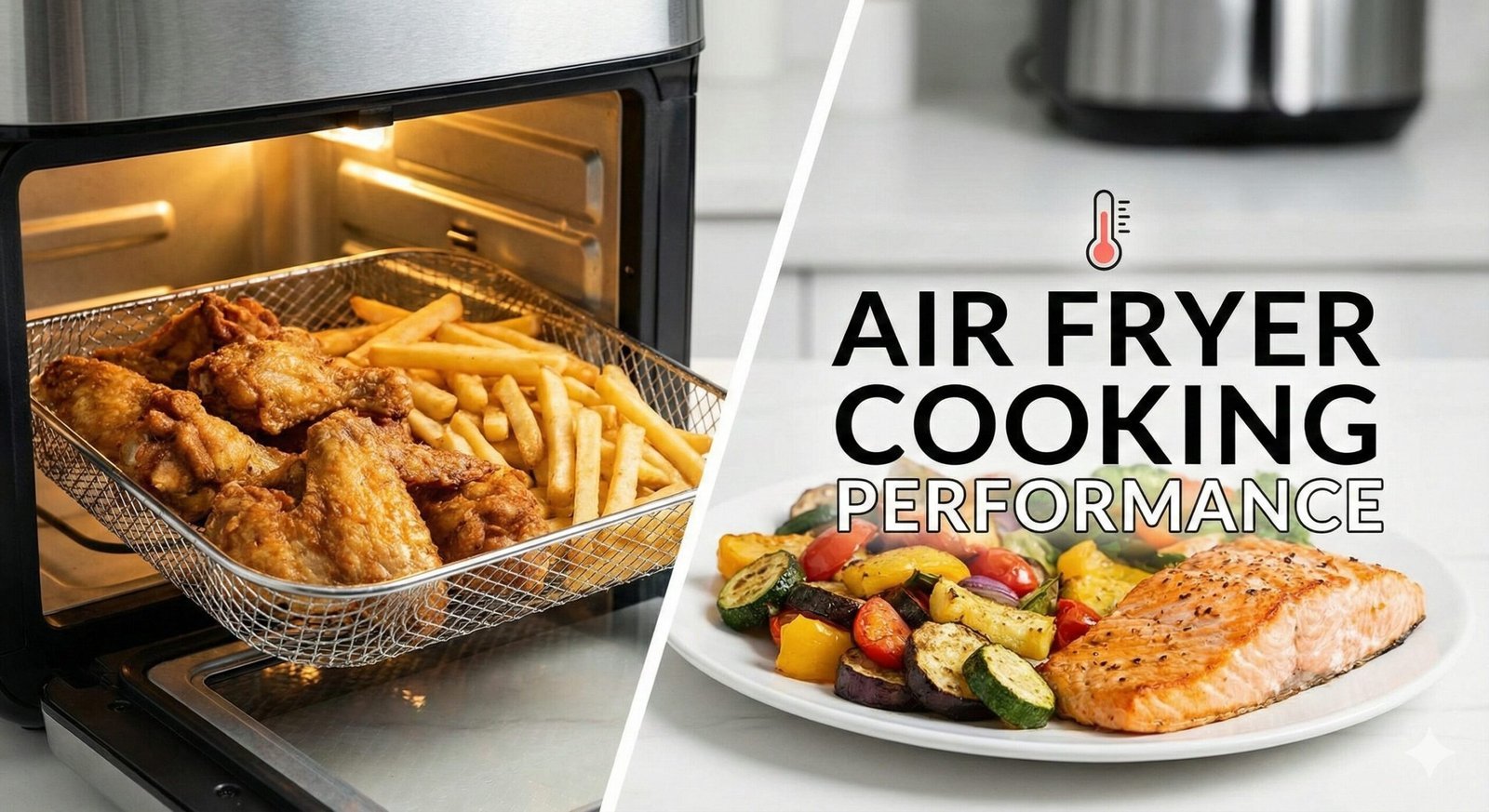
Air fryers are known for their superior crispiness and fast results. Frozen foods like fries, nuggets, mozzarella sticks, dumplings, and spring rolls come out far better in air fryers than in convection ovens. Because of their smaller capacity, they deliver concentrated heat, which leads to crisp results similar to shallow frying.
If you want to enhance cooking texture, explore: Best Air Fryer Liners Best Fryer Strainers Best Fryer Gloves
For recipe ideas, visit: Air Fryer Recipes for Beginners
Convection Oven Cooking Performance
Convection ovens are excellent for most traditional cooking styles: baking, roasting, broiling, and reheating. Their larger chamber means they cannot crisp food as effectively as air fryers, but they deliver consistent heat for perfect pastries, casseroles, cakes, and slow-roasted meals.
When paired with precise tools like: measuring cups, mixing bowls, digital scales, baking sifters, convection ovens become unbeatable for baking.
Capacity Comparison
Air fryers are small and ideal for 1–4 servings. Convection ovens can feed large families or prepare multiple items at once. If you want large capacity with air fryer technology, explore:
Ease of Cleaning
Air fryers are easier to clean because their baskets are small and removable. Convection ovens require cleaning full racks, walls, and trays.
For easy cleaning, check: Best Air Fryer Cleaning Kits
Energy Consumption
Air fryers use significantly less energy due to their compact design and faster cooking times. Convection ovens, being larger, use more electricity per session.
Learn about smart upgrades: Smart Lifestyle Upgrades
Air Fryer vs Convection Oven: Which One Should You Buy?
Choose an Air Fryer If You Want:
- Fast meals
- Crispier texture
- Energy savings
- Healthier cooking
- Simple controls (or digital options)
- Minimal cleanup
Choose a Convection Oven If You Want:
- Baking-friendly environment
- Large capacity
- Multi-level cooking
- Better roasting and baking
- More traditional oven functions
For hybrid usage, explore toaster-oven-style air fryers: Best Air Fryer Toaster Ovens
Is an Air Fryer the Same as a Convection Oven?
This is one of the most common questions shoppers ask before buying either appliance, and the honest answer is: not exactly, but they are close cousins. Both appliances rely on the same underlying principle — forced hot air convection — to cook food faster and crisper than a standard oven. Technically speaking, an air fryer is really just a very small, very powerful convection oven with a fan positioned directly above the food and a narrower cooking chamber that concentrates airflow. A convection oven, by contrast, is a larger, more traditional appliance with a rear-mounted fan and multiple heating elements designed to distribute warm air evenly across several racks at once.
So while every air fryer technically uses convection cooking, not every convection oven can replicate true air-frying results. The difference comes down to the ratio of chamber size to airflow speed. Because an air fryer’s basket is small, the same fan motor that would barely stir the air in a full-size oven instead creates an intense, swirling vortex around the food. This is why air fryers can produce shatteringly crisp fries or wings in a fraction of the time a convection oven needs to achieve a similar (though usually less crisp) result.
If you already own a convection oven and are wondering whether you need a separate air fryer, the honest answer depends on how often you cook small portions and how much you value speed and crispiness over capacity. Many modern convection ovens now include a dedicated “Air Fry” setting that boosts fan speed and raises the top heating element’s output to mimic a countertop air fryer. These hybrid settings are a reasonable middle ground, but most home cooks and product reviewers still find that a dedicated countertop air fryer out-crisps an oven’s air fry mode simply because of its smaller, more concentrated chamber.
Air Fryer vs Conventional Oven vs Convection Oven
It helps to place all three appliances on a single spectrum. A conventional oven relies purely on radiant heat from top and bottom elements with no fan at all, which means hot air stays relatively still and food closest to the heating elements cooks faster than food in the center of the oven. A convection oven adds a fan (and sometimes a third heating element) to keep that hot air moving, reducing hot spots and shortening cook times by roughly 25 percent compared to a conventional oven at the same temperature. An air fryer takes the convection concept to its logical extreme, cramming a high-speed fan into a small enclosed basket so that hot air moves around the food at a much higher velocity than either a conventional or convection oven can achieve.
| Feature | Conventional Oven | Convection Oven | Air Fryer |
|---|---|---|---|
| Fan Present | No | Yes | Yes (high-speed) |
| Heating Elements | Top and bottom | Top, bottom, sometimes rear | Usually top only |
| Chamber Size | Large | Large | Small |
| Typical Preheat Time | 10–15 minutes | 8–12 minutes | 2–4 minutes |
| Best Use Case | Slow roasting, casseroles | Multi-rack baking and roasting | Small-batch crisping and reheating |
Temperature and Cooking Time Conversion Chart
One of the most searched-for pieces of information when switching between appliances is how to convert a recipe’s temperature and time. Because air fryers cook faster and hotter due to their concentrated airflow, most recipes written for a conventional oven need to be adjusted when made in an air fryer, and vice versa when converting an air fryer recipe back to a full-size convection oven.
| Conventional Oven Setting | Convection Oven Equivalent | Air Fryer Equivalent |
|---|---|---|
| 350°F | 325°F | 320°F, reduce time ~20% |
| 375°F | 350°F | 340°F, reduce time ~20% |
| 400°F | 375°F | 360°F, reduce time ~25% |
| 425°F | 400°F | 380°F, reduce time ~25% |
| 450°F | 425°F | 400°F, reduce time ~25% |
As a general rule of thumb, when converting any conventional oven recipe to an air fryer, lower the temperature by about 25 degrees Fahrenheit and shorten the cooking time by roughly 20 to 25 percent. Always check food a few minutes early the first time you try a converted recipe, since basket size, wattage, and airflow design vary between air fryer brands and models.
Air Fryer vs Convection Oven: Health and Nutrition Differences
Health-conscious shoppers frequently want to know whether an air fryer is actually healthier than a convection oven, and the answer is nuanced. Both appliances reduce the need for added oil compared to deep frying, since neither one submerges food in fat. However, air fryers typically require even less oil than convection ovens because their concentrated airflow crisps food with just a light mist or brush of oil, sometimes as little as half a teaspoon per serving.
From a nutritional standpoint, cooking with either appliance instead of deep frying can meaningfully reduce total fat and calorie intake. Traditional deep frying can add anywhere from 100 to 200 extra calories per serving compared to air frying or convection baking the same food. Because air fryers cook faster at high, concentrated heat, they can also help retain more moisture inside the food while still achieving a crisp exterior, which some nutritionists argue helps preserve certain heat-sensitive vitamins better than the longer cook times required by a convection oven.
That said, convection ovens have their own nutritional advantages for certain dishes. Because they allow for larger batches of vegetables, lean proteins, and whole grains to be roasted at once, they make it easier to meal-prep healthy dishes in bulk rather than cooking in small air fryer batches multiple times per week.
Noise, Countertop Footprint, and Kitchen Space
Noise level is a surprisingly common consideration for buyers, especially those living in apartments or open-concept homes. Air fryers tend to run louder than convection ovens on a per-decibel basis because their fans spin at higher speeds in a smaller enclosed space, producing a noticeable whirring sound during operation. Most air fryers register somewhere between 50 and 60 decibels, comparable to a running dishwasher, while a convection oven’s fan is generally quieter since it operates inside a larger, better-insulated cavity.
Countertop footprint is another practical factor. A standard air fryer takes up roughly the same space as a large stand mixer and can often be stored in a cabinet between uses. A countertop convection oven, on the other hand, is considerably larger and is usually left out permanently, which is worth considering for kitchens with limited counter space. Built-in convection wall ovens solve the footprint issue entirely since they replace or supplement a traditional oven rather than adding another appliance to the counter.
Cost Comparison: Air Fryer vs Convection Oven
Upfront price is often the deciding factor for budget-conscious shoppers. Basic countertop air fryers typically range from $40 to $120, while larger digital models with more presets and capacity can run from $120 to $250. Countertop convection ovens tend to start around $100 and can exceed $300 for larger multi-function models that combine toasting, baking, broiling, and air frying in a single unit. Built-in convection wall ovens are the most expensive option, often costing well over $1,000 once installation is included.
Running costs also differ. Because air fryers use less wattage and cook for shorter periods, they generally cost less per use to operate than a full-size convection oven, which can add up to meaningful electricity savings for households that cook several times a week. Over a year of regular use, the energy savings from an air fryer compared to a full-size oven can offset a portion of the appliance’s purchase price, particularly in regions with higher electricity rates.
Best Foods for Each Appliance
Foods That Perform Best in an Air Fryer
- Frozen french fries, tater tots, and hash browns
- Chicken wings and drumsticks
- Breaded items like mozzarella sticks and onion rings
- Small batches of vegetables like Brussels sprouts and broccoli
- Reheating leftover pizza and fried foods
- Bacon and small cuts of fish
Foods That Perform Best in a Convection Oven
- Whole roasted chickens and turkeys
- Sheet-pan dinners with multiple components
- Cookies, pastries, and multi-tray baked goods
- Casseroles and lasagna
- Large batches of roasted vegetables
- Bread and artisan loaves that need even, gentle heat
For more inspiration, browse our full collection of recipe guides at Air Fryer Recipes for Beginners.
Do You Need Both an Air Fryer and a Convection Oven?
Many households ultimately decide to own both appliances rather than choosing one over the other, since they serve complementary purposes rather than directly competing functions. A convection oven remains essential for larger meals, baking projects, and dishes that require multiple trays, while an air fryer becomes the go-to tool for quick snacks, reheating leftovers, and crisping small portions without heating up the entire kitchen.
If counter space or budget only allows for one appliance, consider a hybrid toaster-oven-style air fryer that includes a dedicated air fry setting alongside toast, bake, and broil functions. These combination units won’t quite match the raw crisping power of a dedicated air fryer basket, but they offer far more versatility than a single-purpose appliance and are a smart middle-ground choice for smaller kitchens.
Explore hybrid options here: Best Digital Toaster Oven Air Fryers
Safety Tips for Air Fryers and Convection Ovens
- Always leave adequate clearance (at least 5 inches) around an air fryer’s air vents to prevent overheating.
- Never overfill the basket, as blocked airflow reduces crisping and increases cooking time unevenly.
- Use oven mitts or heat-resistant gloves when removing hot baskets or trays from either appliance.
- Check convection ovens periodically for worn heating elements or fan motor issues, especially with older units.
- Avoid using non-oven-safe plastic or thin containers inside either appliance.
- Keep both appliances away from flammable materials like paper towels and curtains.
For appliance protection accessories, browse: Best Fryer Gloves
Maintenance and Appliance Lifespan
With proper care, a quality countertop air fryer typically lasts three to five years, depending on how frequently it’s used and how well the basket’s non-stick coating is maintained. Regular cleaning after each use, avoiding metal utensils that scratch the basket, and periodically checking the heating coil for grease buildup can extend an air fryer’s lifespan considerably. Convection ovens, particularly built-in wall models, tend to last much longer — often eight to fifteen years — since they are built with more robust components designed for heavier, more frequent use.
Regardless of which appliance you choose, wiping down the interior after each use and deep-cleaning the fan area every few months will prevent smoke, odors, and uneven cooking caused by accumulated grease and food residue.
Common Myths About Air Fryers and Convection Ovens
Myth 1: Air fryers use no oil at all
Most air-fried recipes still call for a small amount of oil, usually one to two teaspoons, to help achieve the golden, crispy exterior people expect.
Myth 2: Convection ovens and air fryers cook identically
While both use moving hot air, the difference in airflow speed and chamber size means results, especially crispiness, are noticeably different between the two.
Myth 3: Air fryers can replace an oven entirely
Due to their limited capacity, air fryers are better suited as a supplement to, rather than a full replacement for, a conventional or convection oven.
Myth 4: Convection settings always shorten cook times
Convection settings usually reduce cook time only modestly, and many recipes still require similar total cook times with a lower temperature instead.
Frequently Asked Questions
Is an air fryer cheaper to run than a convection oven?
Yes, in most cases. Air fryers use less wattage and cook for shorter durations, which typically makes them more energy-efficient per meal than a full-size convection oven.
Can I use aluminum foil in an air fryer or convection oven?
Yes, both appliances generally allow foil, as long as it does not block airflow vents or touch heating elements directly.
Which appliance is better for a family of four or more?
A convection oven is generally better suited for larger households since it can cook bigger portions and multiple dishes simultaneously, though a large-capacity air fryer oven can also work well.
Do air fryers cook faster than convection ovens?
Yes, air fryers typically cook 20 to 50 percent faster than convection ovens because their smaller chamber concentrates hot air directly around the food.
Is it worth buying both appliances?
For most households that cook frequently, yes — the two appliances complement each other well, covering both small quick meals and larger batch cooking needs.
Top Amazon Air Fryer Recommendations


Large capacity, digital presets, excellent crisp performance.
Buy on Amazon

Types of Air Fryers Explained
Not all air fryers are built the same way, and understanding the different formats available can help you choose the right one for your kitchen. There are three broad categories on the market today: basket-style air fryers, oven-style air fryers, and toaster-oven combo air fryers. Each has its own strengths, tradeoffs, and ideal use cases.
Basket-Style Air Fryers
Basket-style models are the most common and typically the most affordable option. Food sits in a pull-out drawer lined with a perforated basket, allowing hot air to circulate on all sides. These models heat up the fastest and produce the crispiest results because their compact chamber concentrates airflow tightly around the food. The tradeoff is limited capacity, usually enough for two to four servings, and a shape that isn’t ideal for large or oddly shaped items like a whole chicken.
Oven-Style Air Fryers
Oven-style air fryers use a front-opening door and internal shelves rather than a pull-out basket, closely resembling a miniature convection oven. These models usually offer more capacity, letting you cook multiple trays of food at once, and they often include rotisserie functions for chicken or roasts. Because the chamber is larger than a basket-style unit, crisping performance is slightly less intense, but the added versatility makes these popular for families.
Toaster-Oven Combo Air Fryers
These hybrid units combine a traditional toaster oven with an added air fry setting, giving you toasting, baking, broiling, and air frying in a single countertop appliance. They’re an excellent choice for smaller kitchens that don’t have room for multiple appliances, though the compromise is usually slightly weaker crisping power compared to a dedicated basket-style air fryer.
For a closer look at combo appliances, see: Best Digital Toaster Oven Air Fryers
Buying Guide: Choosing the Right Appliance for Your Household
Single Person or Couple Households
If you’re cooking for one or two people, a compact basket-style air fryer with a 2- to 4-quart capacity is usually the most practical choice. It heats up quickly, uses minimal counter space, and is perfectly sized for individual meals, snacks, and quick reheats without wasting energy on a full-size oven.
Families of Three to Five
Mid-size households often benefit most from either a larger oven-style air fryer (6 to 10 quarts) or a countertop convection oven. These options provide enough capacity to cook a full meal in one batch, which is especially helpful on busy weeknights when time is limited.
Large Families or Frequent Entertainers
For households that regularly cook large meals, host guests, or meal-prep in bulk, a full-size convection oven — whether countertop or built-in — is generally the better long-term investment. The larger capacity and multiple rack levels allow you to cook several dishes simultaneously, which a compact air fryer simply cannot match.
Renters and Small Kitchens
If counter space or kitchen size is limited, a toaster-oven-style air fryer combo offers the best balance of versatility and footprint, letting you toast, bake, broil, and air fry without needing separate appliances.
Step-by-Step: Converting Your Favorite Oven Recipes
Converting a conventional oven recipe for use in an air fryer doesn’t have to be complicated once you understand the basic adjustments. Follow these steps for the best results:
- Lower the temperature. Reduce the original recipe’s temperature by about 25°F to account for the air fryer’s more intense, concentrated airflow.
- Shorten the cook time. Cut the original cooking time by roughly 20 to 25 percent as a starting point, then check for doneness a few minutes early.
- Reduce the oil. Since air fryers crisp food with far less oil than traditional baking, cut any called-for oil by half or replace it with a light spray.
- Avoid overcrowding. Arrange food in a single layer with space between pieces so hot air can circulate fully around each item.
- Shake or flip halfway through. This ensures even browning on all sides, particularly for smaller items like fries or nuggets.
- Check early and often. Every air fryer model varies slightly in wattage and airflow strength, so always verify doneness a few minutes before the estimated finish time on your first attempt.
Troubleshooting Common Air Fryer and Convection Oven Problems
Food Comes Out Soggy Instead of Crispy
This is usually caused by overcrowding the basket or tray, which blocks proper airflow. Try cooking in smaller batches and shaking or flipping food halfway through the cycle.
Uneven Cooking or Browning
Uneven results often stem from an overloaded chamber or inconsistent food sizes. Cut ingredients into similar-sized pieces and avoid stacking items on top of each other.
Excessive Smoke During Cooking
Smoke is typically caused by grease buildup on the heating element or leftover food residue from previous use. Clean the interior thoroughly, especially around the heating coil, after every few uses.
Appliance Takes Longer Than Expected to Preheat
This can indicate a failing heating element or fan motor, particularly in older convection ovens. If preheating times have gradually increased over months of use, it may be time to have the appliance serviced or replaced.
Environmental Impact and Energy Efficiency in Depth
Beyond simple electricity costs, environmentally conscious shoppers often want to understand the broader efficiency picture. Because air fryers cook faster and at lower average wattage draw than full-size ovens, they generally produce a smaller carbon footprint per meal when powered by the same electrical grid. A typical air fryer draws between 1,200 and 1,800 watts but only runs for 10 to 20 minutes per meal, while a convection oven, though often similar in wattage, tends to run for 30 minutes to over an hour depending on the dish.
For households aiming to reduce overall kitchen energy consumption, batching air fryer meals back-to-back while the appliance is already hot, and reserving the convection oven for larger, less frequent baking sessions, offers a practical way to minimize total energy use throughout the week.
Glossary of Key Terms
- Convection Cooking: A cooking method that uses a fan to circulate hot air around food, promoting even cooking and browning.
- Rapid Air Technology: A marketing term used by many air fryer brands to describe their high-speed internal fan systems.
- Preheat Time: The time it takes an appliance to reach the target cooking temperature before food is added.
- True Convection: A convection oven feature that includes a third heating element specifically for the fan, improving heat consistency.
- Basket Capacity: The usable cooking volume of an air fryer’s basket, typically measured in quarts or liters.
- Crisping Function: A specific setting on some ovens and air fryers optimized for maximum surface browning and crunch.
Expert Tips for Getting the Best Results
- Preheat your air fryer or convection oven for a few minutes before adding food to ensure consistent crisping from the start.
- Pat proteins and vegetables dry before cooking to remove excess surface moisture, which helps achieve a crispier exterior.
- Use a light coating of oil with a high smoke point, such as avocado or grapeseed oil, for the best browning results.
- Avoid using parchment paper without weighing it down, as the strong airflow inside an air fryer can cause it to fly into the heating element.
- Rotate trays halfway through cooking in a convection oven if your model doesn’t have a true convection third element for even heat distribution.
- Invest in an instant-read thermometer to verify doneness on proteins rather than relying solely on time estimates.
Air Fryer vs Deep Fryer vs Convection Oven
It’s worth briefly addressing how both appliances stack up against a traditional deep fryer, since many shoppers are comparing all three options at once. A deep fryer fully submerges food in hot oil, typically between 325°F and 375°F, producing the crispiest, most indulgent texture but also the highest fat and calorie content. Both air fryers and convection ovens use moving hot air instead of submerged oil, which dramatically reduces total fat while still achieving a satisfying crisp, though neither will perfectly replicate the exact texture of true deep-fried food.
For households transitioning away from deep frying for health reasons, an air fryer is generally the closer substitute in terms of texture and speed, while a convection oven is better suited for those who want to bake, roast, and prepare larger quantities of food without the mess, oil disposal, and safety concerns associated with a pot of hot oil.
Seasonal and Occasion-Based Recommendations
Weeknight Dinners
For quick weeknight meals, an air fryer shines with its short preheat time and fast cooking cycles, making it possible to have dinner on the table in 15 to 20 minutes for items like chicken tenders, salmon fillets, or roasted vegetables.
Holiday Cooking and Entertaining
During the holidays, a convection oven becomes indispensable for roasting a whole turkey, baking multiple trays of cookies, or preparing several side dishes simultaneously — tasks that exceed the capacity of even the largest countertop air fryer.
Summer Cooking
In warmer months, an air fryer’s smaller size and shorter cook times generate significantly less ambient heat than running a full-size oven, helping keep the kitchen cooler during summer cooking sessions.
Meal Prep Sundays
For batch meal-prepping, a convection oven’s larger capacity allows you to roast several trays of proteins and vegetables at once, while an air fryer works well for prepping smaller portioned snacks and quick reheats throughout the week.
Real-World Usage Scenarios
The busy parent: With limited time between school pickups, sports practices, and homework, an air fryer’s speed makes it a practical daily tool for reheating leftovers, cooking frozen kid-friendly snacks, and preparing quick proteins without waiting for a full oven to preheat.
The weekend baker: Anyone who regularly bakes bread, pastries, or multi-tray cookie batches will find a convection oven’s larger capacity and more even heat distribution far better suited to consistent baking results than a compact air fryer basket.
The health-focused cook: For those prioritizing lower-fat meals without sacrificing texture, an air fryer offers an easy way to prepare crispy proteins and vegetables with minimal oil, fitting well into portion-controlled or calorie-conscious eating habits.
The small-space renter: With limited kitchen counter space and no built-in oven upgrade options, a toaster-oven-style air fryer combo provides the most functionality without requiring multiple separate appliances.
Accessories That Improve Results
A handful of inexpensive accessories can noticeably improve results in either appliance. Silicone or parchment liners help simplify cleanup and prevent smaller food items from falling through basket grates. Multi-layer racks allow you to cook more food at once inside larger oven-style air fryers without sacrificing airflow. Digital probe thermometers take the guesswork out of checking protein doneness without opening the appliance repeatedly, which can otherwise extend cooking time by releasing built-up heat.
Explore accessory recommendations here: Best Air Fryer Liners Best Air Fryer Cleaning Kits
More Frequently Asked Questions
Can I bake a cake in an air fryer?
Yes, small cakes and baked goods can be made in an air fryer using a compatible small pan, though a convection oven remains better suited for larger or multi-layer cakes.
Why does my air fryer smoke when cooking fatty foods?
Smoking usually occurs when rendered fat drips onto the heating element. Adding a small amount of water to the drawer beneath the basket, if your model allows it, can help reduce smoking.
Is preheating necessary for an air fryer?
While not always required, preheating for two to three minutes helps achieve more consistent crisping, especially for frozen foods.
How do I know if my convection oven has true convection?
True convection ovens include a third heating element specifically dedicated to the fan, usually located around the fan housing at the back of the oven. Check your appliance’s manual or specification sheet to confirm.
Can I cook raw meat safely in an air fryer?
Yes, as long as the internal temperature reaches the USDA-recommended safe minimum for that specific type of meat, verified with a meat thermometer.
Do air fryers work well for reheating pizza?
Yes, air fryers are particularly well-suited for reheating pizza since they re-crisp the crust far better than a microwave, without drying out the toppings the way a conventional oven might.
The Science Behind Crispiness
Understanding why hot air circulation creates a crispy texture helps explain the performance gap between air fryers and convection ovens. When food is heated, moisture at its surface evaporates and forms a thin layer of water vapor immediately surrounding it. In a still-air environment, like a conventional oven, this vapor layer lingers close to the food’s surface, insulating it and slowing further moisture loss, which delays browning and crisping. Moving air, whether from a convection oven’s fan or an air fryer’s high-speed circulation, continuously strips away that vapor layer, allowing the surface to dry out and brown much faster through a chemical reaction known as the Maillard reaction.
Because an air fryer’s fan moves air at a much higher velocity within a smaller enclosed space, it strips away surface moisture far more aggressively than a convection oven, which explains why air-fried food often achieves a noticeably crispier crust in less time. This same principle is why overcrowding a basket or tray hurts results in either appliance: when airflow is blocked by too much food, the vapor layer cannot be efficiently removed, leading to steaming rather than true crisping.
Choosing Between Digital and Manual Controls
Both air fryers and convection ovens are available with either digital touchscreen controls or manual dial-based controls, and the choice often comes down to personal preference and desired precision. Digital models typically include preset cooking programs for common foods like fries, chicken, fish, and baked goods, taking the guesswork out of temperature and time settings for beginners. They also often include more precise temperature increments and helpful features like delayed start timers and keep-warm functions.
Manual dial-based models tend to be more affordable and, for some users, more intuitive since there’s no menu to navigate — simply set the temperature and timer dials and start cooking. They can also be more durable over time since there are fewer electronic components that could potentially fail. For a deeper breakdown of which control style might suit your cooking habits, see: Digital vs Manual Air Fryer.
Warranty, Durability, and Long-Term Value
When evaluating long-term value, it helps to factor in manufacturer warranties and expected part longevity alongside upfront price. Most countertop air fryers come with a one- to two-year limited warranty covering manufacturing defects, though normal wear on the non-stick basket coating is rarely covered. Higher-end convection ovens, particularly built-in models, often come with longer warranties on heating elements and electronic control boards, sometimes extending to five years or more given their higher price point and expected lifespan.
To maximize long-term value regardless of which appliance you choose, avoid using metal utensils that scratch non-stick coatings, clean grease buildup regularly to prevent smoke damage to internal components, and register your appliance with the manufacturer when possible to ensure you’re notified of any recalls or extended warranty offers.
Final Thoughts on Making the Right Choice
Ultimately, choosing between an air fryer and a convection oven comes down to matching the appliance to your actual cooking habits rather than chasing whichever option is trending. If your household prioritizes speed, minimal oil, and easy cleanup for smaller portions, an air fryer will likely earn a permanent spot on your counter. If your cooking routine revolves around larger meals, baking projects, and feeding a family or guests, a convection oven’s capacity and versatility will serve you better in the long run.
Many experienced home cooks eventually land on owning both, using each appliance for the tasks it handles best rather than trying to force one tool to do everything. Whichever direction you choose, understanding the underlying differences in airflow, chamber size, and heating design — covered throughout this guide — will help you get the most consistent, crispy, and delicious results from whichever appliance ends up in your kitchen.
Brand and Model Considerations
When comparing brands within either category, a few practical factors consistently separate good appliances from great ones: fan strength, temperature accuracy, basket or rack material quality, and the presence of useful safety features like auto shutoff. Higher-end air fryer brands tend to invest more heavily in fan motor durability and precise digital temperature sensors, which translates into more consistent results batch after batch compared to budget models that may run hotter or cooler than their displayed setting.
For convection ovens, look closely at whether the model offers “true convection” with a dedicated third heating element, since this feature meaningfully improves even heat distribution compared to convection ovens that simply add a fan to a standard two-element design. Reading verified customer reviews and checking independent lab testing results, where available, can help you avoid appliances with common complaints like uneven cooking, loud fan noise, or short-lived non-stick coatings.
Browse our detailed model reviews and comparisons for further guidance: Kalorik MAXX Air Fryer Oven, NuWave Brio 8 qt, and Yedi Evolution Air Fryer.
Quick Reference Summary
- Fastest cooking: Air fryer, thanks to its small chamber and concentrated airflow.
- Best for large families: Convection oven, due to its greater capacity and multiple rack levels.
- Lowest energy use per meal: Air fryer, since it draws less total wattage over a shorter cook cycle.
- Best for baking multiple trays: Convection oven, which distributes heat evenly across a larger cavity.
- Easiest to clean: Air fryer, thanks to its small, dishwasher-safe removable basket.
- Best long-term durability: Convection oven, particularly built-in wall models with sturdier components.
- Smallest counter footprint: Air fryer, especially basket-style compact models.
- Most versatile single appliance: Toaster-oven-style air fryer combo, which balances space savings with added functionality.
Frequently Overlooked Factors Before You Buy
Beyond the headline specs of capacity, wattage, and price, a few overlooked details can make a real difference in day-to-day satisfaction with either appliance. Basket or tray shape matters more than most buyers expect: square or rectangular baskets tend to hold more food efficiently than round ones, since round shapes waste corner space that square shapes can use. If you regularly cook fish fillets, flatbreads, or other elongated foods, a rectangular basket or oven-style shelf will accommodate them far more easily than a compact round basket designed primarily for fries and nuggets.
Handle design and drawer mechanism quality are also worth checking before purchase, particularly for basket-style air fryers used daily. Look for models with sturdy, heat-insulated handles and a smooth-sliding drawer mechanism that won’t loosen or stick after repeated use. Cheaper models sometimes develop wobbly or misaligned drawers within the first year of frequent use, which can affect how evenly the basket seats inside the heating chamber.
Finally, consider how each appliance fits into your existing kitchen workflow. If you already own a full-size convection wall oven, adding a compact basket-style air fryer for quick weekday meals often makes more sense than purchasing a second large countertop appliance. Conversely, if your current kitchen lacks any oven with a convection setting, a larger oven-style air fryer or countertop convection oven might serve double duty as both your primary baking appliance and your go-to tool for crisping and reheating.
Taking the time to honestly assess your typical weekly cooking patterns — how many people you regularly cook for, how much you bake versus fry versus reheat, and how much counter or storage space you realistically have — will lead to a far more satisfying purchase than simply choosing whichever appliance currently has the most buzz online.
Conclusion
Both air fryers and convection ovens are excellent kitchen appliances, but their strengths differ. Air fryers are perfect for crisping, reheating, fast meals, and healthier cooking with minimal oil. Convection ovens excel at traditional baking, roasting, and cooking large meals with multi-level trays. The best choice depends on your cooking habits, family size, and kitchen space.
For more guides, comparisons, reviews, and smart kitchen upgrades, visit kitchenoutput.com/


