What to Put on Kitchen Counters: The Complete Room-by-Room Styling Guide
A practical, no-clutter approach to decorating and organizing every inch of your countertop — from the coffee corner to the stove-side zone.
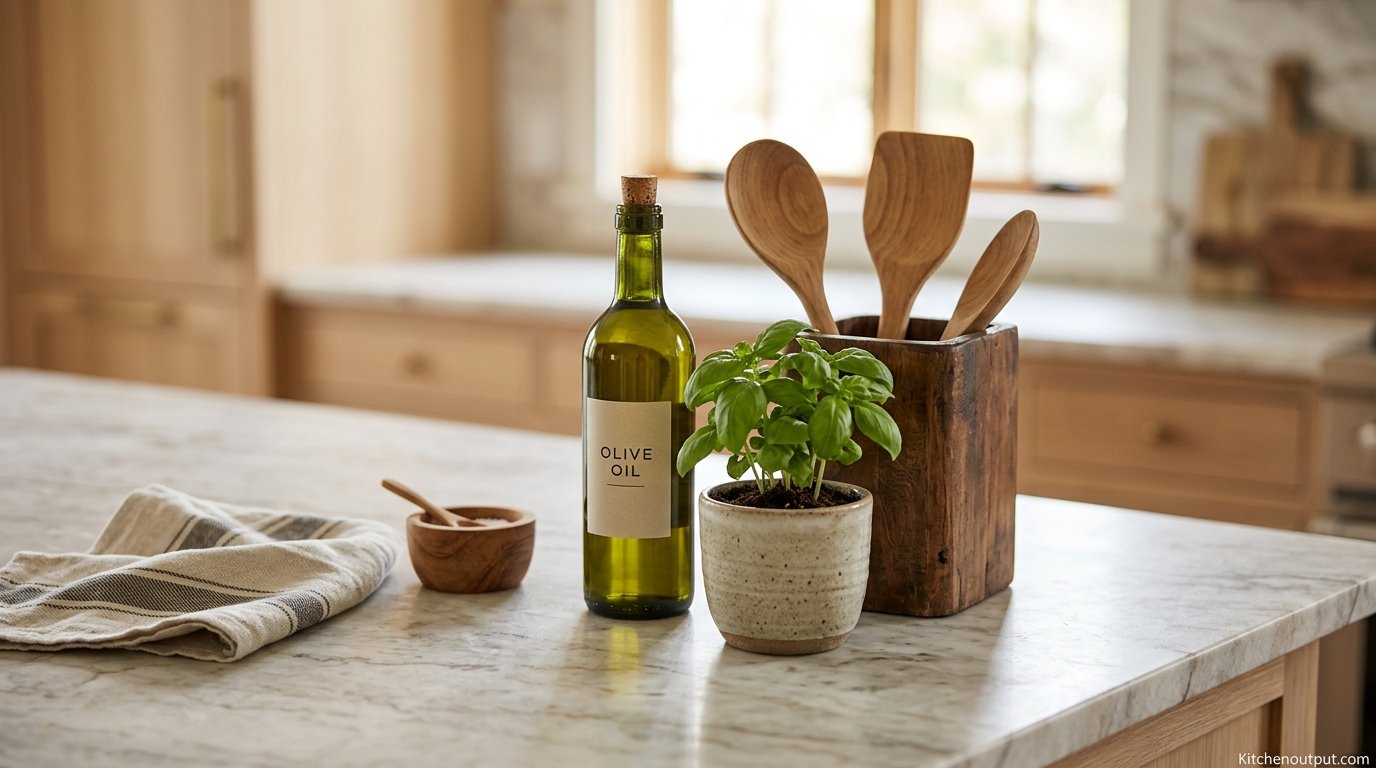
Open any kitchen inspiration feed and you’ll notice something interesting: the kitchens that feel calm, expensive, and easy to cook in almost never have empty counters. They also almost never have cluttered ones. There’s a specific middle ground — a handful of well-chosen objects, arranged with intention — that makes a counter feel finished rather than bare or buried. Figuring out exactly what belongs on that counter, and what should live somewhere else, is the entire game.
This guide walks through that decision process in detail: which appliances earn counter space and which don’t, how to layer in decor that actually gets used, how to think about zones instead of random objects, and how your approach should shift depending on whether you’re working with a studio-apartment galley kitchen or a sprawling island-centered layout. By the end, you’ll have a clear, repeatable framework you can apply to your own counters — not just a list of pretty things to buy.
1. Why Countertop Styling Matters More Than You Think
Counters are the most-used horizontal surface in the home, which means they’re also the surface most likely to become a dumping ground: mail, keys, a half-read magazine, three chargers, and a candle that’s never once been lit. The problem isn’t that these things exist — it’s that they exist without a system. Once you assign every item on your counter a reason to be there, the space starts to function instead of just accumulate.
There’s also a practical cooking argument for good counter styling. A counter that’s organized around how you actually move through meal prep — chopping near the sink, oils and spices near the stove, coffee gear near the outlet — shaves real time off your daily routine. Decor and function aren’t separate goals here; the best-looking counters are almost always the most usable ones too.
2. The Golden Rule: Zones Before Objects
Interior designers rarely start by picking pretty objects — they start by mapping zones. A kitchen counter typically breaks down into four to six functional zones: prep zone, cooking zone, coffee/beverage zone, cleanup zone, landing zone (mail, bags, phone), and sometimes a display zone near a window or open shelf. Once zones are mapped, the “what to put on the counter” question answers itself, because every object gets assigned to the zone it serves.
This is also the fastest way to fix a cluttered kitchen. Most counter clutter isn’t too many objects — it’s objects with no assigned zone, floating between areas because nobody decided where they belong. Walk your kitchen counter right now and try to name the zone each item belongs to. Anything you can’t answer for is a candidate to remove.
- Prep zone: cutting board, knife block, mixing bowls stack
- Cooking zone: oil cruet, salt cellar, utensil crock, trivets
- Coffee zone: machine, mugs, canister, small tray
- Landing zone: tray for keys/mail, charging dock
- Display zone: plant, cookbook stand, bowl of fruit
| Zone | Location | Typical Items |
|---|---|---|
| Prep | Beside sink | Cutting board, knife block, bowl |
| Cooking | Beside stove | Utensil crock, oil, salt cellar |
| Coffee | Near outlet, corner | Machine, canister, mugs |
| Landing | Near entry | Tray, charging pad |
| Display | Open run of counter | Plant, fruit bowl, cookbooks |
3. Everyday Appliances Worth Keeping Out
The appliance debate is where most countertop plans go wrong — either everything gets tucked away for the sake of looks (and then dragged out and put back daily, which gets old fast), or everything stays out and the counter reads as a small-appliance showroom. The right answer depends entirely on frequency of use. A rough rule that works well in practice: if you use it four or more times a week, it earns permanent counter space.
- Coffee maker or espresso machine — daily use almost always wins out over storage
- Electric kettle — fast, frequent, and visually slim
- Toaster or toaster oven — a good toaster oven often replaces several other appliances, which helps justify its footprint
- Knife block or magnetic strip — safety and speed matter more than hiding blades away
- Dish soap and a soap pump — practically permanent by necessity
If you’re weighing a toaster against a toaster-oven-air-fryer combo for that daily-use slot, this comparison of the best digital toaster oven air fryers is worth a look before you commit counter real estate to one or the other.
4. Appliances That Should Probably Be Hidden Away
On the flip side, some appliances are used often enough to own, but not often enough to justify permanent visibility. These are the classic “appliance garage” or lower-cabinet candidates — worth having, not worth displaying.
Keep visible if…
- Used almost daily
- Slim, vertical footprint
- Matches your counter’s color palette
Store away if…
- Used weekly or less
- Bulky, wide-body design
- Has a cord that dangles or tangles
Common examples of “store it” appliances include stand mixers (unless you bake several times a week — see this stand mixer buying guide for space-conscious models), food processors, blenders used only for occasional smoothies, air fryers used a couple times a month, and pressure cookers reserved for weekend batch cooking. If you’re deciding between a countertop-dwelling multicooker and one you’ll store, this Instant Pot roundup breaks down sizes that tuck into a cabinet easily.
A good compromise for appliances you use often but don’t want visible all the time is a small appliance lift or a garage-style cabinet with a roll-up door — it keeps the counter clear while keeping the appliance one motion away from use.
5. Functional Decor: Crocks, Boards, and Canisters
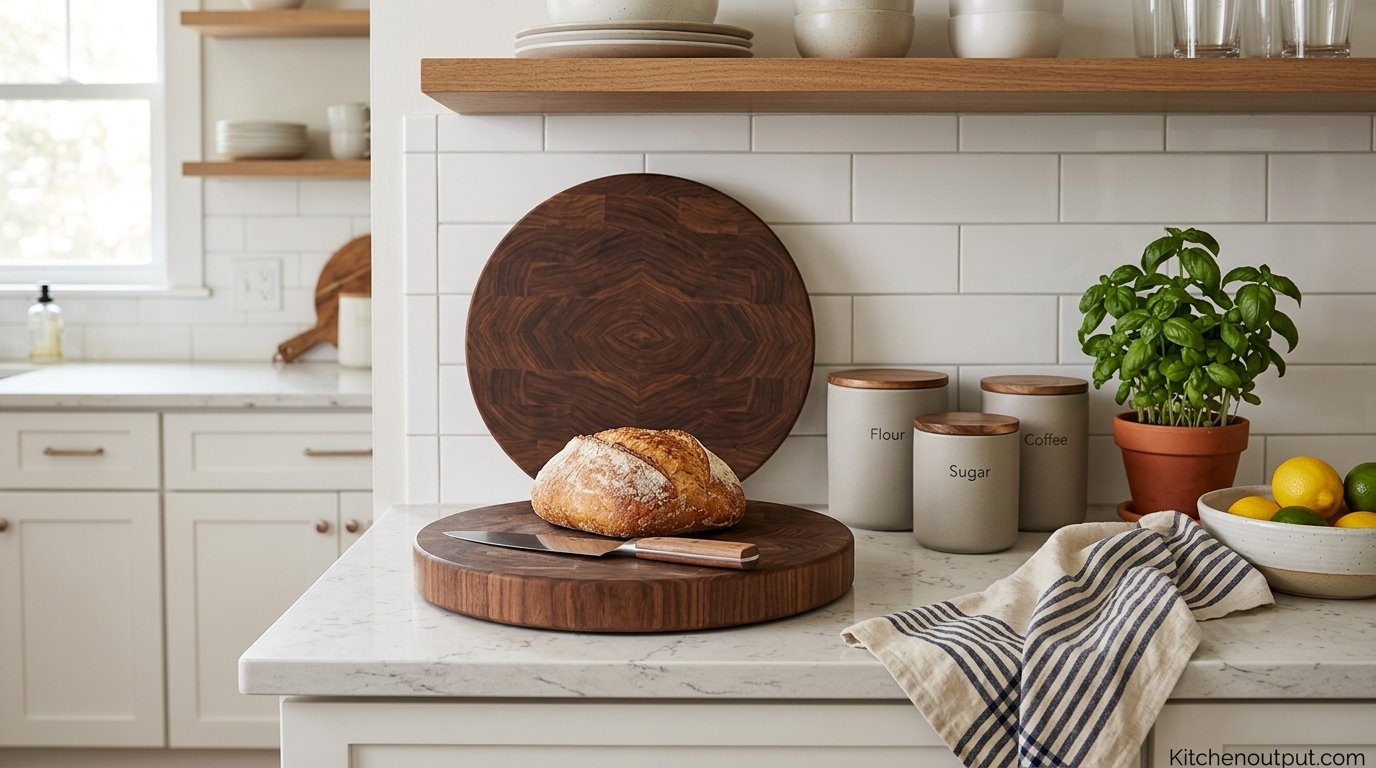
This category is the sweet spot of counter styling — items that look intentional and get used constantly. A wooden cutting board leaned against the backsplash, a ceramic utensil crock, a set of matching canisters for flour and sugar — these do double duty as decor and tools, which is exactly why designers lean on them so heavily.
- Utensil crock: ceramic or stone finishes read more “styled” than plastic
- Cutting boards: a large wood board leaned upright adds warmth and texture
- Canister set: matching glass or ceramic canisters for staples look far tidier than original packaging
- Knife storage: if you’re upgrading knives anyway, this beginner knife set guide covers sets that come with attractive blocks
- Salt cellar: small, open-topped dish beside the stove for pinch-salting
6. Greenery and Natural Touches
Nothing softens a hard-surfaced kitchen faster than something alive or organic. A small potted herb plant on a sunny counter section does more visual work than almost any other object, and it comes with a practical bonus: fresh herbs within arm’s reach of the stove.
- Low-maintenance herbs: mint, rosemary, and chives tolerate inconsistent watering better than basil
- A single stem in a bud vase: takes up almost no space and refreshes the whole counter in seconds
- A wooden bowl of citrus or garlic: functional, colorful, and constantly replenished
- A small woven basket: for onions and potatoes, keeping them out of the pantry’s dark corners while adding texture
If you’re testing out fresh flavor combinations to make better use of that herb plant, a marinated dish like these garlic paprika butter chicken skewers is a good excuse to keep rosemary and garlic within reach on the counter rather than buried in the fridge.
7. Lighting and Ambiance on the Counter
Counters aren’t just work surfaces — in the evening, they’re part of the room’s ambient lighting layer. A single warm-toned lamp or a cluster of candles on an otherwise clear stretch of counter changes the entire feel of a kitchen after dark, especially in open-plan homes where the kitchen counter is visible from the living area.
- Small rechargeable lamp: no cord clutter, movable wherever it’s needed
- Pillar candles on a wood tray: grouped in odd numbers (three works well) for a designed look
- Under-cabinet LED strips: not “on” the counter, but dramatically improve how everything on it looks and functions
8. The Coffee and Beverage Station
The coffee corner has become its own micro-genre of kitchen styling, and for good reason — it’s used every single morning, which makes it worth the counter space and the visual investment. A well-planned station groups the machine, a small canister of beans or grounds, a mug rack or a stack of two to three mugs, and a small tray to contain drips.
Choosing the right machine for the space matters as much as the styling. A compact drip coffee maker suits small counters, while an espresso setup like the ones covered in this Breville espresso review needs a deeper footprint and a nearby outlet. If pods are more your speed, this Keurig K-Elite review covers one of the slimmer single-serve options.
| Setup Type | Counter Footprint | Best For |
|---|---|---|
| Drip coffee maker | Small–Medium | Daily multi-cup households |
| Single-serve pod | Small | 1–2 person households |
| Espresso machine | Medium–Large | Espresso/latte drinkers |
| French press only | None (stored) | Minimalist counters |
9. Styling by Kitchen Size
Not every counter has the same amount of real estate to work with, and the right approach shifts a lot between a tiny galley kitchen and a large island-centered layout.
Small or galley kitchens
Every item needs to earn double duty. Favor vertical storage (magnetic knife strips, wall-mounted spice racks) over anything that eats counter footprint. Stick to one appliance out at a time if possible, and lean on a single decorative anchor — one plant, one bowl — rather than several small objects.
Mid-size kitchens
This is where the zone system shines, since there’s enough room for three to four distinct zones without crowding. A compact blender and a two-slice toaster typically fit comfortably alongside a coffee station without visual competition.
Large kitchens and islands
More space means more temptation to over-fill. Resist the urge to treat extra counter length as extra storage. Instead, use the additional room to give each zone more breathing space — wider gaps between objects almost always look more expensive than a densely packed counter, regardless of how nice the individual items are.
10. Seasonal and Rotating Decor
A counter that never changes starts to feel invisible — you stop noticing it, which also means you stop noticing when it’s cluttered. Rotating one or two small decorative elements seasonally keeps the space feeling cared for without requiring a full redesign.
- Fall/Winter: a small bowl of pinecones or citrus, warm-toned candles, a cutting board styled with cinnamon sticks
- Spring/Summer: fresh cut flowers, lighter linen tea towels, a bowl of stone fruit
- Holidays: one or two small themed objects — resist the urge to fully theme the whole counter, which usually looks cluttered by January
11. Common Countertop Mistakes to Avoid
- Mixing too many materials: wood, marble, brass, plastic, and glass all in one small area competes for attention
- Letting mail become a system: a landing zone tray works only if it’s emptied weekly — otherwise it becomes a pile
- Displaying appliances you resent: a bulky, rarely-used gadget on the counter is a daily reminder of clutter, not decor
- Ignoring scale: tiny trinkets scattered across a large island counter read as messy rather than styled — go bigger and fewer
- Forgetting non-stick and cookware safety: if you’re storing pans on open shelving near the counter, it’s worth knowing whether non-stick cookware is safe to display and use long-term
12. Building Your Personal Countertop Plan
Pulling all of this together, here’s a simple four-step process you can run through this week:
- Clear everything off the counter. Yes, everything. It’s the fastest way to see how much usable space you actually have.
- Map your zones based on how you actually cook and move through the kitchen, not how a magazine photo is arranged.
- Sort every item into three piles: daily-use (goes back on the counter), weekly-use (goes in an easy-access cabinet), and rarely-used (goes into deep storage or gets donated).
- Add one or two decorative anchors — a plant, a bowl, a tray — only after the functional items are placed, not before.
If you’re rethinking your appliance lineup as part of this process, this kitchen appliance buying guide and this list of must-have kitchen appliances are both useful for deciding what’s actually worth owning before you decide what’s worth displaying.
Final Thoughts: Less, But Better
The best-looking, most functional kitchen counters aren’t the ones with the most stuff or the least stuff — they’re the ones where every object has a clear job. Start with zones, keep only what you use weekly in plain sight, and add just enough natural texture and light to make the space feel warm rather than clinical. Small, consistent edits over time will do more for your kitchen than any single big purchase.
Frequently Asked Questions
What should always be kept off kitchen counters?
Rarely-used appliances, paperwork, dish towels left in a heap, and anything without an assigned “zone” should come off the counter and into storage or the trash.
How many items should be on a kitchen counter?
There’s no fixed number, but most well-styled counters keep 3–6 functional zones with one or two objects each, plus a single decorative anchor like a plant or bowl.
Is it bad feng shui to have a cluttered counter?
Whether or not you follow feng shui principles, a cluttered counter is widely considered to disrupt the flow of a kitchen both visually and functionally, since it slows down cooking and cleaning.
Should I keep my toaster oven on the counter?
If you use it several times a week, yes — a toaster oven is a strong daily-use candidate, especially models that also air fry, reducing the need for a second appliance nearby.
What’s the best material for kitchen canisters?
Matte ceramic and glass are the most popular because they read as “styled” rather than purely functional, and they let you see remaining quantities of staples at a glance with glass.
Should a knife block be on the counter?
Yes, for safety and convenience — a knife block or magnetic strip should generally stay accessible near the prep zone rather than in a drawer.
What plants survive best on a kitchen counter?
Low-light, low-water herbs like mint, chives, and rosemary tend to outlast basil or delicate flowering plants in a typical kitchen environment.
How do I style a small kitchen counter without it looking bare?
Choose one strong decorative anchor rather than several small items, and rely on vertical storage to keep the horizontal surface as open as possible.
Should mail and keys go on the kitchen counter?
Only inside a dedicated tray or bowl that’s emptied weekly — otherwise a “landing zone” quickly turns into permanent clutter.
What’s a good coffee station setup for small counters?
A compact drip machine or single-serve pod system paired with a small tray and two to three mugs keeps the footprint minimal while still functional daily.
Do stand mixers belong on the counter?
Only if you bake multiple times a week — otherwise their size and weight make them better suited to a lower cabinet or appliance garage.
How often should I rotate counter decor?
Seasonally is usually enough — swapping one or two items every few months keeps the space feeling fresh without requiring a full redesign.


