How to Get Rid of Fruit Flies in the Kitchen
A complete, step-by-step plan to eliminate fruit flies for good — and stop them from coming back.
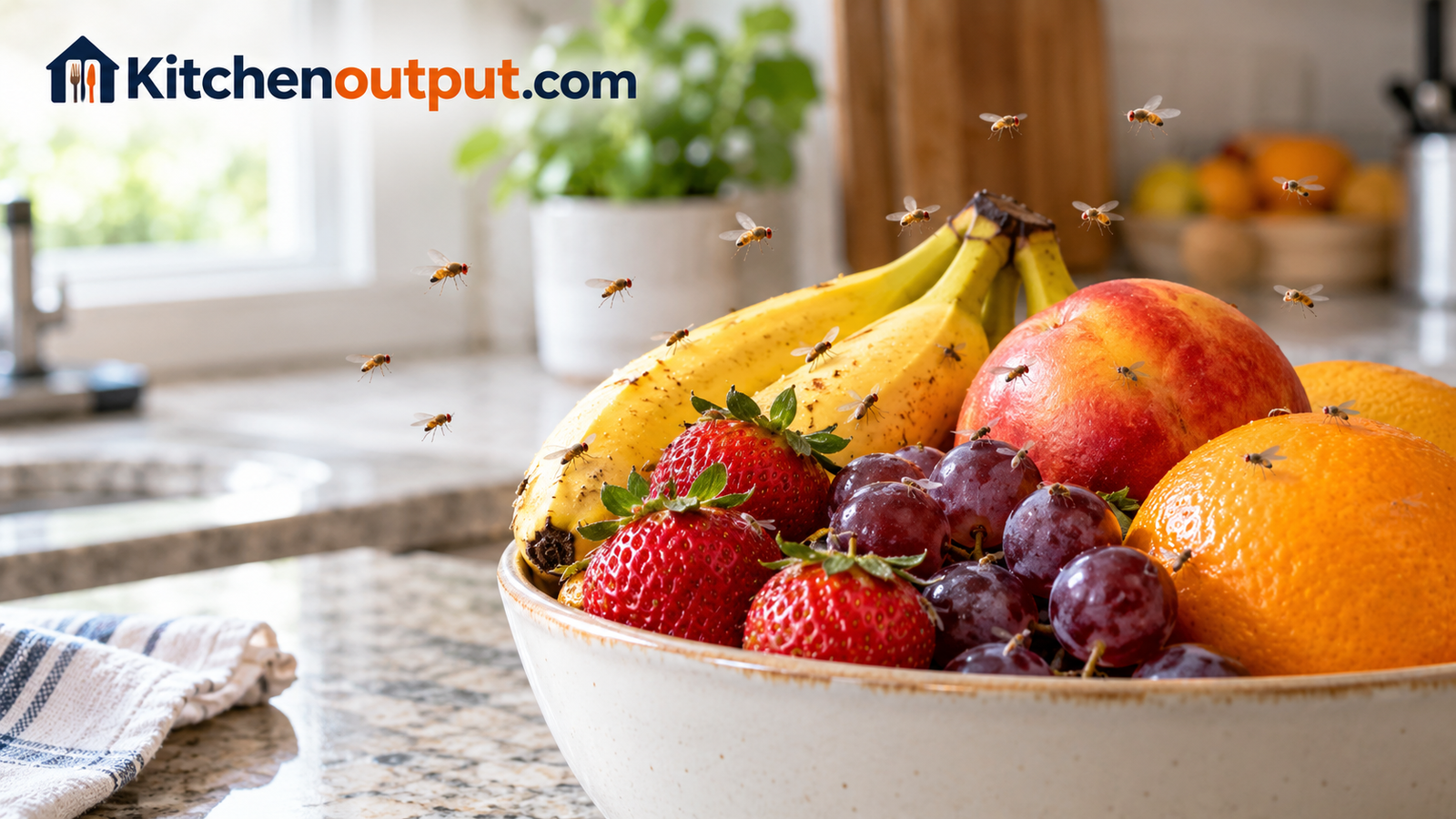
If you’ve noticed tiny, hovering insects circling your fruit bowl, your sink, or your trash can, you’re not imagining things — and you’re definitely not alone. Fruit flies (Drosophila melanogaster) are one of the most common kitchen pests, and once a colony establishes itself, it can multiply from a handful of flies to dozens within a week. The good news is that fruit flies are also one of the easiest kitchen pests to eliminate completely, provided you understand where they come from and attack every breeding site at once rather than just swatting the adults you can see. This guide walks through a full, methodical process — from identifying hidden breeding grounds to building traps that actually work, to sealing off the entry points that let new flies in from outside.
Why Fruit Flies Invade Your Kitchen
Fruit flies aren’t attracted to your kitchen because it’s dirty in the way you might picture “dirty.” They’re attracted to fermentation. A fruit fly can detect the gases released by overripe produce, fermenting liquids, and decaying organic matter from remarkably far away, and a female can lay up to 500 eggs in her short lifespan — often directly on the surface of the food source itself. Those eggs hatch into larvae within 24 to 30 hours, and the entire life cycle from egg to breeding adult can be as short as eight days in a warm kitchen. That’s why an infestation that seems to appear overnight is usually the result of a breeding site that’s been quietly active for a week or more, whether that’s a piece of fruit tucked behind the fruit bowl, a sticky residue in the garbage disposal, or a nearly empty wine bottle in the recycling bin.
Understanding this life cycle matters because it explains why swatting visible flies never solves the problem — you’re only removing the adults you can see while dozens of eggs and larvae continue developing in a spot you haven’t found yet. The rest of this guide is built around that principle: locate every possible breeding site, eliminate it, trap the adults that remain, and then close off the routes new flies use to get inside.
It also helps to understand why fruit flies seem to appear more heavily in certain seasons. Warm, humid conditions accelerate the entire breeding cycle, which is why late summer and early fall — when fruit ripens quickly and windows tend to stay open longer — are peak months for kitchen infestations. In a heated home during winter, the same acceleration can happen indoors even when it’s cold outside, since fruit flies only care about ambient temperature, not the calendar. A kitchen that runs on the warmer side, especially near a stove, dishwasher, or south-facing window, will often see a fruit fly population establish itself faster than a cooler one, all else being equal.
There’s also a common misconception worth clearing up: fruit flies are not the same as gnats, drain flies, or fungus gnats, even though people often use the terms interchangeably. True fruit flies are tan to light brown with distinctive red eyes, they fly in short, darting bursts rather than a slow hover, and they are drawn overwhelmingly to sugars and fermentation rather than soil or plant matter. Correctly identifying the pest matters because the treatment approach differs — a houseplant gnat problem, for example, is addressed by changing watering habits rather than cleaning drains, so misdiagnosing the pest can send you down the wrong path entirely.
Find Every Breeding Site Before You Do Anything Else
Before you buy a single trap or spray a single surface, walk through your kitchen and look for the specific conditions fruit flies need: exposed sugar, moisture, and warmth. Check inside and underneath your fruit bowl, behind appliances where a stray grape or piece of banana may have rolled, inside the trash can and any nearby recycling bins, along the rim and drain of your garbage disposal, inside empty soda cans or wine bottles waiting to be recycled, and even inside mop buckets or reusable produce bags that haven’t been washed. Fruit flies will also breed in drain pipes, damp sponges, and the thin layer of grime that builds up on the underside of a sink strainer, so don’t assume the source has to be visible fruit at all.
Make a simple checklist as you go, and don’t stop after finding one source — most kitchens with an active infestation have at least two or three breeding sites feeding it simultaneously.
A useful trick for locating a hidden source is to watch where the flies actually cluster rather than where you assume the problem is. Fruit flies rarely wander far from a breeding site, so if you consistently see them hovering in one corner of the kitchen — near a specific cabinet, under the sink, or around a particular appliance — that’s almost always a strong clue pointing directly to the source. Take a flashlight and check less obvious spots too: the seal around the refrigerator door, the tray beneath a reusable water filter, the crevice behind a stove where crumbs and spills can collect for months unnoticed, and even a forgotten to-go container pushed to the back of a cabinet shelf.
If you have a compost bin, worm bin, or even a bag of recycling waiting to go out, treat these as prime suspects rather than afterthoughts. A compost bin that isn’t sealed tightly enough is one of the most productive fruit fly breeding environments a kitchen can have, since it combines moisture, sugar, and warmth in one contained space that’s rarely disturbed. If you use one regularly, consider lining it with a breathable bag, emptying it every one to two days during an active infestation, and giving the bin itself an occasional wash with hot, soapy water to remove residue that builds up on the interior walls.
Deep-Clean Your Drains and Garbage Disposal
The garbage disposal and sink drain are the single most overlooked fruit fly breeding sites, because the organic film that builds up on the inside walls of the pipe is completely invisible from above. To check, cover the drain overnight with clear tape or plastic wrap — if flies are breeding inside, you’ll find them trapped against it by morning. To clean it out, run the disposal with ice cubes and coarse salt to scrape the walls, then follow with a mixture of baking soda and white vinegar, letting it foam for 10–15 minutes before flushing with hot water. A dedicated drain-cleaning brush lets you physically scrub the visible portion of the drain and stopper, which is where residue accumulates fastest.
Repeat this process weekly during an active infestation and monthly afterward as maintenance — a clean drain removes one of the most productive breeding sites in the entire kitchen.
Don’t overlook the dishwasher drain or the drain in a secondary sink, like one in a wet bar or laundry room, since both can develop the same organic film given enough time. If your kitchen sink has a garbage disposal, run it briefly with cold water and a few citrus peels after cleaning — this doesn’t kill any remaining larvae, but it does help clear loose debris and leaves the drain smelling noticeably better than a plain vinegar rinse alone. Avoid pouring bleach directly down a disposal on a regular basis, since it can degrade rubber seals over time; the baking soda and vinegar combination is gentler on hardware while still being effective against the buildup that attracts flies.
It’s worth repeating the tape test after cleaning to confirm the drain is actually clear. If new flies still appear on the tape within 24 hours, the buildup may be deeper in the pipe than a surface scrub can reach, in which case a longer flexible drain snake or a call to a plumber may be necessary before the breeding cycle can be fully broken.
Build a Reliable Apple Cider Vinegar Trap
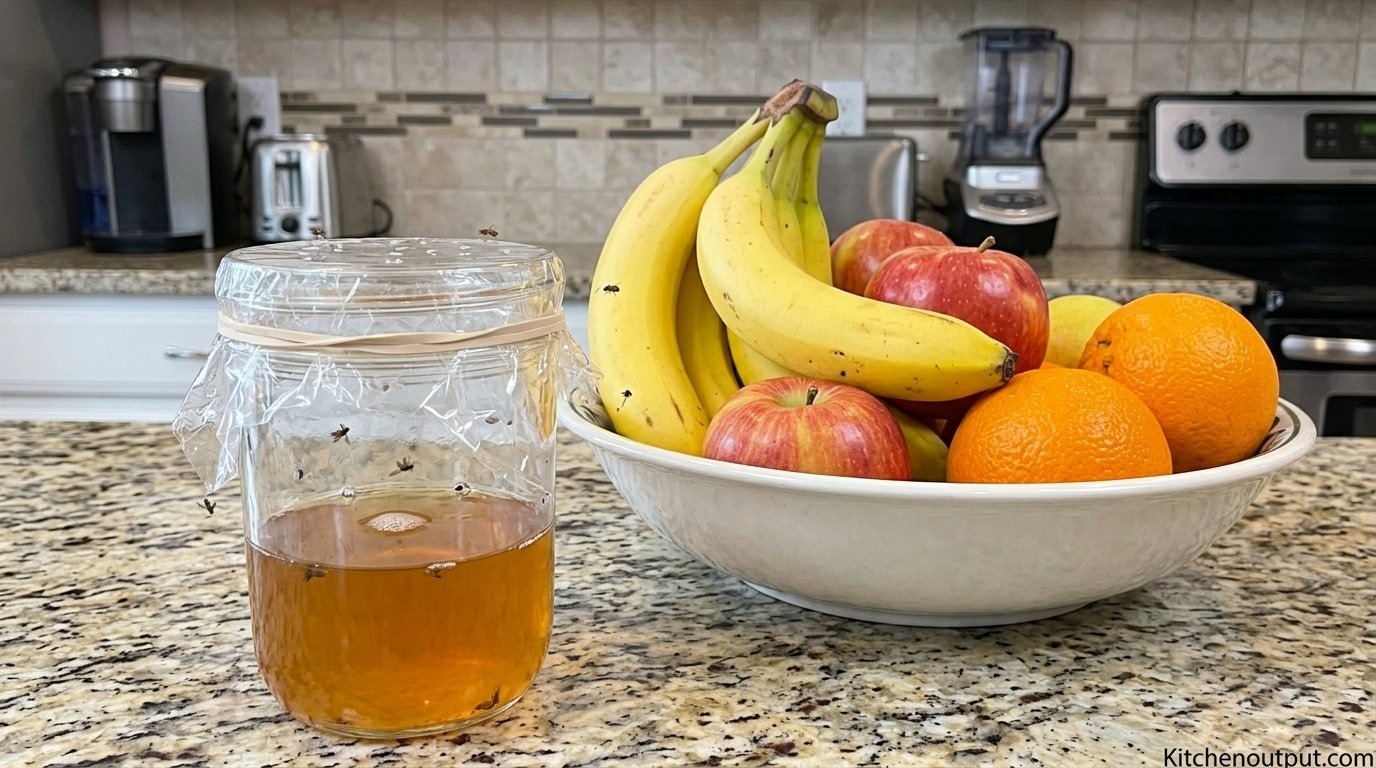
Once breeding sites are cleaned, you still need to catch the adult flies already in the air, and the apple cider vinegar trap is the most effective DIY method available. Pour about half an inch of apple cider vinegar into a small jar or bowl, add two or three drops of dish soap, and stir gently — the soap breaks the surface tension so flies can’t land and fly away again. Cover the jar with plastic wrap secured by a rubber band, then poke five or six small holes with a toothpick. The vinegar’s fermented smell draws flies in through the holes, and the soap-treated surface traps them once they land.
Refresh the trap every two to three days for best results, and place two or three around the kitchen simultaneously — one near the fruit bowl, one near the sink, and one near the trash can — rather than relying on a single trap.
If the standard recipe isn’t catching flies as quickly as you’d like, a few small adjustments can make a noticeable difference. Warming the vinegar slightly before pouring it in intensifies the scent it releases, which can pull flies in faster, especially in a cooler kitchen. Adding a small piece of overripe fruit directly into the vinegar gives the trap a second, stronger scent layer without diluting the soap’s trapping effect. If you’re dealing with a particularly stubborn infestation, running two traps with slightly different bait — one plain vinegar, one with a fruit chunk added — helps you figure out which scent your specific fly population is responding to most strongly.
One common question is how long a trap should stay effective before it needs replacing. In practice, once a trap has caught 15–20 flies or the vinegar starts to look visibly cloudy with debris, it’s time to dump it out, rinse the container, and start a fresh batch — a saturated trap becomes noticeably less attractive to new flies.
Set a Red Wine or Beer Trap as a Backup
Some fruit flies are drawn more strongly to fermented alcohol than to vinegar, which is why a second trap style is worth running alongside the first. Pour a small amount of leftover red wine or beer into a bottle or narrow-necked jar and leave it uncovered, or cover it with plastic wrap and a few pinholes just like the vinegar trap. The narrow opening works in your favor: flies can find their way in following the scent, but the shape of the neck makes it much harder for them to fly back out.
This trap works especially well overnight, when the kitchen is quiet and flies are more likely to investigate a stationary scent source undisturbed.
Beer tends to work slightly better than wine for kitchens with a heavier fly presence, since its yeasty, malty scent profile is closer to the smell of active fermentation than wine’s fruitier notes. If you don’t have leftover alcohol on hand, a small amount of sugar water left to sit for a day or two develops a similar fermented scent and can be used as a reasonable substitute, although it typically takes slightly longer to become effective. As with the vinegar trap, running this alongside — rather than instead of — your other traps gives you the best coverage, since different flies within the same population can show a mild preference for one scent over another.
Use a Store-Bought Sticky Trap or Plug-In Device
If DIY traps aren’t catching flies fast enough, or you’d rather not have jars of vinegar sitting on the counter, commercial sticky traps and plug-in attractant devices are a fast, low-effort alternative. Sticky traps use a scented lure combined with a strong adhesive card, so flies land, get stuck, and can’t return to breeding sites. Plug-in electric traps use UV light or a heated lure to attract flies into a chamber they can’t escape, and they’re particularly useful for kitchens with a persistent, low-level fly presence that DIY jar traps aren’t fully controlling.
Place these traps near known hot spots rather than in open areas of the room, since flies are far more likely to investigate a lure that’s close to where they’re already congregating.
Seal Entry Points and Screen Your Windows
Even a spotless, well-trapped kitchen can be reinvaded from outside if flies have an easy way in. Check window screens for tears or gaps around the frame, install a door sweep on any exterior door that leads into or near the kitchen, and seal gaps around pipes or vents with weatherstripping or caulk. Produce brought in from grocery stores or gardens is another common entry point, so it’s worth giving fruit a quick rinse before it goes into the bowl, especially in warmer months when fly activity outdoors is highest.
Sealing entry points doesn’t eliminate an existing infestation on its own, but it’s an essential final layer that keeps a fully treated kitchen from being reinfested a few weeks later.
Comparing the Best Fruit Fly Elimination Methods
Every method above has a different balance of speed, effort, and long-term effectiveness. The table below breaks down how they compare so you can choose the right combination for your situation.
| Method | Setup Time | Cost | Best For | Effectiveness |
|---|---|---|---|---|
| Apple Cider Vinegar Trap | 2 minutes | Very Low | Active, visible flies | High |
| Wine/Beer Trap | 1 minute | Very Low | Overnight catch-up | Medium-High |
| Drain Deep-Clean | 15–20 minutes | Low | Hidden breeding sites | Very High |
| Sticky Trap Cards | Instant | Low | Hands-off households | Medium |
| Plug-In Electric Trap | 2 minutes | Medium | Persistent, ongoing issues | High |
| Sealing Entry Points | 30–60 minutes | Low-Medium | Long-term prevention | High (preventive) |
Daily Habits That Prevent Future Infestations
Once your kitchen is fly-free, a handful of small daily habits will keep it that way. Store ripening fruit in the refrigerator rather than on an open counter once it reaches peak ripeness, take the kitchen trash out every one to two days rather than letting it sit, rinse recyclables before placing them in the bin, and wipe down counters and stovetops after cooking to remove sugary or fermenting residue. If you keep a compost bin indoors, use a sealed container and empty it frequently, since compost is one of the most attractive breeding environments a fruit fly can find. A well-organized kitchen also makes it far easier to notice a stray piece of fruit or a forgotten container before it becomes a problem — something worth keeping in mind if you’re also working on organizing a small kitchen more generally.
It’s also worth rethinking what stays out on the counter. A quick pass through our guide on what to put on kitchen counters can help you strike the right balance between convenience and cleanliness, since counters cluttered with produce, dirty dishes, and open containers are exactly the environment fruit flies thrive in.
Natural vs. Chemical Solutions: Pros and Cons
Most households can solve a fruit fly problem with natural methods alone, but chemical sprays and foggers exist for more severe or recurring infestations. Here’s how the two approaches compare.
Natural Methods (Vinegar, Wine, Cleaning)
- Safe around food, pets, and children
- Inexpensive using items already on hand
- Addresses root cause, not just symptoms
- No lingering chemical odor
Chemical Sprays & Foggers
- Faster knockdown of large adult populations
- Requires clearing food and surfaces first
- Doesn’t address breeding sites on its own
- Not ideal for daily kitchen use
In practice, the most effective approach for a typical kitchen infestation is a natural-first strategy: clean and trap using the steps above, and reserve chemical treatments for infestations that persist after two full weeks of consistent effort.
Common Mistakes That Make Fruit Fly Problems Worse
A surprising number of infestations drag on for weeks simply because of a few avoidable mistakes. Skipping the drain and disposal check is the most common one, since flies breeding there will keep replenishing the population no matter how many traps are set elsewhere. Using a trap without dish soap is another frequent error — without it, flies can land on the vinegar’s surface tension and fly right back out. Relying on a single trap in one location, rather than several placed near each known hot spot, also slows progress considerably. Finally, treating symptoms without changing storage habits — leaving fruit out at the same rate as before, for example — means new breeding material keeps arriving even as you clear out the old flies.
When to Call Pest Control
The vast majority of fruit fly problems resolve within one to two weeks using the steps in this guide. If you’ve cleaned every drain, eliminated visible produce sources, run multiple traps consistently, and sealed obvious entry points — but the population hasn’t noticeably dropped after two full weeks — it’s worth considering a professional inspection. A persistent infestation that won’t respond to standard treatment sometimes points to a breeding site inside wall cavities, under flooring, or in plumbing that isn’t accessible without specialized equipment, and a pest control technician can identify sources a homeowner typically can’t reach.
The Bottom Line
Fruit flies are persistent, but they’re not complicated to beat once you understand what draws them in. Track down every breeding site, clean drains and disposals thoroughly, run two or three traps at once, and close off the entry points that let outside flies in. Stick with the routine for a week and most kitchens are completely clear — and stay that way with just a few ongoing habits.
Shop Fruit Fly Solutions on AmazonFrequently Asked Questions
How long does it take to get rid of fruit flies completely?
Most kitchens see a noticeable drop within 2–3 days of consistent trapping and cleaning, with full elimination typically taking about one to two weeks depending on how many breeding sites were active.
Why do fruit flies keep coming back after I clear them out?
This almost always means a breeding site was missed, most commonly inside the garbage disposal, sink drain, or a piece of produce hidden behind an appliance or in a pantry bag.
Do fruit flies bite or spread disease?
Fruit flies don’t bite, but they can carry bacteria on their bodies from decaying matter and transfer it to food surfaces they land on, so eliminating them is still a hygiene priority.
What’s the fastest way to catch fruit flies already in the kitchen?
An apple cider vinegar trap with a drop of dish soap, covered in plastic wrap with small pinholes, typically starts catching flies within a few hours.
Can fruit flies come from bananas that look fine?
Yes — fruit flies are drawn to the early stages of ripening and fermentation long before fruit visibly spoils, so a bunch of bananas that still looks fresh can already be attracting them.
Is it necessary to throw out all the fruit in my kitchen?
Not usually. Refrigerating ripe fruit and inspecting the rest for soft spots or overripe pieces is typically enough; only fruit that’s actively fermenting or damaged needs to be discarded.
Do fruit flies live in the drain even if I don’t see them there?
Yes — the tape test (covering the drain overnight and checking for trapped flies by morning) is the most reliable way to confirm drain breeding, since the larvae live below the visible waterline.
Are store-bought fruit fly traps better than DIY traps?
They’re comparable in effectiveness; DIY vinegar traps are typically better for catching flies already in the air, while store-bought sticky or plug-in traps offer more hands-off, ongoing control.
Can fruit flies survive in an empty kitchen with no exposed food?
Not for long — without a food and moisture source to lay eggs in, adult fruit flies typically die within a few days, which is why removing breeding material is more effective than trapping alone.
Will keeping my kitchen colder get rid of fruit flies faster?
Fruit flies breed far more slowly in cooler temperatures, so refrigerating produce and keeping the kitchen cool can meaningfully slow an active infestation while you work through the other steps.
Do essential oils like lavender or eucalyptus repel fruit flies?
Some essential oils can act as a mild deterrent, but they aren’t a reliable standalone solution — they work best as a supplement to trapping and cleaning, not a replacement for it.
How do I know if I have fruit flies or drain flies?
Fruit flies are tan or brown with visible red eyes and fly in quick, darting patterns, while drain flies are fuzzy, moth-like in shape, and tend to rest on walls near drains rather than hovering over food.


