What Can You Cook in an Air Fryer? The Ultimate Guide
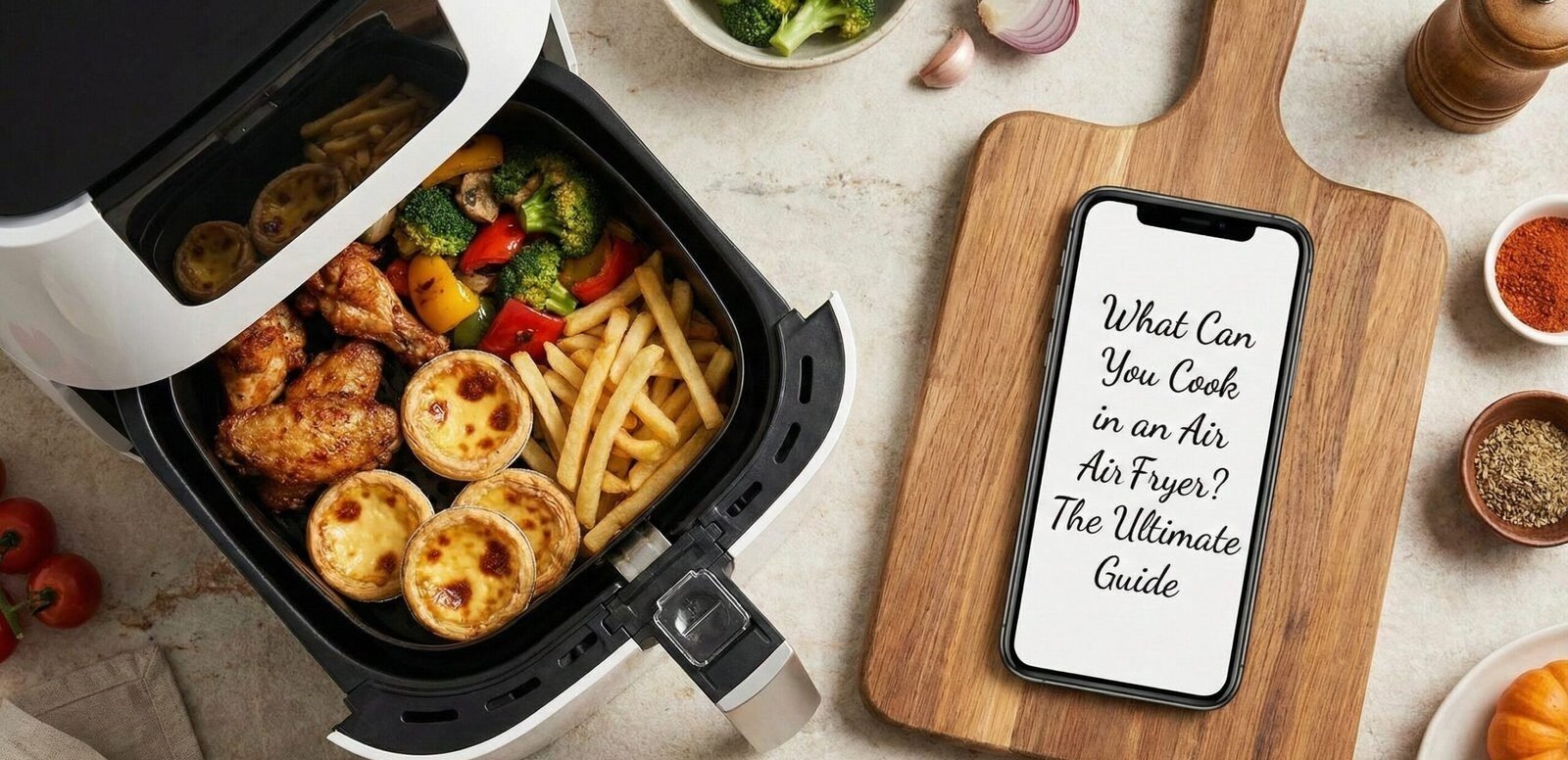
The air fryer has rapidly transformed from a novelty gadget into the undisputed king of the kitchen counter. But for many new owners, a lingering question remains: What exactly can I cook in it? Is it just for reheating frozen fries, or can it genuinely replace your oven?
The answer is broader than you might think. Whether you are looking to create gourmet meals, crisp up leftovers, or bake desserts, the air fryer is surprisingly versatile. It uses rapid air technology—essentially a super-powered convection oven—to cook food faster and with significantly less oil than traditional methods.
In this guide, we will explore every corner of air frying potential, from the benefits of using an air fryer to specific recipes that will change your weekly meal prep forever.
1. Mastering Proteins: Meat, Poultry, and Seafood
Proteins are where the air fryer truly shines. The intense heat sears the exterior while locking in juices, often yielding results superior to a standard oven.
The Perfect Steak
You don’t need a grill to get a great sear. Air frying steak at 400°F for 10-12 minutes (flipping halfway) creates a delicious crust. To ensure safety and perfection, we recommend using high-quality fryer gloves when handling the hot basket and checking doneness with a digital thermometer.
Crispy Chicken Wings & Thighs
This is the “killer app” of the air fryer. The fat renders out of the skin, dripping away from the meat, leaving you with a crunch that rivals deep frying. If you are debating which model handles chicken best, check out our comparison of Ninja vs. Philips Air Fryer.
Seafood
Salmon fillets cook in under 10 minutes. The air circulation crisps the skin perfectly. Breaded shrimp or fish sticks also come out crunchy without being greasy.
Cooking fatty meats like bacon or skin-on chicken can produce grease buildup. To extend the life of your machine, consider using a dedicated air fryer cleaning kit to remove stubborn residue without damaging the non-stick coating.
2. Vegetables: Roasting Redefined
If you have picky eaters at home, the air fryer is your secret weapon. It transforms soggy, boiled vegetables into caramelized treats.
- Brussels Sprouts: Halve them, toss with olive oil and balsamic. They get crispy leaves that taste like chips.
- Broccoli & Cauliflower: These roast in just 8-10 minutes.
- Root Vegetables: Carrots, parsnips, and potatoes cook faster than in an oven.
The Cleanup Hack: Vegetable marinades can get sticky. Using best air fryer liners (parchment or silicone) makes cleanup instant and protects your basket.

Cosori Pro II
Known for its square basket that fits more veggies than round competitors. A top pick for families.
See Price on Amazon
Reusable Liners
Stop scrubbing. These liners are dishwasher safe and keep your airflow unobstructed.
Shop Liners3. Baking & Breakfast: The Unexpected Heroes
Can you bake in an air fryer? Absolutely. Because it is a compact oven, it is actually more energy-efficient for small batches.
Breakfast Essentials
You can make “air boiled” eggs (no water needed!) or perfectly round fried eggs using silicone egg molds. It’s a fantastic way to meal prep breakfast sandwiches for the week.
Desserts
From brownies to muffins, anything you can bake in an oven, you can bake here—usually 20°F lower and 20% faster. However, precision is key in baking. Ensure you are using the best measuring cups and sifters for baking to get the chemistry right.
Need more inspiration? We have compiled the best air fryer cookbooks to get you started.
4. Frozen Foods & Reheating
This is the entry point for most users. Frozen french fries, onion rings, and mozzarella sticks taste deep-fried but contain significantly less fat.
The Reheating Revolution: The microwave is convenient, but it makes pizza soggy. The air fryer restores the crispiness to leftover pizza, wings, and even roasted potatoes. Read our full breakdown of the Air Fryer vs Microwave Oven debate.
Cooking Method Comparison
| Food Type | Air Fryer Time | Oven Time | Verdict |
|---|---|---|---|
| Frozen Fries | 15 mins | 25-30 mins | Air Fryer (Crispier) |
| Chicken Breast | 12-15 mins | 20-25 mins | Air Fryer (Juicier) |
| Whole Chicken | 45-60 mins | 1.5 hours | Air Fryer (Crispy Skin) |
| Baking Cookies | 6-8 mins | 10-12 mins | Tie (Oven holds more) |
5. Choosing the Right Equipment
Not all air fryers are created equal. What you can cook often depends on the size and style of your machine.
- Basket Style: Great for shaking fries and veggies. Look at the Chefman Digital Air Fryer.
- Oven Style: Perfect for pizzas, toast, and rotisserie chickens. The Kalorik Maxx and NuWave IQ360 Pro are leaders here.
- Dual Basket: Cook mains and sides simultaneously. See the Ninja Foodi vs Instant Pot comparison.
If you are on a budget, there are plenty of options. We’ve reviewed the best small digital air fryers under $100.
Accessories Matter
To truly unlock your fryer’s potential, you need the right tools. Fryer strainers help if you use oil, and digital scales ensure portion control.
6. Are Air Fryers Actually Healthy? Separating Fact From Marketing
Before we go any further, it’s worth pausing on the question that convinces most people to buy an air fryer in the first place: is it actually a healthier way to cook, or is that just clever marketing copy printed on the box? The honest answer sits somewhere in the middle, and understanding the nuance will help you get more value out of the appliance rather than treating it as a magic health switch.
The core mechanism is genuinely sound. Traditional deep frying submerges food in hot oil, and that food absorbs a meaningful amount of fat as it cooks — often somewhere between 10 and 20 grams per serving depending on the cut and coating. An air fryer, by contrast, circulates superheated air around the food at high velocity, crisping the surface through convection rather than submersion. Most recipes call for only a light misting or brushing of oil, sometimes as little as a teaspoon for an entire batch. The calorie and fat savings compound quickly once you’re cooking several meals a week this way.
That said, the health halo has limits. If you’re air frying pre-breaded, heavily processed frozen foods multiple times a day, you haven’t solved the nutritional problem — you’ve just changed the cooking method. The appliance doesn’t add nutrients to poor-quality ingredients, and portion size still matters just as much as it does with any other cooking technique. Where the air fryer earns its reputation is in encouraging home cooks to prepare more vegetables, leaner proteins, and whole-food meals simply because the process is fast and the cleanup is minimal, which removes a lot of the friction that leads people toward less healthy takeout alternatives.
There’s also a smaller but legitimate concern worth mentioning: acrylamide formation. This is a compound that can form in starchy foods like potatoes when they’re cooked at high temperatures, whether that’s frying, roasting, or air frying. Keeping temperatures moderate (around 350–370°F rather than maxing out at 400°F+ for starchy foods), avoiding excessive browning, and soaking sliced potatoes in water before cooking are all simple ways to reduce acrylamide formation without sacrificing texture.
If cutting fat is your primary goal, pay attention to marinades and sauces as much as the cooking method itself. A heavily sugared glaze or a butter-laden coating can add back much of the fat and calories that air frying saved you on the cooking side.
7. Common Mistakes That Ruin Air Fryer Results
Almost every disappointing air fryer result traces back to one of a handful of repeatable mistakes. If your food has come out soggy, unevenly cooked, or burnt on the outside while raw in the middle, one of the following is almost certainly the culprit.
Overcrowding the Basket
This is, by a wide margin, the most common error. An air fryer works by circulating hot air around every surface of the food. When you pile ingredients on top of each other, you block that airflow, and the food effectively steams instead of frying. The result is pale, soft, and unevenly cooked food rather than the crisp exterior you’re expecting. Cook in batches rather than cramming everything in at once — it takes a few extra minutes, but the texture difference is dramatic.
Skipping the Shake or Flip
Because hot air moves in a specific pattern inside the basket, food resting in one position for the entire cook time browns unevenly. Shaking the basket or flipping items halfway through redistributes everything so each side gets equal exposure to the hottest air currents.
Using Too Much (or the Wrong Kind of) Oil
A common misconception is that more oil equals more crispiness. In reality, excess liquid oil pools at the bottom of the basket, can smoke at high temperatures, and sometimes triggers the appliance’s smoke detection or produces a burnt smell. A light spray or a toss with a tablespoon or two is almost always sufficient. Also, be mindful of smoke points: extra-virgin olive oil and butter both start smoking well below the 400°F range many recipes call for. Avocado oil, refined olive oil, or a neutral oil with a high smoke point are better choices for high-heat cooking.
Not Preheating
Many newer air fryer models don’t strictly require preheating, but for foods where a crisp sear matters — steak, breaded cutlets, wings — starting with a hot basket helps set the exterior immediately rather than letting the food gradually come up to temperature while sitting in a lukewarm environment.
Ignoring Rack Position and Basket Size
In oven-style air fryers with multiple rack positions, placement relative to the heating element changes cook time significantly. Food on the top rack, closer to the element, will brown faster than food on a lower rack. If a recipe seems to be taking longer than expected, check where the food is actually sitting relative to the heat source before assuming the recipe or the machine is wrong.
Wet Batter and Loose Coatings
Traditional wet batter (the kind used for deep frying) generally doesn’t hold up well in an air fryer because there’s no oil bath to instantly set it. It tends to drip through the basket holes or cook unevenly. A dry breading — flour, then egg wash, then breadcrumbs or panko, pressed on firmly — adheres far better to air-fried surfaces.
8. Vegan and Plant-Based Cooking in an Air Fryer
Plant-based cooks have quietly become some of the biggest fans of air fryers, and for good reason: the appliance solves a problem that has frustrated vegan cooking for years — getting genuinely crispy texture without deep frying in oil.
Crispy Tofu Without the Guesswork
Pressing tofu to remove excess moisture, tossing cubes in a small amount of cornstarch, and air frying at around 375°F for 15–18 minutes (with a shake halfway) produces a crackly, golden exterior that’s genuinely difficult to achieve in a regular pan without a lot of oil.
Chickpeas and Legume Snacks
Drained and dried canned chickpeas, tossed in a little oil and seasoning, turn into a crunchy snack in about 15 minutes — a healthier, cheaper alternative to store-bought roasted chickpea snacks, and endlessly customizable with spice blends.
Cauliflower Wings and Plant-Based “Meat”
Battered cauliflower florets tossed in buffalo sauce after air frying replicate the format of classic wings for a plant-based crowd. Most store-bought plant-based nuggets, patties, and sausages are also specifically formulated to perform well in an air fryer, since manufacturers now design packaging instructions around this cooking method as much as the oven.
Roasted Chickpea Buddha Bowls and Grain-Based Meals
Because the air fryer roasts vegetables so efficiently, it pairs naturally with grain bowl meal prep — a batch of roasted sweet potato, a batch of crispy chickpeas, and some quickly air-fried broccoli can all be prepared back-to-back in the same basket while a pot of rice or quinoa cooks on the stove.
9. Portion Sizing: Cooking for One vs. a Whole Family
One of the more overlooked keyword questions people search for is simply how much food actually fits, and whether an air fryer makes sense for their household size. The honest answer depends heavily on basket capacity, which is usually measured in quarts or liters.
- 2–3 Quart Models: Best suited to a single person or a couple cooking small portions — think one chicken breast, a personal portion of fries, or a couple of reheated slices of pizza.
- 4–6 Quart Models: The sweet spot for most households of 2–4 people. This size comfortably handles a pound of wings, four salmon fillets, or a full tray of roasted vegetables.
- 7–10+ Quart or Dual-Basket Models: Designed for larger families or anyone who regularly meal preps in bulk. Dual-basket models also let you cook two different foods at two different temperatures simultaneously, which solves the classic problem of a protein and a starch finishing at different times.
A frequent complaint from new buyers who purchased a compact model is discovering that a whole family’s dinner requires two or three separate batches, which erodes some of the time savings the appliance promises. If you’re regularly cooking for more than two people, it’s almost always worth sizing up.
10. Energy Efficiency and Real-World Cost Savings
Because an air fryer is smaller than a conventional oven, it heats up faster and loses less energy to warming a large empty cavity. For quick meals and small batches, this translates into a genuine, measurable difference in energy consumption. A large oven can draw somewhere in the range of 2,000–5,000 watts and often needs 10–15 minutes just to preheat, while most countertop air fryers draw between 800 and 1,800 watts and reach cooking temperature in two to five minutes.
For someone who regularly cooks small portions — reheating leftovers, making a quick side dish, or preparing a meal for one or two people — swapping the oven for an air fryer several times a week can produce a noticeable reduction in electricity usage over a billing cycle. The savings are less dramatic for large batch cooking, where an oven’s greater capacity may still be the more efficient choice overall since it avoids running multiple smaller batches back to back.
If cost savings are a priority, reserve the oven for large batch cooking and holiday-sized meals, and default to the air fryer for weeknight dinners, snacks, and reheating — this hybrid approach tends to produce the best balance of speed, energy use, and convenience.
11. Global and International Recipes That Work Surprisingly Well
Air fryers aren’t limited to Western comfort food. Once you understand the underlying principle — dry heat plus circulating air equals crisp exteriors — it becomes clear why so many international dishes translate beautifully to this appliance.
Korean-Style Fried Chicken
Double-frying is traditionally used to achieve the shatteringly crisp, glazed exterior associated with Korean fried chicken. An air fryer can replicate a similar double-cook effect: an initial cook to set the coating, a rest, then a second short blast at a higher temperature to maximize crunch before tossing in a sweet-spicy gochujang glaze.
Indian Samosas and Pakoras
Frozen or homemade samosas crisp up remarkably well in an air fryer, developing a flaky, golden crust without the mess of a deep-fry setup. Pakoras require a slightly firmer batter than the traditional deep-fried version, but the result is a lighter, less greasy snack that still delivers the expected crunch.
Mexican and Latin American Dishes
Frozen or homemade empanadas, taquitos, and flautas all benefit from the air fryer’s ability to crisp a pastry or tortilla shell evenly on all sides. Even elote (Mexican street corn) can be roasted directly in the basket before finishing with the classic mayo, cotija, and chili lime toppings.
Mediterranean and Middle Eastern Flavors
Falafel, traditionally deep-fried, holds together well in an air fryer with a light oil spray, and the exterior still develops a proper crust rather than turning dry and crumbly. Air-fried halloumi, seasoned pita chips, and quickly roasted eggplant for baba ganoush are all popular international keyword searches that this appliance handles effortlessly.
12. Your First Week: A Beginner-Friendly Starting Plan
If you’ve just unboxed a new air fryer and aren’t sure where to start, easing in with a handful of forgiving, low-risk recipes builds confidence before you move on to more ambitious dishes.
- Day 1 – Frozen Fries: The classic starter recipe. It requires no seasoning skill and gives you an immediate, satisfying result that shows off what the appliance can do.
- Day 2 – Bacon: A genuinely mess-free way to cook bacon, with the added benefit of rendered fat dripping away from the meat rather than sitting in a pan.
- Day 3 – Roasted Vegetables: Toss a mix of whatever vegetables are in the fridge with oil, salt, and pepper for a low-stakes side dish.
- Day 4 – Chicken Thighs: A slightly more involved recipe that introduces you to checking internal temperature with a meat thermometer.
- Day 5 – Grilled Cheese or Quesadilla: A fun surprise for most new owners — sandwiches and quesadillas toast beautifully in the basket.
- Day 6 – Baked Potatoes: Air frying produces a genuinely crisp skin with a fluffy interior, faster than a conventional oven.
- Day 7 – A Simple Dessert: Try a small batch of cookies or a mug cake to see how the appliance handles baking before attempting a full dessert recipe.
13. Noise, Placement, and Kitchen Setup Considerations
A detail that rarely makes it into buying guides but comes up often once people are living with the appliance day to day is noise. Because air fryers rely on a fan to circulate hot air at high speed, most models produce a steady hum comparable to a kitchen exhaust fan or a laptop running a demanding task. It’s rarely disruptive, but it’s worth knowing about if your kitchen is open to a living or working space.
Placement also matters more than people expect. Air fryers vent hot, humid air out of the back or top of the unit, so leaving at least 5 inches of clearance on all sides — and never operating one directly under a cabinet — prevents heat damage to surrounding surfaces and ensures the appliance can actually reach its target temperature efficiently. Placing it near an open window or under a range hood if you’re cooking something particularly aromatic, like fish or heavily spiced dishes, will also keep lingering smells from settling into your kitchen.
Frequently Asked Questions
Can I put aluminum foil in an air fryer?
Yes, in most models, as long as the foil doesn’t block airflow or touch the heating element. Weighing it down with food (rather than letting loose edges flap around) and avoiding acidic ingredients directly on foil are both good practices.
Why did my food come out undercooked or overcooked?
This is almost always caused by overcrowding, skipping the halfway shake, or not accounting for how a specific model’s wattage and airflow pattern differs from the recipe’s original testing conditions. Start checking a few minutes before the suggested time and adjust from there for your specific unit.
Do I need to preheat my air fryer every time?
Not always. For frozen foods and items that benefit from an initial hard sear, preheating for two to three minutes helps. For longer cooks like a whole chicken, the extra few minutes of preheating matter less since the food spends so much time in the basket regardless.
Is it safe to leave an air fryer unattended?
Most manufacturers recommend staying in the kitchen while it’s running, the same guidance given for any high-heat countertop appliance, and suggest keeping the unit on a heat-safe surface away from curtains, paper towels, or other flammable materials.
14. Converting Your Favorite Oven Recipes to the Air Fryer
One of the most-searched questions among people who already have a rotation of favorite recipes is how to adapt them for a countertop air fryer rather than starting from scratch with air-fryer-specific recipe collections. The good news is that the conversion process is fairly consistent once you know the two variables that change: temperature and time.
As a general rule, most conventional oven recipes translate to the air fryer by reducing the stated temperature by about 25°F and cutting the cook time by roughly 20 percent. This isn’t an exact science — thicker cuts of meat, dense baked goods, and casseroles behave differently than thin cutlets or individual portions of vegetables — but it’s a reliable starting point that you can refine the more you use the appliance.
| Oven Temperature | Air Fryer Temperature | Time Adjustment |
|---|---|---|
| 350°F | 325°F | Reduce by ~20% |
| 375°F | 350°F | Reduce by ~20% |
| 400°F | 375°F | Reduce by ~20-25% |
| 425°F | 400°F | Reduce by ~25% |
The other major adjustment is portion thickness. Ovens cook through radiant heat surrounding a larger cavity, which is forgiving of thick, densely packed dishes like lasagna or a whole roast. Air fryers work best with food that has more exposed surface area relative to its volume, since that’s what allows the circulating air to do its job efficiently. A casserole that works beautifully in the oven may need to be split into a shallower dish or cooked in smaller portions to get an even result in an air fryer.
Baked goods deserve special mention here. Cakes, quick breads, and anything relying on a slow, even rise benefit from a slightly lower temperature than the standard conversion formula suggests, since the more aggressive air circulation in a fryer basket can dry out the exterior of a cake before the center has fully set. Tenting the top loosely with foil partway through the bake — as long as it doesn’t block the fan — can help prevent over-browning while the interior finishes cooking.
15. Air Fryer vs. Deep Fryer: What You Actually Gain and Lose
It’s worth being honest about where a deep fryer still has the edge, since a lot of buying-guide content oversells the air fryer as a strict upgrade in every category. A traditional deep fryer submerges food fully in oil, producing a uniform, deeply golden crust and a texture that’s genuinely difficult to replicate with circulated air alone, especially on items with a wet batter coating like traditional beer-battered fish or funnel cake.
Where the air fryer wins decisively is in cleanup, safety, and everyday practicality. There’s no gallon of used oil to store, filter, or dispose of, no risk of an oil fire, and no lingering fried-food smell soaked into your kitchen for the rest of the evening. For the vast majority of home cooking — proteins, vegetables, frozen foods, and reheating — the texture difference between the two methods is small enough that most people can’t reliably tell them apart in a blind taste test, particularly once a light oil spray and proper technique are dialed in.
If you cook fried food often enough that a deep fryer would see regular use, and you have adequate ventilation and storage for oil, it can still be the better tool for a handful of specific, batter-heavy dishes. For everyone else, the air fryer covers roughly 90 percent of what a deep fryer does with a fraction of the mess and risk.
16. Diet-Specific Cooking: Keto, Gluten-Free, and Low-Carb
Because air frying doesn’t require flour or breadcrumbs to achieve a crisp texture, it has become a favorite tool among people following restrictive diets that would otherwise make “fried” food off-limits.
Keto and Low-Carb Adaptations
Pork rind crumbs, crushed pork panko, or a parmesan crust stand in for traditional breading on chicken cutlets and fish fillets, delivering a genuinely crunchy exterior without the carbs of flour or breadcrumbs. Cauliflower, zucchini, and radishes roast into satisfying, low-carb alternatives to potato-based sides.
Gluten-Free Cooking
Because the air fryer doesn’t require any batter to function, naturally gluten-free proteins and vegetables need no modification at all. For dishes that do call for a coating, gluten-free breadcrumbs, almond flour, or crushed rice cereal all crisp up well in the basket, and because there’s no shared oil bath, there’s virtually no risk of cross-contamination from gluten-containing foods cooked in a different batch — unlike a shared deep fryer at a restaurant.
Whole30 and Paleo-Friendly Meals
Since the appliance excels at roasting vegetables and searing proteins with minimal added ingredients, it naturally suits diets built around whole, unprocessed foods. A simple combination of protein, a drizzle of approved oil, and compliant seasonings covers a huge share of Whole30 and paleo meal planning without any special air-fryer-specific recipes required.
17. Cooking for Babies, Toddlers, and Picky Eaters
A surprising number of parents search specifically for air fryer guidance aimed at feeding young children, and the appliance genuinely does solve a few common frustrations in this category. Because portions are small and the appliance heats quickly, it’s efficient for cooking single servings of soft-cooked vegetables, small protein portions, or homemade toddler-friendly snacks like veggie tots or mini meatballs without needing to heat a full-size oven for a tiny amount of food.
For babies who are just starting solids, steaming or lightly roasting vegetables like sweet potato, carrot, and zucchini in the air fryer until fork-tender (without any added salt or oil) produces the same soft texture recommended for early feeding, with the added benefit of natural caramelization that can make vegetables more appealing to a developing palate than plain boiled versions.
For pickier toddlers and older kids, the crisp texture the air fryer produces is often the deciding factor in whether a vegetable gets eaten at all — many parents report that broccoli, sweet potato, or zucchini fries that are refused when steamed or boiled are readily accepted once air-fried to a light crunch.
18. Small Kitchens, Dorms, RVs, and Off-Grid Cooking
Because a countertop air fryer requires only a standard wall outlet and a small footprint of counter space, it has become a popular full or partial oven replacement in living situations where a conventional oven isn’t practical or available at all.
Dorm Rooms and Small Apartments
Many dorms and small studio apartments either lack a full oven or restrict certain cooking appliances for safety reasons. A compact air fryer, where permitted, offers a way to cook actual meals — not just reheat takeout — in a footprint smaller than a microwave.
RVs and Camping
Compact 2–4 quart air fryers are increasingly common in RV kitchens, since they draw manageable power from a generator or shore hookup and don’t produce the open flame or ventilation concerns of a propane oven. For campsites with reliable electrical hookups, an air fryer can replace a good portion of a traditional camp cooking setup, particularly for proteins and reheating.
Power Considerations
It’s worth checking your specific model’s wattage against whatever power source you plan to use it with, since some full-size air fryer ovens draw close to 1,800 watts, which can strain a smaller generator or an RV’s electrical system if other appliances are running simultaneously.
19. Maintenance Schedule and Troubleshooting Guide
Beyond the basic wipe-down after each use, a consistent maintenance routine keeps an air fryer performing well for years rather than degrading in performance after a few months of heavy use.
After Every Use
Let the basket cool, then wash with warm soapy water, paying particular attention to the mesh or perforated bottom where grease tends to collect and eventually cause smoking on future cooks if left unaddressed.
Weekly, for Frequent Users
Check the heating element (the exposed coil near the top of most basket-style units) for grease splatter and wipe it down once it’s fully cooled, since a dirty element is one of the most common causes of unexpected smoke during cooking.
Monthly
Inspect the power cord, the exterior vents, and the drawer’s sliding mechanism for any buildup that could restrict airflow or become a safety issue over time.
Common Problems and Fixes
- Excessive smoke: Almost always caused by grease buildup on the element or too much oil pooling in the basket. Clean thoroughly and reduce oil quantity.
- Food sticking to the basket: Usually a sign the non-stick coating is wearing down, or that not enough oil was used on a naturally sticky food like fish. A light spray directly on the basket, not just the food, can help.
- Uneven cooking: Typically overcrowding or an unbalanced load. Spread food in a single layer and shake or flip partway through.
- Unusual noise or vibration: Check that the basket and drawer are fully and correctly seated; a partially inserted basket can cause the fan to vibrate against it.
20. Seasonal and Holiday Cooking
One of the more surprising uses that gains search interest around the holidays is cooking an entire festive meal, or at least major components of one, entirely in an air fryer — particularly useful for smaller gatherings or when oven space is at a premium during a big holiday dinner.
A spatchcocked turkey breast, rather than a whole bird, fits in most larger air fryer ovens and cooks significantly faster than a traditional roast, freeing up the main oven for side dishes. Brussels sprouts, a holiday table staple, arguably cook better in an air fryer than in the oven, since the concentrated hot air produces the deeply caramelized, slightly charred leaves that are difficult to achieve evenly on a crowded sheet pan. Even stuffing, formed into individual portions or muffin-tin-sized servings, crisps beautifully on the outside while staying moist inside.
During summer months, the air fryer’s lower heat output compared to a full oven makes it a popular choice for avoiding heating up an entire kitchen — a genuinely practical consideration in warmer climates or homes without strong air conditioning.
21. Meal Prep Strategies Built Around the Air Fryer
Meal prepping with an air fryer looks a little different than the batch-cooking approach most people use with a stove and oven, mostly because basket capacity limits how much you can cook in a single pass. Rather than fighting that limitation, the most efficient meal preppers lean into it by treating the air fryer as a fast, sequential production line rather than a single large-batch tool.
A typical Sunday prep session might start with the ingredient that takes longest — say, a couple of chicken breasts or a batch of tofu — followed immediately by a quick-cooking vegetable like broccoli or green beans while the protein rests, and finished with something like crispy chickpeas or sweet potato cubes that can hold up well in the refrigerator and reheat cleanly later in the week. Because each item typically takes somewhere between 10 and 20 minutes, a full week’s worth of proteins and vegetables for two or three people can realistically be prepped in under an hour of hands-on, mostly unattended cooking.
Reheating Prepped Food
This is where the air fryer earns its keep as a meal-prep tool specifically, rather than just an initial cooking device. Reheating leftovers in an air fryer at a moderate temperature for a few minutes restores texture that a microwave simply cannot — rice crisps slightly at the edges instead of turning gummy, proteins regain a bit of their original sear, and anything originally breaded comes back genuinely crunchy rather than soggy.
Batch Sizes and Container Planning
Because portions come out of the basket in relatively small batches, it helps to prep directly into individual meal containers rather than one large communal dish, which also makes grab-and-go lunches simpler during a busy week. Glass containers with vented lids tend to hold up best to the slightly higher temperatures that reheated, previously air-fried food is often served at.
22. Brands, Warranties, and What Actually Matters When Buying
With dozens of air fryer brands competing for attention, most buying decisions come down to a small number of practical factors rather than marketing claims. Basket shape (square baskets generally fit more food than round ones of the same stated capacity), the presence of a viewing window (helpful for monitoring baked goods without interrupting the cook cycle), and app connectivity or preset programs are the features that tend to matter most in daily use, more than headline wattage numbers.
Warranty length varies meaningfully across brands, typically ranging from one to two years for most mainstream models, with some premium brands offering extended coverage. Given that the basket and drawer see the most wear from daily washing, checking whether replacement parts (baskets, crisper trays, and racks) are sold individually is worth doing before you buy, since a worn-out basket is a common reason people end up replacing an otherwise functional unit years down the line.
Customer reviews focused specifically on longevity — rather than initial impressions — tend to be the most useful signal here, since almost every air fryer performs well when it’s brand new. The real differentiator between budget and premium models usually shows up after six months to a year of regular use, in things like whether the non-stick coating holds up, whether the fan motor stays quiet, and whether the digital display and buttons remain responsive.
23. Extended FAQ: More Questions People Search For
Can I stack food in an air fryer?
Light, uniformly sized items like fries or tater tots can be stacked loosely since there’s still airflow between individual pieces, but larger or irregularly shaped items like chicken pieces should be arranged in a single layer for even cooking.
Why does my air fryer smell like plastic when it’s new?
This is common with new units and comes from manufacturing residue on internal components. Running the empty air fryer at a moderate temperature for 10–15 minutes, and washing the basket thoroughly before first use, typically resolves it within the first one or two cooks.
Can I use parchment paper instead of a liner?
Yes, as long as it’s weighed down by food so it doesn’t get pulled into the fan, and it’s not used during an empty preheat cycle where it could blow around unsecured.
Do I need to flip food in an oven-style air fryer with multiple racks?
Generally yes, though less critically than in a basket-style model, since oven-style units tend to have more even heat distribution across multiple racks. Rotating trays top to bottom partway through still improves consistency.
Is it normal for the air fryer to smoke a little on the first use?
A small amount of smoke or odor during the very first use is common and related to manufacturing coatings burning off; it should not continue past the first one or two cook cycles.
24. Air Fryer Etiquette for Shared Kitchens and Offices
An increasingly common search topic comes from people sharing a kitchen — roommates, office break rooms, or multi-generational households — who want guidance on using an air fryer considerately in a communal space. A few habits go a long way toward keeping the appliance a shared asset rather than a source of friction.
Cleaning the basket immediately after use, rather than leaving it to soak indefinitely in a shared sink, prevents the appliance from becoming unusable for the next person and avoids the buildup of odors that can transfer to the next meal cooked in it. Being mindful of strong-smelling foods — fish, heavily spiced dishes, certain cheeses — is worth extra consideration in an office setting, since the compact size of most air fryers means the smell disperses into a shared space more noticeably than it would from a stovetop pan in a separate kitchen.
In office break rooms specifically, checking whether the appliance is permitted at all is an important first step, since some workplaces restrict high-wattage appliances due to electrical circuit limits or fire safety policies. Where permitted, keeping a dedicated, clearly labeled set of basket liners and a small bottle of appropriate oil nearby reduces the temptation for colleagues to use whatever is on hand, which is often the source of smoking, off smells, or damage to the coating.
25. Air Fryer Accessories Worth Considering
Beyond the basic basket that comes with the unit, a handful of accessories genuinely expand what’s practical to cook, though it’s easy to over-accessorize an appliance that’s meant to simplify cooking in the first place.
Baking Pans and Cake Barrel Inserts
Small round or square metal pans sized to fit inside the basket make baking cakes, cornbread, and quiches far more practical, since batter naturally needs a solid-bottomed vessel rather than a perforated basket.
Skewer and Rotisserie Attachments
Available on larger oven-style units, these attachments allow for rotisserie-style cooking of whole chickens or kebabs, producing continuous, even browning on all sides without manual flipping partway through the cook.
Silicone Muffin Cups and Egg Bite Molds
Useful for portion-controlled baking and breakfast prep, these small silicone inserts make it practical to cook individual servings of muffins, egg bites, or mini frittatas without needing a full-size baking pan.
Splatter Guards and Racks
A simple metal rack raises food off the basket floor for more even airflow underneath, which is particularly useful for items like bacon or sausages that release a lot of fat during cooking and would otherwise sit in a pool of their own grease.
As a general guideline, it’s worth resisting the urge to buy every accessory available at once. Starting with just a baking pan and a set of liners covers the vast majority of use cases beyond basic basket cooking, and additional accessories can be added later once you’ve identified specific gaps in your own cooking routine.
Final Thoughts
The air fryer is a versatile powerhouse that fits perfectly into a smart lifestyle upgrade. It handles everything from delicate fish to hearty steaks and quick snacks. By understanding temperature control and having the right accessories, you can cook almost anything.
Still worried about safety? Check out our article: Do air fryers use radiation? for peace of mind.


